Well, I'm going to have to try this one. I absolutely love the look and simplicity of this amp. I can't wait to hear it!

TalkBass has been independent since 1998. Add your voice.
Create a free account to reply to discussions, view embedded media, and browse with fewer display ads.
Join free Log in
Want zero display ads or expanded classifieds tools? Compare plans.

Excellent questions...Qs:
Gonna get one. Saving up and selling things. This is the apex wishlist head.
- What is the output of the "USB DEVICE PWR" jack? (500mA or 2A? or ?)
- Why a 12AT7 (as opposed to 12AX7)? Curious as to breakup, gain/headroom, harmonic detail/color, etc. Eden did that on WT preamp, but seems somewhat uncommon. Is that something one might want to switch and is that possible?
- Does Headphone jack delete Speaker output (ngl Headphone gain switch is nice if not)?
Will buy unheard if money comes before testing it out.
Basics covered- selectable impedance, tuner out, nice DI options. Sick.
Congrats to @agedhorse and the Mesa Gibson team. Looks like a total winner.
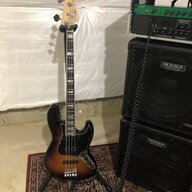
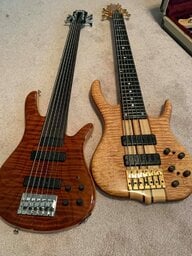
Great looking amp Andy. With you behind it, I know it will sound great, feel great and be bullet proof. Well done.OK, I guess that you all have figured out what I have been working on the past while...
Frankly, this project started out from a seemingly endless stream of TalkBass suggestions and requests for a more dedicated single channel, Bass 400+ inspired version of the TT-800's Boogie channel. The first player to (very strongly I might add) suggest this was Tom Bowlus (no big surprise given his fondness for the Bass 400+) but he was far from alone.
I actually asked for input from the TB community regarding a few "what if" scenarios, including such topics as importance of a graphic eq was, player preferences in trade-offs of size and weight versus feature set (our European members were understandably the most concerned about this, but not by as much as I expected), and the basic feature set itself.
The results of this TB community input were extremely helpful in shaping this amp as the most player influence designed amp in the Subway line, and some of you may see a piece of yourself in this amp. Even our old friend Chef's "bright switch" made it into the amp, he was such a champion of this feature! Because of all this input, it turned into a really fun project, and not just challenging.
There are some Beta testers out there, Tom has one and hopefully he will be able to provide his input regarding how this amp plays with different cabinets (he has the widest variety of speakers in his collection of anybody that I know). Also, Al Kraft (@Al Kraft) and Gus Kendrick (@gustobassman) are beta test players as well as helped write and edit the owner's manual for the amp. Both Al and Gus are really solid, experienced players and have extensive experience with the new amp, they will also be able to answer questions from a player perspective (remember, I'm just a mediocre keyboard player, not a bass player). Gus even sneaked his out on tour, so hopefully he can find some videos or audio clips that are real world gig based rather that the typical marketing/influencer wank-fest videos that tend to appear with every new product release.
Posted this on the Mesa thread, but it belongs here as well:
This is something that every company I have been affiliated with has believed in, starting with Genz Benz and KMC. Good lessons to be learned from (many) long term industry professionals if willing to listen.Best thing about Mesa is when they announce something it is available and ready to ship.
Can't say that about some other manufactures.

Yes, uses the same rack ear kit.@agedhorse is the Bass 800D rackmountable similar to the WD or TT? If so, does it use the same ears?


I personally love that the design aesthetic is a throwback to the D-180/400/400+ graphics, knobs, etc. ... really adds to the overall vibe and makes it clear as to who this amp is for. Really, really nice touch, in my opinion.I have to say that I prefer the look of the other Subway heads but this looks like a great amp feature and specs-wise. I love that the Deep switch (for me this switch is more useful than the Bright switch) and the (indispensable) variable HPF made it on. I also love the fact that Andy took the trouble to survey us bassists and take our suggestions into consideration. These are the kinds of touches that go a long way in keeping me loyal to a brand.

ditto!! I love it, and I really love the Mesa/Boogie logo instead of the other one. Really classic looking ampI personally love that the design aesthetic is a throwback to the D-180/400/400+ graphics, knobs, etc. ... really adds to the overall vibe and makes it clear as to who this amp is for. Really, really nice touch, in my opinion.
USB device power is ~500mA (2.5W), it's intended to be useful for smaller devices. Things like LED lights, recording interface, tablets (to increase battery life, not for primary power), and 9V pedals using a converter cable (at 9V, the available current is reduced to ~300mA)

The USB port follows the PC USB 2.0 standard, is rated at 500 mA maximum current, and conforms to the Apple USB charge current control standard. It can be used to drive any number of USB devices, including power converters that provide 9-volt pedal power. Because pedal power devices step up the voltage from 5 to 9 volts, the available current decreases to ~300 mA at 9V.Qs:
Gonna get one. Saving up and selling things. This is the apex wishlist head.
- What is the output of the "USB DEVICE PWR" jack? (500mA or 2A? or ?)
- Why a 12AT7 (as opposed to 12AX7)? Curious as to breakup, gain/headroom, harmonic detail/color, etc. Eden did that on WT preamp, but seems somewhat uncommon. Is that something one might want to switch and is that possible?
- Does Headphone jack delete Speaker output (ngl Headphone gain switch is nice if not)?
Will buy unheard if money comes before testing it out.
Basics covered- selectable impedance, tuner out, nice DI options. Sick.
Congrats to @agedhorse and the Mesa Gibson team. Looks like a total winner.


Nope, not a thing. Might just be from the camera guy moving around and how it's picking up the sound.Tone post-solo in Badfish is sick. Before that it seemed more mid heavy, did you change something?



Posted this on the Mesa thread, but it belongs here as well:


