
Enjoy the benefits of a premium membership!
Upgrade Account
-
TalkBass has been independent since 1998. Add your voice.
Create a free account to reply to discussions, view embedded media, and browse with fewer display ads.
Join free Log in
Want zero display ads or expanded classifieds tools? Compare plans.
You are using an out of date browser. It may not display this or other websites correctly.
You should upgrade or use an alternative browser.
You should upgrade or use an alternative browser.
New to the blues, Advice please?
- Thread starter trigger happy
- Start date
More options
Who Replied?

Buy Ed Friedland's Blues Bass ‑ A Guide to the Essential Styles and Techniques: Hal Leonard ...
Go through the entire book and you'll be ready. It's the very best book for bass on the topic.
It will also serve as a foundation to many other musical styles.
Go through the entire book and you'll be ready. It's the very best book for bass on the topic.
It will also serve as a foundation to many other musical styles.
Really?? Dont see too many amateur hour blues bands playing anything as difficult as Oh Well by early Fleetwood Mac...
Sorry, but I'm not referring to the commercial success era of Fleetwood Mac starting from their chart success with 'Need Your Love So Bad'. 'Oh Well' came later.
There is the standard 12 bar blues stuff they did on the first album which an amateur band could handle.
One of my favourites by Mac is 'Driftin' and that is a good, slow, driving blues song which I think was on a second album they did. It was back in 68/69 so my memory fails me a little here.
I never regarded any of their chart stuff as being blues anyway.


I just came across this lesson on rhumba blues from the No Treble site. I thought it was very well presented. There is a chart to download, and links to video examples of tunes in this style. I will definitely watch more of the videos lessons by Ted Gould. Invalid Link Removed

it's all about doing it as often as you can so it becomes part of you. jam along to music of stevie ray vaughn, allman brothers, johnny winter, robert cray. then you can dig a bit deeper and see how the brit masters did it - compare and contrast little red rooster by the rolling stones and yer blues by the beatles. don't forget cream and hendrix - a treasure trove of great bass from jack bruce and noel redding (and billy cox). after that, you're ready for mannish boy of muddy waters and smokestack lightning by howlin' wolf. eventually you end up with robert johnson (no bass though).
you could spend 10 lifetimes and barely scratch the surface... the key is repetition, then a bit more repetition, followed by a whole lot of repetition. the nice part is that it's fun studying bass blues. keep jamming along to songs and try out everything with just a guitarist and swap solos every 24 bars - i guarantee you'll be fine and dandy.
you could spend 10 lifetimes and barely scratch the surface... the key is repetition, then a bit more repetition, followed by a whole lot of repetition. the nice part is that it's fun studying bass blues. keep jamming along to songs and try out everything with just a guitarist and swap solos every 24 bars - i guarantee you'll be fine and dandy.
Last edited:
Also, you need to listen to Billy Sheehan's work on Johnny Winter's version of "Be Careful With a Fool". I believe you won't be disappointed.
Huh?
I assume you mean Tommy Shannon?

Well this is all great advice! I honestly believe that listening and playing along with the early electric blues greats is the best way to learn. 1 4 5 can get you a long way with the occasional 6 2 turn around. But almost more important is the tone and swing. Feel is everything when it comes to great blues bands. Well depending on what type of blues you are playing. I like to use a cut sponge under my strings close to the bridge to mute the strings, also I anchor around the end of the finger board. To get the fattest sound I can. For me it's all about attempting to emulate an upright bass the best I can with my electric. Every time I hear a modern blues band with a brite clanky modern bass tone it drives me nuts. The tone knob is also your friend.especially if you are using rounwound strings. Don't be afraid of mudd. Also don't be afraid of BIG FAT notes. You don't always have to play a lot. Sometimes it's what you don't play that matters.
Willie Dixon is essentially listening.
I'm not a big fan of the fabulous thunderbirds but that bass player swings like mad!
Check out just about anything jimmy Sutton has recorded also.
Also..... no picks allowed!
Willie Dixon is essentially listening.
I'm not a big fan of the fabulous thunderbirds but that bass player swings like mad!
Check out just about anything jimmy Sutton has recorded also.
Also..... no picks allowed!
i believe that will come with constant repetition. have fun jamming along, THEN develop tone and feel as all that will mean nothing if you can't nail 12 bars of basic blues.But almost more important is the tone and swing. Feel is everything when it comes to great blues bands

- Oct 22, 2015
- 21,164
- 256,828
- Disclosures
- I am an affiliate for Ari Cap.
It helps a great deal to like the blues.
Keen students of the form notice there is no such thing as the Bel Air blues. But Chicago blues is hoppin'. That said, do endeavor to avoid gigs that feature a Chicago piano.
Keen students of the form notice there is no such thing as the Bel Air blues. But Chicago blues is hoppin'. That said, do endeavor to avoid gigs that feature a Chicago piano.

The short answer is....learn 12 bar blues progression (1-4-5 pattern) and a turn around. It can be and is more difficult than that, but this is the basic idea.

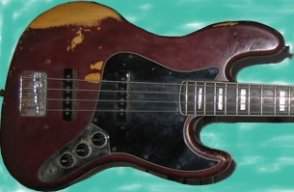

Tommy Shannon. Context is everything. It doesn't matter if you know every scale and mode if you don't know how to use them. There is a tool call Transcribe that is useful for transcribing lines. Also, if it's typical 'blues' band, I would concentrate on arpeggios and scales in A, D, E, G, C, and F. Focus most of your practice where you'll be doing most of your playing.So... for a newbie, other than watching "Crossroads" again, what would be some things for me to focus on learning form the masters?
What references would you recommend? What artists to seek out to transcribe?
Good luck, the blues are easy to play poorly, but it takes time to play them well.
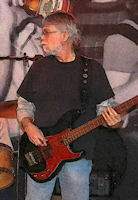
I agree with other contributors that Johnny B Gayden (Albert Collins) is the man. He gave me every blues foundation I have. If you default to Johnny, you can't go wrong.
Some additional learning in variations for me recently has been the bass work in Tinsley Ellis recordings. The album, "Storm Warning" is a good place to listen. Also his version of "Double Eyed Whammy".
Allman Brothers songs like "Whipping Post", "One Way Out", and "Statesboro Blues" also present some interesting variations as they kinda, sorta border on Southern Rock, but remain blues based. The last two have been good speed training for me. And, "Whipping Post" presents something a bit more complex with the change ups and walking parts.
Some comments here say the blues is easy. Fundamentally, structure and even fingering may be relatively simple. But, the proof in becoming proficient is to find as many variations as possible to not become repetitious from song to song, and to be able to play in a minimalist style with great feeling.
So, these things say to me, it really ain't all that easy to become a great blues player. I have seen and heard some highly technically trained musicians who can play just about anything as slow or fast as you would ask, but if the feeling is not there, they just can't make it sound right. Technical skill and practice are certainly important....gotta spend the time in the woodshed.... but, it really is all about how these skills are translated with feeling. You either have it, or you don't. It can be developed, but you have to pay close attention to find it.
Hope this is helpful.
Koog
Some additional learning in variations for me recently has been the bass work in Tinsley Ellis recordings. The album, "Storm Warning" is a good place to listen. Also his version of "Double Eyed Whammy".
Allman Brothers songs like "Whipping Post", "One Way Out", and "Statesboro Blues" also present some interesting variations as they kinda, sorta border on Southern Rock, but remain blues based. The last two have been good speed training for me. And, "Whipping Post" presents something a bit more complex with the change ups and walking parts.
Some comments here say the blues is easy. Fundamentally, structure and even fingering may be relatively simple. But, the proof in becoming proficient is to find as many variations as possible to not become repetitious from song to song, and to be able to play in a minimalist style with great feeling.
So, these things say to me, it really ain't all that easy to become a great blues player. I have seen and heard some highly technically trained musicians who can play just about anything as slow or fast as you would ask, but if the feeling is not there, they just can't make it sound right. Technical skill and practice are certainly important....gotta spend the time in the woodshed.... but, it really is all about how these skills are translated with feeling. You either have it, or you don't. It can be developed, but you have to pay close attention to find it.
Hope this is helpful.
Koog
Listening is key. Listen to all of the styles (Chicago, Texas, West Coast, Jump, etc.). Know your grooves inside and out, from shuffles to rhumba to slow blues. Also, some songs have signature bass lines, like "Scratch My Back", "Blue Midnight", "Honey Hush", etc, which you will need to know.
After all of this, learning to fit your line to the rest of band. From my experience, I will play more simply if one of the guitar players is playing the shuffle groove then I will play quarter notes, making sure to hit the "1" and the "3" strongly. And don't play a normal turnaround on slow blues, you will get yelled at, which has happened to me a few times (should be 1/4 1/5).
After all of this, learning to fit your line to the rest of band. From my experience, I will play more simply if one of the guitar players is playing the shuffle groove then I will play quarter notes, making sure to hit the "1" and the "3" strongly. And don't play a normal turnaround on slow blues, you will get yelled at, which has happened to me a few times (should be 1/4 1/5).
Willie Dixon will teach you everything you need to know, if you're listening.

Simple answer is listen.....you cannot play what you cannot hear in your head.
Technique will develop to play what you hear in your head.
You cannot develop techniques for what you cannot hear.
So listen and learn, do not listen and play....because it will be assumed you can already play, but what do you play is another matter.
Technique will develop to play what you hear in your head.
You cannot develop techniques for what you cannot hear.
So listen and learn, do not listen and play....because it will be assumed you can already play, but what do you play is another matter.
Last edited:
Latest posts
-

-
 Curious what the percentage of bass players use rounds vs flats is.
- Latest: Watchootognbout
-

-

