• TalkBass has been independent since 1998. Add your voice.
    Create a free account to reply to discussions, view embedded media, and browse with fewer display ads.
    Join freeLog in
    Want zero display ads or expanded classifieds tools? Compare plans.

New to the blues, Advice please?

Also, to play great blues, you gotta really like the music. Technique can get you there, but to enjoy playing it is the holy grail of playing blues. Also, learn the history, and read up on the musicians that came before us. Guitar players, drummers, keyboard players, harmonica players, and bass players all have a significant part on why and how the blues is the way it is today. If you understand the blues, you'll understand that the blues has DNA in every form of popular music, as well as jazz, hip hop and reggae. And with this understanding of the blues, you'll be able to get into any style of music.

This. The more you dig, the more you'll find.

Only advice I can give is ...
  • There are a bunch of different shuffles. They're all cool. Just don't think one size fits all.
  • The west coast swings different than everybody.
  • And - the Chicago cats play hard ...
 
Several have mentioned time and feel, locking with the drummer etc., and I couldn't agree more. Blues bass is extremely simple harmonically. What gives it life is the pocket ... you have to live in that laid-back pocket and lock with the drummer. Once you have the basics of the various types of blues tunes and what works underneath them, you're set as far as lines go, getting started. Oh, you'll advance, and come up with interesting variations that season the tunes nicely and make it fun and less repetitive as time goes by. But time and feel is just absolutely crucial. If you have awesome pocket feel and lock with the drummer but only play simple lines, you'll get gigs. If you have awesome chops but only a rudimentary pocket and lock, or worse, you can't keep the pocket, you won't.

Best wishes, and have fun! :bassist: I so love playing blues! :)
 
  • Like
Reactions: GwenOnBass
As an Amazon Associate, TalkBass may receive commissions from qualifying purchases made via links on this site.
If you are new to bass and the blues then Steve said it right, less notes at first. A lot of great advice has been given here all ready. All I can say is go at it slow, stay with the groove of the songs. Start adding runs or scales as you become more aware of the feeling of a particular song. SBL is great but don't think that you have to know a ton before you go out there and play. It sounds like you have already done a lot of work now go have fun.
 
first you need to have the blues

But seriouly jazzy blues played by jazz player is a lot more interesting to me than the formulaic box pattern 12 bars blues following a 1-4-5 formula played by rocker blues like BB King

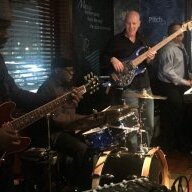


Oscar Peterson is no doubt one of the greats of jazz piano but for actual blues music I'd take Junior Kimbrough playing " All Night Long " any day of the week . No one doubts Charlie Parker's legendary skill as a horn virtuoso but for blues sax I'd listen to the aptly nicknamed J.T . " Goat Boy " Brown - Chess session guy on many hits by Howling Wolf - Elmore James etc ..... Check out very early 50's B.B. King's jump blues if you think he was a rocker and dislike his later era work . Just my 2 cents - Kelly
 
I agree that several have mentioned "feel" in this thread. They are correct. Study it, listen to it, play along with it, but eventually it all comes down to if you "feel" it or not. And you will.

My piece of advice? Have fun. If this isn't fun, then why do it? You obviously love playing bass. Let it show through.
 
  • Like
Reactions: trigger happy
A few years ago I saw an old friend, whom I hadn't seen in many years, playing with a blues band. Awesome player; I used to take lessons with him. As I sat there listening to him play, I was struggling to figure out what it was that made him sound so damn good. He was playing mostly simple lines, as is typical in most blues bands, but he just grooved like all get-out. Near the end of the set it finally dawned on me: It was his control of note length. Every note was held for precisely its full value, not a millisecond less. After the show I told him about my epiphany, and he just grinned and said, "Yeah, I think you're right."

As @fearceol said, blues is all about "feel," and that's one important aspect of feel. Put the notes in the right places, of course, but then be sure to hold them for their full value and avoid choking them off too soon.

Good point. It's funny, a couple of years ago I went to take lessons after already knowing how to play and my teacher had me play "What's Goin' On" to evaluate where I was... He stopped me within the first 4 measures and told me to quit cutting notes short and let each one ring into the next one. I just tested myself with a walking blues and found that "long before" the beat is done, I have my plucking finger sitting on the next (or same) string that I have to pluck. Not because I need to get ready, it's just a bad habit. Obviously, I have fallen back off that wagon!

This note shortening may have started way back when while trying to get that "cool" staccato, percolate-y sound that is awesome for soloing... The faster one plays the less likely it is to notice this tendency but play a slower song and note shortening is pretty obvious and bad, at least in the blues. Thanks for the reminder!!!!
 
  • Like
Reactions: Lobster11
Albert collins' bassman ...Johnny B. Gayden can teach you every blues lick ever created..and some cool funky extras...love his playing...love. it !!!
Yeah this ^. One of my all time fave blues albums, Albert Collins, Johnny Copeland, Robert Cray, Johnny B. Gayden, Casey Jones, Alan Batts. This is the cream of blues. I've been listening to this for many years. One of the best ever.


Through a my work I happened upon an opportunity to start playing with a local gigging blues and classic rock band. Long story short I have been learning to play for about a year using Scott's bass lessons as my only source of online instruction. This has created a need to start playing with people to obviously further my education and give me more experience. To keep it short and simple without going to deep into where I am at in proficiency I have just a few short questions. I am ready and not intimidated to start this journey, but no real knowledge of the blues other than what I have heard mentioned, and researched online. SBL does have a blues deep dive course that I am studying to be more prepared and it is helping, but so far "the shuffle", that's all that I have gotten past. My current focus is getting an understanding of Pentatonics so that I am familiar with them before jumping directly into the 'blues scale." Should take a couple weeks for that.

So... for a newbie, other than watching "Crossroads" again, what would be some things for me to focus on learning form the masters?
What references would you recommend? What artists to seek out to transcribe?

Thanks in advance for the advice. The guitarist has seen me play and is excited to play with me and says that I will do just fine, but of course I would like to be as prepared as possible for the audition.
This is an easy one for me. I go way back. I learned to play bass primarily by playing along to early Fleetwod Mac albums. We are talking hundreds of hours. The Peter Green era. John McVie is one of the greatest bassists ever. Put YouTube on your TV, search for Fleetwood Mac and just play. For hours and hours.
 
3 of my all time favorites are Willie Dixon (arguably the greatest ever simply because he wrote the book, check out the number of blues classics he wrote!), Dusty Hill (zzTop) and Tommy Shannon (SRV).

Dusty does this triplet thing with three picking fingers that is mind blowing. He is so good at shifting the groove. He can lay back in the pocket or lean forward. Tommy is hands down the blues bassist with the greatest sense of time ever - a human metronome, and a tone that is perfect for electric blues.

I don't think anyone else has said it yet, but the bassist's job is to be the rhythm part of rhythm and blues. If the ladies in the crowd aren't dancing you're not doing it right.
 
Last edited:
All of the blues classics mentioned here are definitely excellent choices. I have to say that I cut my teeth early on with the Allman Brothers Fillmore East Album. It has "Statesboro Blues", "Stormy Monday", "Must Have Done Somebody Wrong" "You Don't Love Me" and of course one of my all-time favorites "In Memory of Elizabeth Reed" (Always indicated as E-Reed on our set lists and filled with all the pentatonic work you want). Also, you need to listen to Billy Sheehan's work on Johnny Winter's version of "Be Careful With a Fool". I believe you won't be disappointed.
 
All good advice, and I don't have a lot to add, but one important piece of advice is to seek out and learn what not to play & when not to play. I went from a classic rock / pop band to a pure blues band back in the 90's. It took me a couple years to purge some of the common techniques used in pop / rock from my playing. Several common techniques used in pop / rock playing tends to clutter up the blues. Don't misunderstand; rock and blues are obviously very closely related and skills for playing one translates well to the other, but going from rock ==> blues requires some filtering out of a few things to get to an authentic blues feel. I think you'll pick it out as you review the masters as has been suggested.
 
I've played heaps of blues and for me it started with playing Jazz; seriously there's a lot you can learn from Jazz with regard to your walking lines and "passing tones", the notes that connect one scale to another.

But the quickest way to learn the above is to first get your bands song list together and work through it as many times as you can, listening closely to the bassist on each.

Most blues songs use the Mixolydian scale (flat 7th) so get used to that one! And, learn the offbeat ending; a singer will raise his/her hand and the band stops briefly, then does a run back to the root of the song. Here's an example:

(I picked someone other than Scott here for a different perspective!)


It really is about the conversation. Things to make sure of on any blues gig:

- Make sure you're in tune before the set or song starts, once it leaves the station, you have no time to tune
- Be alert, blues is a conversation and the singer leads the way, then the guitar player (no solos and keep your lines groovy and simple)
- Have fun with the drummer! He/she will be plugging away at the shuffle with you, so as you improve you can spice up the rhythms a bit and even make it funkier.
- Learn the V start and classic blue ending and the difference between "long" and "short" changes. Long is the normal 12 bar blues, Short means start on I but go to IV for one bar in the middle of it in that first 4 bars
- Above all before any song starts make sure you know the Key and the style (a blues shuffle is a lot different than a funky or jazzy blues)

Listen to the greats from John Lee Hooker, Muddy Waters, on up to Stevie Ray Vaughn. Once you know some of the history you have a lot more knowledge to draw from on gigs.