• TalkBass has been independent since 1998. Add your voice.
    Create a free account to reply to discussions, view embedded media, and browse with fewer display ads.
    Join freeLog in
    Want zero display ads or expanded classifieds tools? Compare plans.

New to Warwick, Rockbass Corvette V ??

MrLowEnd75

Guest
Jul 19, 2017
20
5
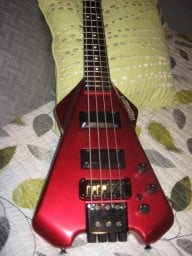
Hi everyone, I recently picked up a used Rockbass Corvette 5 Passive and although I love it, I really need to take some time and tinker with the action, bridge, Just a Nut, etc. I've watched the vids on Youtube and still not getting how to adjust the actual string spacing (seems very narrow). Will that move by adjusting the saddle screws or are they just for the string action?

Also, how do these compare to Squier Jazz basses in terms of quality and sound? Pickups and neck seem ok and I like the finish on the body just not familiar with their bridge/nut system.

Any lovers/haters out there can help shed some light on these?

Thanks!

 
Hi everyone, I recently picked up a used Rockbass Corvette 5 Passive and although I love it, I really need to take some time and tinker with the action, bridge, Just a Nut, etc. I've watched the vids on Youtube and still not getting how to adjust the actual string spacing (seems very narrow). Will that move by adjusting the saddle screws or are they just for the string action?

Also, how do these compare to Squier Jazz basses in terms of quality and sound? Pickups and neck seem ok and I like the finish on the body just not familiar with their bridge/nut system.

Any lovers/haters out there can help shed some light on these?

Thanks!

Can you post a picture of the bridge?

On my Corvette there is a small screw in the front face of the saddle caddy that locks the actual saddle in place. You need to loosen that before attempting any individual saddle adjustments. So action can be adjusted in two ways - the bridge as a whole and individual saddles. The latter is really just to conform the strings to the fingerboard radius.
 
  • Like
Reactions: Reedt2000 and Helix
Can you post a picture of the bridge?

On my Corvette there is a small screw in the front face of the saddle caddy that locks the actual saddle in place. You need to loosen that before attempting any individual saddle adjustments. So action can be adjusted in two ways - the bridge as a whole and individual saddles. The latter is really just to conform the strings to the fingerboard radius.

Thank you for the reply, unfortunately I am unable to post a pic of the bridge at the moment, but it does have the small screw on the caddy for each string. After unlocking it, action can be lowered or set higher using the saddle screws, but how would I also adjust the string spacing? Thanks again!
 
Can you post a picture of the bridge?

On my Corvette there is a small screw in the front face of the saddle caddy that locks the actual saddle in place. You need to loosen that before attempting any individual saddle adjustments. So action can be adjusted in two ways - the bridge as a whole and individual saddles. The latter is really just to conform the strings to the fingerboard radius.

Here are a few pics of the bridge
 

Attachments

  • IMG_2420.JPG
    IMG_2420.JPG
    47.6 KB · Views: 38
  • IMG_2422.JPG
    IMG_2422.JPG
    43.1 KB · Views: 33
Here are a few pics of the bridge

Yeah, like mine. There is a screw in the front face of the chrome block, just under the string, that holds the brass saddle in place. Once loosened the saddles will slide in the slot to adjust spacing. It looks like you have a couple of mm available on the G string, then just distribute the others equally between themselves - easy but time-consuming. You may want to recheck the action and relief as moving the strings sideways will change things due to the fingerboard radius (although most wicks have pretty flat boards so it probably won't affect things too much).
 
Yeah, like mine. There is a screw in the front face of the chrome block, just under the string, that holds the brass saddle in place. Once loosened the saddles will slide in the slot to adjust spacing. It looks like you have a couple of mm available on the G string, then just distribute the others equally between themselves - easy but time-consuming. You may want to recheck the action and relief as moving the strings sideways will change things due to the fingerboard radius (although most wicks have pretty flat boards so it probably won't affect things too much).

Ok cool and thanks again so much for your response!
 
I recommend watching this video a couple of times as it moves pretty quickly. Around the 1:30 mark you can see the how the string saddles can be unlocked, and the 1:50 mark is where the string spacing adjustment is demonstrated.


This is great and extremely helpful, thank you! Total noob question and not trying to cut corners, but do you think it's necessary to de-tune and lower the bridge to adjust the string spacing? Or can I just inclock the saddle screws ?
 
This is great and extremely helpful, thank you! Total noob question and not trying to cut corners, but do you think it's necessary to de-tune and lower the bridge to adjust the string spacing? Or can I just inclock the saddle screws ?
You will need to de-tune in order to move the string saddles, just get the strings loose enough so you can move the saddles where you want them to be. This might be a process you have to do a few times to get the bridge adjusted to your preference.
 
The Rockbass Corvette has a number of features that make it particularly friendly:

-tuners canted toward the player for comfort in tuning
-the long upper horn shifts the body of the bass toward the player's right hand making access to the frets easier for the left hand (on a right-handed bass)
-on active basses, the battery can be accessed without tools
-beveled edges for the player's comfort

The Rockbass was thoughtfully designed.
 
The Rockbass Corvette has a number of features that make it particularly friendly:

-tuners canted toward the player for comfort in tuning
-the long upper horn shifts the body of the bass toward the player's right hand making access to the frets easier for the left hand (on a right-handed bass)
-on active basses, the battery can be accessed without tools
-beveled edges for the player's comfort

The Rockbass was thoughtfully designed.

Agree apart from upper position access which, for me, is limited by the lower horn which gets in the way of good hand position - those last 4 notes may as well not be there. Notice how the horns are almost symmetrical around the neck joint...
 
Thanks again for the input and suggestions. I watched the three Warwick instructional videos on YouTube a few times each least night and made some tweaks. I can't seem to get string spacing more than 16-17 mm and seems like there is some bow in the neck because action is very high and still getting buzz around the 12th fret. Would this require a pocket shim? I adjusted truss rod for some relief before going to bed so hoping that when I check it later on it has adjusted somewhat.
 

Attachments

  • IMG_2428.JPG
    IMG_2428.JPG
    60.6 KB · Views: 32
Last edited:
I have both a Streamer RB5, and a modded Jazzenstein, so IMHO....
.....much better build quality, construction, and materials on the RockBass. I had a minor setup done on it to put the action stupid-low, and it didn't take much-fretwork was nearly perfect from the factory. Sound is subjective, but very tight/punchy/grindy. I use it exclusively for recording now, and it sounds great thru every amp I've put it thru. Have over 100 gigs on it and it has yet to fail me or sound bad.....except the straplocks suck and I replaced them LOL.

Jazzenstein? Total different animal. Single coils are finicky, tempermental, and just don't work very well with some amps and venues. But....good lord, when it's right, it's right, and nothing sounds like a well-tweaked Jazz. I swapped on an Affinity P-neck, which I absolutely love, and also have the action set pretty low. Good thing about it is that most (not all....) Fender-type upgrade parts will fit. I play this one a lot when I do Classic Country gigs, just hafta tweak the amp EQ for each venue.
 
  • Like
Reactions: MrLowEnd75
I have both a Streamer RB5, and a modded Jazzenstein, so IMHO....
.....much better build quality, construction, and materials on the RockBass. I had a minor setup done on it to put the action stupid-low, and it didn't take much-fretwork was nearly perfect from the factory. Sound is subjective, but very tight/punchy/grindy. I use it exclusively for recording now, and it sounds great thru every amp I've put it thru. Have over 100 gigs on it and it has yet to fail me or sound bad.....except the straplocks suck and I replaced them LOL.

Jazzenstein? Total different animal. Single coils are finicky, tempermental, and just don't work very well with some amps and venues. But....good lord, when it's right, it's right, and nothing sounds like a well-tweaked Jazz. I swapped on an Affinity P-neck, which I absolutely love, and also have the action set pretty low. Good thing about it is that most (not all....) Fender-type upgrade parts will fit. I play this one a lot when I do Classic Country gigs, just hafta tweak the amp EQ for each venue.


Thinking I might have a set up on the rockbass as well. It's also JJ single coil set up but definitely has more punch, presence and clarity vs. the squier vm jazz. That B string really rings out! in your opinion, how would the rockbass hold up for something like a classic country gig or funk or jazz?? Is the wick more of an "in your face" rock bass ( no pun intended) or can it get pretty versatile like a J-bass?