• TalkBass has been independent since 1998. Add your voice.
    Create a free account to reply to discussions, view embedded media, and browse with fewer display ads.
    Join freeLog in
    Want zero display ads or expanded classifieds tools? Compare plans.

New Tool Day: CNC Router!

Finished wiring up the inside. I didn't obsess over neatness too much, as there are some expansions/modifications I plan on making once I get basic functionality. Plugged it in and got all green lights:
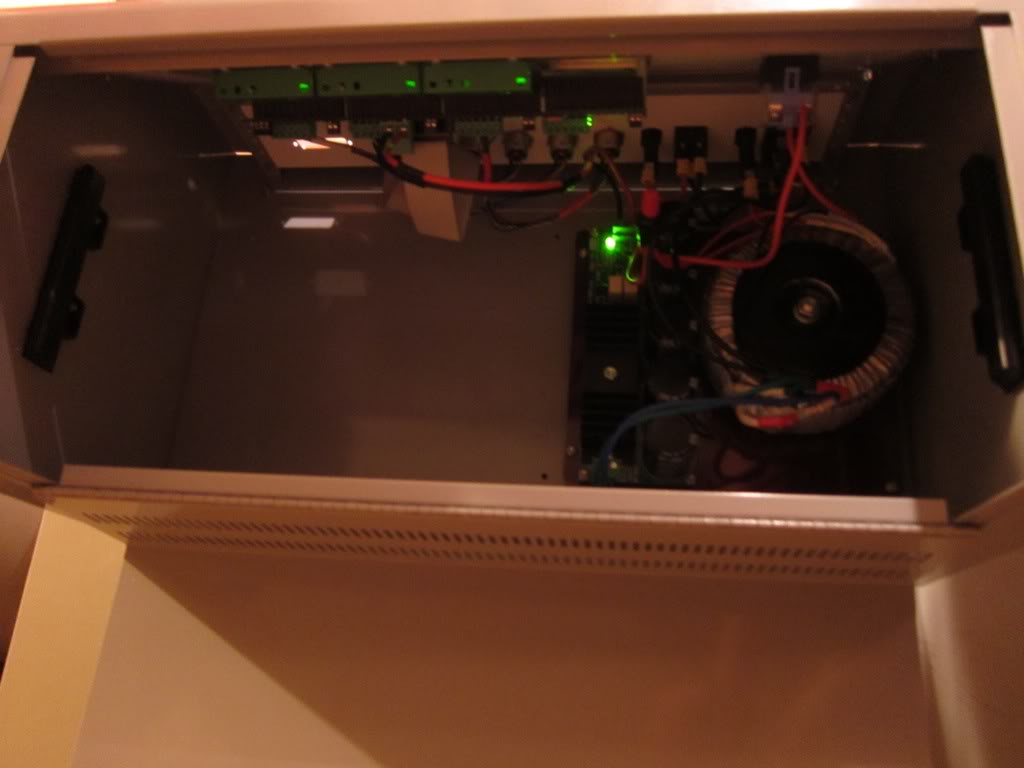
3da27972.jpg


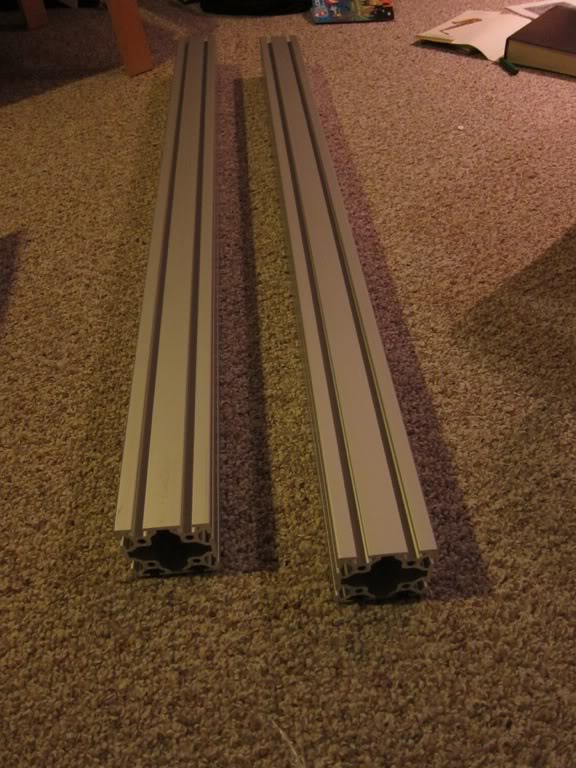
That's a good sign. Router parts have also started to come in. First is the long axis profiles, shipped direct from Invalid Link Removed
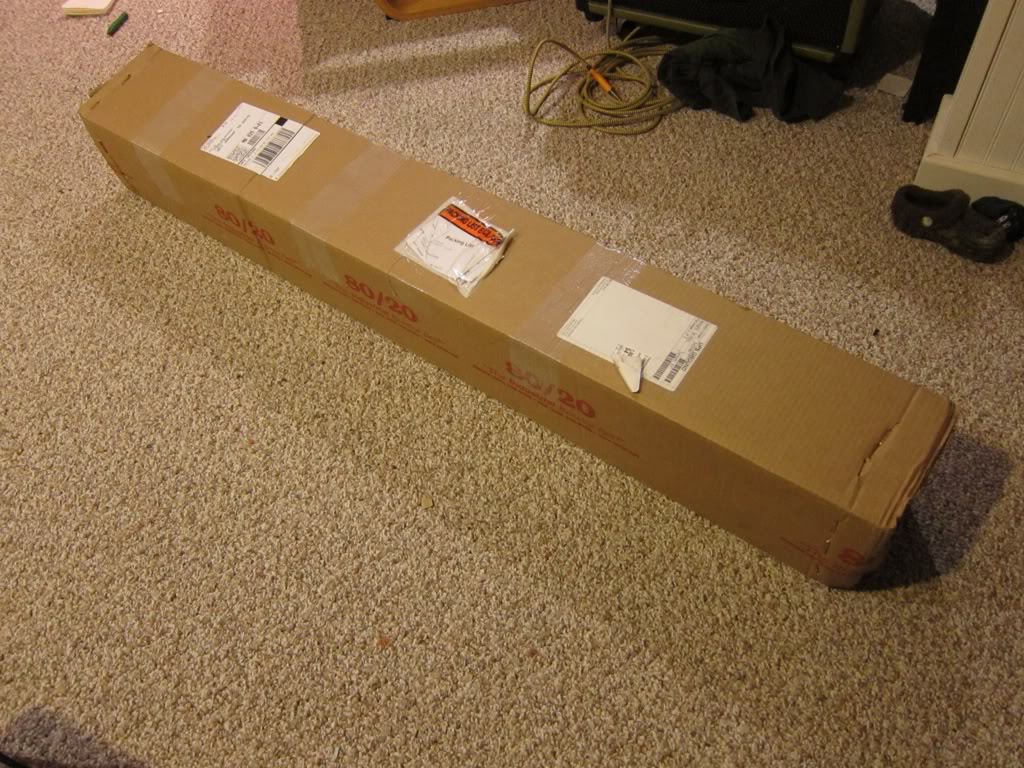
2479beee.jpg


ed221b5e.jpg


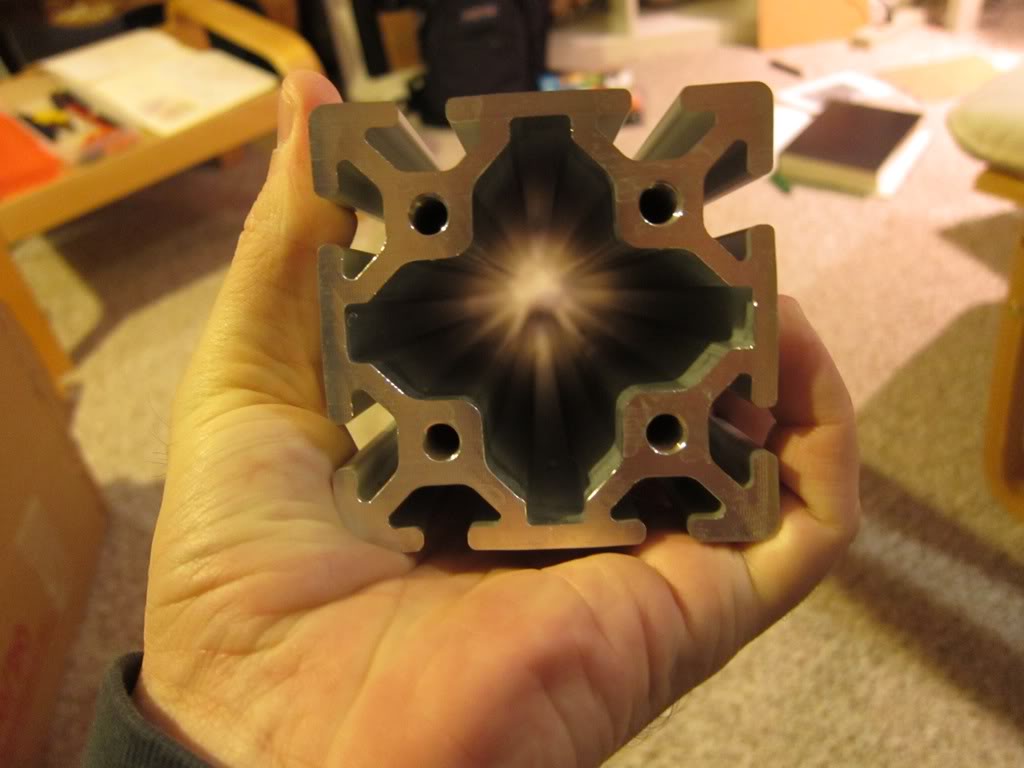
These things are massive. 80mm on a side, and at 48" long they weigh almost 20lbs a piece:
4749c526.jpg
 
BarnacleBeau - thanks for continuing to chronicle your journey through this project! You're undertaking something very similar to what I was thinking of doing, so this is very inspiring, enough if I can get my fretless finished soon, then I can start selling some of my least-used power tools, and get going on this too!

Looking forward to more updates,

Dan
 
Thank you guys for the kind words, and the interest.

Big step this evening - got EMC2 talking to the drivers, and spinning the motors! I used EMC2's configuration wizard, very straightforward. The only hangup I had was that the PMDX breakout board's step and direction pins were reversed from the defaults, once I cleared that up everything was good. Video of EMC2 turning motors through the gcode splash screen:

YouTube

Drove to Boston today and got some bench bolts from Rockler, I'm going to build a table for the machine. George from XZero said the rest of my machine ships Monday, stoked!
 
Working out tool paths in pycam, while waiting for the machine frame to arrive. It's a linux program, you have to download some dependencies to get it running, and I found that those dependencies break EMC2 so I'll be running pycam in a virtual Ubuntu machine on my Macbook. (I'm using Oracle's VirtualBox for my Windows, Linux, and other vital OS's lately. It's fast, easy to use, more stable than Parallels IME, and unbelievably, free!) I'm using 2-flute 1/4" end mills from American Carbide, a square-ended for roughing and a ball end for finishing. I think I need to make the pickup holes be their own routine, though.

ScreenShot2011-09-18at15640.png
 
Got a box of parts today! Machined aluminum frame ends, gantry, and rail guides. These things are 3/4" thick, and very heavy. I'm not the least bit concerned about this machine flexing!
aaf8add8.jpg


Also got the bulk of the work done on the machine table. The plan was to make the metal table fit underneath for the driver box, but there wouldn't be enough room.
42dec0b7.jpg


So the table here will soon get a top, and a lower shelf:
ScreenShot2011-09-23at24122.png


Rest of the machine parts are supposed to arrive next week, then I can start assembling!
 
This project is looking fantastic! Nice work on the table...shame that the shelf doesn't quite accommodate your needs, but as with every workshop, a shelf is an invaluable item :)

I've been trying to make use of pyCAM too, but for me it seems to take ages to generate a toolpath (+10 hours). How do you get your project into the program, and what settings have you found that speed things up?

This isn't specific to Linux, but Inkscape (the vector art program) has a Gcode export plugin that can process a number of layers for depths. I haven't tried it yet as I don't have any layered drawings, but I'm going to give it a go at some point!

Looking forward to seeing more!
 
You'll definitely have my vote if there is ever a CNC build-off!
Seriously nice work Adam. I can't wait to see what you do with it once it's setup and running.

Thanks fretless- a CNC build off would be pretty great. But mine's more like a Warmoth build than a scratch build, to use a bass-like analogy :) I didn't do much fabricating in this machine, it's more like Lego's.

This project is looking fantastic! Nice work on the table...shame that the shelf doesn't quite accommodate your needs, but as with every workshop, a shelf is an invaluable item :)

I've been trying to make use of pyCAM too, but for me it seems to take ages to generate a toolpath (+10 hours). How do you get your project into the program, and what settings have you found that speed things up?

This isn't specific to Linux, but Inkscape (the vector art program) has a Gcode export plugin that can process a number of layers for depths. I haven't tried it yet as I don't have any layered drawings, but I'm going to give it a go at some point!

Looking forward to seeing more!

Thanks Dan! I tried to get pycam running in OSX, but it never worked out- I could see the interface but not the window of the model. Next I tried the standalone Windows version, and had the same problem as you, it just went on and on...... I never let it finish a toolpath, I gave up after 3 hours. I finally tried it in Linux, and it works fine. Three-pass 3-D bass body .ngc file in about 30 minutes. I export my files from Rhino as .stl, then import them into pycam.

I'll give inkscape a spin! Do you have a machine? What kind?
 
Bench is done. Gave it a coat of linseed oil, I haven't used that stuff in ages. It seems less smelly than I remember. I was tempted to paint it grey and draw black lines on it so it looked like the Rhino model, but I have stuff to do this weekend. :)

0a148820.jpg


Those cross dowels holding the legs together are Rockler's bench bolts, item number 30249. These things are super sturdy, and make assembly go smoothly and quickly.
 
Do you have plans for dust collection? It looks like you've taken good precautions for the nearby equipment to ensure that dust won't be an issue, but I suspect you'll want to at least do something to minimize the amount of dust and chips flying all over the place.
 
Thanks again, guys.

Do you have plans for dust collection? It looks like you've taken good precautions for the nearby equipment to ensure that dust won't be an issue, but I suspect you'll want to at least do something to minimize the amount of dust and chips flying all over the place.

I'm going to be using a Bosch Colt as a spindle, with 1/4" end mills, until I get my process down and I can get good parts. I'll fab a little dust shoe shroud with bristles, and plug the shop vac into that. If I ever move up from the occasional work I plan on doing, I'll upgrade to a grownup spindle/inverter and grownup dust collection.