• TalkBass has been independent since 1998. Add your voice.
    Create a free account to reply to discussions, view embedded media, and browse with fewer display ads.
    Join freeLog in
    Want zero display ads or expanded classifieds tools? Compare plans.

noob question, active passive difference

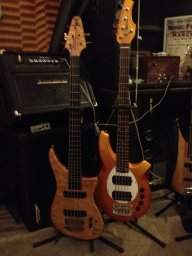
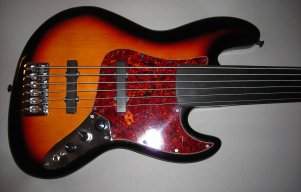
Passive simply means that there are no active components (transistors or ICs requiring a DC power source to operate.) in the signal chain. Active means that any component on the bass is active. (Requires a DC power source to operate.)

Most commonly, the term "active bass" refers to the pairing of passive pickups with a preamp.

Preamps do three things.

1. Provide onboard EQ for tone shaping.
2. Lower the output impedance to lessen the "tone suck" from long guitar cables.
3. Some preamps provide a gain boost, though many are unity-gain.
 
Lower the output impedance to lessen the "tone suck" from long guitar cables.

How long does a cable (assuming it's a good quality one, like Monster or whatever) need to be before the average ear (i.e. one that's been exposed to loud rock music for 35 years :D) appreciates "tone suck"? Can such suckage be compensated in any way? Finally, does a Line6 XDS wireless similarly create negative tone pressure?
 
How long does a cable (assuming it's a good quality one, like Monster or whatever) need to be before the average ear (i.e. one that's been exposed to loud rock music for 35 years :D) appreciates "tone suck"? Can such suckage be compensated in any way? Finally, does a Line6 XDS wireless similarly create negative tone pressure?
There are opinions all over the map and no objective data on the question of tone being affected by cables. What is "negative tone pressure"?
 
There are opinions all over the map and no objective data on the question of tone being affected by cables. What is "negative tone pressure"?

No objective data? Really? It would seem that someone might have hooked up a bass to an analyzemotron and measured something...sometime. It's also been my experience in the last few years here on TB, that Line6Man rarely addresses issues he doesn't know lots about.

When you suck, you create vacuum, which by definition, is negative pressure. Thus, tone suck is negative tone pressure. :)
 
Actives give much more tone shaping ability since passives only have treble cut tone control. Actives allow for boosts and cuts of predetermined freqs centers for bass and treble and also midrange if you have 3band eq. The change to Hiz also imo improves the sound from the bass to include when tone controls are left flat. Some prefer passive, I prefer active eq onboard.
 
How long does a cable (assuming it's a good quality one, like Monster or whatever) need to be before the average ear (i.e. one that's been exposed to loud rock music for 35 years :D) appreciates "tone suck"? Can such suckage be compensated in any way? Finally, does a Line6 XDS wireless similarly create negative tone pressure?

One can't give a rule on this. Usually the statement is that the cable is "long". How long is long? Over 20 feet? Over 6 feet? Who knows. To get the exact answer you'd have to measure the system with your given amp, bass and cable. It depends on all those things.

The "tone suck" is simple. The cable acts as a capacitor directly across the output of your bass. In other words it's basically another "tone" control that you can't do anything about. Just like any tone control it rolls off your highs. Active circuits lower the output ohms of the bass by 10 - 100 times. That means that you can have 10 - 100 times more cable before it starts to affect the sound.

Wireless systems generally aren't affected by the cables. However they can change your tone either because the frequency response is limited due to the design making it act sort of like the tone controls on an active bass or because it has too much distortion in the signal which "colors" the sound.

And yes, this kind of response roll-off can be compensated to a degree using EQ of some kind, though to really work well the EQ specs would have to be matched to the effects the cable is giving (and reverse them). Usually that isn't the case. A parametric EQ probably comes closest to being able to compensate until you run out of boost.