
Enjoy the benefits of a premium membership!
Upgrade Account
-
TalkBass has been independent since 1998. Add your voice.
Create a free account to reply to discussions, view embedded media, and browse with fewer display ads.
Join free Log in
Want zero display ads or expanded classifieds tools? Compare plans.
You are using an out of date browser. It may not display this or other websites correctly.
You should upgrade or use an alternative browser.
You should upgrade or use an alternative browser.
Notable quotes about the Fender Jazz bass
- Thread starter davec
- Start date
More options
Who Replied?
Dropping a Herman Rarebell reference is a deep, deep cut. Respect."They're imprecise."
- Herman Rarebell

Thanks but I can't lie: He was only in my noggin because co-host Tom Scharpling name-checked him on the episode of the Double Threat podcast ("How to Make Trippy Music") I happened to listen to this afternoon.Dropping a Herman Rarebell reference is a deep, deep cut. Respect.

It's a little known fact, that this song was actually written about the Fender Jazz bass:
"
Because you know I'm all about that bass
'Bout that bass, no treble
I'm all about that bass
'Bout that bass, no treble
I'm all about that bass
'Bout that bass, no treble
I'm all about that bass
'Bout that bass... bass... bass... bass
Yeah, it's pretty clear, I ain't no size two
But I can shake it, shake it, like I'm supposed to do
'Cause I got that boom boom that all the boys chase
And all the right junk in all the right places"
The "junk" is referring to the 2 pickup placement, as well as volume and tone controls.
"
Because you know I'm all about that bass
'Bout that bass, no treble
I'm all about that bass
'Bout that bass, no treble
I'm all about that bass
'Bout that bass, no treble
I'm all about that bass
'Bout that bass... bass... bass... bass
Yeah, it's pretty clear, I ain't no size two
But I can shake it, shake it, like I'm supposed to do
'Cause I got that boom boom that all the boys chase
And all the right junk in all the right places"
The "junk" is referring to the 2 pickup placement, as well as volume and tone controls.

Not hardly, but that's not what this thread is about….How about, "That's nice but where's your P-bass?"
-Every Recording Engineer Ever
Also, this early version of the famous Thanksgiving song:
This song is called Alice's Restaurant, and it's about Alice, and the
restaurant, but Alice's Restaurant is not the name of the restaurant,
that's just the name of the song, and that's why I called the song Alice's
Restaurant.
You can get anything you want at Alice's Restaurant
You can get anything you want at Alice's Restaurant
Walk right in it's around the back
Just a half a mile from the railroad track
You can get anything you want at Alice's Restaurant
Now it all started two Thanksgivings ago, was on - two years ago on
Thanksgiving, when my friend and I went up to visit Alice at the
restaurant, but Alice doesn't live in the restaurant, she lives in the
church nearby the restaurant, in the bell-tower, with her husband Ray and
Fasha the dog. And livin' in the bell tower like that, they got a lot of
room downstairs where the pews used to be in. Havin' all that room,
seein' as how they took out all the pews, they decided that they didn't
have to take out their garbage for a long time.
We got up there, we found all the garbage in there, and we decided it'd be
a friendly gesture for us to take the garbage down to the city dump. So
we took the half a ton of garbage, put it in the back of a red VW
microbus, took shovels and rakes and implements of destruction and headed
on toward the city dump.
Well we got there and there was a big sign and a chain across across the
dump saying, "Closed on Thanksgiving." And we had never heard of a dump
closed on Thanksgiving before, and with tears in our eyes we drove off
into the sunset looking for another place to put the garbage.
We didn't find one. Until we came to a side road, and off the side of the
side road there was another fifteen foot cliff and at the bottom of the
cliff there was another pile of garbage. And we decided that one big pile
is better than two little piles, and rather than bring that one up we
decided to throw our's down.
That's what we did, and drove back to the church, had a thanksgiving
dinner that couldn't be beat, went to sleep and didn't get up until the
next morning, when we got a phone call from officer Obie. He said, "Kid,
we found your name on an envelope at the bottom of a half a ton of
garbage, and just wanted to know if you had any information about it." And
I said, "Yes, sir, Officer Obie, I cannot tell a lie, I put that envelope
under that garbage."
After speaking to Obie for about fourty-five minutes on the telephone we
finally arrived at the truth of the matter and said that we had to go down
and pick up the garbage, and also had to go down and speak to him at the
police officer's station. So we got in the red VW microbus with the
shovels and rakes and implements of destruction and headed on toward the
police officer's station.
Now friends, there was only one or two things that Obie coulda done at
the police station, and the first was he could have given us a medal for
being so brave and honest on the telephone, which wasn't very likely, and
we didn't expect it, and the other thing was he could have bawled us out
and told us never to be see driving garbage around the vicinity again,
which is what we expected, but when we got to the police officer's station
there was a third possibility that we hadn't even counted upon, and we was
both immediately arrested. Handcuffed. And I said "Obie, I don't think I
can pick up the garbage with these handcuffs on." He said, "Shut up, kid.
Get in the back of the patrol car."
And that's what we did, sat in the back of the patrol car and drove to the
quote Scene of the Crime unquote. I want tell you about the town of
Stockbridge, Massachusets, where this happened here, they got three stop
signs, two police officers, and one police car, but when we got to the
Scene of the Crime there was five police officers and three police cars,
being the biggest crime of the last fifty years, and everybody wanted to
get in the newspaper story about it. And they was using up all kinds of
cop equipment that they had hanging around the police officer's station.
They was taking plaster tire tracks, foot prints, dog smelling prints, and
they took twenty seven eight-by-ten colour glossy photographs with circles
and arrows and a paragraph on the back of each one explaining what each
one was to be used as evidence against us. Took pictures of the approach,
the getaway, the northwest corner the southwest corner and that's not to
mention the aerial photography.
After the ordeal, we went back to the jail. Obie said he was going to put
us in the cell. Said, "Kid, I'm going to put you in the cell, I want your
wallet and your belt." And I said, "Obie, I can understand you wanting my
wallet so I don't have any money to spend in the cell, but what do you
want my belt for?" And he said, "Kid, we don't want any hangings." I
said, "Obie, did you think I was going to hang myself for littering?"
Obie said he was making sure, and friends Obie was, cause he took out the
toilet seat so I couldn't hit myself over the head and drown, and he took
out the toilet paper so I couldn't bend the bars roll out the - roll the
toilet paper out the window, slide down the roll and have an escape. Obie
was making sure, and it was about four or five hours later that Alice
(remember Alice? It's a song about Alice), Alice came by and with a few
nasty words to Obie on the side, bailed us out of jail, and we went back
to the church, had a another thanksgiving dinner that couldn't be beat,
and didn't get up until the next morning, when we all had to go to court.
We walked in, sat down, Obie came in with the twenty seven eight-by-ten
colour glossy pictures with circles and arrows and a paragraph on the back
of each one, sat down. Man came in said, "All rise." We all stood up,
and Obie stood up with the twenty seven eight-by-ten colour glossy
pictures, and the judge walked in sat down with a seeing eye dog, and he
sat down, we sat down. Obie looked at the seeing eye dog, and then at the
twenty seven eight-by-ten colour glossy pictures with circles and arrows
and a paragraph on the back of each one, and looked at the seeing eye dog.
And then at twenty seven eight-by-ten colour glossy pictures with circles
and arrows and a paragraph on the back of each one and began to cry,
'cause Obie came to the realization that it was a typical case of American
blind justice, and there wasn't nothing he could do about it, and the
judge wasn't going to look at the twenty seven eight-by-ten colour glossy
pictures with the circles and arrows and a paragraph on the back of each
one explaining what each one was to be used as evidence against us. And
we was fined $50 and had to pick up the garbage in the snow, but thats not
what I came to tell you about.
Came to talk about the Fender Jazz bass.
This song is called Alice's Restaurant, and it's about Alice, and the
restaurant, but Alice's Restaurant is not the name of the restaurant,
that's just the name of the song, and that's why I called the song Alice's
Restaurant.
You can get anything you want at Alice's Restaurant
You can get anything you want at Alice's Restaurant
Walk right in it's around the back
Just a half a mile from the railroad track
You can get anything you want at Alice's Restaurant
Now it all started two Thanksgivings ago, was on - two years ago on
Thanksgiving, when my friend and I went up to visit Alice at the
restaurant, but Alice doesn't live in the restaurant, she lives in the
church nearby the restaurant, in the bell-tower, with her husband Ray and
Fasha the dog. And livin' in the bell tower like that, they got a lot of
room downstairs where the pews used to be in. Havin' all that room,
seein' as how they took out all the pews, they decided that they didn't
have to take out their garbage for a long time.
We got up there, we found all the garbage in there, and we decided it'd be
a friendly gesture for us to take the garbage down to the city dump. So
we took the half a ton of garbage, put it in the back of a red VW
microbus, took shovels and rakes and implements of destruction and headed
on toward the city dump.
Well we got there and there was a big sign and a chain across across the
dump saying, "Closed on Thanksgiving." And we had never heard of a dump
closed on Thanksgiving before, and with tears in our eyes we drove off
into the sunset looking for another place to put the garbage.
We didn't find one. Until we came to a side road, and off the side of the
side road there was another fifteen foot cliff and at the bottom of the
cliff there was another pile of garbage. And we decided that one big pile
is better than two little piles, and rather than bring that one up we
decided to throw our's down.
That's what we did, and drove back to the church, had a thanksgiving
dinner that couldn't be beat, went to sleep and didn't get up until the
next morning, when we got a phone call from officer Obie. He said, "Kid,
we found your name on an envelope at the bottom of a half a ton of
garbage, and just wanted to know if you had any information about it." And
I said, "Yes, sir, Officer Obie, I cannot tell a lie, I put that envelope
under that garbage."
After speaking to Obie for about fourty-five minutes on the telephone we
finally arrived at the truth of the matter and said that we had to go down
and pick up the garbage, and also had to go down and speak to him at the
police officer's station. So we got in the red VW microbus with the
shovels and rakes and implements of destruction and headed on toward the
police officer's station.
Now friends, there was only one or two things that Obie coulda done at
the police station, and the first was he could have given us a medal for
being so brave and honest on the telephone, which wasn't very likely, and
we didn't expect it, and the other thing was he could have bawled us out
and told us never to be see driving garbage around the vicinity again,
which is what we expected, but when we got to the police officer's station
there was a third possibility that we hadn't even counted upon, and we was
both immediately arrested. Handcuffed. And I said "Obie, I don't think I
can pick up the garbage with these handcuffs on." He said, "Shut up, kid.
Get in the back of the patrol car."
And that's what we did, sat in the back of the patrol car and drove to the
quote Scene of the Crime unquote. I want tell you about the town of
Stockbridge, Massachusets, where this happened here, they got three stop
signs, two police officers, and one police car, but when we got to the
Scene of the Crime there was five police officers and three police cars,
being the biggest crime of the last fifty years, and everybody wanted to
get in the newspaper story about it. And they was using up all kinds of
cop equipment that they had hanging around the police officer's station.
They was taking plaster tire tracks, foot prints, dog smelling prints, and
they took twenty seven eight-by-ten colour glossy photographs with circles
and arrows and a paragraph on the back of each one explaining what each
one was to be used as evidence against us. Took pictures of the approach,
the getaway, the northwest corner the southwest corner and that's not to
mention the aerial photography.
After the ordeal, we went back to the jail. Obie said he was going to put
us in the cell. Said, "Kid, I'm going to put you in the cell, I want your
wallet and your belt." And I said, "Obie, I can understand you wanting my
wallet so I don't have any money to spend in the cell, but what do you
want my belt for?" And he said, "Kid, we don't want any hangings." I
said, "Obie, did you think I was going to hang myself for littering?"
Obie said he was making sure, and friends Obie was, cause he took out the
toilet seat so I couldn't hit myself over the head and drown, and he took
out the toilet paper so I couldn't bend the bars roll out the - roll the
toilet paper out the window, slide down the roll and have an escape. Obie
was making sure, and it was about four or five hours later that Alice
(remember Alice? It's a song about Alice), Alice came by and with a few
nasty words to Obie on the side, bailed us out of jail, and we went back
to the church, had a another thanksgiving dinner that couldn't be beat,
and didn't get up until the next morning, when we all had to go to court.
We walked in, sat down, Obie came in with the twenty seven eight-by-ten
colour glossy pictures with circles and arrows and a paragraph on the back
of each one, sat down. Man came in said, "All rise." We all stood up,
and Obie stood up with the twenty seven eight-by-ten colour glossy
pictures, and the judge walked in sat down with a seeing eye dog, and he
sat down, we sat down. Obie looked at the seeing eye dog, and then at the
twenty seven eight-by-ten colour glossy pictures with circles and arrows
and a paragraph on the back of each one, and looked at the seeing eye dog.
And then at twenty seven eight-by-ten colour glossy pictures with circles
and arrows and a paragraph on the back of each one and began to cry,
'cause Obie came to the realization that it was a typical case of American
blind justice, and there wasn't nothing he could do about it, and the
judge wasn't going to look at the twenty seven eight-by-ten colour glossy
pictures with the circles and arrows and a paragraph on the back of each
one explaining what each one was to be used as evidence against us. And
we was fined $50 and had to pick up the garbage in the snow, but thats not
what I came to tell you about.
Came to talk about the Fender Jazz bass.

Chat GPT knows no loysltyI couldn't think of any so I asked ChatGPT.
The Fender Jazz Bass has earned a special place in music history, and while there may not be as many "famous" quotes about it as, say, the Fender Stratocaster, there are certainly many musicians who have praised its unique sound and versatility. Here are a few notable quotes and sentiments from well-known bassists and musicians who have talked about the Fender Jazz Bass:
- Jaco Pastorius(often associated with the Fender Jazz Bass):
- "I play the bass like a lead instrument."
This quote captures Jaco's revolutionary approach to the bass guitar, often using his Fender Jazz Bass as a solo instrument, rather than just as part of the rhythm section.- Flea (of Red Hot Chili Peppers):
- "The Fender Jazz Bass is the best bass in the world. It's just got the perfect balance of tone, sound, and feel. It's always been my go-to bass."Flea has been an iconic user of the Jazz Bass throughout his career, noting its versatility across genres and its punchy, clear tone.
- Geddy Lee (of Rush):
- "The Jazz Bass is a great instrument. It's got a sound that cuts through the mix, and that's always been really important to me. It has a distinct, punchy character."
Geddy Lee has often used a Fender Jazz Bass, especially in his earlier years, for its clear and cutting tone.- Marcus Miller(famous Jazz Bass player):
- "The Fender Jazz Bass is the closest thing to an electric bass guitar that has a personality of its own."
Marcus Miller is known for his virtuosic playing on the Fender Jazz Bass, often using it for both smooth, jazz fusion lines and funk grooves. His love for the instrument is evident in his praise of its unique character.- John Paul Jones (of Led Zeppelin):
- "The Fender Jazz Bass gave me everything I needed in terms of sound and feel. It was a real breakthrough for me. It's a bass that lets you do anything."
John Paul Jones, who is widely regarded for his innovative bass playing, has long been associated with the Fender Jazz Bass, and he's often praised its versatility for everything from rock to more intricate, melodic lines.
These quotes reflect the wide admiration for the Fender Jazz Bass and its lasting impact on musicians across various genres. It's celebrated not just for its sleek design, but for its distinctive sound and playability, which has made it a favorite among some of the most influential bassists in music history.
You're welcome.
The Fender Jazz Bass, while widely celebrated, has faced some criticism over the years. Here are a few negative sentiments or critiques that have been shared by musicians and critics:
1. Complexity in Design
Critics sometimes argue that the dual pickup design and additional tone-shaping controls make the Jazz Bass overly complicated compared to the simplicity of the Precision Bass. As bassist Dee Dee Ramone once said, "Why have two pickups when you only need one?" This sentiment resonates with purists who prefer a stripped-down approach.
2. "Thin" Sound Criticism
Some players have criticized the Jazz Bass for having a tone that is perceived as thinner or less punchy than the Precision Bass. This is particularly noted in settings where the midrange growl doesn't cut through as strongly in a mix. Jazz legend Charles Mingus reportedly dismissed the Jazz Bass as sounding "too polite for the bandstand."
3. Neck Profile Issues
While the Jazz Bass's narrower neck is celebrated by some, others find it less comfortable, especially for players with larger hands. Jack Bruce, Cream's bassist, reportedly preferred the chunkier neck of a Gibson EB-3, finding the Jazz Bass "a little fiddly."
4. Overly Versatile at the Cost of Character
Some critics argue that the Jazz Bass's tonal versatility comes at the expense of a singular, distinctive voice. A common quip in bass forums is: "The Jazz Bass can do everything, but sometimes it doesn't feel like it does anything with conviction."
5. Not as Iconic as the Precision Bass
There's a sentiment among some traditionalists that the Jazz Bass lives in the shadow of the Precision Bass, with its cultural and historical impact being somewhat secondary. As one anonymous bassist put it, "The Precision is the voice of rock 'n' roll; the Jazz is just trying to keep up."
While these criticisms exist, it's important to note that the Fender Jazz Bass has an enduring legacy and remains a favorite for many bassists across genres. The negative perspectives often come down to personal preference rather than inherent flaws.

'Between the two major Fender basses, it's one of the choices.' —J.Q. Public

"The most distinctive players choose the Jazz Bass: Jaco, Anthony Jackson, John Paul Jones, Larry Graham, Geddy Lee, Ashton "Family Man" Barrett, Marcus Miller, Bobby Vega, Flea, David Hood, Joe Osborn, Jerry Jemmott, Tal Wilkenfeld, Daryl Jones, Rutgar Gunnarsson, Gary Thain, Gail Ann Dorsey, Victor Bailey."
I said that.
I said that.


There must be.
I wouldn't have bought mine unless I saw a notable quote about Jazz basses.
I wouldn't have bought mine unless I saw a notable quote about Jazz basses.

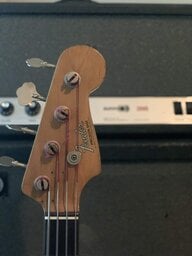

The Precision Bass (P Bass), introduced by Fender in 1951, has been a favorite of bass players across genres. Here's a list of some famous P Bass players:"The most distinctive players choose the Jazz Bass: Jaco, Anthony Jackson, John Paul Jones, Larry Graham, Geddy Lee, Ashton "Family Man" Barrett, Marcus Miller, Bobby Vega, Flea, David Hood, Joe Osborn, Jerry Jemmott, Tal Wilkenfeld, Daryl Jones, Rutgar Gunnarsson, Gary Thain, Gail Ann Dorsey, Victor Bailey."
I said that.
Rock/Classic Rock
1. James Jamerson (Motown session player) – Often used a Fender P Bass to craft the legendary "Motown Sound."
2. John Entwistle (The Who) – Played P Basses early in his career.
3. Roger Waters (Pink Floyd) – Frequently used a P Bass, particularly on The Wall and other iconic albums.
4. John Deacon (Queen) – Known for his warm, melodic basslines on a P Bass.
5. Phil Lynott (Thin Lizzy) – Played a P Bass during many Thin Lizzy performances and recordings.
Punk and Alternative
6. Dee Dee Ramone (The Ramones) – A key figure in punk bass, known for his P Bass energy.
7. Sid Vicious (Sex Pistols) – Famously (and infamously) associated with the P Bass.
8. Mike Dirnt (Green Day) – Regularly uses P Basses, including his Fender signature model.
9. Kim Deal (Pixies, The Breeders) – Played P Basses on numerous influential alternative rock records.
10. Krist Novoselic (Nirvana) – Frequently used a Fender P Bass in Nirvana's early days.
Funk and R&B
11. Duck Dunn (Booker T. & the M.G.'s) – His P Bass tone was foundational for Stax Records.
12. Bob Babbitt (The Funk Brothers) – Used a P Bass alongside James Jamerson for Motown hits.
13. Louis Johnson (The Brothers Johnson) – Combined funk slapping with the rich tone of a P Bass.
14. Bootsy Collins (Parliament-Funkadelic) – Occasionally used a P Bass early in his career.
Metal and Hard Rock
15. Steve Harris (Iron Maiden) – Famous for his aggressive fingerstyle playing on a P Bass.
16. Duff McKagan (Guns N' Roses) – Known for his unique P Bass sound and signature Fender model.
17. Jason Newsted (Metallica) – Often used P Basses live and in the studio.
18. Nikki Sixx (Mötley Crüe) – Early in his career, Sixx favored the P Bass.
Jazz and Fusion
19. Jaco Pastorius – Though primarily associated with the Jazz Bass, Jaco occasionally played a fretless P Bass.
20. Pino Palladino (Session legend) – Used a fretless P Bass to define the neo-soul sound with D'Angelo.
Indie and Modern Rock
21. Sting (The Police) – Played a P Bass during his early career.
22. Adam Clayton (U2) – Known for using P Basses on U2's later recordings.
23. Chris Wolstenholme (Muse) – Often blends P Bass tones with effects.
The P Bass is a versatile workhorse, and its players span nearly every genre of music.


