
• TalkBass has been independent since 1998. Add your voice.
    Create a free account to reply to discussions, view embedded media, and browse with fewer display ads.
    Join freeLog in
    Want zero display ads or expanded classifieds tools? Compare plans.

NPB: Temple Audio Design Duo 17

Thanks to a recent post in another thread by @JGR, I discovered Temple Audio Design's fantastic pedal boards.

They have apparently been around a few years, but I had no idea of their existence until JGR's picture that I hope he will post and share in this thread as well.

Temple's trademark Quick Release Pedal Mounting System got me curious, but a trip to their website had me drooling!

As is usually the case, I like to research before I purchase, and despite Temple's YouTube videos being very informative, I still could not commit to clicking the Check Out button.

The board and accessories were not cheap and I had found quite a few scattered posts online regarding product issues and shortcomings.

I am finally happy to report that after purchase, receipt and assembly, I could not be more happy with this investment, the quality of these products, and highly recommend them!

In my next post I will go into details as to what was negatively mentioned by others about the products and this board system and hope you will continue reading.

Until then, below are some obligatory pictures.

Cheers!

tpb_0859.jpg


tpb_0868.jpg


tpb_0862.jpg


tpb_0866.jpg
 
Cool board, but how do you power all these pedals with the 1-spot? I thought at least the Zoom and the 2 Two-Notes had much much higher power ratings...

Thanks!

As directly per Truetone Support, the CS7 is able to supply as much current as necessary to all pedals just as long as the total current drawn does not exceed the cumulative total of all outlets.

The seven CS7 outlets provide a total 1900mA (which is 100mA (x1) + 200mA (x4) + 500mA (x2))

My pedals draw approximately 1400mA, leaving 500mA on reserve.

Cheers!
 
image.jpeg
Well done and congrats! I had never heard of them either until fairly recently. Very pleased with their products - love the design, makes for a clean layout. Also very light and sturdy.

Above is my board all done - I just got a cool little Peican box to hold my picks and wrenchs which will fill the space in the upper right corner. Mono makes a nice bag that will fit should I ever need to take it somewhere.
 
As mentioned above, I was hesitant to commit to purchase of this board system for a number of reasons posted elsewhere online by others.

For those in the same position as I was, I hope the information below can be of value to you.

The following are the issues/concerns had by others and then my personal experience with same now after purchase:

The adhesive pads on the mounting plates either malfunctioned or were problematic.

It appears that there were issues in the past with the adhesive as acknowledged by Temple and/or the adhesive manufacturer. These have since been identified and resolved. The pads I received are very strong and secure, but are removable if need be using a hardware scraper tool. Videos are available online showing both installation and removal. I personally attempted the removal of one on my own to test both. I am 100% confident in use of these adhesive pads and Temple stands just as firmly behind them. Temple's Quick Release Pedal Mounting System is the absolute best and was the primary reason behind my migration to it and their boards.​

The depth of the configurable side walls was too thin to support firm attachment of the available modules, in particular, the IEC AC Mains Micro Module.

If not installed properly, one can easily cross-thread the screws resulting in attachment failure. The holes in the side walls are additionally increased and reinforced by small mole-hills of threaded metal adding to the thread depth. The holes are precision cut and more than secure if the screws are installed properly the first time and not over-tightened. I am fully confident that my modules are not going anywhere, even under repeated insertion/removal force of the plugs. All is very solid feeling.​

The powder coating on the board was too easily damaged and prone to flaking.

The quality of the powder coating is outstanding and this finish quality extends to the painted side walls as well.​

The board was prone to flexing under stomp pressure, especially in the middle.

My board model is only 17" wide, but I could see where longer widths could exhibit this. At the same time, Temple has since introduced secondary rail mounting brackets that address this. These rails are now included with longer boards and are also sold separately.​

The cost of the board and accessories surpasses other popular systems.

Yes, but I am 100% OK with this after having received and handled the merchandise. They exude quality and elegance much like Apple's iProducts and greatly surpass the competition. You will not be disappointed! :thumbsup:
 
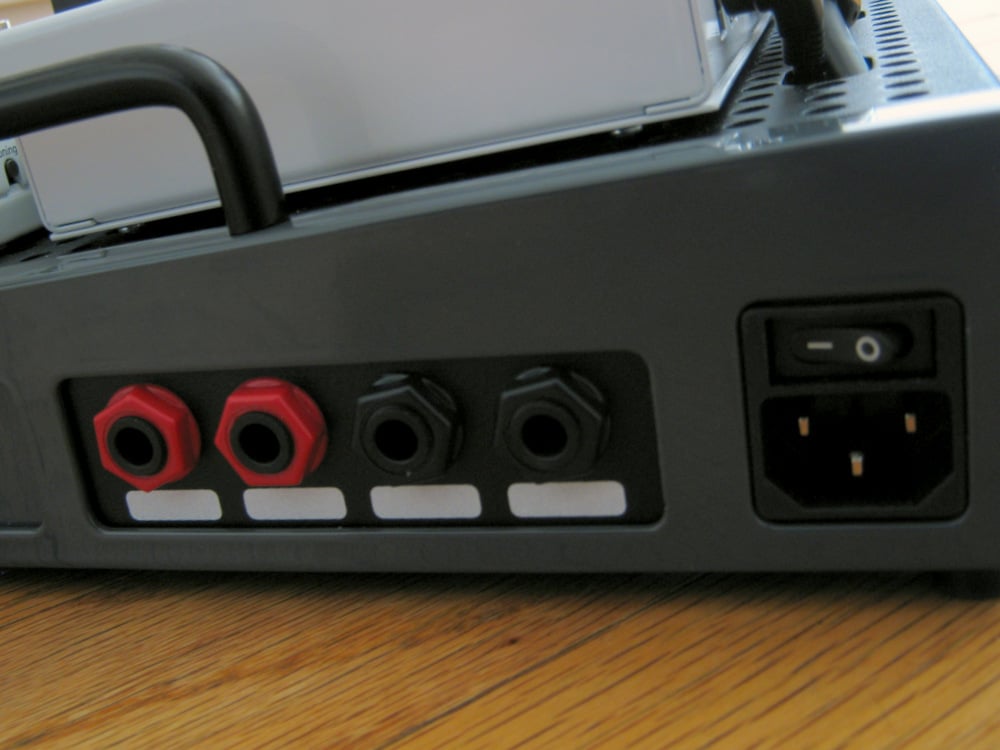
The 4 Way Jack Patch Module

It is great that Temple offers a really cool jack patch module for their boards, but nowhere online will you find any info on how to configure it or the damage it could do to your pedals should you not!

Temple manufactures these in-house, sells them for $39 USD, and as is their norm, the quality of the product is top-notch. The 4 pairs of premium Amphenol TRS jacks inside confidently grip and support your plugs with perfect contact. The module firmly mounts to the side wall of your board, but it comes with a secret.

Not specified in words anywhere, each jack pair is "normalized." By default, all four out-facing jacks will short the inside jacks should an outside plug not be inserted. This is similar to how input jacks work on most amps. When you remove the instrument plug from the amp, there is no pop or noise, as internally, the hot input is quietly shunted to ground. With this said, the four out-facing jacks on the 4 Way Jack Patch Module are in fact all Input jacks. Should one of these four be used as an Output jack, meaning you feed the output of your last pedal on board to an inside jack, with intention to then feed your amp with the companion outside jack, the potential exists for an output short on that last pedal. Pedals typically do not like output shorts nor the damage that could result from them.

To be fair, Temple does display a technical schematic on the module housing, but it is highly-likely that not many will know the meaning of it and the implications of not.

mod_4jpm.png


To turn any of the four jack pairs into an output jack, one must cut the related trace on the PC board. This assumes one knows to do this! ;)

You will notice a circle on the trace in need of cutting and I highly recommend one use a small drill bit to bore a small divot and cut the trace. Do not go through the PC board, just divot out the trace by breaking the surface coating and underlying copper.

If pedals could talk, the ones with their outputs connected to this jack module would thank you for this effort.

Cheers!

tpb_0836.jpg


tpb_0822.jpg


tpb_0825.jpg
 
IEC AC Mains Micro Module

Perhaps the most useful of the available modules for Temple boards is the IEC module that serves as an AC inlet for your power supply.

In researching this accessory, popular posts by existing board owners detailed their attempts at creating their own AC inlets as an alternative to Temple's that retails for $50 USD.

Looking past the retail price, Temple's AC inlet again is another well-made in-house product offering worthy of your consideration, but should one still want to save a few bucks and make their own, I highly suggest using the same part as Temple does so that it properly fits the side panel.

A few Google searches revealed that Schaffner EMC manufactures this part which sells for $17 at DigiKey, who also sell the Quick Connects recommended for wiring.

Invalid Link Removed

Invalid Link Removed

fn9263.jpg


Should you decide to go the DIY route, please be sure to properly insulate to prevent electrical shock, or better yet, spend the extra bucks for Temple's part! ;)
 
Power Supply Logistics

As can be seen in a picture from my original post, a power supply can be mounted underneath the board, but depending on its size and orientation, mounting options may be limited if not challenging.

Should the height of the power supply approach the 2-inch mark, like my Truetone CS7, one might find that a tight landscape orientation is the only option. The primary reason can be seen in the following diagrams.

tpb_side_a.png


Mounting my particular power supply in portrait style would have gone past the floor point and made the board unusable.

tpb_side_b.png


Only mounting in landscape orientation results in acceptable floor clearance.

To complicate matters further, the AC inlet for my power supply is located in the side where now there is no room for the IEC plug.

Getting around the AC inlet issue required the purchase of a C14 to C13 Power Extension Cord, which are available online in various lengths and angles.

Buy Computer Cable, Adapters, Power Cables, Accessories & Network Equipments Online

tpb_ext.jpg
 
A big shout-out to Hosa Technology for their quality effect patch cables!

Once I X-Acto Knife their obnoxious white shrink wrap just before the sleeve, all is right with these inter-connects.

I cannot make these for as affordable as they are pre-made, just less my time for the shrink wrap appendectomy :)

Quality copper inter-connects and I love them in all 3 retail lengths.

Cheers!

Invalid Link Removed

cpe_100.jpg
 
Last edited:
Thanks to a recent post in another thread by @JGR, I discovered Temple Audio Design's fantastic pedal boards.

They have apparently been around a few years, but I had no idea of their existence until JGR's picture that I hope he will post and share in this thread as well.

Temple's trademark Quick Release Pedal Mounting System got me curious, but a trip to their website had me drooling!

As is usually the case, I like to research before I purchase, and despite Temple's YouTube videos being very informative, I still could not commit to clicking the Check Out button.

The board and accessories were not cheap and I had found quite a few scattered posts online regarding product issues and shortcomings.

I am finally happy to report that after purchase, receipt and assembly, I could not be more happy with this investment, the quality of these products, and highly recommend them!

In my next post I will go into details as to what was negatively mentioned by others about the products and this board system and hope you will continue reading.

Until then, below are some obligatory pictures.

Cheers!
tpb_0859.jpg


tpb_0868.jpg


tpb_0862.jpg


tpb_0866.jpg

Hi. Do you have the softbag AS well?
I was wondering what the max. height of the pedals could be, so that the board fits in the softbag.
 
Hi. Do you have the softbag AS well?
I was wondering what the max. height of the pedals could be, so that the board fits in the softbag.

Yes, I have the Temple soft bags for both the Duo 17 and Solo 18.

Both bags have just enough internal height to accommodate my pedals (and their knobs) inside.

The bags "have give", meaning that they can stretch a little if required.

Highly-recommended purchase with the boards themselves.

Cheers!
 
  • Like
Reactions: robert_stuart
The 4 Way Jack Patch Module

It is great that Temple offers a really cool jack patch module for their boards, but nowhere online will you find any info on how to configure it or the damage it could do to your pedals should you not!

Temple manufactures these in-house, sells them for $39 USD, and as is their norm, the quality of the product is top-notch. The 4 pairs of premium Amphenol TRS jacks inside confidently grip and support your plugs with perfect contact. The module firmly mounts to the side wall of your board, but it comes with a secret.

Not specified in words anywhere, each jack pair is "normalized." By default, all four out-facing jacks will short the inside jacks should an outside plug not be inserted. This is similar to how input jacks work on most amps. When you remove the instrument plug from the amp, there is no pop or noise, as internally, the hot input is quietly shunted to ground. With this said, the four out-facing jacks on the 4 Way Jack Patch Module are in fact all Input jacks. Should one of these four be used as an Output jack, meaning you feed the output of your last pedal on board to an inside jack, with intention to then feed your amp with the companion outside jack, the potential exists for an output short on that last pedal. Pedals typically do not like output shorts nor the damage that could result from them.

To be fair, Temple does display a technical schematic on the module housing, but it is highly-likely that not many will know the meaning of it and the implications of not.

mod_4jpm.png


To turn any of the four jack pairs into an output jack, one must cut the related trace on the PC board. This assumes one knows to do this! ;)

You will notice a circle on the trace in need of cutting and I highly recommend one use a small drill bit to bore a small divot and cut the trace. Do not go through the PC board, just divot out the trace by breaking the surface coating and underlying copper.

If pedals could talk, the ones with their outputs connected to this jack module would thank you for this effort.

Cheers!

tpb_0836.jpg


tpb_0822.jpg


tpb_0825.jpg

This is way cool. I wish I could throw this on my board.
 
  • Like
Reactions: CharlieC
For my Solo 18 board, I used a regular 1-Spot pedal adapter coupled to the Temple IEC AC Mains module.

To do this, I used an adapter from sfcable.com --> [Invalid or Expired Link Removed]

The 1-Spot is suspended underneath using a Temple small pedal plate.

All cables were attached underneath using black sandwich bag ties through the board holes. I prefer these over zip ties for this particular application as they are easily removable and reusable.

tpb_0890_b.jpg
 
View attachment 841938 Well done and congrats! I had never heard of them either until fairly recently. Very pleased with their products - love the design, makes for a clean layout. Also very light and sturdy.

Above is my board all done - I just got a cool little Peican box to hold my picks and wrenchs which will fill the space in the upper right corner. Mono makes a nice bag that will fit should I ever need to take it somewhere.

Which size do you have?
 
Charlie, am I correct in saying if one was to use it with one jack being an output, as described by you below, that as long as an output lead was plugged into the external jack, there would be no risk of a short to the last pedal plugged into the internal jack side when powered on? What can an output short typically do a pedal?

I've seen many people using these modules with one as an output, and no one seems to know anything about the issue you've mentioned. Thanks for alerting us!

I've just built up a Duo 17 (possibly the first in Australia!) and I love it. Pics to come soon!

The 4 Way Jack Patch Module

It is great that Temple offers a really cool jack patch module for their boards, but nowhere online will you find any info on how to configure it or the damage it could do to your pedals should you not!

Temple manufactures these in-house, sells them for $39 USD, and as is their norm, the quality of the product is top-notch. The 4 pairs of premium Amphenol TRS jacks inside confidently grip and support your plugs with perfect contact. The module firmly mounts to the side wall of your board, but it comes with a secret.

Not specified in words anywhere, each jack pair is "normalized." By default, all four out-facing jacks will short the inside jacks should an outside plug not be inserted. This is similar to how input jacks work on most amps. When you remove the instrument plug from the amp, there is no pop or noise, as internally, the hot input is quietly shunted to ground. With this said, the four out-facing jacks on the 4 Way Jack Patch Module are in fact all Input jacks. Should one of these four be used as an Output jack, meaning you feed the output of your last pedal on board to an inside jack, with intention to then feed your amp with the companion outside jack, the potential exists for an output short on that last pedal. Pedals typically do not like output shorts nor the damage that could result from them.

To be fair, Temple does display a technical schematic on the module housing, but it is highly-likely that not many will know the meaning of it and the implications of not.

mod_4jpm.png


To turn any of the four jack pairs into an output jack, one must cut the related trace on the PC board. This assumes one knows to do this! ;)

You will notice a circle on the trace in need of cutting and I highly recommend one use a small drill bit to bore a small divot and cut the trace. Do not go through the PC board, just divot out the trace by breaking the surface coating and underlying copper.

If pedals could talk, the ones with their outputs connected to this jack module would thank you for this effort.

Cheers!