• TalkBass has been independent since 1998. Add your voice.
    Create a free account to reply to discussions, view embedded media, and browse with fewer display ads.
    Join freeLog in
    Want zero display ads or expanded classifieds tools? Compare plans.

Official Fernandes Club

Hello everyone, I am new here on Talkbass!

I add to this thread a question about my Fernandes Precision (Stone Logo), I hope someone can help me.

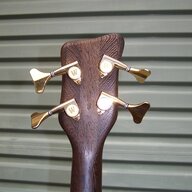
As you can see in the pictures, the code below the neck (reverse Showa, right?) says that the neck comes from the 1981 production...but the double series of holes made me rise some suspicion about the body. In your opinion, is it of the same age?
In the picture of the neck pocket a dark stamp is clearily visible, to the top-left of the red sign (it seems to be a japanese ideogram or something like that), maybe it can give a clue. The body is old, for sure. I attach also some pictures ot the electronic...maybe they can help too.

Any ideas or opinion?

Thank you!

Hi! No one can help me?
...or did I get something wrong?
 
  • Like
Reactions: Zooberwerx
Did some upgrades to my Atlas

IMG_0972.jpeg


IMG_1067.jpeg


IMG_1068.jpeg


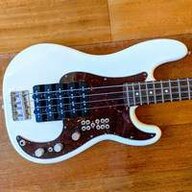
Still passive, but added a turner multicoil pickup, babicz bridge, graphtec nut, and upgraded the switch/pots

I want to do a different pickguard but not too sure on the color. I was thinking 3 ply black white black but, now with the pickup installed, it kind of gets lost with black. Thoughts?
 
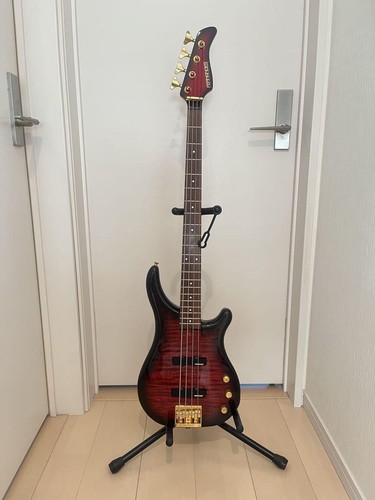
can anyone in this club help me figure out what model this? It's listed as short scale, but I'm fairly confident it's a medium. I've seen a lot of the revolver basses which appear to be all PJ's but this one is JJ, so seems interesting.

 
As an eBay Associate, TalkBass may earn a commission from qualifying purchases.
  • Like
Reactions: Rudyboy98
Hello everyone, I am new here on Talkbass!

I add to this thread a question about my Fernandes Precision (Stone Logo), I hope someone can help me.

As you can see in the pictures, the code below the neck (reverse Showa, right?) says that the neck comes from the 1981 production...but the double series of holes made me rise some suspicion about the body. In your opinion, is it of the same age?
In the picture of the neck pocket a dark stamp is clearily visible, to the top-left of the red sign (it seems to be a japanese ideogram or something like that), maybe it can give a clue. The body is old, for sure. I attach also some pictures ot the electronic...maybe they can help too.

Any ideas or opinion?

Thank you!
I'm interested, did you get any updates on this?
 
  • Like
Reactions: Rudyboy98
can anyone in this club help me figure out what model this? It's listed as short scale, but I'm fairly confident it's a medium. I've seen a lot of the revolver basses which appear to be all PJ's but this one is JJ, so seems interesting.

Well, a 30" seems like it would be a short scale vs. what I believe 32" medium scale is. But I don't have any expertise on this. You could do a search and verify before buying. But I don't know enough about this model to make a valid assessment either. YMMV. Good luck on the purchase. Let us know how it turns out.
 
As an eBay Associate, TalkBass may earn a commission from qualifying purchases.

Have you ever seen a Fernandes bass like this???​


I just saw this for sale on NZ's version of Ebay (Trade Me) and wondered if anyone can shed any light on it? Does anyone have one? Is it standard or modified? Would love to hear from anyone who knows anything about this model Fernandes.

It's for sale at a recycling centre and they don't know anything about it. Other than saying: This good-looking bass guitar is in overall tidy condition, minor cosmetic marks here and there. Neck is straight, dials move freely. Bass is Unstrung so is sold, as it is, untested. Would be a great restoration project. comes with a Carry case, this is a bit scruffy.

The sticker on the headstock shows Weta Guitars. They closed a few years back so no calling or visiting them.
 

Attachments

  • 2284147334.jpg
    2284147334.jpg
    657.3 KB · Views: 5
  • 2284147412.jpg
    2284147412.jpg
    509.7 KB · Views: 6
  • 2284147354.jpg
    2284147354.jpg
    783.9 KB · Views: 6
  • 2284147449.jpg
    2284147449.jpg
    699.7 KB · Views: 7
  • 2284147372.jpg
    2284147372.jpg
    805.7 KB · Views: 8
  • 2284147431.jpg
    2284147431.jpg
    657.8 KB · Views: 7
  • 2284147520.jpg
    2284147520.jpg
    868.7 KB · Views: 4
  • 2284147539.jpg
    2284147539.jpg
    861 KB · Views: 9
  • 2284147561.jpg
    2284147561.jpg
    833.3 KB · Views: 6
  • 2284148768.jpg
    2284148768.jpg
    821.3 KB · Views: 6

Have you ever seen a Fernandes bass like this???​


I just saw this for sale on NZ's version of Ebay (Trade Me) and wondered if anyone can shed any light on it? Does anyone have one? Is it standard or modified? Would love to hear from anyone who knows anything about this model Fernandes.

It's for sale at a recycling centre and they don't know anything about it. Other than saying: This good-looking bass guitar is in overall tidy condition, minor cosmetic marks here and there. Neck is straight, dials move freely. Bass is Unstrung so is sold, as it is, untested. Would be a great restoration project. comes with a Carry case, this is a bit scruffy.

The sticker on the headstock shows Weta Guitars. They closed a few years back so no calling or visiting them.

If the price is right, snag it...don't wait. It's the Fernandes homage to the Alembic although the model designation and details escape me. Bonus points if all the elex function properly.

Edit: Fernandes FAB-170? The cream pickups and dummy-coil are throwing me.

Riis
 
Last edited:
Yep, that is a Fernandes FAB-170. I own one. Very cool find!

TLDR: A FAB-170 essentially IS a mid-70s Alembic Series 1 short-scale bass (like Stanley Clarke's), just without the brand name.
These often sell here in the US for roughly $1500-2500 or maybe even more, depending on condition and completeness. They are quite rare! If you found it for a significantly better price, and it all works, might be worth snagging it. If there are dead pickups or other electronics problems, though, be aware that they are difficult and expensive to fix.

The only thing that appears to be unusual about that one is the cream-colored pickups. I think I have only seen that color on one other FAB instrument, and it was a doubleneck version of the FAB-170 bass and FAG-170 guitar. Very cool!

If you're interested in details:

The amazing thing about these instruments is how extremely closely they copy Alembics. I own a 1977 Alembic Series 1 as well, and I'm pretty sure it's literally the exact same dimensions everywhere. Fernandes must have gotten their hands on one, and then meticulously measured every dimension, angle, and curve, and reproduced it. The neck stringers are made of (I think) walnut instead of purpleheart, but otherwise even the woods match what Alembic would have used.

Even cooler is the electronics. Over the years I've heard some Alembic fans (and much love to them, I am one!) claim that "OK, Fernandes may have copied the construction, but they really missed the mark with the electronics."
I'm here to confirm that this simply isn't true. I get why it would be easy to assume this - Alembic's onboard electronics are VERY complex compared to just about any other instrument out there. But Fernandes went all the way; I've traced out the entire circuits for the Alembic and the Fernandes, and all of the tone-producing portions of the circuit are 100% the same between them. Same arrangement, same values. (I'm an electrical engineer, I like this kind of stuff. And I needed to trace it in order to repair some issues that mine came with.)
The Fernandes does use somewhat cheaper components - although totally fine for audio use, e.g. on par with any good effects pedals, just not the very high-end components that Alembic uses. But these aren't things that would make a difference to the tone. From memory, I think there were some VERY slight differences in the components of the input gain stage, maybe also in the power section, but that was it. Again, no difference to tone.
It uses a slightly lower power supply voltage, but we're talking multiple x as much onboard voltage as, say, an EBMM Stingray, so both Alembic and Fernandes can produce signals far stronger than anything you'd ever need.
The pickups also appear to be essentially identical based on magnetic readings, although I can't confirm that 100%. I tried swapping them, and they sound identical to me.

Couple of downsides:
- The Fernandes's internal wiring is far more FRAGILE than Alembic's. If you need to open the control cavity to fix any issues, you need to be very careful not to break something else.
- If you or anyone here needs the full schematic, e.g. to give to a repair person, I'm happy to share it.
- If one of the pickups is dead (which can definitely happen), forget trying to repair it. They're sealed in epoxy. And replacing it will be a custom job, because even though the dimensions and construction probably match a mid-70s Alembic perfectly, Alembic's current Series pickups have changed dimensions since then, and they not longer fit exactly. So you can't just replace a Fernandes pickup with a new Alembic Series pickup. I tried this route to replace a dead pickup on the guitar version (FAG-170), and in the end, I had to do a full custom job to make a replacement pickup. Worked perfectly in the end, but a TON of work.

Anyway, probably way more information than you wanted , but just thought I'd share since this is one of those weird things I've gone down the rabbit hole on. :)
 
One thing I just noticed: The pickup selector switch is not the original type. The original is a special type of 2-pole rotary switch, whereas this is just a toggle
It's possible that the wiring is still the same, but my fear is that this may be one of those cases where someone gutted some/all of the original electronics, and replaced it with basic passive controls.

Unfortunately, since the seller said they don't know anything about the bass, we can't tell for now.
But if anyone is seriously interested in it, I'd suggest asking them to just unscrew the back plate, and sending a photo of the inside of the controls cavity. It should be pretty obvious if the original electronics are still there - they're pretty distinctive looking.

If not - it would probably still be a pretty cool bass (and frankly, probably way easier to maintain), just not worth as much money as a 100% original one. And I guarantee absolutely nobody in the audience would care! 🤣
 
Yep, that is a Fernandes FAB-170. I own one. Very cool find!

TLDR: A FAB-170 essentially IS a mid-70s Alembic Series 1 short-scale bass (like Stanley Clarke's), just without the brand name.
These often sell here in the US for roughly $1500-2500 or maybe even more, depending on condition and completeness. They are quite rare! If you found it for a significantly better price, and it all works, might be worth snagging it. If there are dead pickups or other electronics problems, though, be aware that they are difficult and expensive to fix.

The only thing that appears to be unusual about that one is the cream-colored pickups. I think I have only seen that color on one other FAB instrument, and it was a doubleneck version of the FAB-170 bass and FAG-170 guitar. Very cool!

If you're interested in details:

The amazing thing about these instruments is how extremely closely they copy Alembics. I own a 1977 Alembic Series 1 as well, and I'm pretty sure it's literally the exact same dimensions everywhere. Fernandes must have gotten their hands on one, and then meticulously measured every dimension, angle, and curve, and reproduced it. The neck stringers are made of (I think) walnut instead of purpleheart, but otherwise even the woods match what Alembic would have used.

Even cooler is the electronics. Over the years I've heard some Alembic fans (and much love to them, I am one!) claim that "OK, Fernandes may have copied the construction, but they really missed the mark with the electronics."
I'm here to confirm that this simply isn't true. I get why it would be easy to assume this - Alembic's onboard electronics are VERY complex compared to just about any other instrument out there. But Fernandes went all the way; I've traced out the entire circuits for the Alembic and the Fernandes, and all of the tone-producing portions of the circuit are 100% the same between them. Same arrangement, same values. (I'm an electrical engineer, I like this kind of stuff. And I needed to trace it in order to repair some issues that mine came with.)
The Fernandes does use somewhat cheaper components - although totally fine for audio use, e.g. on par with any good effects pedals, just not the very high-end components that Alembic uses. But these aren't things that would make a difference to the tone. From memory, I think there were some VERY slight differences in the components of the input gain stage, maybe also in the power section, but that was it. Again, no difference to tone.
It uses a slightly lower power supply voltage, but we're talking multiple x as much onboard voltage as, say, an EBMM Stingray, so both Alembic and Fernandes can produce signals far stronger than anything you'd ever need.
The pickups also appear to be essentially identical based on magnetic readings, although I can't confirm that 100%. I tried swapping them, and they sound identical to me.

Couple of downsides:
- The Fernandes's internal wiring is far more FRAGILE than Alembic's. If you need to open the control cavity to fix any issues, you need to be very careful not to break something else.
- If you or anyone here needs the full schematic, e.g. to give to a repair person, I'm happy to share it.
- If one of the pickups is dead (which can definitely happen), forget trying to repair it. They're sealed in epoxy. And replacing it will be a custom job, because even though the dimensions and construction probably match a mid-70s Alembic perfectly, Alembic's current Series pickups have changed dimensions since then, and they not longer fit exactly. So you can't just replace a Fernandes pickup with a new Alembic Series pickup. I tried this route to replace a dead pickup on the guitar version (FAG-170), and in the end, I had to do a full custom job to make a replacement pickup. Worked perfectly in the end, but a TON of work.

Anyway, probably way more information than you wanted , but just thought I'd share since this is one of those weird things I've gone down the rabbit hole on. :)
I'm all about info and research so that's exactly what I wanted to read! Thank you.
I'm just thinking if it stays a fairly low price, maybe throwing in a bid.
 
  • Like
Reactions: mikedeeez
One thing I just noticed: The pickup selector switch is not the original type. The original is a special type of 2-pole rotary switch, whereas this is just a toggle
It's possible that the wiring is still the same, but my fear is that this may be one of those cases where someone gutted some/all of the original electronics, and replaced it with basic passive controls.

Unfortunately, since the seller said they don't know anything about the bass, we can't tell for now.
But if anyone is seriously interested in it, I'd suggest asking them to just unscrew the back plate, and sending a photo of the inside of the controls cavity. It should be pretty obvious if the original electronics are still there - they're pretty distinctive looking.

If not - it would probably still be a pretty cool bass (and frankly, probably way easier to maintain), just not worth as much money as a 100% original one. And I guarantee absolutely nobody in the audience would care! 🤣
According to searches online regarding the Weta Guitars decal on the headstock, they closed down the business over the covid era but still carried on making Weta Basses. So possibly that mod you noticed was done at Weta?
 
  • Like
Reactions: mikedeeez