
I have never bothered much about the alder/ash, heavy/light, nitro/poly issues. However, many seems to care a lot about these things, so I am beginning to wonder what my early 70's Jazz is made of...
I have heard that Fender used both alder and ash in this period, and I have always assumed that it was alder as it's quite a bit lighter than my 78/79 jazz that weighs +11 pounds. I have never weighted it, but I'd say around 9-10 pounds.
Also, as mentioned, I have never really bothered about whether it has a nitro or poly finish, but I have always assumed that it was poly since it is a 70's bass. Please correct me if I'm wrong
I know the solid color finish makes it harder to tell by just looking at it, but I was wondering what one should look for - in general - in order to distinguishe alder from ash and nitro from poly when it comes so sunburst or natural finisehed basses? Please upload pics showing examples if possible
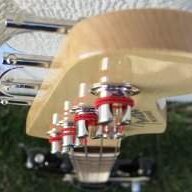
Here's a pic:
Invalid Link Removed
I have heard that Fender used both alder and ash in this period, and I have always assumed that it was alder as it's quite a bit lighter than my 78/79 jazz that weighs +11 pounds. I have never weighted it, but I'd say around 9-10 pounds.
Also, as mentioned, I have never really bothered about whether it has a nitro or poly finish, but I have always assumed that it was poly since it is a 70's bass. Please correct me if I'm wrong
I know the solid color finish makes it harder to tell by just looking at it, but I was wondering what one should look for - in general - in order to distinguishe alder from ash and nitro from poly when it comes so sunburst or natural finisehed basses? Please upload pics showing examples if possible
Here's a pic:
Invalid Link Removed






 )
)