
Didn't Bag End have a system (ELF, if i remember correctly) that would give flat response down to 8Hz? I think it was just processing and speakers; still had to BYO amp.

TalkBass has been independent since 1998. Add your voice.
Create a free account to reply to discussions, view embedded media, and browse with fewer display ads.
Join free Log in
Want zero display ads or expanded classifieds tools? Compare plans.

Exactly! I'm equal parts eyeroll and fascinated.The part of me that got a bachelor's degree in music composition and dabbled in electronic formats understands this kind of thinking. The part of me that is a musician who plays music for my and others' enjoyment thinks it's freaking nuts.



Yeah, you could summon whales and other interesting sea creatures playing notes that low.

Even with my planar magnetic headphones -- all I hear are 1st or 2nd octave above the fundamental They need to record that better

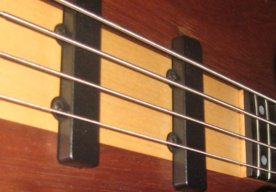
I’ve tried as low as E an octave down using a .175. I didn’t care for it. That string was as thick as a number two pencil, it wasn’t very playable, it was very expensive, and died really fast. I mainly play a 37” Dingwall that I’ll tune to drop A for some songs. But anything lower than that I use an octave down pedal as below that the bass becomes more of an effect anyways.Today I have been drooling over a 40" scale 4-string Quake bass most of the day.
Then I went on this string tension calculator website.
And it calculates that technically you could use a 40-inch Quake bass and tune one full octave below regular B standard BEAD tuning.
B (-1), string 0.236, 40lbs tension
E0, string 0.176, 40lbs tension
A0, string 0.130, 40lbs tension
D1, string 0.100, 40lbs tension
My question is: Has anyone done anything like this before ? ?
Or can anyone share any audio samples (songs) of this tuning with me ? ?
View attachment 4848614
I was wondering what a 40" 5 string bass would sound like tuned ADGCF ... just 1 step below BEADG ... that could produce a lot of overtones with an electric bass and a preamp.

Immediately I thought, hey just get a BEAD tuning bass and an octave pedal? Pretty much the same kind of thing, not quite the same. Much easier to test out. I’ve found the suboctave pedal on the low notes pretty mushy….one full octave below regular B standard BEAD tuning.
The same principle of psychoacoustics applies, your brain fills in the missing information in the note.

26908775[/URL], member: 384422"]Today I have been drooling over a 40" scale 4-string Quake bass most of the day.
Then I went on this string tension calculator website.
And it calculates that technically you could use a 40-inch Quake bass and tune one full octave below regular B standard BEAD tuning.
B (-1), string 0.236, 40lbs tension
E0, string 0.176, 40lbs tension
A0, string 0.130, 40lbs tension
D1, string 0.100, 40lbs tension
My question is: Has anyone done anything like this before ? ?
Or can anyone share any audio samples (songs) of this tuning with me ? ?
Link Removed
Since 99% of the human ears will not be able to perceive 15 Hz, one could of course explore other means to transport the note instead of traditional loudspeakers. Maybe vibrate them into the floor with a V8 engine. Or TNT.
This was discussed before (a missing fundamental harmonic), and I think it’s not so much that it sounds the same, or that your brain fills in the missing fundamental. It’s more like the note is recognizable even if the fundamental is missing.
So, a low E0 sounds like the same note even if the fundamental is missing, and not like the note E1 an octave up, due to the intervals on the harmonics. However it’s timbre is different, thinner or more tinny, when the fundamental is missing. It is surprising though, since you might think that an E0 with the fundamental missing would sound the same as the E1.
I listened to a bunch of YouTube “missing fundamental” demonstrations to convince myself……
Is the low B musically useful? Is an octave below that musically useful? Is 2 octaves above that musically useful? Depends on the composition.