

Enjoy the benefits of a premium membership!
Upgrade Account
-
TalkBass has been independent since 1998. Add your voice.
Create a free account to reply to discussions, view embedded media, and browse with fewer display ads.
Join free Log in
Want zero display ads or expanded classifieds tools? Compare plans.
You are using an out of date browser. It may not display this or other websites correctly.
You should upgrade or use an alternative browser.
You should upgrade or use an alternative browser.
One knob... I like it.
- Thread starter Marko 1
- Start date
More options
Who Replied?
For a waffle headed framing hammer for Metalz?Weight?
Or for my biggass fantasy bass head with a massive blank front panel and only one chicken head knob?
If the latter, I'm old so not too heavy, it's just for the cool looks factor.

I mean I was just being silly in the way common of TB threads...For a waffle headed framing hammer for Metalz?
Or for my biggass fantasy bass head with a massive blank front panel and only one chicken head knob?
If the latter, I'm old so not too heavy, it's just for the cool looks factor.

That's my style- I recognize it as yours, as well.I mean I was just being silly in the way common of TB threads...

I do enjoy when some serious guy comes in and gets all technical, too.

Last edited:
- Feb 5, 2013
- 1,686
- 2,281
- Disclosures
- Endorsing Artist: Used Fender Lead Sleds and Hartke cabs with bent grills

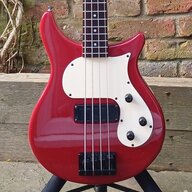

What more do y'all need?
Additional knobs for the other stuff and things.
Sadly, discontinued. I like that unit. Found one for sale tho if anyone gotta have it....
Markbass seems to have adopted the policy of making one batch of most of its new products then discontinuing them almost immediately.Sadly, discontinued. I like that unit. Found one for sale tho if anyone gotta have it....

I believe you described it pretty well. But the actual purpose of a gain control is to set the level of the signal from the input to the pre-amp. I find that it works well for introducing grit into the signal be running it higher and reducing volume as needed.
Agreed; that is my understanding also. Coming at it from a guitar amp perspective: crank the gain and turn down the master for crunch at manageable levels. Or, as I was attempting to describe above, run the master at a high setting and the gain at a lower setting to get volume with a cleaner sound (again, ignoring signal to noise ratio concerns and just focusing on distortion).

Oh, I see what you're saying. I must have misread your post. Sorry.Agreed; that is my understanding also. Coming at it from a guitar amp perspective: crank the gain and turn down the master for crunch at manageable levels. Or, as I was attempting to describe above, run the master at a high setting and the gain at a lower setting to get volume with a cleaner sound (again, ignoring signal to noise ratio concerns and just focusing on distortion).
Markbass seems to have adopted the policy of making one batch of most of its new products then discontinuing them almost immediately.
What astounds me is that I believe it takes time to design, plan production, & then roll-out a new product no matter where it's built. Then-It's introduced, catalogued, distributed....and subsequently DISCONTINUED!
I don't get it. Obviously, they don't sell well enough to continue to build the item, but I should think that they might plan a little better. (I LOVES me some MB btw
 )
)
WOW- "Double Like" for that array!


I have it's Headlite counterpart and run it much like the OP would. Good sound but fiddly.I used one of these regularly for several years until it died. I wish a company with the resources to make a small class D power amp at less than boutique prices would come out with something like this again.
View attachment 4847134
This is why I sort of do what the OP does, except I'll usually stop at 8 or 9, depending on the amp. I find that there's usually a point where to go higher just gives you more hiss &/or other noise than any real signal gain. You hear the hiss suddenly go up in relation to the signal. I'll usually stop a touch before this point and go from there. I started doing this to avoid running the Headlite's preamp into it's very non-musical distortion.Assuming you don't crank the input gain into overload in the latter case, the first way will typically have lower distortion but a worse signal/noise ratio. So it depends on your definition of "clean."
That being said, I still like a good, solid set of eq/voicing controls and options. I'd love a TT800.
how do you like that pro bass? Just got one myself

I do like it. I have a JJ Ecc803Show do you like that pro bass? Just got one myself
I find it to be very very warm. Usually I have a hard time hearing "warm" but with this head. It's there. Very round and warm for sure.
was thinking of selling it
If you like neutral, pure and simple power amps, I have designed this prototype. I wish one day to go further with him, but at the moment I have little time.
I've been using it in my band for 2 years. I like to connect an EBS III and other times an Ampeg SVP Pro (they are my 2 favorite sound brands, as different as they are characteristic).
At other times I like to connect the direct bass, without anything else (just a compressor sometimes). And that's all.
P.A.I.P (Power Amp Input for Preamps) with tube buffer.
[ADJUNTAR=completo]4887966[/ADJUNTAR]
[ADJUNTAR=completo]4887967[/ADJUNTAR]
I've been using it in my band for 2 years. I like to connect an EBS III and other times an Ampeg SVP Pro (they are my 2 favorite sound brands, as different as they are characteristic).
At other times I like to connect the direct bass, without anything else (just a compressor sometimes). And that's all.
P.A.I.P (Power Amp Input for Preamps) with tube buffer.
[ADJUNTAR=completo]4887966[/ADJUNTAR]
[ADJUNTAR=completo]4887967[/ADJUNTAR]
Attachments



After reading all these posts I am suddenly wondering why amps don't have locking knobs on them.
When I used to work as a maintenance electrician we installed them on many machines so settings could not be accidentally changed.
You just dial up what you want and flick the little lever on the side of the knob to lock the setting in.
BUT..they are ugly to put on an amp.
Most are also made for multi-turn pots.
Imagine setting your tone controls and locking it in, it can stay the same even when moved around.
When I used to work as a maintenance electrician we installed them on many machines so settings could not be accidentally changed.
You just dial up what you want and flick the little lever on the side of the knob to lock the setting in.
BUT..they are ugly to put on an amp.
Most are also made for multi-turn pots.
Imagine setting your tone controls and locking it in, it can stay the same even when moved around.

I'm not a knob twiddler. I set them and leave them. Some players do like turning knobs. I think that some of that is nerves. It gives them something to do while turning away from the audience.
I have one amp that's full of knobs, both in the front and back, some are also push-pull. Too many options just confuses me. I just want to play. In my mind, minimal controls in the signal path equates to better tone. I'll take that over features in a heartbeat.
I have one amp that's full of knobs, both in the front and back, some are also push-pull. Too many options just confuses me. I just want to play. In my mind, minimal controls in the signal path equates to better tone. I'll take that over features in a heartbeat.


