• TalkBass has been independent since 1998. Add your voice.
    Create a free account to reply to discussions, view embedded media, and browse with fewer display ads.
    Join freeLog in
    Want zero display ads or expanded classifieds tools? Compare plans.

Open A string rattle/buzz

This is also a squire problem, i have a brand new Classic Vibe Precision (Indonesia) and the rattle came at me straight from the box... I'm familiar with it and was considering returning the Bass until I figured this is common issue by reading some threads.

Here's my take on this issue.... after visiting a Luthier for his opinion where he confirmed the string is not wired low enough on the peg therefore it rattles on the nut and vibrations are hitting the first fret he said thee's nothing he can do from warranty point of view but said he can ask Fender to possibly send new strings (For the record i think this is a good idea because i never cut my bass strings and wrap the entire string on the peg which gives me enough meet to control the position of the string on the peg). The problem with the squire is that the tuner pegs are hour glass shape and therefor even if you try to wire the strings to overlap downwards its natural direction is to wrap to the center. If you look at every other after market machine head they are all concentric shaped pegs and not hour glass shape.

At this point I'm thinking i have one of two options to fix. (1) I order a machine head of my choice Hipshot or generic which only have a concentric shape to the peg and in theory this will allow me to wrap the string in a downward spiral like i want. (2) Add a string tension peg ahead of the A string and this way all future string replacements will not to carry the risk of having to deal with the "Fender A Rattle". Obviously the string tension peg is the cheaper and faster option and probably guaranteed to solve the problem (but obviously changes the P-Bass look of the head).

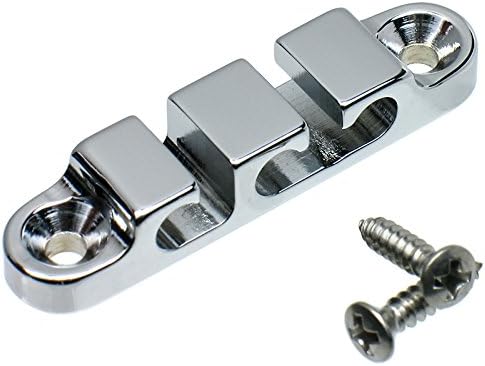
There's actually a fender string retainer that fits on the tuner peg if you have the tuners with the hex nut on the front which some people have said that Fender by knowing about this issue should give this part for free.
Here's the part on amazon. Unfortunately my tuners are the kind that slide through the head stock with screws holding it in place from the back (no nut in front of the bushing). See the link for the product on Amazon and you'll get a better understanding of what I'm talking about.
Fender 0078972049 STEALTH STRING RETAINER BASS

Final thought..... I said i don't cut my strings and just wrap the entire string, if I pop the A string out of the nut (factory strung and cut steel strings) the string natural (straight) alignment with right side of tuner peg is a few mm left of the A string nut slot. This would suggest that i need a correct scale string on this tuner and not have it cut so that there's enough winding to create a thickness around the tuner peg which will get the string to align correctly with the nut slot while allowing to push the string down lower on the tuner peg. .

Hope this information helps the discussion.
I had the same issue with my bass. Many replies from members told me I wasn't wrapping the string right, didn't have enough string wrap, etc, but the fact is, due to the shape of the tuner post, one couldn't wrap it low and have it stay there. Out of exasperation I made a new string tree against all the advice, and I'm done with the problem. I still say the headstock geometry on these instruments is a chickenpoopie design.
 
As an Amazon Associate, TalkBass may receive commissions from qualifying purchases made via links on this site.

I still say the headstock geometry on these instruments is a chickenpoopie design.

There's definitely a consideration in the design that the string must wrap around the peg enough times so that it aligns with nut correctly. My 2019 CV 70's Precision came nicely setup out of the box and this really ruins the moment when you have to start messing with the setup to figure this kind of crap out. Personally i think the factory should not cut the strings and simply string them whole to allow the string to wrap correctly. Other than that the Bass is a pleasure to play on, the factory strings are like sand paper on my fingers and need to be replaced with the brand of my choice and since I'm not planing on returning the Bass it's now time to start modding it.
 
I had the same issue with my bass. Many replies from members told me I wasn't wrapping the string right, didn't have enough string wrap, etc, but the fact is, due to the shape of the tuner post, one couldn't wrap it low and have it stay there. Out of exasperation I made a new string tree against all the advice, and I'm done with the problem. I still say the headstock geometry on these instruments is a chickenpoopie design.
I have the same on one bass. I have no problem getting the string down to the bushing. I just don’t cut the string. Five plus wraps and it’s on the deck. The first wrap is actually on the uphill part of the hourglass making it impossible for the lower wraps to push up.
 
Another update, i borrowed a Hipshot HB-7 from a buddy to see if my problem will go away for good. Looking at many other generic tuners they have the hour glass shape to the peg and others brands like GOTOH and Schaller are similar to some of the fender straight pegs. The hipshot HB-1 and HB-7 have the closest match to the screw holes spacing for my bass and if you look closely at the pegs they are the only ones i could find that are concentric.

Although the Hipshot HB7 is not an exact match for the screw placement on my 2020 Squire CV 70's Precision i could get 2 screws in easily just to hold the machine head in place for testing. The peg on the HB7 is 1.211" (30.75mm) and the peg elevation through the head stock was noticeably lower, basically the lower end of the concentric peg was sitting as close as possible to the bushing (This looks promising i thought)...... Put the A string back on and smacked the living poopie out of it only to discover the A string rattle was gone, the string was finally sitting low enough and problem solved. I then plucked the D string and it was rattling now.... my heart sank thinking of colorful words, i look up at the head stock and the D string came out from under its retainer to give me a F U rattle.

Conclusion, the design of these hourglass tuners is simply bad for the A string, they could easily have this fixed by making it concentric like Hipshot or by cutting the peg shorter between 1/8 - 1/4". For reference here's the link to the Hipshot BT-7 specs, look closely at the shape and length of peg... Hipshot Bt-7
 
  • Like
Reactions: 96tbird
I think the hourglass shape is a hangover from guitar tuners, and a poor choice for bass. On guitar, the first wrap of the string on the post would go over the tail end of the string, the next wrap would go under. The two wraps would be pulled to the centre of the hourglass pinching the tail of the string between them, thus helping to keep the string from slipping on the post.

On a Fender-style bass, feeding the string down the centre hole of the post helps to lock it in position and because of the size of the strings they don't tend to slip on the post. It is far more important to wrap the strings down the tuner post as far as possible to ensure a good break angle at the nut, and an hourglass shape makes that more difficult - actually working against the best outcome. On some basses the tuner post actually tapers thinner toward the headstock which forces the windings down where we want them. Others have straight-sided posts that allow you to place the windings wherever you want. I would take either of these over an hourglass shape.
 
OK, Same problem (open A rattle, same with hitting 12th fret harmonic, finger on string behind nut stops it). So...P-bass scale is 34", distance from nut to tuner is ~3.4" (1/10), sympathetic resonance! Two layers of heat shrink 3" long on the string between nut and tuner and, while not gone, livable. Crazy?
 
Oh, I forgot to update you guys about the problem, sorry.
It's still going on my P bass and it started to show also on my J bass after I changed the strings to Rotos 66. Never done that before. And if I remember correctly my P bass was ok with the old stock strings.
I'll investigate more in the future but for now I'm ignoring both, to be honest. Both basses plays great despite this little problem, so I'll think about that again when I'll do my next setup routine for both.
 
  • Like
Reactions: RickStaar
I have this same issue on my MiM p bass- I’m so happy to have found this post. I had no idea about ideally having 3/4 wraps as I followed this video:


On here he says 1.5 to two tuning pegs distance before cutting the string. That barely got 1 wrap for me - angle isn’t great on the video - similar to mine:

B944B6D5-9BC8-4338-AD75-437BB5076E18.png


Anyone know what the rough measure is for 3/4 wraps on a MiM p bass might be? Or has anyone actually gone to the effort of measuring the string exactly for a fender p bass?

I looked into getting a Fender Stealth String Retainer for the A string but they are for American Fenders- won’t fit the stock tuners on my MiM unfortunately.

thanks
 
Out of habit I cut strings at about the width of my fingers - i.e. I put my pinky against the string post, with the string along the inside of my fingers, then grab the string with my thumb against my pointer finger and cut it right there. On most posts that results in about two and a half wraps. For 1/2" posts that aren't tapered I go a little longer.

The number of wraps is not as critical as getting the "exit point" down as close to the headstock as possible. As you cinch up the string and it starts actually pulling tension, use your fingertips to keep the wraps pressed down towards the headstock and you'll be fine.
 
  • Like
Reactions: Shak_2112
I have this same issue on my MiM p bass- I’m so happy to have found this post. I had no idea about ideally having 3/4 wraps as I followed this video:


On here he says 1.5 to two tuning pegs distance before cutting the string. That barely got 1 wrap for me - angle isn’t great on the video - similar to mine:

View attachment 4513797

Anyone know what the rough measure is for 3/4 wraps on a MiM p bass might be? Or has anyone actually gone to the effort of measuring the string exactly for a fender p bass?

I looked into getting a Fender Stealth String Retainer for the A string but they are for American Fenders- won’t fit the stock tuners on my MiM unfortunately.

thanks

On Fender type headstocks I always measure and cut strings at least two and a half tuners PAST (away from the body) the tuner on which I am installing the string. For example - If I am replacing the low E, I measure and trim the string from the bridge to in-between the D string and G string Tuners. That should give you enough wraps. Bassically cut the string two and half tuners past the tuner on which you are installing the string. Hope that makes sense. Measure twice, cut once.
 
I recently bought a precision and did exactly the wrong thing - cut the A too short.
Result: buzz/rattle on A string.

I didn't want to buy new strings (flat-wounds last for ever and are expensive) so I wrapped the end of the string with some shrink-wrap and heated it. The additional spacing on the tuner was just enough to bring the end of the string down far enough to stop the rattle completely. The last winding is 100% string so I doubt this has any effect on sound and it has stayed in tune perfectly.

Hope it helps anyone.
 
  • Like
Reactions: 96tbird
I recently bought a precision and did exactly the wrong thing - cut the A too short.
Result: buzz/rattle on A string.

I didn't want to buy new strings (flat-wounds last for ever and are expensive) so I wrapped the end of the string with some shrink-wrap and heated it. The additional spacing on the tuner was just enough to bring the end of the string down far enough to stop the rattle completely. The last winding is 100% string so I doubt this has any effect on sound and it has stayed in tune perfectly.

Hope it helps anyone.
Elegant solution!
 
This has been covered before, but for those who haven't seen it...

The problem with a number of bass tuners, including those on MIM Fenders, is the "waist" that is shaped into the post, like an hourglass:
upload_2022-6-24_16-25-58.png


When you string up the tension pulls the string into that centre waist area. Where you want it, particularly for the A string, is at the bottom of the post, like this:
upload_2022-6-24_16-28-55.png


That ensures a good break angle over the nut, without which the A string is likely to rattle in the nut slot. Why Fender uses the "waisted" tuner is one of the great mysteries of the Universe - even the Vogons (thanks DA) haven't been able to figure it out. Because the hourglass shape pushes the strings into the centre of the waist, you need 4 or more windings on the post to get the stack to terminate at the base of the post. Otherwise, 4 wraps is excessive, the additional wraps are just more stretching length that can lead to tuning instability. What you want is 2-1/2 to 3 wraps to provide enough friction of string-to-post to avoid slippage.

Some makers use tapered posts that have the narrowest part close to the ferrule. This ensures that the string gets pulled to the bottom of the post as tension is applied to the string. The problem with this design is that the first wrap goes right to the bottom of the post and it's a bit of a struggle to get the next windings under it. I prefer a straight post. With it I can manipulate the string wraps to the bottom of the post with ease.

So, regardless of the design of you tuners, be sure to get the string wraps (especially the A string) close to the bottom of the post. The second pic above is just about ideal.
 
Last edited:
Thread bump.

Have/had an insane rattling on my MIM Pbass on an open E and A string pluck. Recently changed out the tuners to Hipshots and snugged down the hex head, teflon and metal washers on the worm side of the tuners. Used CA glue to hold the Hipshot bushings in place on the head and lightly lubed them and the sting pass thru on the nut. Still no joy on fixing the rattle. Until I found this thread.... THANK YOU!

After putting downward pressure on the strings and guiding the string break towards the bottom of each tuner waist, it fixed the rattle. I maintained the 3 string loops around each tuner waist.

Wondering if the Chrome flatwounds that I am using, with the blue threading around the string ends, might induce some of the rattle and cause string slippage to slacken the break at the nut??
 
  • Like
Reactions: Matt Liebenau
Thread bump.

Have/had an insane rattling on my MIM Pbass on an open E and A string pluck. Recently changed out the tuners to Hipshots and snugged down the hex head, teflon and metal washers on the worm side of the tuners. Used CA glue to hold the Hipshot bushings in place on the head and lightly lubed them and the sting pass thru on the nut. Still no joy on fixing the rattle. Until I found this thread.... THANK YOU!

After putting downward pressure on the strings and guiding the string break towards the bottom of each tuner waist, it fixed the rattle. I maintained the 3 string loops around each tuner waist.

Wondering if the Chrome flatwounds that I am using, with the blue threading around the string ends, might induce some of the rattle and cause string slippage to slacken the break at the nut??


Probably not. That’s a common(ish) issue with Fender and some other flat headstocks, particularly on the A. If you have tuners with a post that tapers and forces the strings up towards the middle of the post that tends to exasperate the issue.
 
  • Like
Reactions: 8xlaxx
This has been covered before, but for those who haven't seen it...

The problem with a number of bass tuners, including those on MIM Fenders, is the "waist" that is shaped into the post, like an hourglass:
View attachment 4730143

When you string up the tension pulls the string into that centre waist area.

This is something that I can't grasp. Why make a design worse by causing the string to pool in the middle... Like you said it's a problem, especially with the a-string. There is nowhere near enough pressure. The A string just keeps popping out of the nut when playing hard.