- Jun 30, 2010
- 49,603
- 222,065
- Disclosures
- musician/artist/owner - Gildaxe
I'm a bit hesitant to post this thread as I'm swimming in uncharted waters... (Jim, Jim... I'm an artist/musician - not a luthier!") This "project" goes back/relates to my fascination with obscure vintage basses. Not main $tream vintage, but ones that can be bought for a very affordable cost. Over the years I've bought and restored/resurrected a number of them to make them playable, and I've mostly been rewarded after a lot of work. They all have their own unique character, look and sound, but it's important to me to experience them as players.
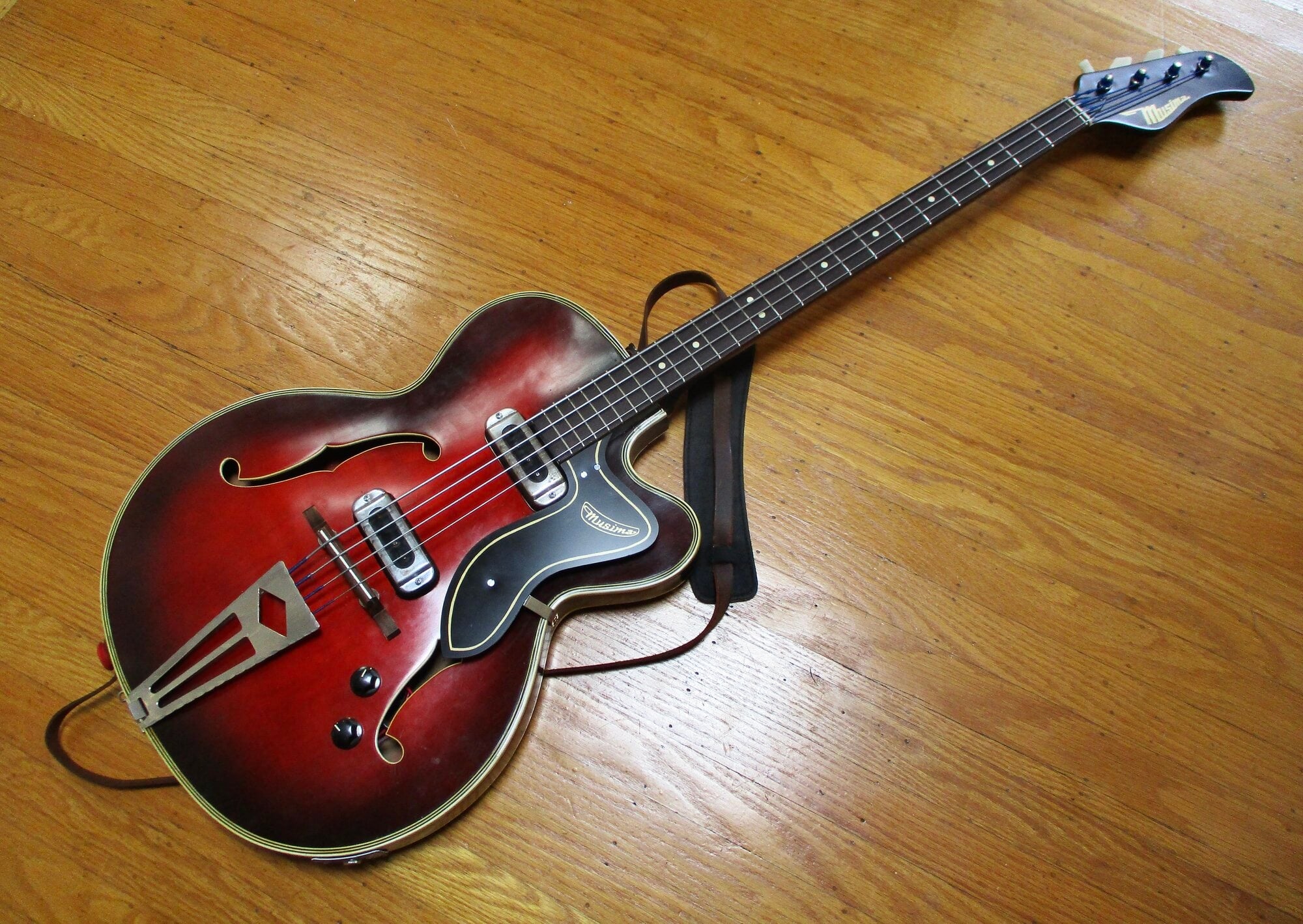
I acquired this vintage German bass from a seller in Ukraine a few years ago and did work on it then to get it playable, enough so that I even gigged it at a dinner-club here in SF with Bond Girl last year. It had major table* warpage issues when I got it that got worse over time, leading to it being unplayable. ATC, it so far wasn't a financial loss, but I wanted a playable bass. So I thought, I'll remove the table/top and see what I can do to address it. Here's where the "can of worms" comes in...
Before I post pics, I totally understand a seller in Ukraine doing as much as they could do (especially today) to sell instruments to an affluent country like the US. No slagging them - I get it. I'm of 3rd generation Eastern European decent (Poland/Czech) so I am totally empathetic. Posting these pics shows the DIY-ness of their situation and I'm not mocking them but acknowledging their resourcefulness in the face of external chaos. But as stated - my goal is a playable instrument, not just a vintage icon.
What I liked about this bass was a few things; 32" scale, hollow-body, 24 frets, and a cool vintage vibe. Others I've seen on-line had 20 frets. They also had different 'tail-pieces'. This one was a bit special/unique. It didn't come with its pg - so I researched and fabricated one. The neck heal had separation issues so I addressed that. But being a true 'hollow-body', the string tension caused bowing of the table. When I got it I could discern it had been mucked with and did what I thought would address it. Unfortunately, I was putting a band-aid on an open wound... looks bitchin' though...
*top layer of an acoustic instrument - I learned that from my dealing with double basses...
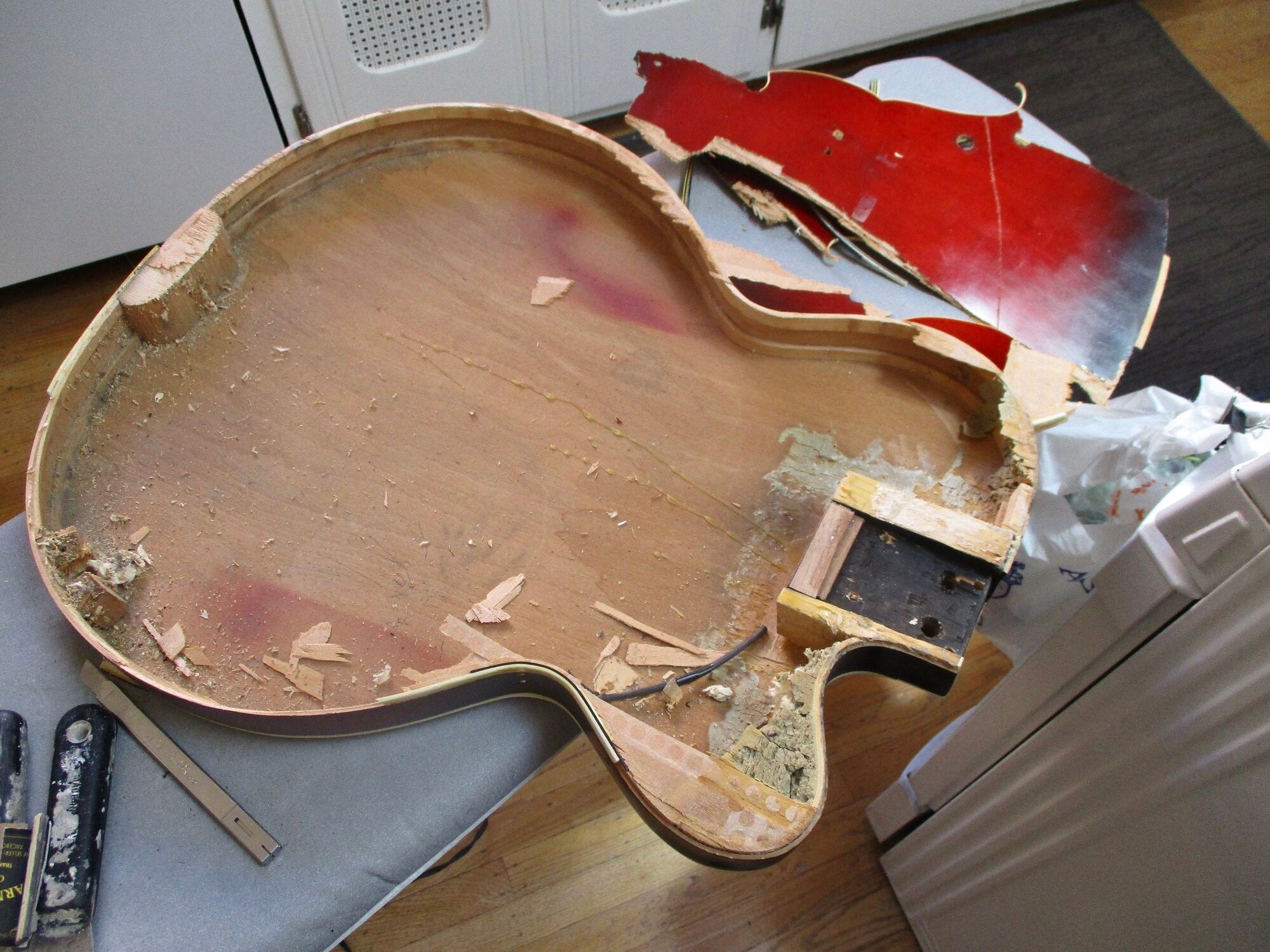
I attempted to remove the table/top with heat and careful wedging of a flat-blade...but ended up trashing the table/top in the process. This was partially due to the fact it had been previously removed and... certain irreversible things were done at one point. What have I gotten myself into?
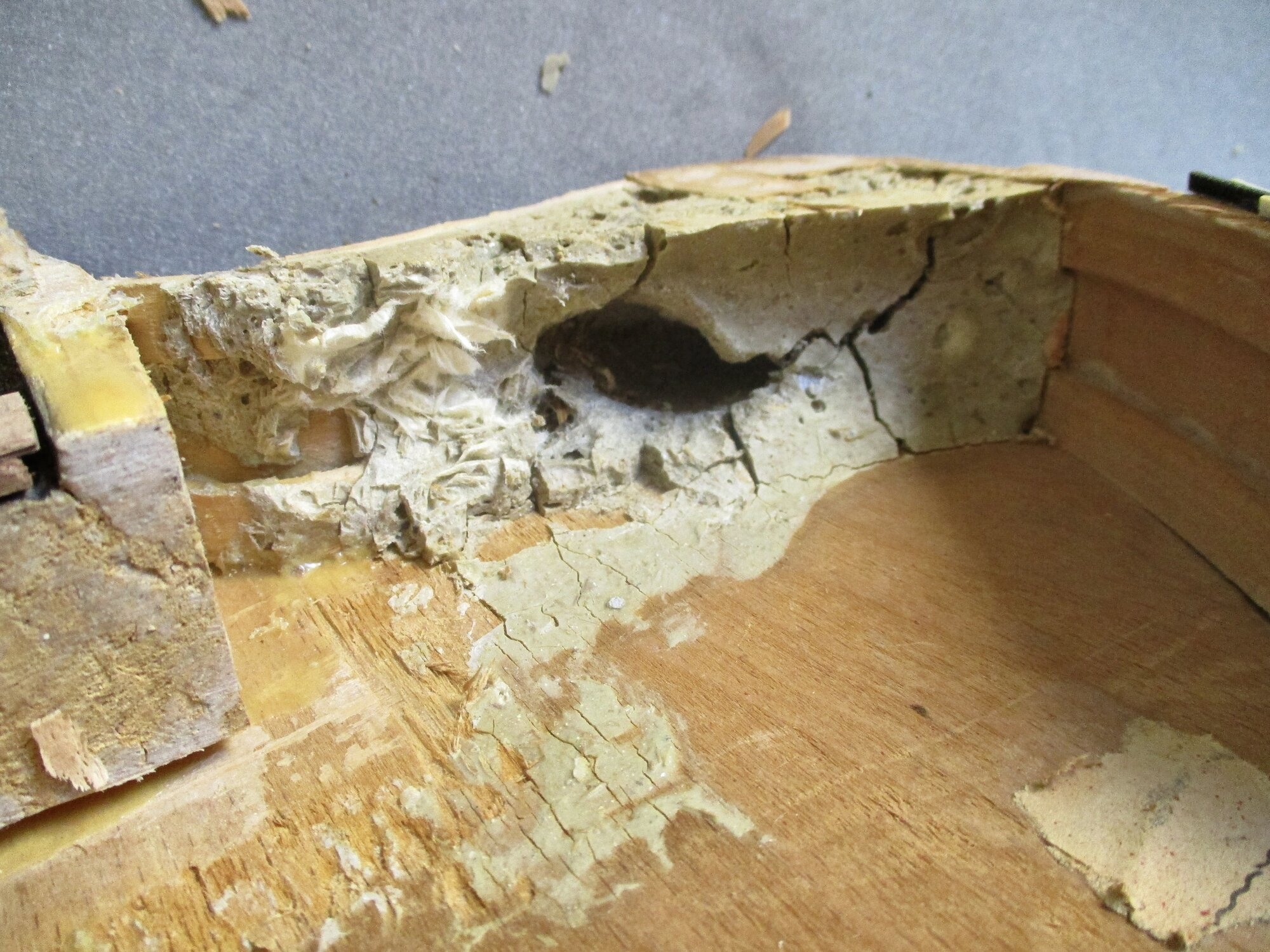
I have no idea what product was used here - but it was hard and brittle like concrete. I'll have to rank this as the top DIY hack of all time... some sort of cloth/fabric was also incorporated...
It didn't stop there...
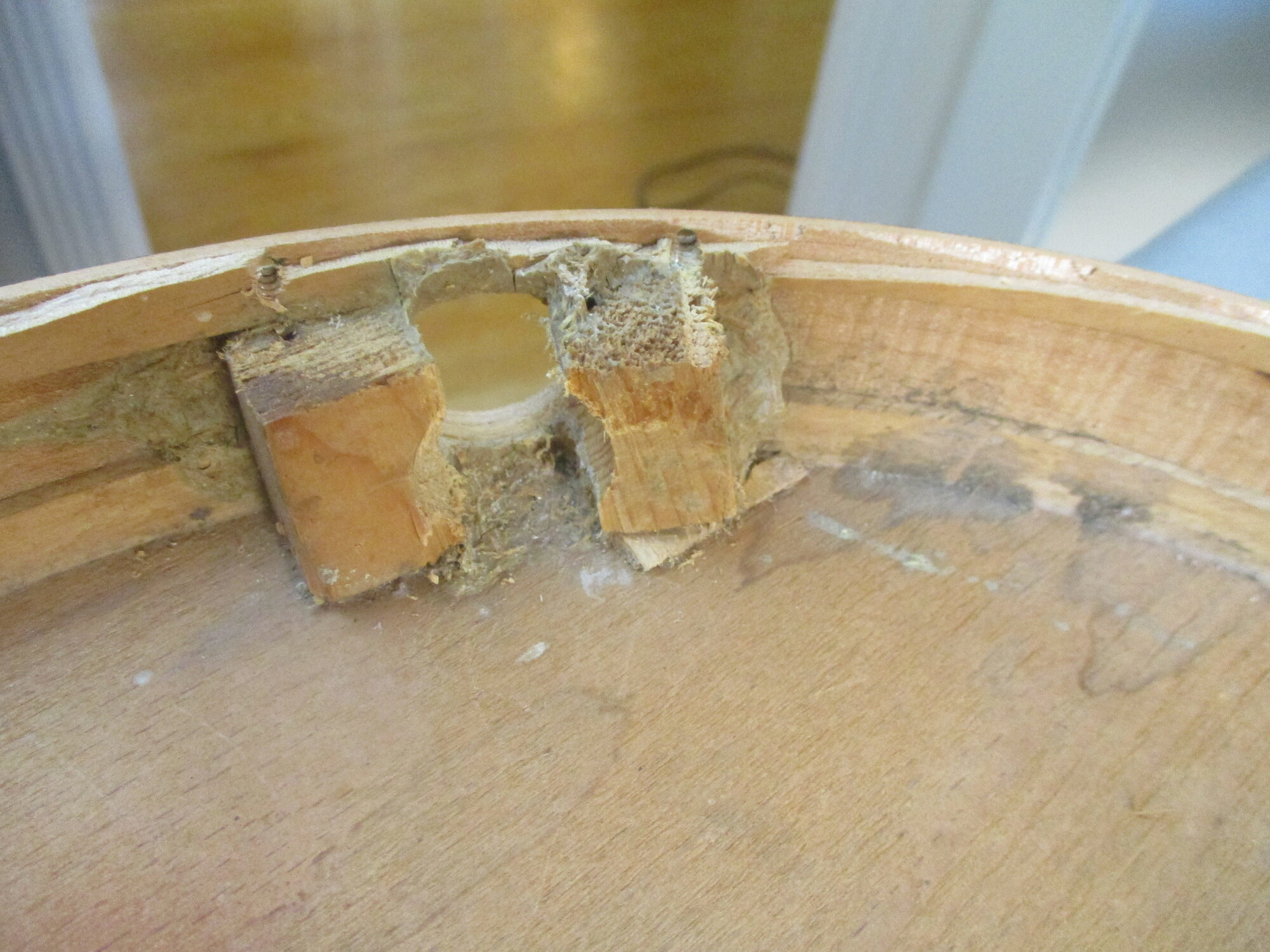
... but I carefully cleared it out -
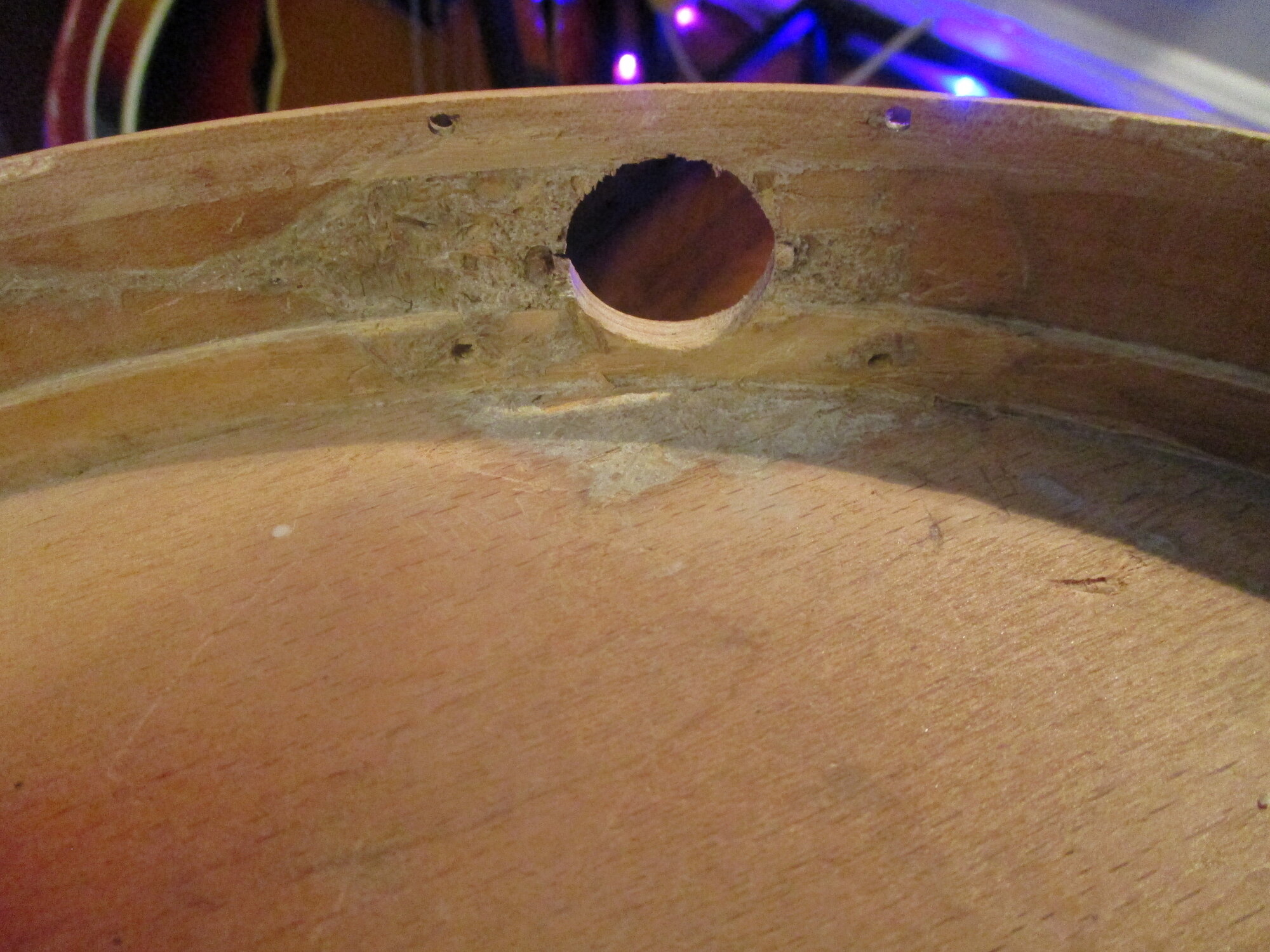
same here - at least as a start... much more to come - Hack-a-Loosa ...
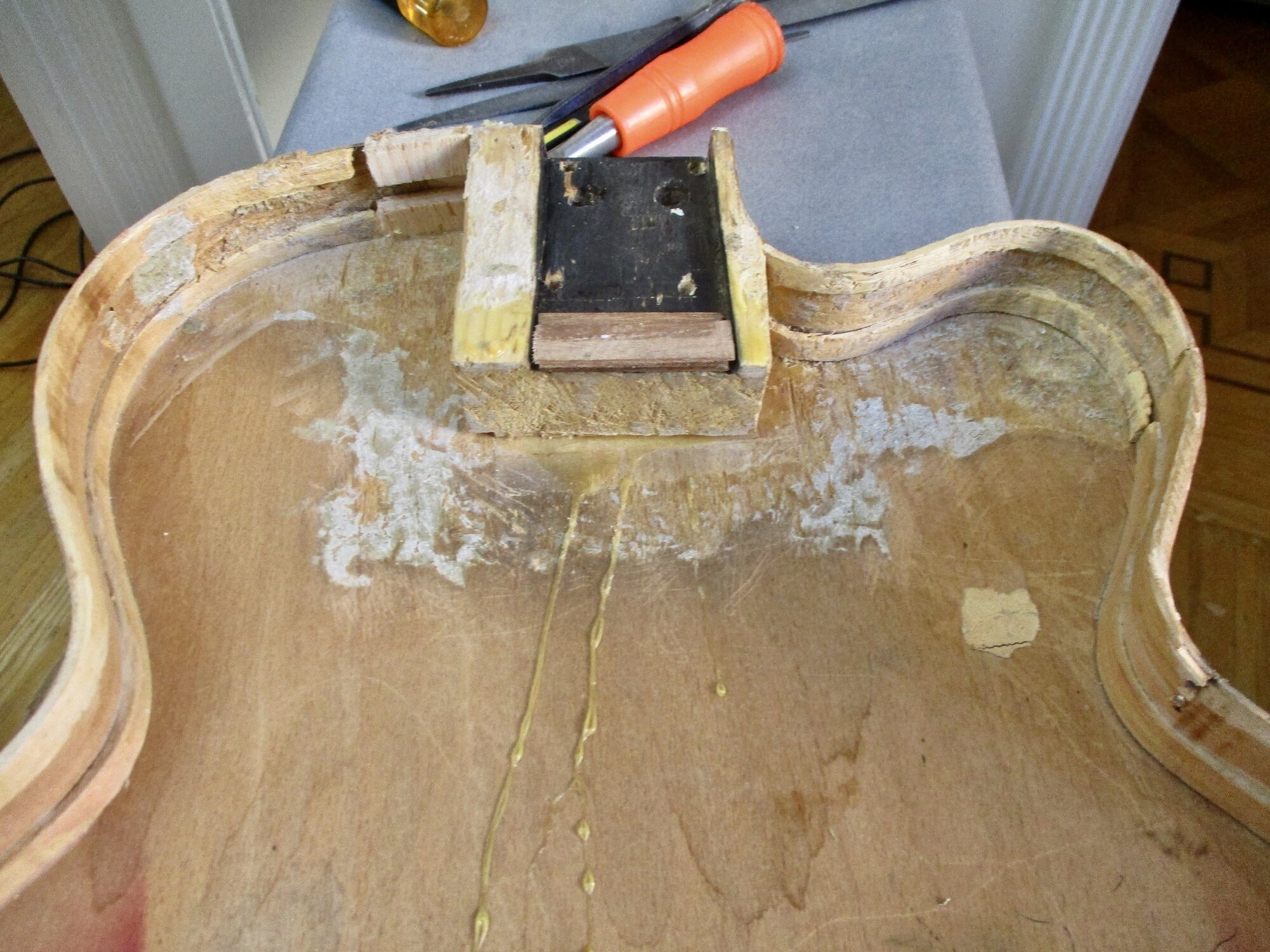
...and a bit further -
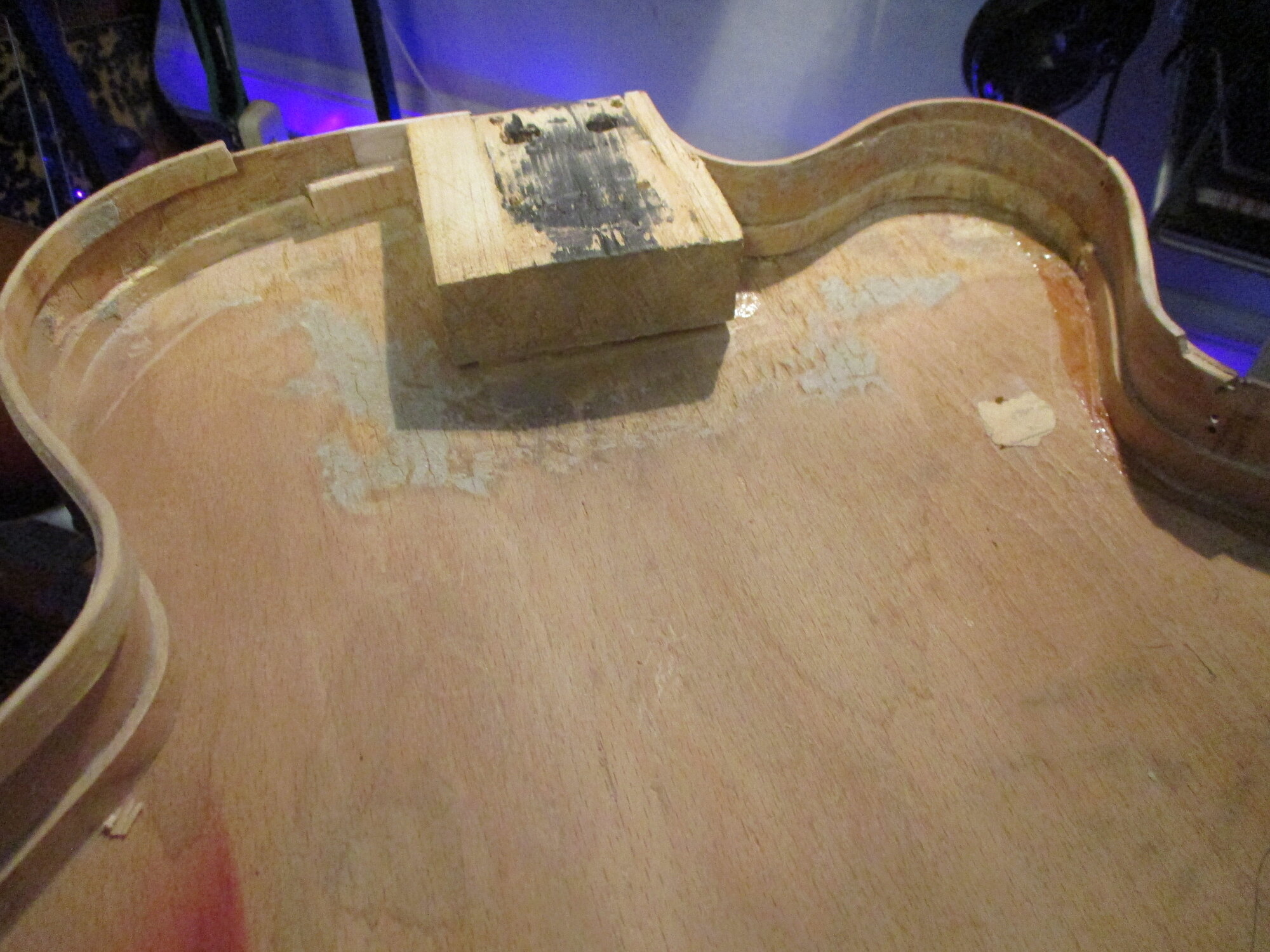
yes - crude...
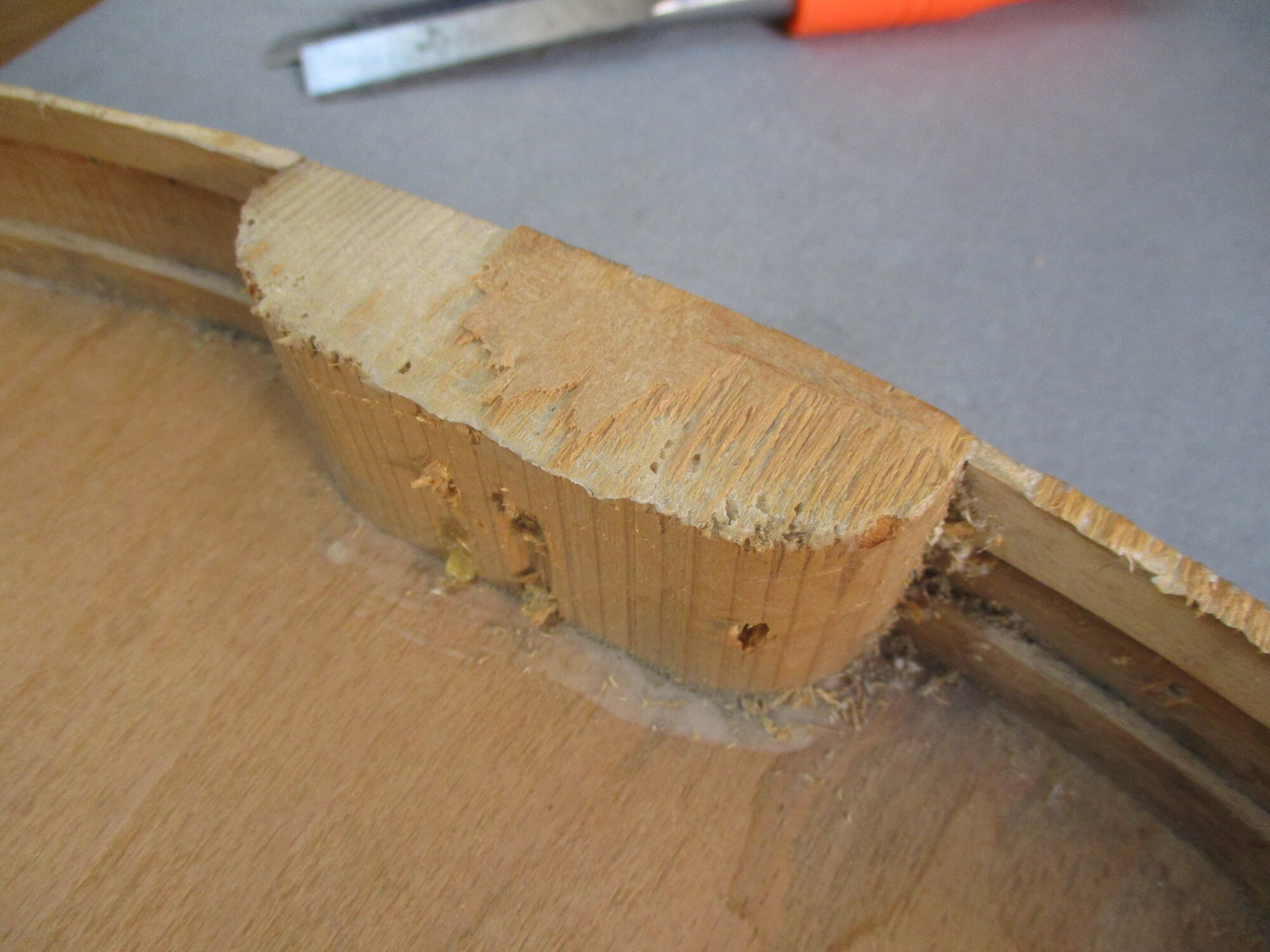
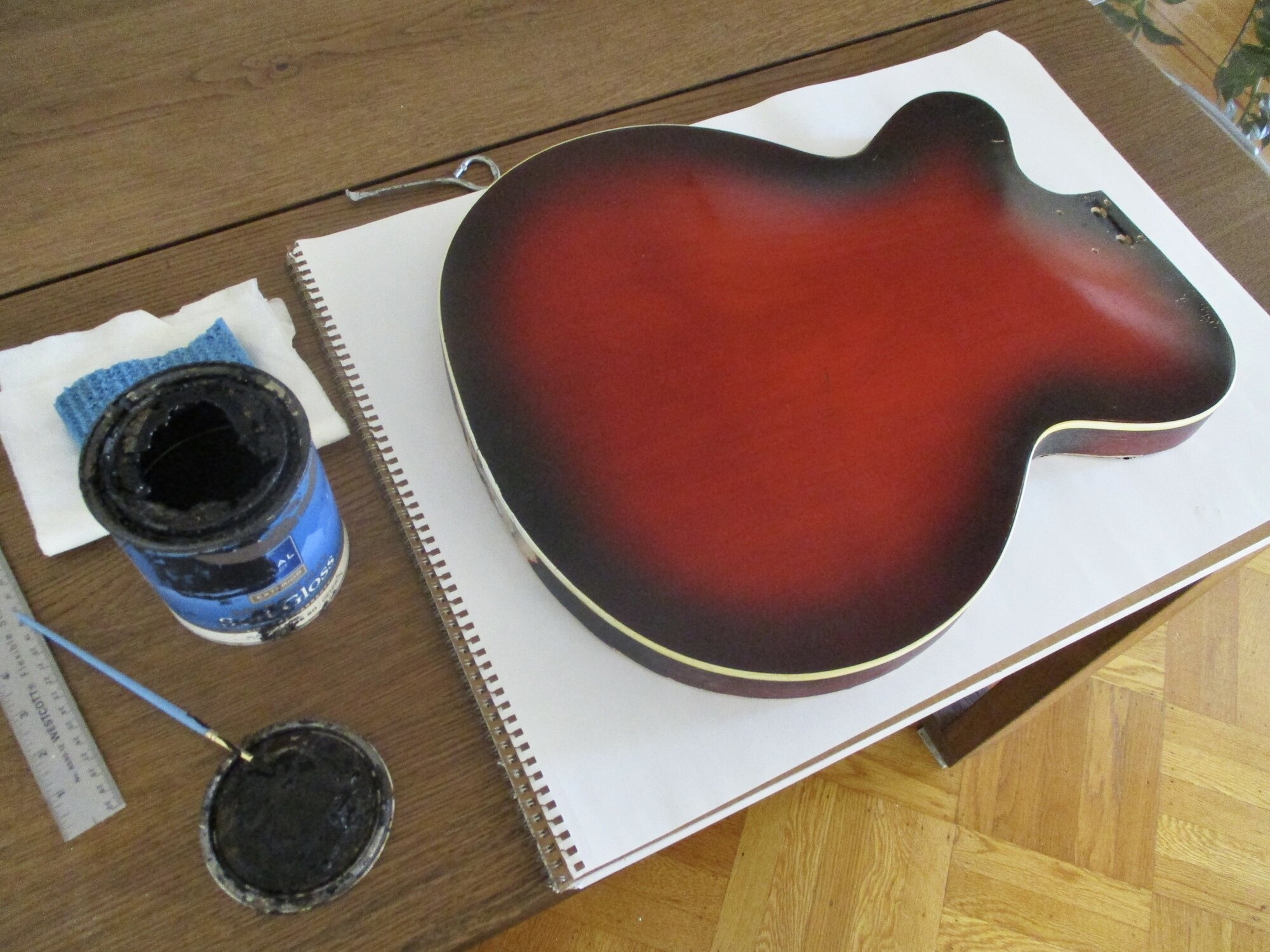
No pics but I added wood strips where they were degraded in result of the table removal process and I created a process to determine the table perimeter. I applied acrylic paint to the raised edges in order to 'stamp' the outline.
...which gave enough of an outline to deal with -
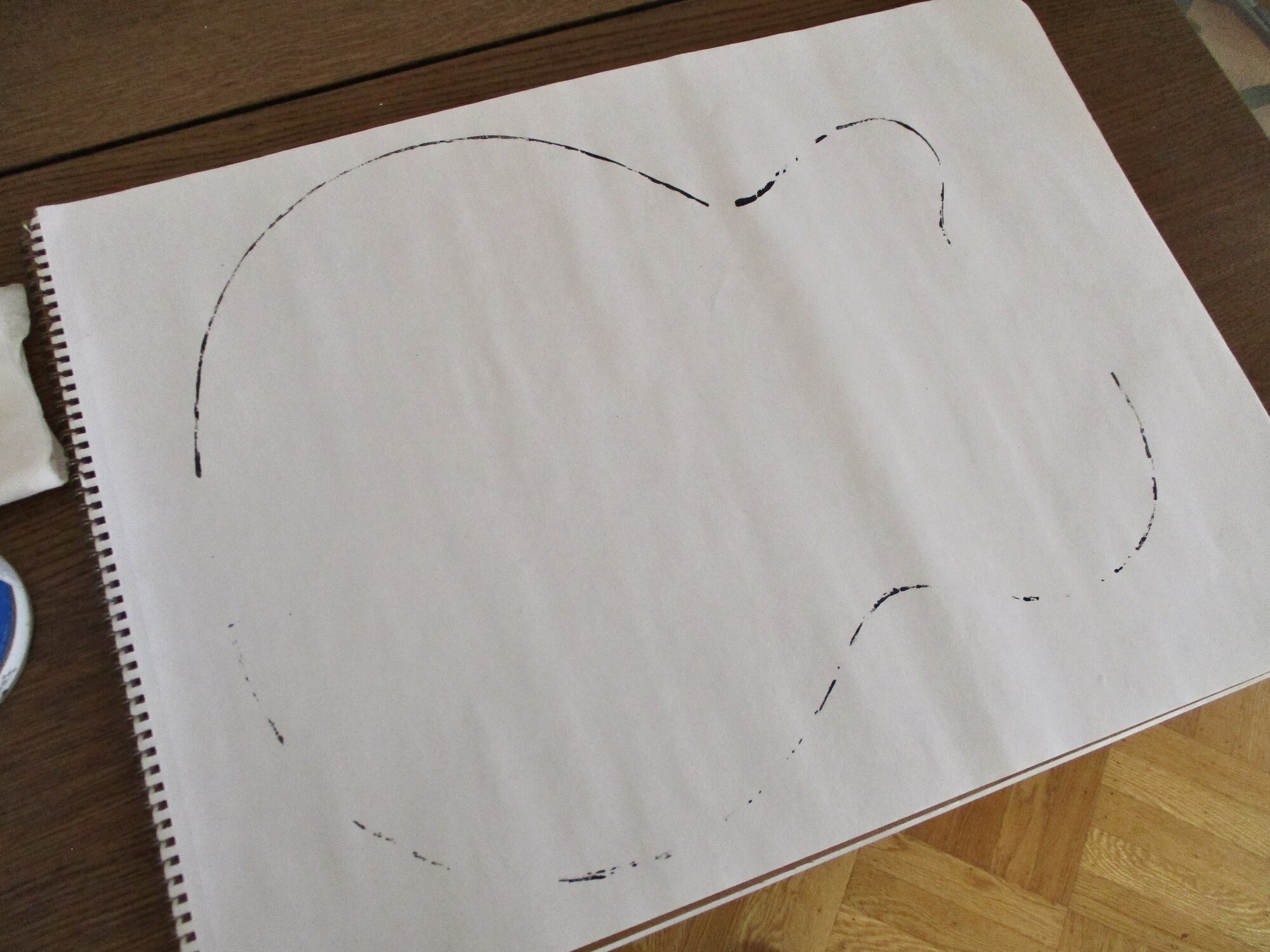
...and scribe on the new table -
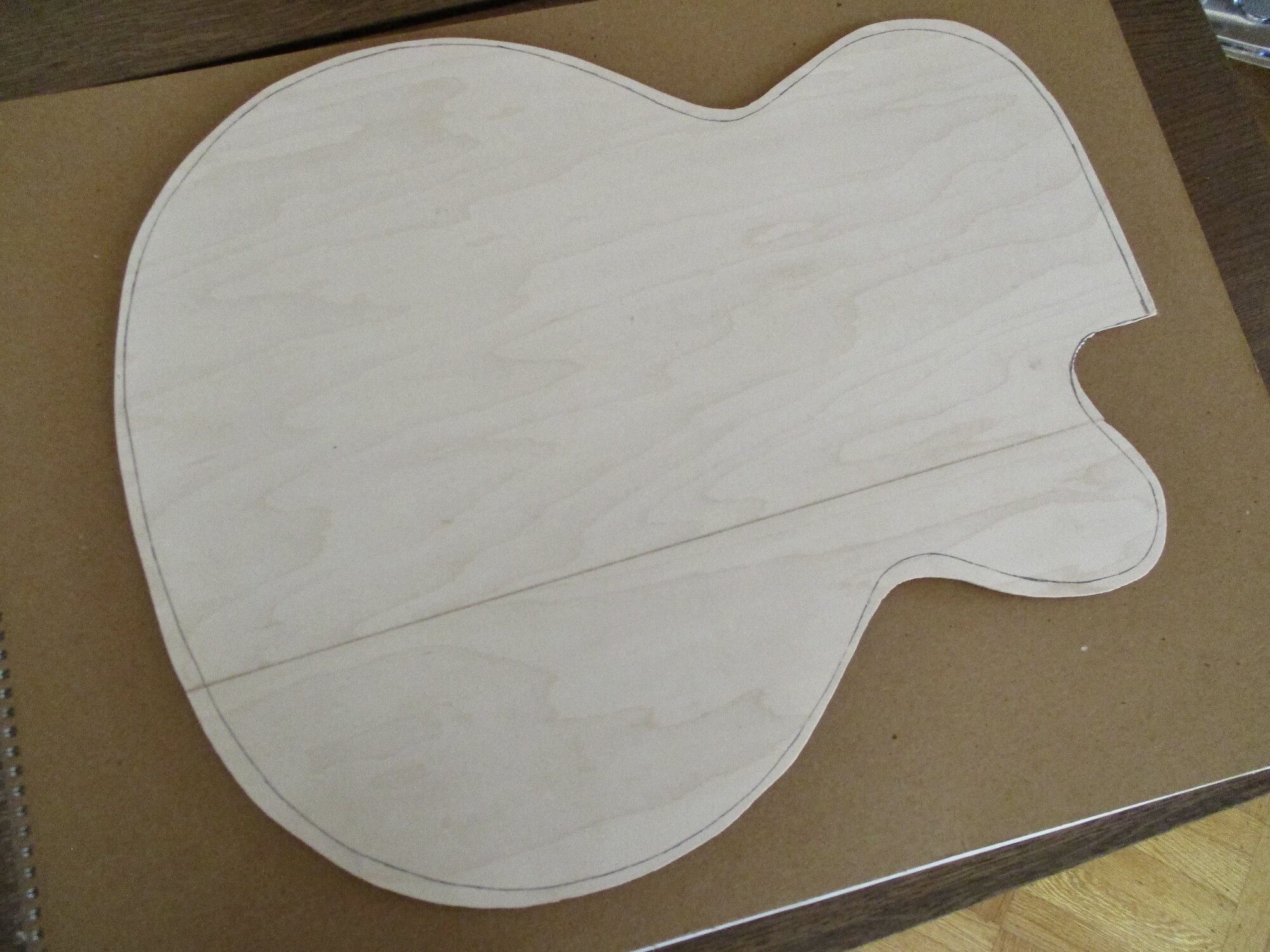
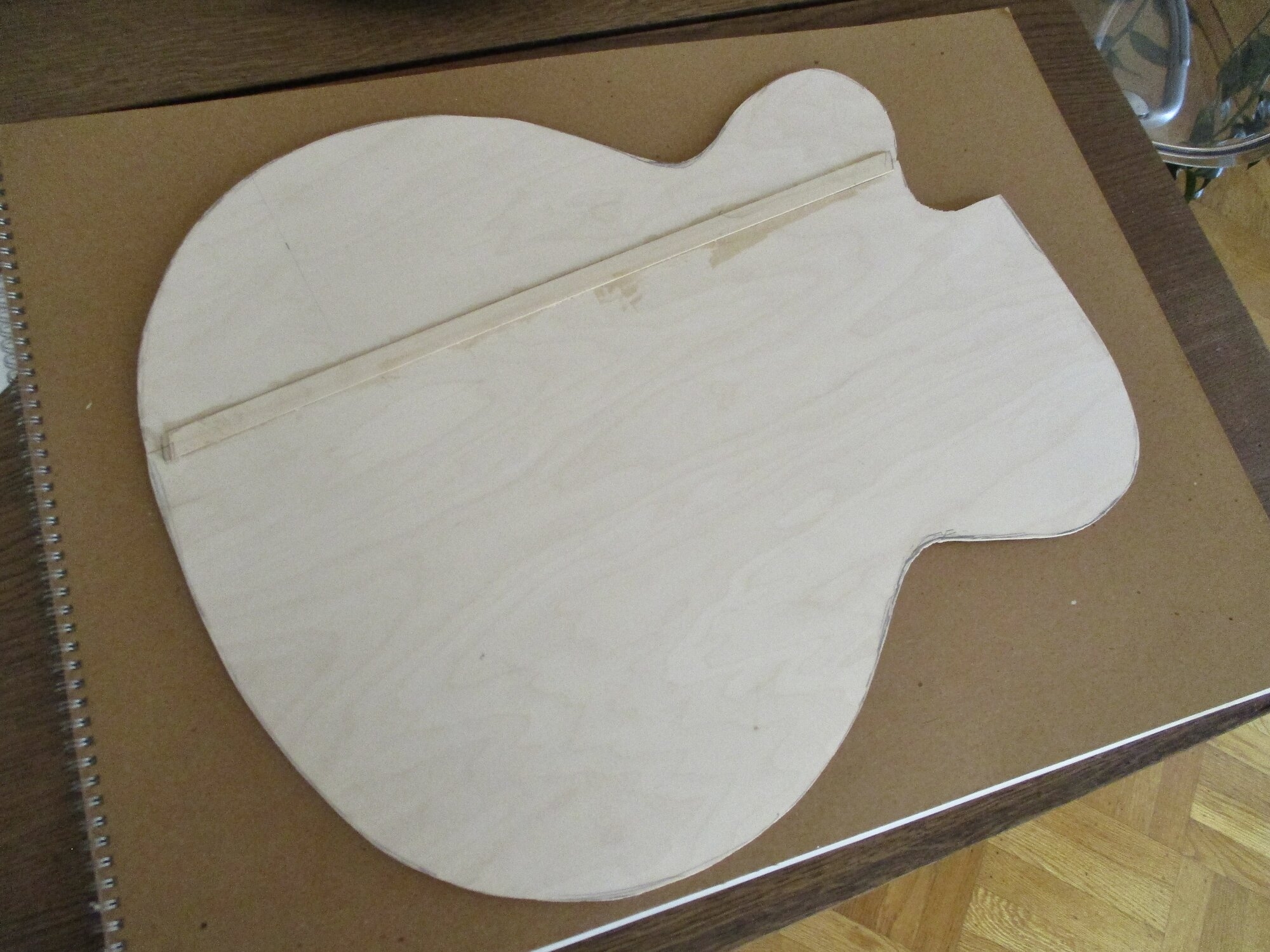
The table is made of two pieces of 1/8th birch plywood - which is good enough considering the rest that is to come - so far, so good...
I acquired this vintage German bass from a seller in Ukraine a few years ago and did work on it then to get it playable, enough so that I even gigged it at a dinner-club here in SF with Bond Girl last year. It had major table* warpage issues when I got it that got worse over time, leading to it being unplayable. ATC, it so far wasn't a financial loss, but I wanted a playable bass. So I thought, I'll remove the table/top and see what I can do to address it. Here's where the "can of worms" comes in...
Before I post pics, I totally understand a seller in Ukraine doing as much as they could do (especially today) to sell instruments to an affluent country like the US. No slagging them - I get it. I'm of 3rd generation Eastern European decent (Poland/Czech) so I am totally empathetic. Posting these pics shows the DIY-ness of their situation and I'm not mocking them but acknowledging their resourcefulness in the face of external chaos. But as stated - my goal is a playable instrument, not just a vintage icon.
What I liked about this bass was a few things; 32" scale, hollow-body, 24 frets, and a cool vintage vibe. Others I've seen on-line had 20 frets. They also had different 'tail-pieces'. This one was a bit special/unique. It didn't come with its pg - so I researched and fabricated one. The neck heal had separation issues so I addressed that. But being a true 'hollow-body', the string tension caused bowing of the table. When I got it I could discern it had been mucked with and did what I thought would address it. Unfortunately, I was putting a band-aid on an open wound... looks bitchin' though...
*top layer of an acoustic instrument - I learned that from my dealing with double basses...
I attempted to remove the table/top with heat and careful wedging of a flat-blade...but ended up trashing the table/top in the process. This was partially due to the fact it had been previously removed and... certain irreversible things were done at one point. What have I gotten myself into?
I have no idea what product was used here - but it was hard and brittle like concrete. I'll have to rank this as the top DIY hack of all time... some sort of cloth/fabric was also incorporated...
It didn't stop there...
... but I carefully cleared it out -
same here - at least as a start... much more to come - Hack-a-Loosa ...
...and a bit further -
yes - crude...
No pics but I added wood strips where they were degraded in result of the table removal process and I created a process to determine the table perimeter. I applied acrylic paint to the raised edges in order to 'stamp' the outline.
...which gave enough of an outline to deal with -
...and scribe on the new table -
The table is made of two pieces of 1/8th birch plywood - which is good enough considering the rest that is to come - so far, so good...
Last edited:








 Growing up, we never had need of a 'repairman' - my dad helped by my brother & I fixed whatever needed fixing and did our own home & car maintenance. So I learned resourcefulness from an early age and have never been afraid of taking on a repair/project. I wish I could have kept the table intact because it was a cool looking bass, but I'll do my best to make it a playable instrument. Once I get it into shape, I'll start thinking about how to finish the flat table. I'm leaving the neck and back as-is to maintain some history.