• TalkBass has been independent since 1998. Add your voice.
    Create a free account to reply to discussions, view embedded media, and browse with fewer display ads.
    Join freeLog in
    Want zero display ads or expanded classifieds tools? Compare plans.

Orange AD200B vs TAD tubes

coreyfyfe

Supporting Member
Nov 19, 2007
9,822
6,111
boston, ma
Anyone retube their AD200 recently and have a good tube recommendation?

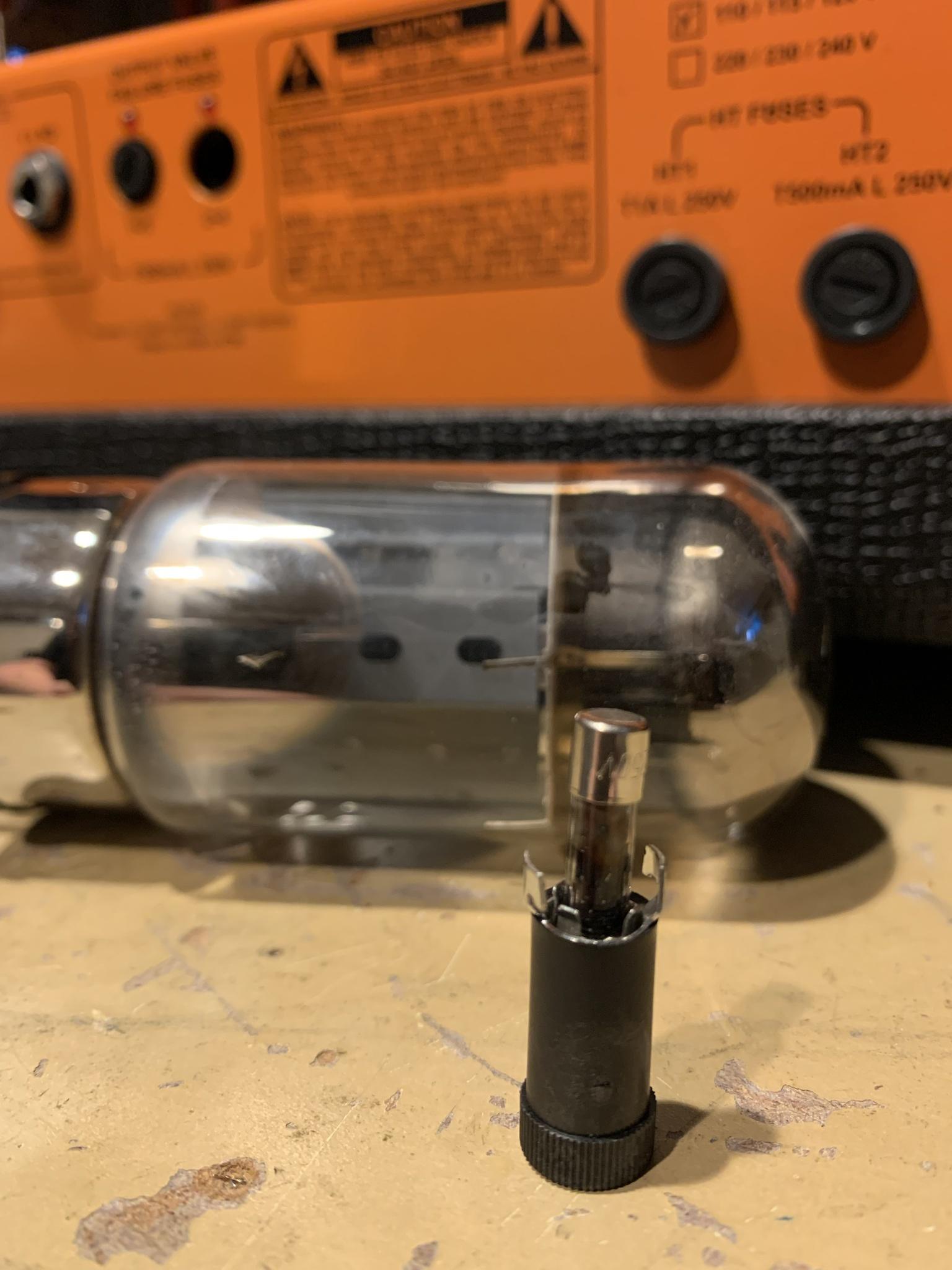
I was using mine the other day and swapping around some amps for demos when I noticed a fuse had tripped on tubes 2+4. Checked the fuse and it was definitely toast, but the tubes all tested fine, though not the best matched set. They appear original, all of the tubes in the amp have the “PM” logo.

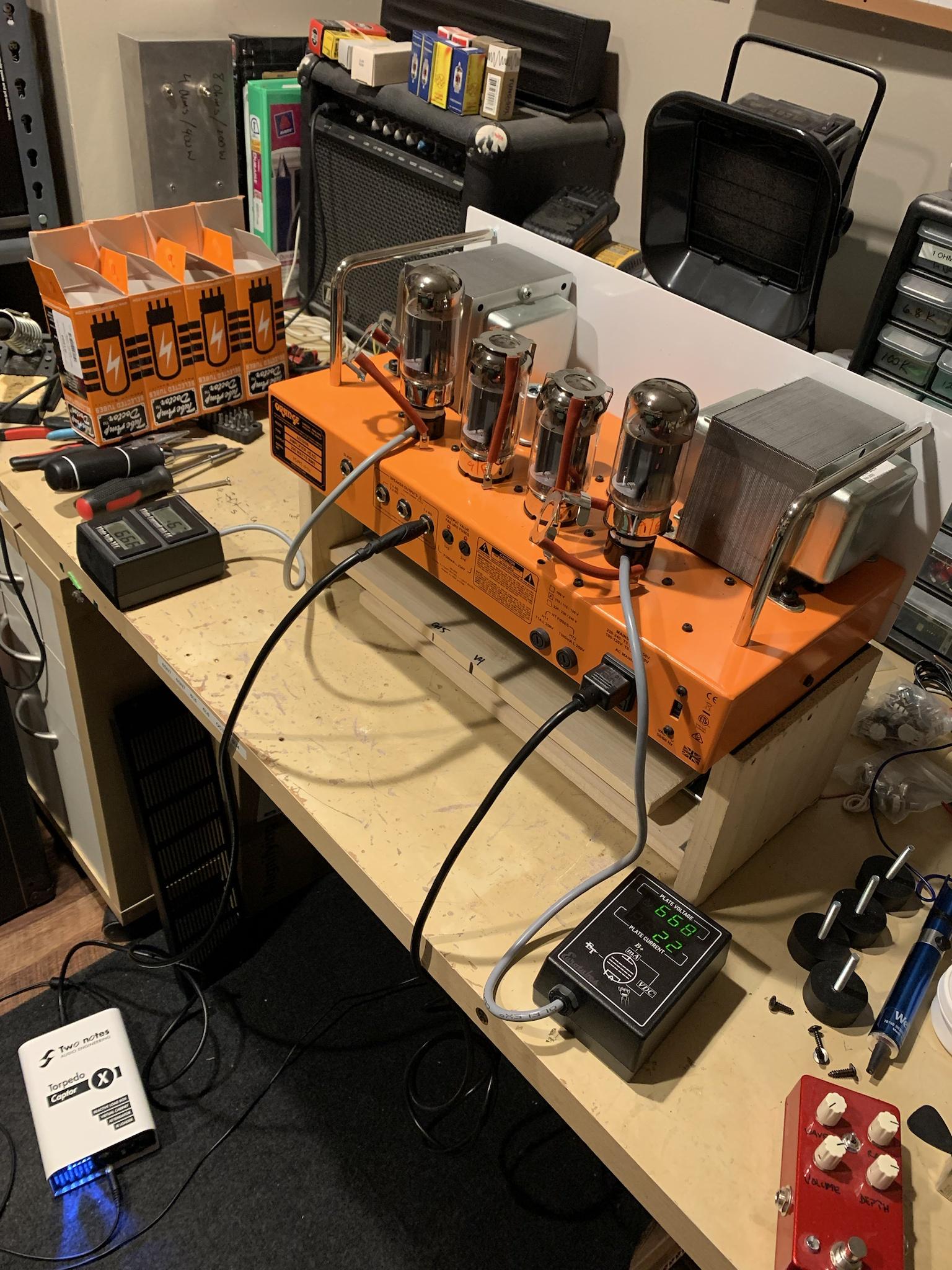
I had a matched quad of TAD branded 6550s, not sure how long I’ve had them on the shelf but they’re new. On the tester they matched the better of the original orange tubes so I put those in, swapped the fuse, and checked the bias. They sat right in what I’ve read is the factory range for these amps at 22-23mA.

Great. Seemed like maybe just a tube issue, maybe an intermittent short or something of the sort since they were testing fine now.

Not so great. After letting the amp warm up a bit and playing for a time it started having an annoying background ticking. Almost like a static or interference kind of sound. Happens with the volume and gain down, no instrument plugged in, 4 or 8 ohm cabs, different speaker cables, and into my captor X. Tried reseating the tubes and checked the PI since it’s post MV. Same noise.

Last night I swapped the PM tubes back in and the noise is gone. The bias isn’t exact, on the lowest testing tube I’m getting around 18mA/666V, on the higher testing tube 23mA/668V.

So it seems like the issue was the tubes, not the amp. But now I’ve got a potentially problematic tube set, or two I suppose. One in the amp, one out.

So, for anyone who has replaced tubes in their AD200 recently - what are you using? How are you setting your bias? As mentioned above what I’ve read around the nets is orange recommends pretty cool bias of 18-22mA so I’m right in the range.

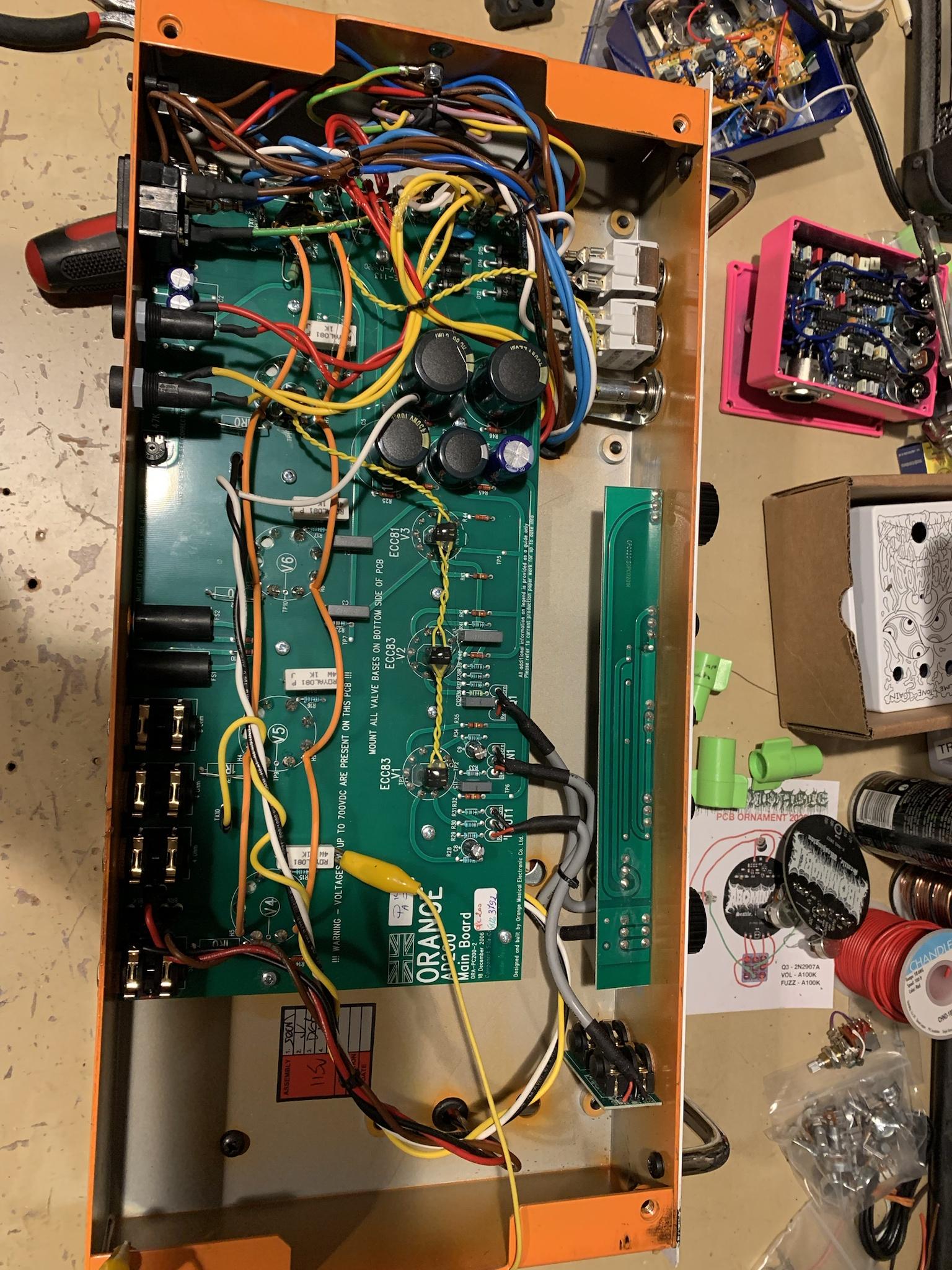
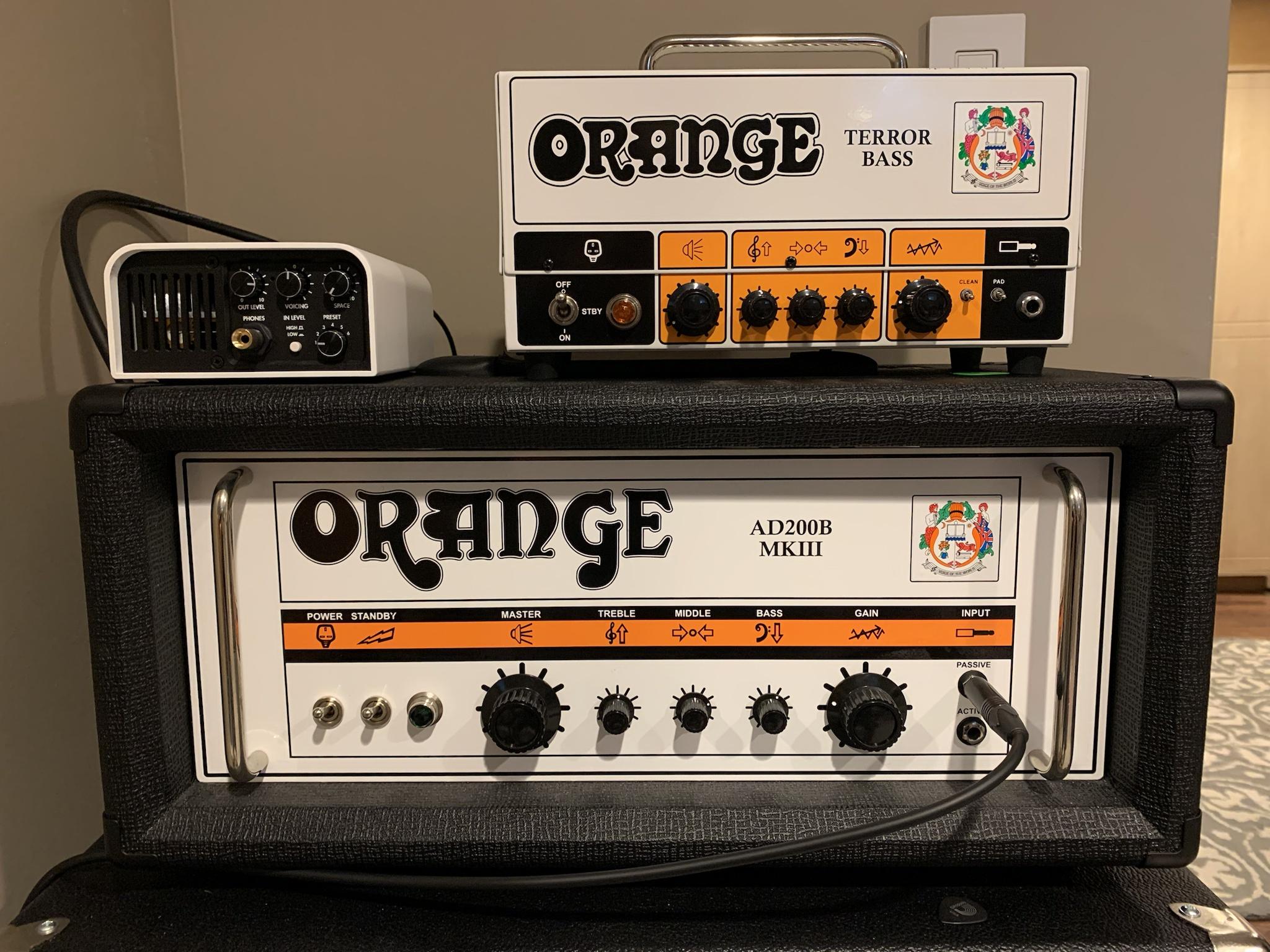
Because threads are boring without pictures, here’s some candy:
MhaDX7n.jpg


WhkRpjb.jpg


jYj8F9Z.jpg


1cal0qv.jpg
 
Both problems could be caused by loose pins in the tube sockets. The pins can be retensioned with a dental pick. I bought mine at my local Ace Hardware. Make sure the power supply capacitors are bled down before doing the procedure, or you may get a jolt.

My amp is still running the original JJ 6550s. Factory bias is 18-22mA. Haven't checked where the bias is set in my amp, but it pulls less current through my variac than any other 200W tube amp in my collection...so my guess is the tubes are running pretty cold. It sounds good.

If I ever wear the JJs out, I'll probably install a new set of JJs. If I have a reasonably matched set of previously loved KT88s on hand, I will try those first.

If retensioning the tube sockets does not eliminate the ticking, try pulling two tubes. You want one tube on each side of the OT. If the ticking goes away, swap the other pair in. If the ticking comes back, swap one of the other tubes into the pair to identify the faulty tube.

I have analog bias probes that measure cathode current directly. So if one of the tubes is noisy, it shows on the respective current meter. It looks like you have digital bias probes, so they may not pickup the fluctuation.
 
Both problems could be caused by loose pins in the tube sockets. The pins can be retensioned with a dental pick. I bought mine at my local Ace Hardware. Make sure the power supply capacitors are bled down before doing the procedure, or you may get a jolt.

My amp is still running the original JJ 6550s. Factory bias is 18-22mA. Haven't checked where the bias is set in my amp, but it pulls less current through my variac than any other 200W tube amp in my collection...so my guess is the tubes are running pretty cold. It sounds good.

If I ever wear the JJs out, I'll probably install a new set of JJs. If I have a reasonably matched set of previously loved KT88s on hand, I will try those first.

If retensioning the tube sockets does not eliminate the ticking, try pulling two tubes. You want one tube on each side of the OT. If the ticking goes away, swap the other pair in. If the ticking comes back, swap one of the other tubes into the pair to identify the faulty tube.

I have analog bias probes that measure cathode current directly. So if one of the tubes is noisy, it shows on the respective current meter. It looks like you have digital bias probes, so they may not pickup the fluctuation.

The PM tubes and TADs actually look like they may be the same construction. Metal base, similar plate structure. I’ve read various sources the PM are usually either Chinese or JJ. I’ve had good luck with TAD in the past, but this is the first time I’ve used their 6550.

The analog current probes are a good idea, not that I need an excuse for more tools. Would probably be an easy way to visualize the noisy tube without having to probe around 660V with a scope.

Swapping back to the PM tubes did away with the ticking entirely, it’s just an old/used tube set which possibly blew a fuse.
 
  • Like
Reactions: Wasnex
The PM tubes and TADs actually look like they may be the same construction. Metal base, similar plate structure. I’ve read various sources the PM are usually either Chinese or JJ. I’ve had good luck with TAD in the past, but this is the first time I’ve used their 6550.

The analog current probes are a good idea, not that I need an excuse for more tools. Would probably be an easy way to visualize the noisy tube without having to probe around 660V with a scope.

Swapping back to the PM tubes did away with the ticking entirely, it’s just an old/used tube set which possibly blew a fuse.

If the fuse blows again and retensioning the sockets does not fix either problem. Perhaps one good tube from the old set will match up well-enough with 3 good tubes from the new set. I have quite a few amps running mixed sets that are selected based on how the current matches in the amp.

Since the tubes are fused in pairs, you probably already know which pair has the suspect bad tube. Per the schematic it looks like the fuse pairings alternate. From the top back of the amp, the output tubes are V4,5,6,7. FS1 feeds V4 and V6; FS2 feeds V5 and V7.
 
  • Like
Reactions: coreyfyfe
There might not be any issue with the old tubes, the matching is pretty typical and not worrying either. I would leave the old tube set in the amp and see how it goes.

One of the issues we see in guitar land (where players swap tubes more then they do their underwear), a lot of new problems get created during such "tone safari" quests for excellence and beyond.
 
  • Like
Reactions: Laurent
The AD200B I bought from Sweetwater had pretty mismatched tubes ( EH 6550's ) as well, some as much as 10mA. I second the JJ KT88’s, I bought a matched quad and they were all within 2mA after biasing. The amp sounded fine with the original tubes, but I think the KT88's sound better to me. Glad it worked out for you in the end, these are EXCELLENT sounding and LOUD amps, love mine!
 
Note that static bias current doesn't mean that much. What's more important is how close current sharing under load. It's much easier to measure static bias, therefore it has more value to the marketing folks who don't want to do any more than is necessary to make the sale.

It's quite possible to have perfectly matched static bias yet poorly matched AC load sharing on say a quartet.
 
I recently swapped tubes in my AD200B
I had original tubes (supposed to be Ruby) from 2009 to something like 2019
Then I moved to JJ and the amp never sounded like before, harsher, less rounded.
Then somebody used the head in a not proper way and I had to fix it and change tubes that were exhausted
My technician returned the amp a couple of weeks ago, with EH matched tubes, and it sounds more similar to what I remember as the original sound of the head
(as a side note: current tube price is crazy)