• TalkBass has been independent since 1998. Add your voice.
    Create a free account to reply to discussions, view embedded media, and browse with fewer display ads.
    Join freeLog in
    Want zero display ads or expanded classifieds tools? Compare plans.

Output Jack Wear?

Hi, all!

I practice in short bursts—5, 10 minutes throughout the day with a relatively old active bass made around 2003. Could I possibly damage the output jack by plugging and unplugging every time? I wonder if it’d be wiser to forget about battery life and only unplug at night to minimize wear on the jack.

I’m really new to bass and the forum. Please forgive me if this is a dumb question!
 
Depends on the style and quality of Jack. Barrel jacks wear out quicker. IME jacks are one of the parts to wear out first.

that said, jacks last a long time. And it’s pretty cheap and easy to replace one. You can eat up batteries quick, even just plugged in all day. So I’ll +1 on unplugging.

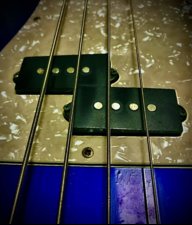
One thing I do on my P bass, to minimize the strain on the Jack and pickguard when unplugging- put your thumb on the nut and push down as you pull the cable out (sort of like you’re flipping a coin.) instead of yanking it out.
 
Hi, all!

I practice in short bursts—5, 10 minutes throughout the day with a relatively old active bass made around 2003. Could I possibly damage the output jack by plugging and unplugging every time? I wonder if it’d be wiser to forget about battery life and only unplug at night to minimize wear on the jack.
Using the same logic ;), never play your bass because if you do the string will wear out and need to be replaced. :woot:
 
  • Like
Reactions: hitolee
It seems that I replace output jacks every couple of years or so. I do practice 2-3 times a day and usually gig at least 1 or 2 nights a week. Until recently, I had only active basses (now I have one of each).

To me, it seems that repeated cycles of connecting the cable will eventually wear the nickel plating off of the contact surfaces of the output jack. Once the bare metal of the contact point is exposed, it corrodes quickly. It can be cleaned with Deoxit and the like, but that’s a short-term solution. It will corrode fairly quickly. That’s why I don’t hesitate to replace an output jack at the first sign of noise or ginchiness. I keep new ones on hand (the good Switchcraft jacks). Since I’m adept at soldering, I can easily replace one in 10-15 minutes.
Since I now divide my time between an active bass and a passive bass, I’m curious to see how the life cycle of the outback changes, if at all.

What I’ve never understood is why the cable plugs’ surfaces don’t seem to wear near as quickly as the jacks. Oh, well….
 
One thing I do on my P bass, to minimize the strain on the Jack and pickguard when unplugging- put your thumb on the nut and push down as you pull the cable out (sort of like you’re flipping a coin.) instead of yanking it out.

Thanks for the advice. It's really tight for now--I have to use all my might with both hands to pull the cable out. That's why I thought the process would be hard on the part.


Using the same logic ;), never play your bass because if you do the string will wear out and need to be replaced. :woot:

Good point... I better not breathe too much or my lungs will give out! :laugh:


To me, it seems that repeated cycles of connecting the cable will eventually wear the nickel plating off of the contact surfaces of the output jack. Once the bare metal of the contact point is exposed, it corrodes quickly. It can be cleaned with Deoxit and the like, but that’s a short-term solution. It will corrode fairly quickly. That’s why I don’t hesitate to replace an output jack at the first sign of noise or ginchiness. I keep new ones on hand (the good Switchcraft jacks). Since I’m adept at soldering, I can easily replace one in 10-15 minutes.

That's really cool you can work on it yourself. I am getting some popping noise, which I assumed was from the battery connection. I'll check if there's corrosion in the jack.

Thanks, everyone!
 
  • Like
Reactions: Jeff Scott
One of my basses is 40 years old and gets plugged/unplugged almost daily.

Still the original Switchcraft jack.

I have occasionally re-bent the tip contact over the years to tighten.

When it finally breaks, I'll replace it with another non-bootleg Switchcraft jack

They are rated for 20,000 insertions, so 54 years of daily use
 
  • Like
Reactions: hitolee
A tip to help your jack last longer. Don't use gold-plated plugs. That gold plating wears off inside the jack and I don't know what actually happens, but the coating it leaves inside the jack causes poor electrical contact with the plug. And it takes a bit of work to remove it, often times I have to clean it out with a fine emery - De-Oxit doesn't remove it..
 
Gold plating sucks, no matter where it is on a guitar.

31053c47298d03b1be1fee3ddfbad5a5.jpg
 
A tip to help your jack last longer. Don't use gold-plated plugs. That gold plating wears off inside the jack and I don't know what actually happens, but the coating it leaves inside the jack causes poor electrical contact with the plug. And it takes a bit of work to remove it, often times I have to clean it out with a fine emery - De-Oxit doesn't remove it..

Gold plating sucks, no matter where it is on a guitar.

:jawdrop:
Thanks for bringing that to my attention.
Looks like it’s happening already!
What should I replace it with? Chrome? Nickel?

14708994-A9BA-4143-BF99-DC1EC0AAA847.jpeg
 
A tip to help your jack last longer. Don't use gold-plated plugs. That gold plating wears off inside the jack and I don't know what actually happens, but the coating it leaves inside the jack causes poor electrical contact with the plug. And it takes a bit of work to remove it, often times I have to clean it out with a fine emery - De-Oxit doesn't remove it..

Well, great…:banghead:

I just bought a surplus dozen of really nice black gold-plated right-angle Neutrik 1/4” TS plugs from a contractor that had these left over from a job.

I’ve never consciously bought or not bought gold-plated plugs until these. I’ve used only one of those plugs so far. I put it on on the 10’ 1/4” cable I use with my practice mixer at home. I reckon I better start watching the plug and the output jacks on my basses. 99% of the time, I go wireless and the plug on the belt pack is nickel.

Harrumph. And oh, well….:D
 
  • Like
Reactions: hitolee
What I’ve never understood is why the cable plugs’ surfaces don’t seem to wear near as quickly as the jacks. Oh, well….

Because the wear on the jack is concentrated on one tiny spot on each contact, yet on the cable the wear is spread out over a much larger surface. First of all, the male end on the cable is round - unless you're inserting it with exactly the same orientation ever time, you're going to randomly spread the wear out around the whole circumference - whereas the same portion of the contact in the jack is worn each time. Secondly, as you slide the cable in, the jack contacts run up along the plug surface as it's seated - one small spot on the jack contact is rubbed along a long section of the plug, so once again, the wear is concentrated on the jack but spread out on the plug.

Plus, jacks are made with contacts that are sprung, so each time you insert the cable the contacts are bent back. Those repeated bend cycles eventually cause the contact to deform and the jack gets loose. Plug ends on cables are static, they aren't repeatedly deformed so they don't really wear out in the same way.
 
  • Like
Reactions: Geri O and hitolee