
American Professional II

Enjoy the benefits of a premium membership!
Upgrade Account
-
TalkBass has been independent since 1998. Add your voice.
Create a free account to reply to discussions, view embedded media, and browse with fewer display ads.
Join free Log in
Want zero display ads or expanded classifieds tools? Compare plans.
You are using an out of date browser. It may not display this or other websites correctly.
You should upgrade or use an alternative browser.
You should upgrade or use an alternative browser.
P bass necks that are thin/flat front to back?
- Thread starter nonohmic
- Start date
More options
Who Replied?
peavey fury has a jbass like neck.... some obscure usa player fenders from the 2010ish era are thinner



They were made alongside the early '62 reissues. Very similar (identical?) dimensions.The Precision Elite I and II from the early eighties have the thinnest necks I ever played.

Also what the original Labella Olintos were based on. More recent, not so much.Which is what the Lull is based on.

I did wonder about Lakland. 1.75 would be fine if it were a shallow neck.USA Lakland 44-64 with the 1.75” nut width has the widest/thinnest P neck I’ve encountered.
Bwahah yus! I love this thing.Sounds like my ratty 62. Wide side to side but very thin front to backI love that thing
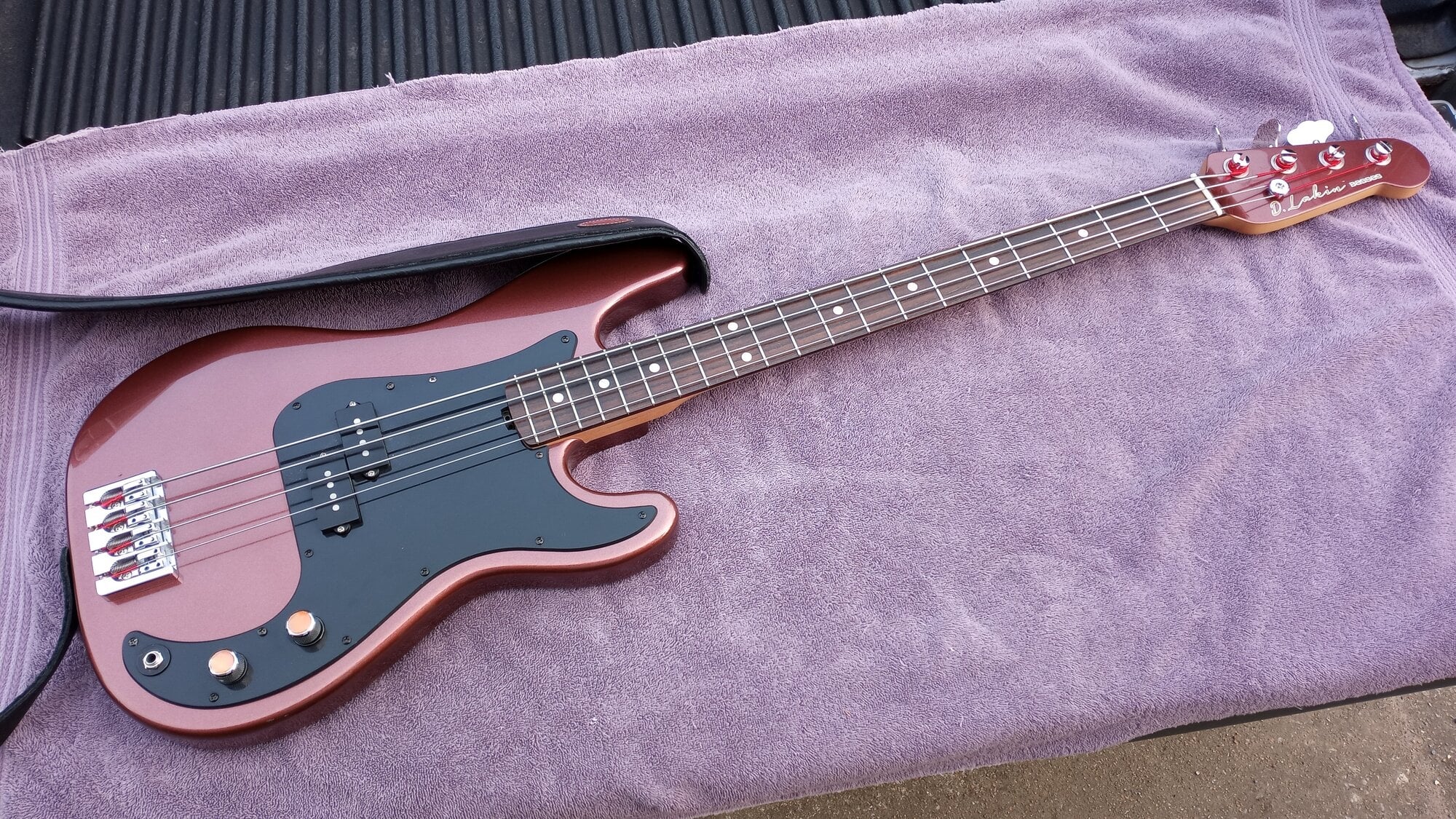
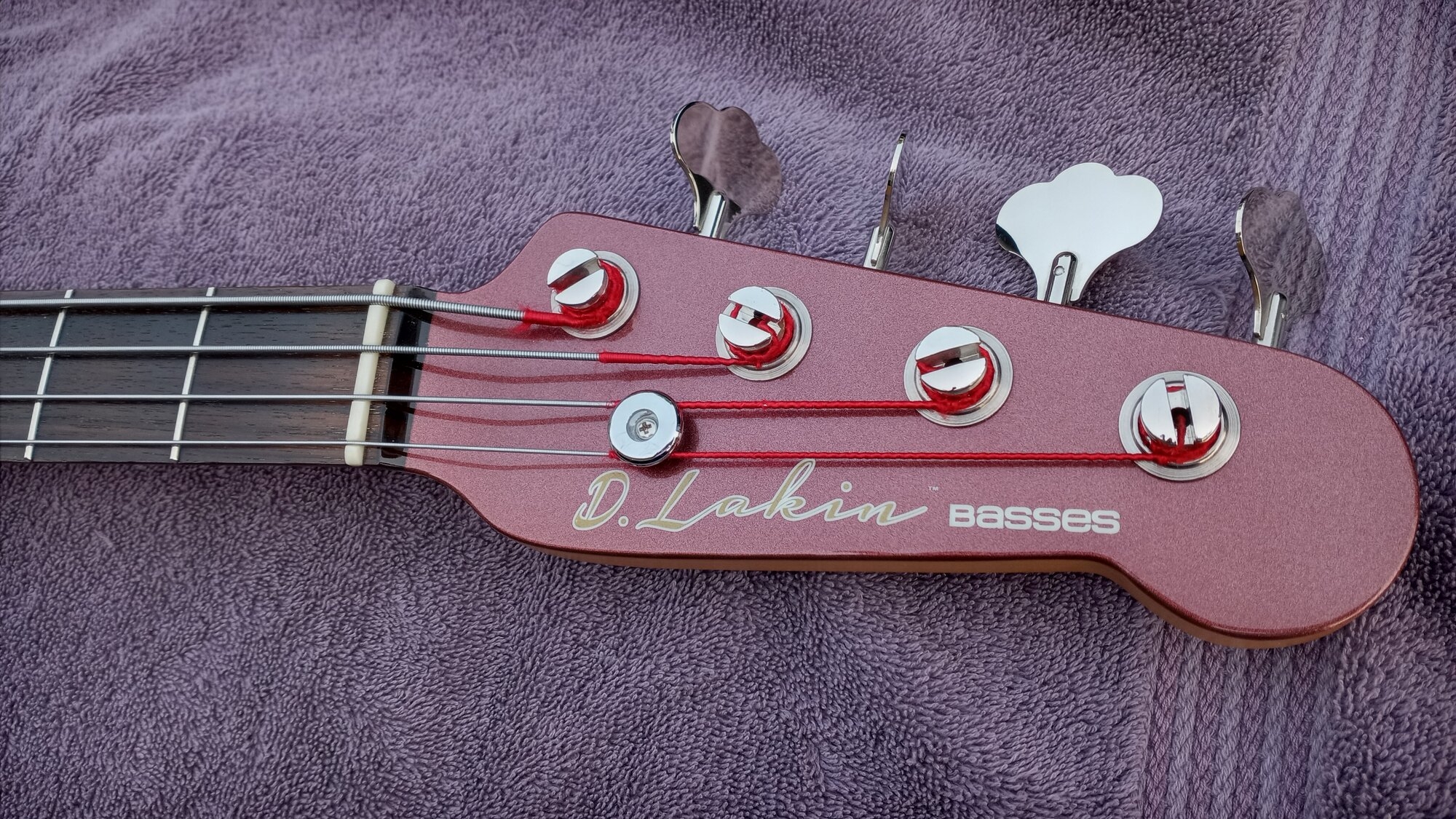
View attachment 7447883


The D Lakin Bob Glaub P bass is modeled after Glaub's '64 Fender. A full 1 3/4" at the nut and flat as a pancake like a typical '64. In fact, "pancake" was the nick-name for that neck shape at one time. Here's my pancake and it's probably going to the grave with me!  (Thanks DaveDeville!)
(Thanks DaveDeville!)
My fender American sanbdlasss bass
don’t forget sandblasted!Original run China Squier Classic Vibe 60’s Precision . This is why I keep buying them.
Fender American Specials with that grease bucket circuits. I believe they came in White, Black, Red, and satin Honey Burst.
Attachments


My 2009 Fender Road worn P is thin front to back....But I think the 1983 Fender standard P I had was thinner.

The custom shop 59 P bass has that neck and some of the early 60's basses also.These dimensions are typically not listed, and it's hard to parse through all the posts and get a clear answer.
What say you, which P basses have necks that have a shallow neck profile front to back? C or D shaped, or otherwise.
thanks!


My Vintera II 60s P bass has the thinnest neck I've ever seen, front to back. At the 1st fret I measured it at 19mm/0.75" at its thickest but my measurement was wonky so maybe it's closer to 20mm/0.79", which is a spec I read somewhere. It tapers out to a full inch at the 12th fret.
This is a 7.25" radius neck so there's a considerable difference in thickness between the edges and the center of the neck.
AFAIK this is somewhat period correct, though there was quite a bit of variation back in the day since necks were finished by hand, but I see many vintage P basses from the early 60s that have a tad more depth at the 1st fret.
What makes a neck feel thin, besides the actual depth, is the profile. This bass has a pronounced C shape with very shallow shoulders. Honestly it doesn't support the hand enough for my tastes, especially since it's 1.75" wide. It's a bit like holding a tile
Contrast that with my MIJ and its oval profile. The nut width is 1.65" and at the 1st fret it's about 21mm thick with a flat back but the shoulders bulge outwards - it feels like the neck is wider than the fretboard - so it feels chunkier than it is.
This is a 7.25" radius neck so there's a considerable difference in thickness between the edges and the center of the neck.
AFAIK this is somewhat period correct, though there was quite a bit of variation back in the day since necks were finished by hand, but I see many vintage P basses from the early 60s that have a tad more depth at the 1st fret.
What makes a neck feel thin, besides the actual depth, is the profile. This bass has a pronounced C shape with very shallow shoulders. Honestly it doesn't support the hand enough for my tastes, especially since it's 1.75" wide. It's a bit like holding a tile
Contrast that with my MIJ and its oval profile. The nut width is 1.65" and at the 1st fret it's about 21mm thick with a flat back but the shoulders bulge outwards - it feels like the neck is wider than the fretboard - so it feels chunkier than it is.
mm = cmI did some measurements on my Elite's from the 80's:
Elite I (rosewood fretboard)
First fret: 2.075mm = 0.817 inch
12th fret: 2.295mm = 0.904 inch
Elite II (maple fretboard)
First fret: 2.075mm = 0.817 inch
12th fret: 2.315mm = 0.911 inch

My 69 P is as well, that one and the 66 mustang I had are/were just awesome feeling necks. I had a couple of late 70s fenders where they had that deep U feel, totally different from the 60s basses. I think the change was in the early 70s? The modern stuff often feels like a compromise between the two to me. Haven’t tried many modern MIJ basses.My early '68 Fender P is pretty thin front to back. I have a 2023 Fender japan Heritage 60s p-bass that is nearly the same.
I thought these were quite 'normal'. Not flat at all, but not baseball bats.
I had a Fender Ultra with 'D' shaped neck multi radius and 1.625 nut: was most comfortable and playable neck I ever played
The thin/wide combo allowed my thump to be closer to fretboard which allowed much easier to stretch fretting hand fingers
There's a used Ultra at my GC. I'll go check it out. Not into an active P, but worth checking the neck.
I did some measurements on my Elite's from the 80's:
Elite I (rosewood fretboard)
First fret: 2.075mm = 0.817 inch
12th fret: 2.295mm = 0.904 inch
Elite II (maple fretboard)
First fret: 2.075mm = 0.817 inch
12th fret: 2.315mm = 0.911 inch
My Vintera II 60s P bass has the thinnest neck I've ever seen, front to back. At the 1st fret I measured it at 19mm/0.75" at its thickest but my measurement was wonky so maybe it's closer to 20mm/0.79", which is a spec I read somewhere. It tapers out to a full inch at the 12th fret.
This is a 7.25" radius neck so there's a considerable difference in thickness between the edges and the center of the neck.
AFAIK this is somewhat period correct, though there was quite a bit of variation back in the day since necks were finished by hand, but I see many vintage P basses from the early 60s that have a tad more depth at the 1st fret.
What makes a neck feel thin, besides the actual depth, is the profile. This bass has a pronounced C shape with very shallow shoulders. Honestly it doesn't support the hand enough for my tastes, especially since it's 1.75" wide. It's a bit like holding a tile
Contrast that with my MIJ and its oval profile. The nut width is 1.65" and at the 1st fret it's about 21mm thick with a flat back but the shoulders bulge outwards - it feels like the neck is wider than the fretboard - so it feels chunkier than it is.
Thanks for the measurements. That's good info


