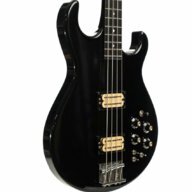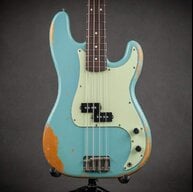
The Precision Elite I and II from the early eighties have the thinnest necks I ever played.
Came in to post ^^^this.

TalkBass has been independent since 1998. Add your voice.
Create a free account to reply to discussions, view embedded media, and browse with fewer display ads.
Join free Log in
Want zero display ads or expanded classifieds tools? Compare plans.
The Precision Elite I and II from the early eighties have the thinnest necks I ever played.

You can try the Indonesia Squier CV70P.These dimensions are typically not listed, and it's hard to parse through all the posts and get a clear answer.
What say you, which P basses have necks that have a shallow neck profile front to back? C or D shaped, or otherwise.
thanks!

Indonesia Squier CV70P

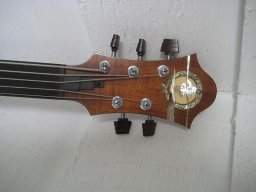
Yes! Late ‘80s, too. Both their ESP-branded replacement necks and their Navigator-branded complete basses had very flat necks.ESP from the early 90s, but it would probably be on a PJ
I've also been down this road with Musikraft. I've asked if they'd make a Fullerton P profile which should be roughly about .775 to .875 1st and 12th frets, and a Jaco profile jazz neck .74 to .85 1st and 12th frets, they said absolutely not to both requests.Yes! Late ‘80s, too. Both their ESP-branded replacement necks and their Navigator-branded complete basses had very flat necks.
Fender Precisions from around ’82 until around ‘84-ish when they closed down U.S. production for a year have really wide, flat necks. 83 was the sweet spot. The variants of P-basses at that time like the Precision Elite also had that wide, flat neck.
I believe Musikraft will make a P neck with that profile as well.
How does that feel to play? I never tried a neck that thin.The D Lakin Bob Glaub P bass is modeled after Glaub's '64 Fender. A full 1 3/4" at the nut and flat as a pancake like a typical '64. In fact, "pancake" was the nick-name for that neck shape at one time. Here's my pancake and it's probably going to the grave with me!(Thanks DaveDeville!)
View attachment 7448078
View attachment 7448079
They have their standard profiles and that's it. I believe they used to have more available but I guess they've had to streamline production.I've also been down this road with Musikraft. I've asked if they'd make a Fullerton P profile which should be roughly about .775 to .875 1st and 12th frets, and a Jaco profile jazz neck .74 to .85 1st and 12th frets, they said absolutely not to both requests.


These dimensions are typically not listed, and it's hard to parse through all the posts and get a clear answer.
What say you, which P basses have necks that have a shallow neck profile front to back? C or D shaped, or
I feel like late 50s P bass reissues have wide and thin necks.These dimensions are typically not listed, and it's hard to parse through all the posts and get a clear answer.
What say you, which P basses have necks that have a shallow neck profile front to back? C or D shaped, or otherwise.
thanks!
Those are actually not thin, they are deeper than the early 60s reissues. Usually the MIM 50s necks in maple are .82" at the 1st fret vs 0.75-0.79" for the early 60s with rosewood.Another vote for a late 50s profile. I had a MIM Classic 50s P with a pretty shallow depth front to back.
Fender 1961 also. It seems like all the early ‘60’s P-necks. feature that. One TB’er claims the CS Pino, supposedly modeled after a ‘62, has a chunky neck. That would be an exceptional ‘62. Are there other exceptions from the era?Fender 1963