

Enjoy the benefits of a premium membership!
Upgrade Account
-
TalkBass has been independent since 1998. Add your voice.
Create a free account to reply to discussions, view embedded media, and browse with fewer display ads.
Join free Log in
Want zero display ads or expanded classifieds tools? Compare plans.
You are using an out of date browser. It may not display this or other websites correctly.
You should upgrade or use an alternative browser.
You should upgrade or use an alternative browser.
P-Bass Pawn Shop Find
- Thread starter Tulsa Teddy
- Start date
-
- Tags
- pawn pawn shop precision bass shop
More options
Who Replied?
The Internet story about MIA necks being shipped to Ensenada seems unlikely to be real. NAFTA was just implemented, and allowed a much slower phase-in of tariff free imports into Mexico. The Ensenada plant would not reach full FTZ status until later. Thus, it would be too costly to import USA necks then to ship them back to USA.
I really doubt Fender would be willing to take a significant loss on that product line. The story about being without a Squier contract with an Asian manufacturer, and using the Ensenada plant as a bridge to keep the brand out in stores is far more likely.
I really doubt Fender would be willing to take a significant loss on that product line. The story about being without a Squier contract with an Asian manufacturer, and using the Ensenada plant as a bridge to keep the brand out in stores is far more likely.

thank you for the heads up about the quality and congrats, i might just pick up a mim squier jazz to mess around with

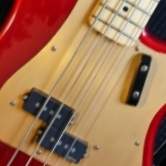
I've heard of these. In the mid nineties,due to a fire at the California factory, Fender sent American necks and bodies to the Mexico facility and these became the "Squier Series." I verified it's a Fender alder body with an American Fender neck, bit it had cheaper hardware all the way around.
I'd be curious to know how you verified it's an American fender body. As far as I know the USA origin of Squire Series MIM Fenders parts is completely apocryphal. I'm prepared to be proved wrong, but it's a story that keeps going 'round year after year with no evidence presented.
I've played several Squire Series MIM Fenders and the truth is that what you're getting in them is a MIM Fender with slightly lower quality hardware and a single color (rather than two tone) Fender logo that were originally sold at a slightly lower price point. Also, the J basses often (perhaps always) had one piece pick/control guards. They can be quite a good value used (often priced less than similar MIM fenders) though and typically will take all/most typical Fender upgrade parts.
All this to say, it might not be quite what you think, but you still got a great deal. Play it in good health.
I have heard so many iterations of the 'these ones are made with american parts but in mexico' that I may start to believe that maybe they ARE both made of wood!
Pardon me, but I believe they're both made of authentic, American tree wood.
That's quality! Mexican tree wood just doesn't measure up.

Nice find, and even nicer pairing with your Jazz in that pic! I really like the bold Fender logo from that era...just looks cool. Good story, thanks for sharing.


Dude that's awesome! Any chance of posting a close-up pic of the headstock? I'm curious if it's similar to mine, which has something scratched off on it. I've never heard of the series, this could explain the unusually great quality of my Mexican Jazz.

I have read several things on the internet (so it must be true) about a fire at a Fender factory and that resulting in American parts being sent to Mexico for production purposes. Some of these sources had a bunch of other data that was turning out to be true so I had no reason to dispute it. I had never seen it disputed until this thread.I'd be curious to know how you verified it's an American fender body. As far as I know the USA origin of Squire Series MIM Fenders parts is completely apocryphal. I'm prepared to be proved wrong, but it's a story that keeps going 'round year after year with no evidence presented.
I've played several Squire Series MIM Fenders and the truth is that what you're getting in them is a MIM Fender with slightly lower quality hardware and a single color (rather than two tone) Fender logo that were originally sold at a slightly lower price point. Also, the J basses often (perhaps always) had one piece pick/control guards. They can be quite a good value used (often priced less than similar MIM fenders) though and typically will take all/most typical Fender upgrade parts. True or not it makes a good story. I had a sergeant in the Marines once who said :It's not where you've been, it's the stories you tell." However now that I know this story is in dispute, I won't further it's longevity.
All this to say, it might not be quite what you think, but you still got a great deal. Play it in good health.
I don't believe I said I verified the body was American. The neck however.....I had been led to believe that in the mid-90s that the necks made overseas had truss rod adjustment lugs that were adjusted with either a screw driver or a metric size allen wrench type tool and that American produced necks had English size allen wrench type truss rod lugs. So since the truss rod was adjusted with an English size allen wrench, I concluded that my neck was American. Furthermore, I've never represented the bass as anything but a MIM "Squier Series" Fender bass. I'm not a luthier nor a Fender corporate historian and never claimed to be so I hope you're happy about my explanation. I'm just a guy who found a bass at a pawn shop and am excited enough about it to share that among friends. If I've made a few mistakes in my back story then who cares.....it doesn't diminish my joy of refurbishing my new instrument and making music with it and learning more about it through the information that Justice and a few others have shared with me. Have a nice day sir.
Last edited:
Thanks. That black J is awesome in its own way. I've been very lucky in finding a few basses that really play nice. I don't know what it is with me and black instruments though. My first electric was a black American strat back in the 80's. I have a vintage Framus Les Paul style that was originally black before abuse occurred, you can still see some of it. I have a black Squier strat now that I keep on hand for noodling around on, and the J and P. My other 2 are natural wood. I always end up selling the guitars with other colors....like the red Squier Pro Tone in my avatar. That just seems to be the color of the good deal for me.Nice find, and even nicer pairing with your Jazz in that pic! I really like the bold Fender logo from that era...just looks cool. Good story, thanks for sharing.
Last edited:
I was excited about the deal and thinking of cleaning it up so much that as soon as I got home I immediately pulled the strings and bridge off and started stripping all the gunk off it. I didn't even think about pictures until the bridge was clean and reinstalled. But here are my earliest pictures.I wanna see the "before" pics!

I got a great deal on a 94 Squier Series Fender Jazz off the bay. It was in great condition and the neck was pristine. One of the best necks Ive seen/played on a Mexican Fender.
Good find! Enjoy it!
Good find! Enjoy it!

Edited to add the necks have a standard truss rod nut instead of a metric one. This additionally backs up my belief regarding what I've read about the bodies and necks being American.
Last edited:
I have read several things on the internet (so it must be true) about a fire at a Fender factory and that resulting in American parts being sent to Mexico for production purposes. Some of these sources had a bunch of other data that was turning out to be true so I had no reason to dispute it. I had never seen it disputed until this thread.
I don't believe I said I verified the body was American. The neck however.....I had been led to believe that in the mid-90s that the necks made overseas had truss rod adjustment lugs that were adjusted with either a screw driver or a metric size allen wrench type tool and that American produced necks had English size allen wrench type truss rod lugs. So since the truss rod was adjusted with an English size allen wrench, I concluded that my neck was American. Furthermore, I've never represented the bass as anything but a MIM "Squier Series" Fender bass. I'm not a luthier nor a Fender corporate historian and never claimed to be so I hope you're happy about my explanation. I'm just a guy who found a bass at a pawn shop and am excited enough about it to share that among friends. If I've made a few mistakes in my back story then who cares.....it doesn't diminish my joy of refurbishing my new instrument and making music with it and learning more about it through the information that Justice and a few others have shared with me. Have a nice day sir.
Sorry if I came off a bit aggressive. As you say, I swapped neck and body in my response and "Completely Apocryphal" might be incorrect.
That said, I think I've seen most of the same posts and such online that you have. In fact if you look around, you'll find just as much said about other MIM fender's having USA parts. Some folks are even suggesting that the cutting of all MIM necks happened in the USA (finishing is a lot cheaper in Mexico) for a number of years. I was very interested in this topic a few years back as I had an opportunity to buy a "Squier Series" MIM. However, a combination of not being terribly impressed by the overall quality and being unable to find more than hear-say and stories about the parts having a different origin than other MIM instruments let me to pass it by.
I think my gut intent is just for folks to slow down a bit in their assumptions about the USA nature of the parts (unless of course there is some reliable way to determine origin) lest newbies and the uninformed get tricked into paying too much for what -in my experience- has proved to be instruments no-better than (and often less than) their MIM "Standard" contemporaries.
That is to say, that a Squire Series is a way to get a cheaper MIM instrument but it would be unwise to assume that the bodies and necks are any better than other MIM Fenders.
Very interesting. Where is this from?
Last edited:
For me "better" and "worse" are very objective words. I've seen some brand new MIM basses that I would prefer to MIA basses hanging next to each other at various stores. I ran on a hunch with my Squier Series PBass based only on the fact that the neck felt good to me. The ironic part is that I stopped at the pawn shop on the way to another pawn shop to pick up a MIM JBass that I liked, but wasn't in love with for 3 times the money. I saw the Squier Series, went to the other store and came back based solely on the feel of the neck. Since then I've replaced the wiring, pots and plug. Cleaned it up and put on new strings. I already have a better bass than the JBass (that was in pretty good shape) I intended to buy. I'm more impressed with this neck than I have been with many MIA necks I've played lately. As a matter of fact, the only neck I like better is on my MIA Elite J fiver. So, if you told me you knew the necks and bodies were made in USA, I'd reply..."It sure seems like it." If you said they were made in Mexico, I'd reply "They seem to make some good parts down there on occasion." Either way I got a good neck for me and that's what matters. It has also given me the impression that Squier Series instruments are a bargain if you know what to look for and repair/upgrade what you've found.

Very interesting. Where is this from?
I would like to know as well, as I have never come across that in my research on the black label Fenders. Most of that falls in line with what I have been able to find through researching, with the exception of the entire third paragraph. I have never seen anything about the bodies and necks being US made that was not just hearsay..
I've run across that story a couple of times in my googling. I'd like to know too now that I've heard opinions to the contrary.
On the subject of the bass itself, does it have the thinner (Front-to-back) neck profile (the opposite of a baseball bat) that a lot of MIM's P's had/have. My '96 MIM P has the flatter neck profile and I just love it! It's not graphite reinforced and the fretwork isn't quite as polished, but I still prefer it to a lot of MIA necks I've played just for the really comfortable profile.
That's about sums it up. Anything from MIM (or MIA, MIJ, MIC, etc. for that matter) should be judged on an individual basis. I'd never suggest not buying a "Squire Series" if it plays well and it's certainly likely to cost less than a comparable "Standard" MIM. At $110 you really beat the curve and I certainly would have picked it up at that price if only to have another modding platform.
I'd just not pay more thinking they were likely built of better stock than other MIM's.
For me "better" and "worse" are very objective words. I've seen some brand new MIM basses that I would prefer to MIA basses hanging next to each other at various stores. I ran on a hunch with my Squier Series PBass based only on the fact that the neck felt good to me...
... Either way I got a good neck for me and that's what matters. It has also given me the impression that Squier Series instruments are a bargain if you know what to look for and repair/upgrade what you've found.
That's about sums it up. Anything from MIM (or MIA, MIJ, MIC, etc. for that matter) should be judged on an individual basis. I'd never suggest not buying a "Squire Series" if it plays well and it's certainly likely to cost less than a comparable "Standard" MIM. At $110 you really beat the curve and I certainly would have picked it up at that price if only to have another modding platform.
I'd just not pay more thinking they were likely built of better stock than other MIM's.
Last edited:


