• TalkBass has been independent since 1998. Add your voice.
    Create a free account to reply to discussions, view embedded media, and browse with fewer display ads.
    Join freeLog in
    Want zero display ads or expanded classifieds tools? Compare plans.

P-Bass Question for the Fender guys

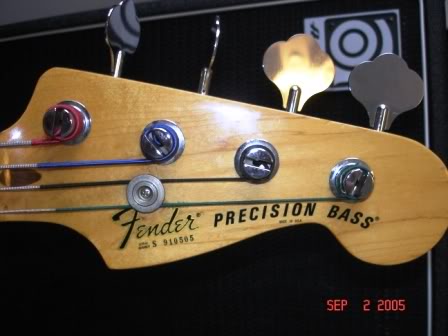
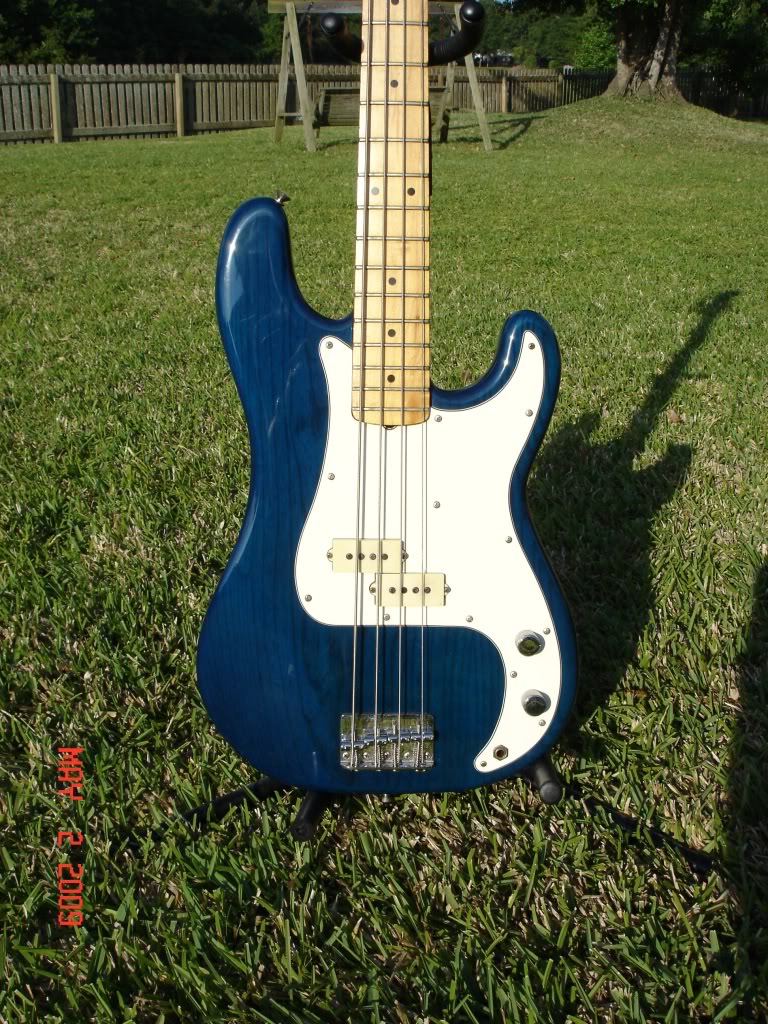
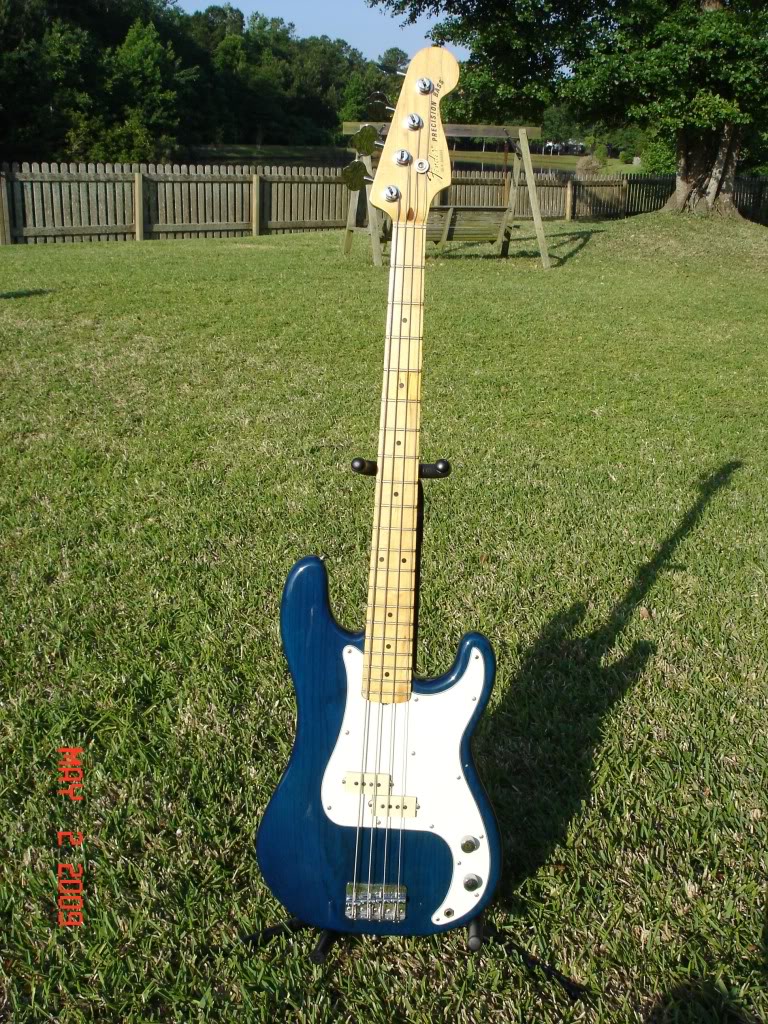
Okay, I have a P-Bass that's dated S9105XX on the headstock, but the neck is stamped Sept. 82 and the pots date to 81 and 82. From that, it looks to be a bass built in 1982 with a 79 neck. As you see from the pics, it's transparent blue over an ash body with white pick up covers. It's all original and plays like a dream so I'll be holding to it for the foreseeable future.

DSC00342.jpg

DSC02194.jpg

DSC02193.jpg


Is this a "Fullerton Era" P-bass and does that help collectabilty?

Thanks!
Randy
 
All CBS Fenders are Fullertons. The name doesn't really mean anything specific...everything from 1984 back to I believe the late 50's, was built in the Fullerton plant.

The Fullerton title used on the 82-84 Reissues is so they're not confused with the 86-later Corona built Reissues, but doesn't mean anything to any other model.
 
All CBS Fenders are Fullertons. The name doesn't really mean anything specific...everything from 1984 back to I believe the late 50's, was built in the Fullerton plant.

The Fullerton title used on the 82-84 Reissues is so they're not confused with the 86-later Corona built Reissues, but doesn't mean anything to any other model.

Thanks Caca de Kick! That clears up the "Fullerton" aspects. I've heard that term for awhile, but never really knew what was behind it. The Fullerton title on the reissues made them sound like a Custom Shop or something....

Randy
 
Fender bought a whole pile of serial number decals in 1978. It took them a long time to use them up. Heck, the pots only tell you the oldest it could be, not when it was actually built because they could have a large stockpile of them too. And between 1983 and 1986, they were making instruments with strange combinations of features as they used up the parts in stock.

The history is relevant here. CBS hired Bill Schultz around 1980 or '81 to run the company and bring it to where it should be. But as time moved on, CBS decided to divest themselves of almost everything not related to the core business of communication. So the whole Fender/Rogers/Rhodes went up for sale (as did Gulbransen organs, Selmer wind instruments, Leslie, etc.). Schultz headed a group of investors who bought Fender from CBS in 1985. They didn't get any real estate, only rights, patents, WIP (works in process), and some machinery. So they had to build a new factory, tool up to build things, and not loose too much money during the transition. That's what "Fullerton" means. It's only in reference to the Vintage Series instruments because that's about the only thing that was ever built in both the Corona factory and the original Fullerton factory. MAYBE the first American Standard Strats were built in Fullterton, but I don't recall the year those came out.

So, they used whatever stuff they had to make instruments. And they didn't care about serial numbers as dating information. Bottom line is that the serial number is only an identification thing for inventory, sales, warranty, and accounting reasons. Beyond that if they keep good records and use the numbers in a logical and sequential manner you can use it to help date an instrument's production. But most guitar makers are in the business of selling new instruments, not keeping track of old ones. So, combine the serial number, the features on the instrument, the pot codes, and any dating/identification marks on the bass itself to determine when it was made. But it's highly unlikely that your bass has a neck that was made a full three years before the rest of the bass. It's just that the S8 decal was three years old. Best way is still to take the neck off and look for production information on the heel.

John
 
That is a special P-Bass. It is a transition model from 81/82, as it has an unusual color that was used on later P's only. They went back to white pickguards in the early 80's, and it is the only time (1981-1984) Fender used white pickup covers on their regular basses. There are a few of these transitional Fenders around.
 
My 83 is similar but no where near as good cond. :

[Invalid or Expired Link Removed]
[Invalid or Expired Link Removed]

I thought the PG should be 1 ply for that year. Has it been replaced?

I was wondering about that weird screw in the mid of the PG. Looks like someone decided to remove mine with a pair of pliers at some stage :hmm:
 
They had 1-ply pg's for 1983/84 only, when they introduced the Standard/Elite series. They also changed back to a smaller decal and used different tuners (the modern halfopen style instead of the BMFL type).
 
Fender bought a whole pile of serial number decals in 1978. It took them a long time to use them up. Heck, the pots only tell you the oldest it could be, not when it was actually built because they could have a large stockpile of them too. And between 1983 and 1986, they were making instruments with strange combinations of features as they used up the parts in stock.

The history is relevant here. CBS hired Bill Schultz around 1980 or '81 to run the company and bring it to where it should be. But as time moved on, CBS decided to divest themselves of almost everything not related to the core business of communication. So the whole Fender/Rogers/Rhodes went up for sale (as did Gulbransen organs, Selmer wind instruments, Leslie, etc.). Schultz headed a group of investors who bought Fender from CBS in 1985. They didn't get any real estate, only rights, patents, WIP (works in process), and some machinery. So they had to build a new factory, tool up to build things, and not loose too much money during the transition. That's what "Fullerton" means. It's only in reference to the Vintage Series instruments because that's about the only thing that was ever built in both the Corona factory and the original Fullerton factory. MAYBE the first American Standard Strats were built in Fullterton, but I don't recall the year those came out.

So, they used whatever stuff they had to make instruments. And they didn't care about serial numbers as dating information. Bottom line is that the serial number is only an identification thing for inventory, sales, warranty, and accounting reasons. Beyond that if they keep good records and use the numbers in a logical and sequential manner you can use it to help date an instrument's production. But most guitar makers are in the business of selling new instruments, not keeping track of old ones. So, combine the serial number, the features on the instrument, the pot codes, and any dating/identification marks on the bass itself to determine when it was made. But it's highly unlikely that your bass has a neck that was made a full three years before the rest of the bass. It's just that the S8 decal was three years old. Best way is still to take the neck off and look for production information on the heel.

John


Thanks for the history John!

The neck is stamped Sept. 82 so that's what I call it. It is an interesting bass when you combine all of the features, dates, finish etc.!!

Randy