I have read many comments on TB regarding P basses where people have stated that nothing sounds exactly like a Fender Precision except a Fender Precision. I am not convinced. So, here is another of my homebaked polls to see if the bass-playing community can REALLY tell the difference.
The 3 basses involved are:
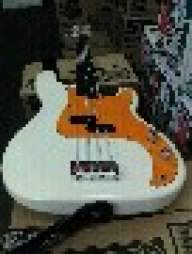
- 1966 Fender Precision. This bass is all original except for the body paint (which was refinned using the same materials and techniques as the original factory paint) and the pickguard. If there a P Bass standard sound, this is it.
- Parts bass. Fender Am Std P body, '62 Reissue pickup, CTS pots, cloth wiring, Orange Drop cap, Allparts neck, Hipshot Ultralight tuners.
- G&L SB-2. Bone stock.
The 2 P basses were recorded with the volume all the way up and the tone all the way off (i.e. no treble cut).
The SB-2 was recorded with the J pickup all the way off and the P pickup volume at around 75%.
I had a set Thomastik Infeld Jazz Flats (heavy) strings on one of them, so I took those strings off that bass and put them on each of the others in turn, to record, then put them back on the original bass and recorded it last. So, it was the same strings on each bass, being played after just being installed on that bass.
The recording setup was bass -> Ibanez Promethean amp. Amp headphone out jack into Olympus LS-10 digital recorder Mic In jack. Recording level was set to manual, with no Limiter, and the level was set the same for all 3 basses. Recording was done in PCM mode (i.e. a WAV file) at 16-bit, 44.1kHz.
The amp EQ was turned off. The amp Vibe setting was turned all the way to Vintage. If I had been paying attention, I would have turned the Vibe loop off, but I didn't notice it was on until I was done recording. Regardless, it was the same for all 3, so it doesn't really affect the test.
So, the question is, can you tell which of the 3 is the "real" P bass?
Recordings:
[Invalid or Expired Link Removed]
[Invalid or Expired Link Removed]
[Invalid or Expired Link Removed]
I am really looking forward to seeing if anybody can really tell which one is the '66. I will say that I cannot tell which is which from listening to the recordings and I would really like to know if that's because they legitimately sound alike or if my ear is just still not sufficiently developed.
ps. Merry Christmas!! Talkbass is awesome and I really appreciate all of you who contribute so much to those of us who are less knowledgeable.
UPDATE: I have posted the answers here (post #59), if you want to post your guess, then go straight on to see if you were right: http://www.talkbass.com/forum/f8/p-vs-p-like-can-you-tell-difference-838140/index3.html#post11944647
The 3 basses involved are:
- 1966 Fender Precision. This bass is all original except for the body paint (which was refinned using the same materials and techniques as the original factory paint) and the pickguard. If there a P Bass standard sound, this is it.
- Parts bass. Fender Am Std P body, '62 Reissue pickup, CTS pots, cloth wiring, Orange Drop cap, Allparts neck, Hipshot Ultralight tuners.
- G&L SB-2. Bone stock.
The 2 P basses were recorded with the volume all the way up and the tone all the way off (i.e. no treble cut).
The SB-2 was recorded with the J pickup all the way off and the P pickup volume at around 75%.
I had a set Thomastik Infeld Jazz Flats (heavy) strings on one of them, so I took those strings off that bass and put them on each of the others in turn, to record, then put them back on the original bass and recorded it last. So, it was the same strings on each bass, being played after just being installed on that bass.
The recording setup was bass -> Ibanez Promethean amp. Amp headphone out jack into Olympus LS-10 digital recorder Mic In jack. Recording level was set to manual, with no Limiter, and the level was set the same for all 3 basses. Recording was done in PCM mode (i.e. a WAV file) at 16-bit, 44.1kHz.
The amp EQ was turned off. The amp Vibe setting was turned all the way to Vintage. If I had been paying attention, I would have turned the Vibe loop off, but I didn't notice it was on until I was done recording. Regardless, it was the same for all 3, so it doesn't really affect the test.
So, the question is, can you tell which of the 3 is the "real" P bass?
Recordings:
[Invalid or Expired Link Removed]
[Invalid or Expired Link Removed]
[Invalid or Expired Link Removed]
I am really looking forward to seeing if anybody can really tell which one is the '66. I will say that I cannot tell which is which from listening to the recordings and I would really like to know if that's because they legitimately sound alike or if my ear is just still not sufficiently developed.
ps. Merry Christmas!! Talkbass is awesome and I really appreciate all of you who contribute so much to those of us who are less knowledgeable.
UPDATE: I have posted the answers here (post #59), if you want to post your guess, then go straight on to see if you were right: http://www.talkbass.com/forum/f8/p-vs-p-like-can-you-tell-difference-838140/index3.html#post11944647