• TalkBass has been independent since 1998. Add your voice.
    Create a free account to reply to discussions, view embedded media, and browse with fewer display ads.
    Join freeLog in
    Want zero display ads or expanded classifieds tools? Compare plans.

Paint shrinkage question

bassgod76

Garbage bassist, but I love this goofy instrument
Mar 13, 2003
5,329
1,133
South Florida
Like George Costanza, I have shrinkage.

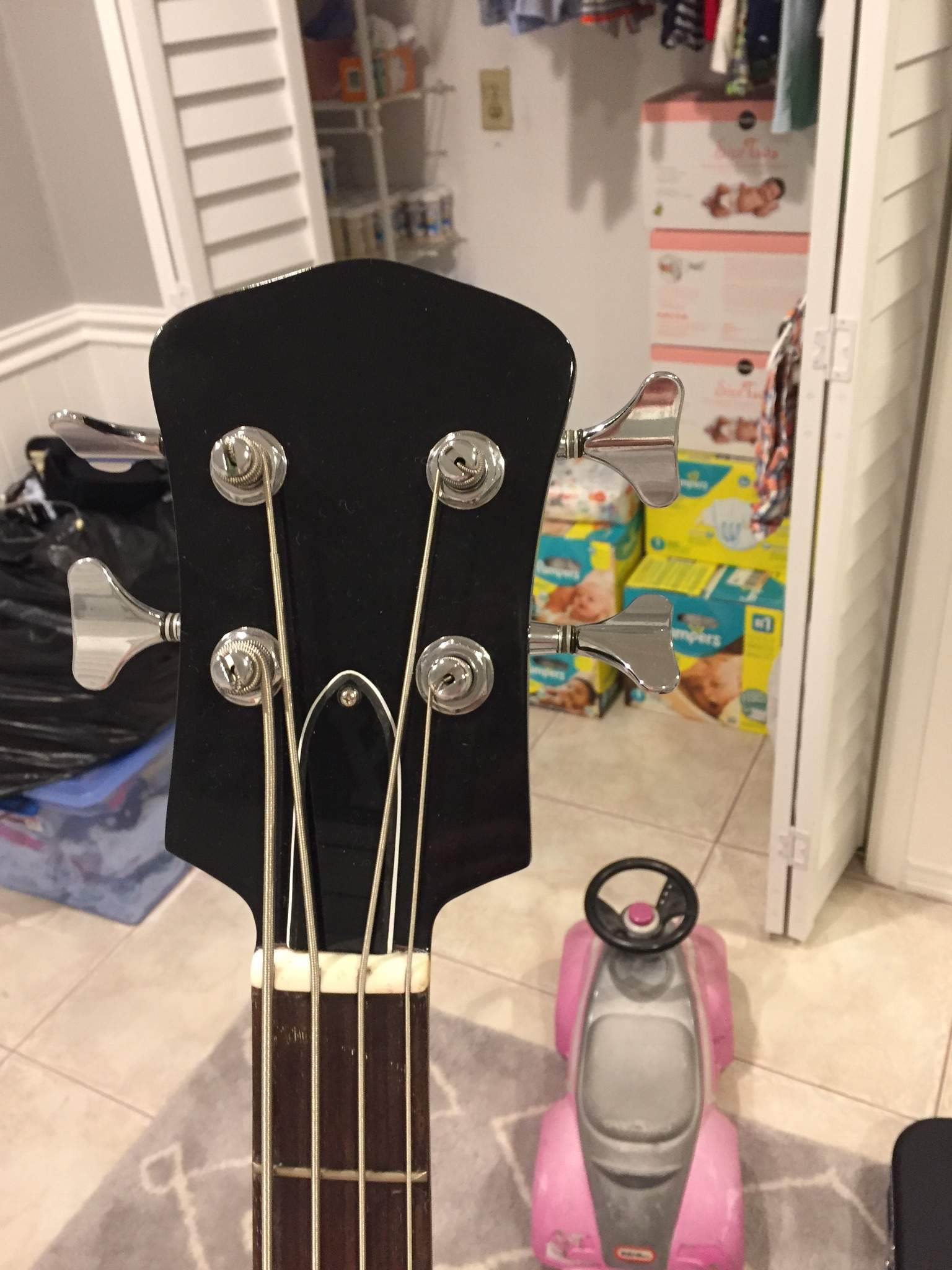
I painted this rattle cans
3 coats primer
9 coats color
14 coats clear
I had to alter some locations of holes, as the headstock was altered. I even capped the dowels with veneer inserts, to keep the surface grain all going the same way.

Throughout prep, fill, sand, and in between sanding, these areas looked smooth, and had no visible marks.

I buff it, and I get this. It’s hard to see, and only visible in direct light.
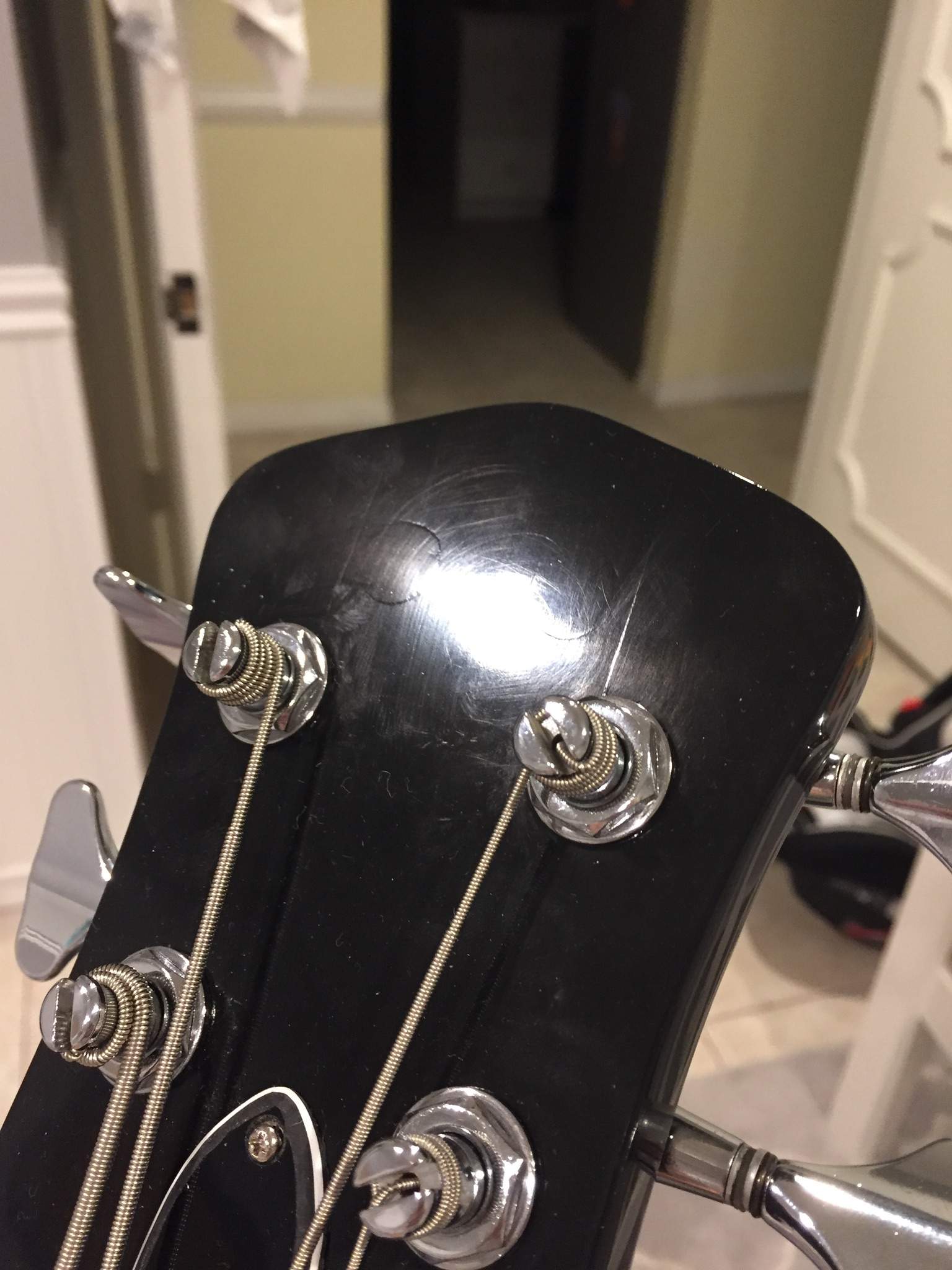
5330949C-BC44-4CEB-B5B2-EC81CDACA0BB.jpeg

D76A398F-C4E7-406F-8554-047ADB8B9B7D.jpeg


1. Is it my paint choice?
2. Did I not give enough cure time before buff?

Fill me in!
 
I’d say it’s glue seam and plugs that are creeping and making witness lines. I’ve had best results with patches when I used epoxy as glue. For opaque paint I’d make a small v-shape slot along the patch edges and fill that with epoxy. For headstock a full veneer front and back would work too.
 
Looks like glue seam shrinkback to me too. I've had similar problems before. Like @MPU states above, I now use a full veneer front and back if I'm modifying hole positions on an existing headstock. I also prefer to use epoxy glue for similar reasons (on other seams), plus it's gap-filling abilities.
 
Titebond is notorious for glue shrinkage. It reacts slightly with the lacquer. It sounds like you have a lot of layers on there. If you flatten it back with some high grit paper...you'll get a flat surface again...only to find that in a few months, those glue lines will mysteriously re-appear. The good news is that it won't get any worse that what you are currently seeing.
Some people use epoxy as a grain filler...which also adds a thin layer across the surface and can help prevent this type shrinkage. It's not particularly nice material to work with and it's tough to sand back. Although this is irritating to see, it happens and only you will notice it. I wouldn't sweat the small stuff too much. It looks like you did a good plug and re-finish. Sure, next time you do something like this, you can do it with some hind sight wisdom. You've achieved what 99.9% of bassists would even attempt.
 
I will echo what has already been said, but will offer this additional tip.

When patching or plugging, don’t be in a hurry to flush-cut and level your patch. Let it cure for several days before you trim and level. It takes longer than you think for all of the moisture to leave the glue and wood. In the end, you’ll have far less movement after the fact.
 
  • Like
Reactions: Beej
Pretty much, yup... you may get some shrinkback on those body glue lines, and epoxy will help keep it smooth. I know that epoxy is not for everyone because of the extra work flow, but if you have a box of nitrile or latex gloves handy, lots of little mixing cups, stir sticks, and cover everything in wax paper, it can go quick easy and smoothly.

One thing to consider, which I learned the hard way, is that epoxy does not bondwell to PVA glue. If you're going to use epoxy, you need to make sure to sand back that glue seam very very well. The epoxy may flake off of the seam. Might be worth doing a little test spot. I've had success putting epoxy over top of Titebond that has been used to glue up a seam, and it has worked out well. I've also had a couple that I lost hair over! The key for me has been sanding it back...
 
  • Like
Reactions: bassgod76