Hello,
Some of you know I REALLY like 65 jazz basses. I just think they're cool, I mean I really have no association with the year or anything like that.
I've always wondered just how close I can get to an actual 60's Fender, and I've done a lot of parts basses that get close purely because I couldn't afford 60's Fenders at the time. Now, having owned and played quite a few 60's Fenders, I am once again curious on how I can make the "perfect" 60's Jazz Bass clone.
Since I've owned 3 vintage jazz basses so far, 2 being 65's one a dot/bound 66, I'm going to stick with the "65" theme here. Before I sold my last 65 Jazz, I took exact caliper measurements of the neck and meter readings of the pickup outputs. I then sent the neck specs in to Musikraft (veneer dark rosewood board, pearl dots, etc) where they shipped it to MJT, where I am also commissioning the body to be built and finished. I went with Gotoh lollipop fb30's.
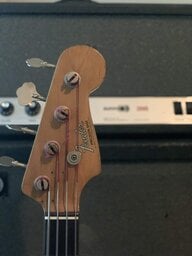
Going for basically a NOS late 65 J. Here's a real example

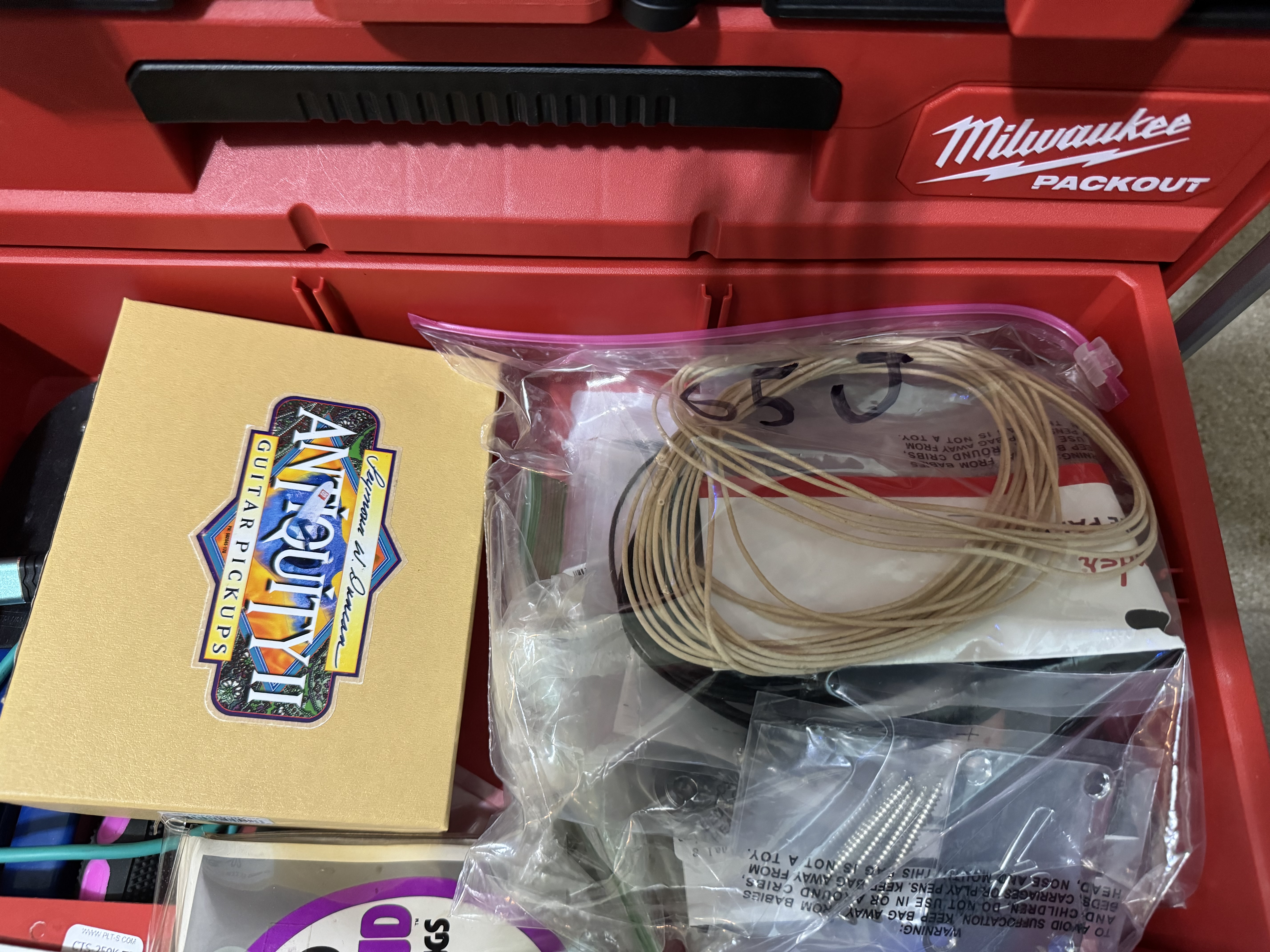
The pickups will be the classic Seymour Duncan Antiquity II pickups, I once didn't like them because they seemed a little, I dunno weird sounding for jazz bass pickups? They had a little more subdued mids than other sets I'd tried, and oddly enough I've only experienced this phenomenon playing 60's jazzes. Heck, I even bought the brass shieldy plate things for the pickup and control cavities, why not?
Drawer full of parts all cts and fender pure vintage, even bought some ashtrays lol.
I at first comissioned a spitfire tort guard for this, but I also bought a lavaguard pickguard which I think looks a LOT closer to the 65 I had, you be the judge lol.
Spitfire
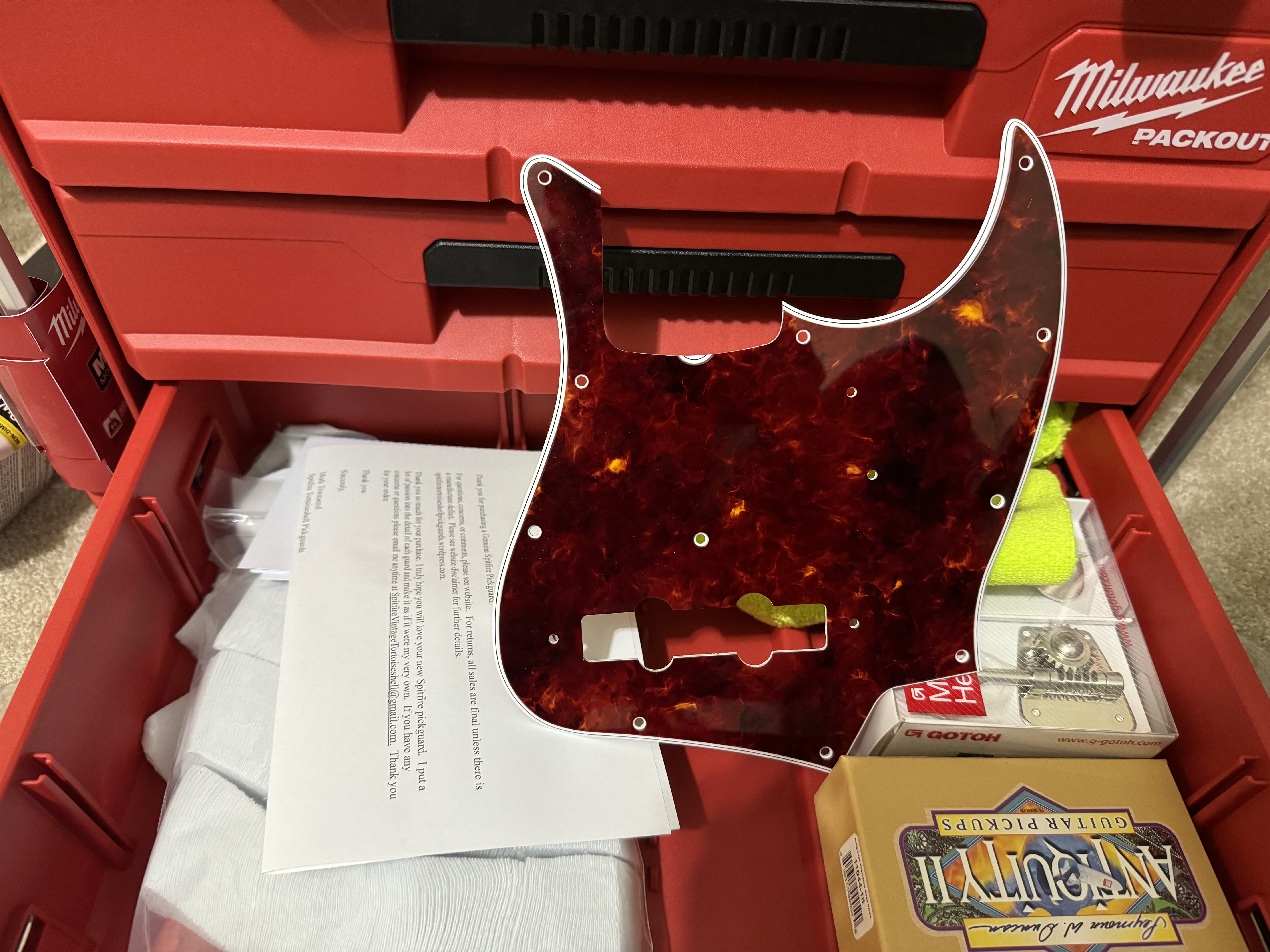
Lavaguards

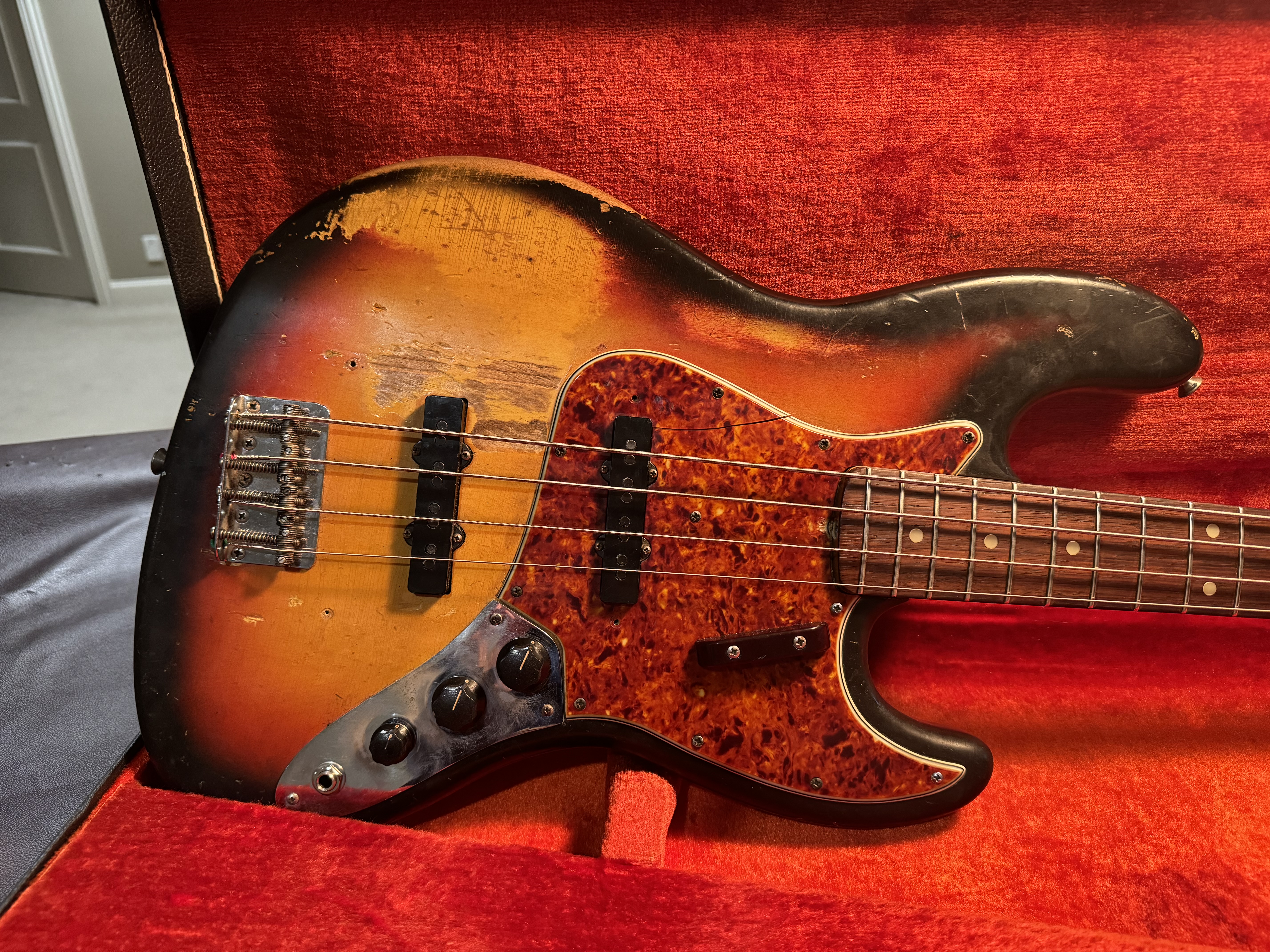
The 65 I had
But yeah that’s kind of it for the moment. Still looking at like a 3-4 week wait on the finished parts from MJT. I’m pretty much going for as NOS as I can get, so no relicing on this one.
I’m working on a similar project in addition to this, only a mid 60’s maple cap precision. Maybe that'll be done in time for Summer Build Off
Some of you know I REALLY like 65 jazz basses. I just think they're cool, I mean I really have no association with the year or anything like that.
I've always wondered just how close I can get to an actual 60's Fender, and I've done a lot of parts basses that get close purely because I couldn't afford 60's Fenders at the time. Now, having owned and played quite a few 60's Fenders, I am once again curious on how I can make the "perfect" 60's Jazz Bass clone.
Since I've owned 3 vintage jazz basses so far, 2 being 65's one a dot/bound 66, I'm going to stick with the "65" theme here. Before I sold my last 65 Jazz, I took exact caliper measurements of the neck and meter readings of the pickup outputs. I then sent the neck specs in to Musikraft (veneer dark rosewood board, pearl dots, etc) where they shipped it to MJT, where I am also commissioning the body to be built and finished. I went with Gotoh lollipop fb30's.
Going for basically a NOS late 65 J. Here's a real example
The pickups will be the classic Seymour Duncan Antiquity II pickups, I once didn't like them because they seemed a little, I dunno weird sounding for jazz bass pickups? They had a little more subdued mids than other sets I'd tried, and oddly enough I've only experienced this phenomenon playing 60's jazzes. Heck, I even bought the brass shieldy plate things for the pickup and control cavities, why not?
Drawer full of parts all cts and fender pure vintage, even bought some ashtrays lol.
I at first comissioned a spitfire tort guard for this, but I also bought a lavaguard pickguard which I think looks a LOT closer to the 65 I had, you be the judge lol.
Spitfire
Lavaguards
The 65 I had
But yeah that’s kind of it for the moment. Still looking at like a 3-4 week wait on the finished parts from MJT. I’m pretty much going for as NOS as I can get, so no relicing on this one.
I’m working on a similar project in addition to this, only a mid 60’s maple cap precision. Maybe that'll be done in time for Summer Build Off
Last edited: