I tried searching this on google but having a hard time. My pedals are daisy chained with a 1 spot. I noticed using single coils there is a buzz(i guess some people call it hum) it sounds like ground loop buzz. Anyway, it is more noticeable when my compressor and overdrive pedals are on. However, when I raise my pedals about an inch from the floor the noise is reduced in half. I do not have a rubber mat to experiment and see if I could lay them on that and would help. Any experience or suggestions out there?

Enjoy the benefits of a premium membership!
Upgrade Account
-
TalkBass has been independent since 1998. Add your voice.
Create a free account to reply to discussions, view embedded media, and browse with fewer display ads.
Join free Log in
Want zero display ads or expanded classifieds tools? Compare plans.
You are using an out of date browser. It may not display this or other websites correctly.
You should upgrade or use an alternative browser.
You should upgrade or use an alternative browser.
Pedals noisier when on the floor.
- Thread starter jwmallett
- Start date
More options
Who Replied?
Does this happen everywhere or just at home? What kind of interior wiring is running under the floor?
John
John
Not sure if it happens everywhere. Although it is an old house with 3 prong receptacle. I was getting a slight shock when my arms were sweaty against the strings so I checked the receptacle of the old house and sure enough, 3 prong dummy connected to only two wires and no ground, so I ran a ground wire from receptacle to the ground outside using a spike, come to think of it, the residual currents would run directly under the floor through a concrete slab so maybe it is picking up interference from that. Either way, I'm not getting shocked anymore and eventually Im going to build a ground loop isolation box for all my pedals, but in the meantime just looking for a poor mans way out. Will be playing at a club this weekend and their wiring could be just as poor. So will a rubber mat help in this situation? Guess I should just find one and try it out.
If it's interference caused by electrical currents running under the floor (or a door bell transformer, low voltage transformer in the thermostat circuit, etc.) then a sheet of rubber won't help. The RF will pass right through it. A sheet of metal between the pedals and the RF source might help, but it's hard to say what's causing the problem.
John
John

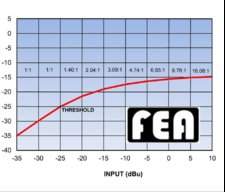
A compy is definitely going to increase the noise floor if you are using a lot of "make up" gain to compensate for a high threshold.
Noise issues
Isolated power outputs can help to eliminate ground loop hum. You could get an Isolated power supply like the Voodoo Lab Pedal Power 2 Plus,...or you could try running all you pedals off of batteries and see if that fixes the issue.
In the long run I advocate for isolated power supplies but the battery solution could at least point you in the right direction.
I have no idea if a rubber mat would be a solution.
Noise issues
Isolated power outputs can help to eliminate ground loop hum. You could get an Isolated power supply like the Voodoo Lab Pedal Power 2 Plus,...or you could try running all you pedals off of batteries and see if that fixes the issue.
In the long run I advocate for isolated power supplies but the battery solution could at least point you in the right direction.
I have no idea if a rubber mat would be a solution.
Many pedals use a pre-amp design If inappropriate (or no) shielding exists on some single coils that could account for the hum. The design of your amp and the order or orientation or the pedals could also. There are several "trial & error" changes you could make but certainly record on paper what you've tried so you move from one to the next to isolate the issue.
There is a device called an "Isolation Transformer" that works very well (it maintains mains voltage & current; it TOTALLY isolates that from other outlets within home or office wiring). This is often the most professional measure if you have Ground Fault Interruption which is causing the hum. The wiring doesn't need to be in existence to be a real problem. Very often the shared ground are water pipes (copper or steel) running right under where you are. Move 10-15ft away and it may disappear. This would be the simplest place to start.
It's also possible that the pre-amp designs are magnifying the present (low level) hum in existence. I would try eliminating one pedal at a time and see if you could isolate it that source first. You've found some DO make a difference, so you may want to start there and alter the order they are stationed in. I would check florescent lights (turn off) and sources similar. Sources of frequency alteration are florescent lights, CRT monitors or TV (the old style big box) laser printers, copies, air purifiers, & especially "neon light displays" - items that typically use higher voltage at another level than 50-60hz.
Of course check any localized mains wiring close to amp or pedals: try another area entirely. If you raise the pedals and the hum diminishes check if a totally different orientation (such as behind the amp) changes anything. If so try another area of the home or office, etc - you might have wiring issues that cannot be altered without difficulty & a lot of work in that exact area.
There is a device called an "Isolation Transformer" that works very well (it maintains mains voltage & current; it TOTALLY isolates that from other outlets within home or office wiring). This is often the most professional measure if you have Ground Fault Interruption which is causing the hum. The wiring doesn't need to be in existence to be a real problem. Very often the shared ground are water pipes (copper or steel) running right under where you are. Move 10-15ft away and it may disappear. This would be the simplest place to start.
It's also possible that the pre-amp designs are magnifying the present (low level) hum in existence. I would try eliminating one pedal at a time and see if you could isolate it that source first. You've found some DO make a difference, so you may want to start there and alter the order they are stationed in. I would check florescent lights (turn off) and sources similar. Sources of frequency alteration are florescent lights, CRT monitors or TV (the old style big box) laser printers, copies, air purifiers, & especially "neon light displays" - items that typically use higher voltage at another level than 50-60hz.
Of course check any localized mains wiring close to amp or pedals: try another area entirely. If you raise the pedals and the hum diminishes check if a totally different orientation (such as behind the amp) changes anything. If so try another area of the home or office, etc - you might have wiring issues that cannot be altered without difficulty & a lot of work in that exact area.
Now this might be way off but maybe something with the jacks? As in something might be improperly grounded or something and holding the pedal a different way might be making something touch that is making the buzz.
FWIW I just wrote a 3 page paper on a mind numbingly boring subject so my brain could be shot.
FWIW I just wrote a 3 page paper on a mind numbingly boring subject so my brain could be shot.

Not sure where the OP is from (not posted in the avatar area) but I don't think wires in the slab are going to do this.
Any wires in a slab are usually in conduit although sometimes it's NM. Driving a ground anode into the dirt isn't always a good OR full ground either. I know - I call them out all the time on the remodels I do - but they are just safety devices, not a common ground.
What I have recently started to see is the switch to Arc-Fault breakers, doing away with GFCI breakers and THESE are letting some hum through in amplifiers.
Arc-Faults are the 'IN' thing in California and are called out in remodels now, even when older circuits are grandfathered out and don't have to be changed. They get a free ride, but I always try to talk the homeowner into the upgrade.
Somebody's uncle to a senator has an Arc-Fault factory and wanted so extra income I guess.
I first ran into this on a dedicated computer circuit that was just noisy with the new Arc-Faults whereas the older GFCIs didn't have any troubles at all. Thanks, California!
The house I live in here has a new VA loan and it called out the A-F breakers and I had to get a Furman rack-mount to clean it up for my gear.
If the OP has the wherewithal to do so, try to run a single WHITE 12AWG wire back to the common bus in the distribution panel. I know fishing a single wire through an existing conduit is a rotten job - maybe there's some other way to access that by going circuit overhead - I'm not there so I can't see the options.
That's the really safe thing to do even if it is a problem to access the circuit.
Some house get bar-room inspections and they have all sorts of failures that don't show up until someone gets hurt - then it's usually too late to get the contractor into court to fix the screw up.
The OP can leave the anode - but I doubt it is doing much good.
BTW: subfloor heating won't do this either - nor will a doorbell transformer - if it even has one of them.
Any wires in a slab are usually in conduit although sometimes it's NM. Driving a ground anode into the dirt isn't always a good OR full ground either. I know - I call them out all the time on the remodels I do - but they are just safety devices, not a common ground.
What I have recently started to see is the switch to Arc-Fault breakers, doing away with GFCI breakers and THESE are letting some hum through in amplifiers.
Arc-Faults are the 'IN' thing in California and are called out in remodels now, even when older circuits are grandfathered out and don't have to be changed. They get a free ride, but I always try to talk the homeowner into the upgrade.
Somebody's uncle to a senator has an Arc-Fault factory and wanted so extra income I guess.
I first ran into this on a dedicated computer circuit that was just noisy with the new Arc-Faults whereas the older GFCIs didn't have any troubles at all. Thanks, California!
The house I live in here has a new VA loan and it called out the A-F breakers and I had to get a Furman rack-mount to clean it up for my gear.
If the OP has the wherewithal to do so, try to run a single WHITE 12AWG wire back to the common bus in the distribution panel. I know fishing a single wire through an existing conduit is a rotten job - maybe there's some other way to access that by going circuit overhead - I'm not there so I can't see the options.
That's the really safe thing to do even if it is a problem to access the circuit.
Some house get bar-room inspections and they have all sorts of failures that don't show up until someone gets hurt - then it's usually too late to get the contractor into court to fix the screw up.
The OP can leave the anode - but I doubt it is doing much good.
BTW: subfloor heating won't do this either - nor will a doorbell transformer - if it even has one of them.
They call them different things in different places but Ground Fault interruption devices do cause problems. The concept is to keep electrocutions from taking place by shutting down the mains should a contact of the active AC contact ground. Frequently they are found in kitchens, bathrooms, etc. But if a bathroom is on the same breaker I think you can get the problem in an adjacent room. If a varying frequency device (florescent lights) is part of that system it could hum. Distance often helps as does moving the system from that breaker load obviously.
The worst I ever heard was from a florescent light ceiling that moved the mains to 400-600VAC (and was no longer 60Hz due to the starter). The only remedy was to move the instruments & amp from that room.
The worst I ever heard was from a florescent light ceiling that moved the mains to 400-600VAC (and was no longer 60Hz due to the starter). The only remedy was to move the instruments & amp from that room.
They call them different things in different places but Ground Fault interruption devices do cause problems. The concept is to keep electrocutions from taking place by shutting down the mains should a contact of the active AC contact ground. Frequently they are found in kitchens, bathrooms, etc. But if a bathroom is on the same breaker I think you can get the problem in an adjacent room. If a varying frequency device (florescent lights) is part of that system it could hum. Distance often helps as does moving the system from that breaker load obviously.
The worst I ever heard was from a florescent light ceiling that moved the mains to 400-600VAC (and was no longer 60Hz due to the starter). The only remedy was to move the instruments & amp from that room.
Yeah - all too true - but you know that the circuits in a bathroom or kitchen or outdoors (another GFCI/AF circuit) are supposed to be single-dedicated and not be tied to any other circuits at all.
Every refrigerator, microwaves, washer/driers, dishwashers, HVAC and exhaust blower motors, freezers, garbage disposals - ANY motored device - are all to be on dedicated lines and not shared with any other circuit too.
Something else::: a fluorescent ballast can backfeed the Common/White return with over 600VAC, and are really dangerous in some situations too.
I am working on a cabin this next month with a 'mysterious 50Volt float' somewhere that another electrician couldn't find. I hope I can find it, as there's a buddies 'C' license on the line if I can't.
I already segregated and removed the A/B legs in the kitchen and one bathroom - THAT would have been deadly - and it was all 'Electrically Approved' in a pre-loan VA inspection.
Idiot inspectors.


- Dec 10, 2008
- 2,341
- 5,822
- Disclosures
- Douglas Castro, Founder: darkglass.com
Pedal chassis are usually made of aluminum, which doesn't conduct (therefore will not shield) electromagnetic waves... there could be a transformer nearby like someone said above.
Try moving them to other room and see what happens!
Try moving them to other room and see what happens!
I am working on a cabin this next month with a 'mysterious 50Volt float' somewhere that another electrician couldn't find. I hope I can find it, as there's a buddies 'C' license on the line if I can't.
I already segregated and removed the A/B legs in the kitchen and one bathroom - THAT would have been deadly - and it was all 'Electrically Approved' in a pre-loan VA inspection.
Idiot inspectors.
When I think of floats that are not obvious (UPS on a computer or some charging system) I check to see if they have some "alternative" power situation like solar.
Obviously anything that charges could give me a float but somethings are odd. There is a new type of water heater than might used a separate lead-acid battery. but with a structure like a cabin they might have a generator somewhere or even part of one (w/ the battery unit).
I've seen too many inspectors take bribes (termite damage, etc) to ever disagree.

Not sure if it happens everywhere. Although it is an old house with 3 prong receptacle. I was getting a slight shock when my arms were sweaty against the strings so I checked the receptacle of the old house and sure enough, 3 prong dummy connected to only two wires and no ground, so I ran a ground wire from receptacle to the ground outside using a spike, come to think of it, the residual currents would run directly under the floor through a concrete slab so maybe it is picking up interference from that. Either way, I'm not getting shocked anymore ...
Since you were getting a shock, that indicates that there were stray currents passing through you (feet to arm?). By adding the additional ground you have minimized these currents to where they are most likely at safe levels, but they are not totally eliminated due to resistances. So, if you are using an electrically conductive pedal board you could be introducing a ground loop somehow with your signal ground. As mentioned above, you can try testing with batteries in all of your pedals and place your pedal board on an insulator.
If it is an EMI issue with the pedals, then shielding with any electrically conductive material (foil or paint) will help reduce it. Especially if some of your pedals have plastic enclosures. Though for it to be effective, the affected circuit(s) should be completely surrounded. Some specialty shielding contains some ferrous materials to help concentrate the magnetic fields within the shielding to route them around the sensitive circuits. Shielding will help attenuate EMI, but it is very difficult (expensive) to completely eradicate it. If you do shield, you will need to provide the shielding with a very good ground connection.
-Frank
When I think of floats that are not obvious (UPS on a computer or some charging system) I check to see if they have some "alternative" power situation like solar.
Obviously anything that charges could give me a float but somethings are odd. There is a new type of water heater than might used a separate lead-acid battery. but with a structure like a cabin they might have a generator somewhere or even part of one (w/ the battery unit).
I've seen too many inspectors take bribes (termite damage, etc) to ever disagree.
The inspectors in this area are too stupid to take a bribe. I've seen 18g zip Xmas extension cord run under floors for extra circuits hardwired into duplex boxes and even found a few mysterious j-boxes inside walls that were long ago paneled over. I love a mystery too!
This cabin is a 1938 model - no solar and a simple 240V water heater. It WAS running the whole house with: electric stove, jacuzzi and three freezers, a double door refrigerator and a spare bedroom in a garage on a 100Amp panel. Then someone added a heat pump HVAC (on 14AWG!) and you had to turn off all the lights to get it to start.
THAT all passed inspection.
I think the problem with the OP's system is just a bad ground and he should not rely on a eufer or a ground anode at all, but make a single run back to the d-panel.
This may be also another time when a back-stab 14AWG receptacle has lost it's spring and he's on the end of a run. I HATE back-stabs!


