• TalkBass has been independent since 1998. Add your voice.
    Create a free account to reply to discussions, view embedded media, and browse with fewer display ads.
    Join freeLog in
    Want zero display ads or expanded classifieds tools? Compare plans.

Pickup blending - why does rolling back one volume cut that pickup?

Apr 10, 2018
174
436
My knowledge of electronics is essentially zero, despite 20+ years of playing, so hopefully you can help with something that Google searches aren't solving for me. It may be something very obvious so be gentle...

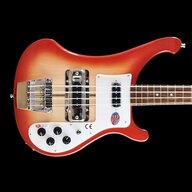
On two of my basses (Rickenbacker 4003S and Squier Paranormal Jazz '54), there are two pickups, each with their own volume and tone controls (the Jazz has stacked pots). With both volume knobs set to the same level, I get a blend of the two pickups. However, if I roll back either volume knob by say 5-10%, it seems as though that pickup just gets cut entirely, with the other pickup effectively soloed (at least to my ear). If I turn down the neck pickup on the Rick a tiny bit, then flicking the switch between "middle" and "bridge" doesn't make the tone change at all.

Why is that the case? My experience with guitars of a similar layout is that the pickups can be blended together flexibly, without one pickup cutting out completely if its volume is turned down slightly.
 
  • Like
Reactions: Swerve
Multimeter already pulled out? Maybe you know someone who can do it with/for you if your not familiar with it. Always handy imho.

I vaguely remember a similar topic some months(?) ago...
 
I had a similar but different problem when I replaced the switch on a Rascal with a MN250 blend pot. On centre detent volume was half of if each pickup was soloed.
If you've wired blend the usual way then you've added a ground wire from the upper and lower lugs of the pot to your pot case IIRC on mine on top row ground lug furthest left to case, bottom row furthest right to case but no matter which way as long as diagonally opposite on each of the 2 rows.
Just remove the ground wires from each lug and off the case.
As long as you have your blend pot grounded on case to volume pot and ultimately to ground on jack out, that cleared the problem for me.
 
Sorry - I read it you had a blend pot. Ignore post 🫢
Quite often, other makers of V/V -T/T wire their guitars like a Gibson, that is with selector switch in middle (both pickups), if adjusting the volume on any pickup the signal would cut on both pickups.
Quite different to Rick wiring which is independent.
I see the advantages of both. Could be your Squier is more wired like the Gibson but is not performing like the archetypal Gibson circuit? May be worth digging out a Rick circuit if you are keen to solve the problem and wiring it similar to that. Maybe re-post on the Rick thread and see if some kind soul will provide you with a diagram
 
My knowledge of electronics is essentially zero, despite 20+ years of playing, so hopefully you can help with something that Google searches aren't solving for me. It may be something very obvious so be gentle...

On two of my basses (Rickenbacker 4003S and Squier Paranormal Jazz '54), there are two pickups, each with their own volume and tone controls (the Jazz has stacked pots). With both volume knobs set to the same level, I get a blend of the two pickups. However, if I roll back either volume knob by say 5-10%, it seems as though that pickup just gets cut entirely, with the other pickup effectively soloed (at least to my ear). If I turn down the neck pickup on the Rick a tiny bit, then flicking the switch between "middle" and "bridge" doesn't make the tone change at all.

Why is that the case? My experience with guitars of a similar layout is that the pickups can be blended together flexibly, without one pickup cutting out completely if its volume is turned down slightly.

Your Rick pickups might be wired to audio taper pots, all the action is in the first few degrees of turn. The alternative would be linear taper, manufacturers use one or the other and sometimes people prefer the opposite :)

Do a couple of searches on the terms and you’ll see a lot of discussion about them.
 
Your Rick pickups might be wired to audio taper pots, all the action is in the first few degrees of turn. The alternative would be linear taper, manufacturers use one or the other and sometimes people prefer the opposite :)

Do a couple of searches on the terms and you’ll see a lot of discussion about them.
This.

It’s quite typical for passive basses with volume-volume controls, like Jazz bass. At least that’s been my experience. I know some swear by the exact pickup mix to get their tone, but to me they all sound like switches. Indeed, I’d prefer to just install a switch to minimize loading.

Linear taper pots should help with precise mix controls. With audio taper pots, if you reduce both volumes (say to 80%), then adjusting one or the other will result in more fine grained control for precise mixing; however, the tone will be somewhat darker, and it can be hard to recall your exact settings (no reference point). Finally, I believe active mixing allows for more fine grained control too…

I’d personally just use a switch, or frankly I seem to prefer just having one pickup :)
 
It’s a combination of the taper of the pots, and the interaction between the pickups in a passive circuit.

If you’re using a blend, then lifting the ground on the blend helps a lot. But for two volumes, linear taper is a good recommendation.
 
  • Like
Reactions: BadMonk
This is more or less always the case with jazz basses. Different pots, different tone control settings impact things a bit though. I find the slightest nudge to back the volume off on one pickup yields an interesting blend, but much over 5-10% and you are effectively soloing the other pickup as you've found. Welcome to passive jazz basses! Do Ricks use the same circuit but with a switch? I don't have much experience with them.

I accidentally miswired a bass once and ended up with an interesting result. When I backed one pickup off everything worked fine, until I got it all or nearly all the way shut off, then it killed both pickups. I think I saw somewhere this was Les Paul wiring as opposed to Jazz Bass wiring? Does anybody know?

Anyway I tried to convince myself that I had stumbled on something cool because I think it had more range of blend available, but I also had a noise issue and ultimately I converted it back which also ended the noise problem.

One time at a rehearsal (different bass) I forgot to bring the guitar player's amp, (they prefer to ride the bus so I don't mind helping). Out of desperation to get us through rehearsal I used a y-adapter to have both of us play through the same input on my amp, which worked ok for the situation. But when I turned my volume off it would kill their sound to zero also! 10% open on my end and they'd be fine. Weird!

Were our two guitars effectively "Les Paul wired" to each other? It would seem so!

If it really bugs you and you want full blending you may have to go active. Or try Les Paul wiring (not sure if that is advisable on your bass). Not all preamp circuits will work though, but I believe my John East allows a nice tapered blend--I'll have to go check it.
 
Ugghhh. My lack of understanding what's actually happening here reminds me why I like MV/Blend/MT, it's simple , intuitive, and it works. I'm sure there are pros and cons (that I also don't understand), but in practice I've never had any trouble getting whatever tone I wanted out of that setup. The 2V/2T Ric setup always drove me crazy, any change in volume changes tone by default as it changes relative balance. Meh.
 
No. It is not audio v linear taper pots. As posted above, yes, it may seem the volume of the other pickup is gone when you roll it down to 9 or 8, but it is still there. After you roll, for example, the bridge pickup off slightly, then roll off the neck pickup all the way. You will hear that the bridge pickup is still there, just slightly down as the volume knob indicates. Then, do something similar: roll off the bridge pickup to 9 or 8, and listen very carefully to the bass's tone. Then roll the bridge pickup the rest of the way down. You will find that with the blend you have a little bit of additional clarity from the impedance interaction of the pickups, and with only the neck pickup up, a fuller tone, albeit marginally.

The reason for this is impedance interaction. With both pickups dimed, you essentially have half the impedance in the circuit, which actually cuts the overall volume slightly, but gives the blended tone. It is not the pots. It is the impedance interaction between pickups.

Now, I don't like the volume drop when both pickups are dimed. So I put a .01 mfd capacitor in-line (similar to what Rickenbacker does on their 4001 & 3 basses, and the same value as on my 4002 (yes, "2," not "1" or "3") between the hot lead of a Jazz bridge pickup and the wiper of its volume pot. This automatically takes the volume of the bridge pickup down a notch, but the capacitor eliminates the comb filtering and the impedance drop which causes the slight volume drop when both pickups are dimed. Since string excursion is less when close to the bridge, you're not losing any appreciable fundamental anyway. Additionally, I use a .033 tone cap instead of the common .047, as Leo did on the stack-knob bridge pickup circuit, to retain more mids, which suits a J-bass, while keeping a .047 on a standard P-bass.

So, again, it's not the pots. It is more complex than that. It is the impedance interaction between the two pickups.
 
Last edited:
This is more or less always the case with jazz basses. Different pots, different tone control settings impact things a bit though. I find the slightest nudge to back the volume off on one pickup yields an interesting blend, but much over 5-10% and you are effectively soloing the other pickup as you've found. Welcome to passive jazz basses!
That's always felt natural and "normal" to me as a long-time Jazz Bass player. I'm probably very polar in my uses, particularly with regards to passive Jazz Basses, and there are three: All Bridge. All Neck. All Bridge and Neck/Classic "both" blend full-on.

When I play guitars, I DO "play" the volume knob(s) which in turn allows me to play the overdrive pedals into the amp.
 
  • Like
Reactions: Swerve
No. It is not audio v linear taper pots. As posted above, yes, it may seem the volume of the other pickup is gone when you roll it down to 9 or 8, but it is still there. After you roll, for example, the bridge pickup off slightly, then roll off the neck pickup all the way. You will hear that the bridge pickup is still there, just slightly down as the volume knob indicates. Then, do something similar: roll off the bridge pickup to 9 or 8, and listen very carefully to the bass's tone. Then roll the bridge pickup the rest of the way down. You will find that with the blend you have a little bit of additional clarity from the impedance interaction of the pickups, and with only the neck pickup up, a fuller tone, albeit marginally.

The reason for this is impedance interaction. With both pickups dimed, you essentially have half the impedance in the circuit, which actually cuts the overall volume slightly, but gives the blended tone. It is not the pots. It is the impedance interaction between pickups.

Now, I don't like the volume drop when both pickups are dimed. So I put a .01 mfd capacitor in-line (similar to what Rickenbacker does on their 4001 & 3 basses, and the same value as on my 4002 (yes, "2," not "1" or "3") between the hot lead of a Jazz bridge pickup and the wiper of its volume pot. This automatically takes the volume of the bridge pickup down a notch, but the capacitor eliminates the comb filtering and the impedance drop which causes the slight volume drop when both pickups are dimed. Since string excursion is less when close to the bridge, you're not losing any appreciable fundamental anyway. Additionally, I use a .033 tone cap instead of the common .047, as Leo did on the stack-knob bridge pickup circuit, to retain more mids, which suits a J-bass, while keeping a .047 on a standard P-bass.

So, again, it's not the pots. It is more complex than that. It is the impedance interaction between the two pickups.
^^^This. You either get used to dealing with the interaction in a passive circuit, (and there are a few things you can do to mitigate the effects) or put in a preamp/buffer.
 
I accidentally miswired a bass once and ended up with an interesting result. When I backed one pickup off everything worked fine, until I got it all or nearly all the way shut off, then it killed both pickups. I think I saw somewhere this was Les Paul wiring as opposed to Jazz Bass wiring? Does anybody know?

This diagram by @fig explains it. "Wiper as output" is the Les Paul wiring:

1768661596397.png
 
Audio vs. Linear taper as stated above.

So, again, it's not the pots. It is more complex than that. It is the impedance interaction between the two pickups.
OK, nobody has talked about the obvious circuit difference yet, so I'll chime in.

First off, trying to blend two pickups with two volume controls is...never really going to work like you think it should. Pickups are highly reactive devices - their impedances are not constant over frequency - they vary wildly, from relatively low at low frequencies to 10x that impedance (or more) at the high mid resonance peak - any mixing strategy is going to have compromises. So, it's not just the interaction between pickups, it;s not the pots, it's the interaction of two pickups and two pots - all 4 things are involved in the mess.

OK, so why do Fenders and Ricks differ in how they work? it's because they use different circuits. Fender P's use volume controls hooked up in a potentiometer circuit - the pickup (source) is connected to "top" of the potentiometer, the output is take from the wiper. That works pretty well - aside from losing some (not a lot) of treble when you turn the volume control down, it's a pretty good scheme. Leo got that right "the first time". One of the main things about this circuit is that the pickup is never heavily loaded - the pickup sees the full value of the pot (to a first approximation) as the load at any volume setting

The Fender J volume controls are hooked up backwards - the pickups are hooked up to the wipers, the output is taken from the "top" of the potentiometer. When you turn down a pickup's volume control, the pickup is shunted, which loads the pickup much more. For a regular audio taper pot, half volume is a tenth of the value of the pot between the wiper and ground, so a Pickup loaded into a standard pot sees a tenth of the impedance that it does at full volume. As the pickup's impedance rises dramatically with frequency, the pickup's output doesn't actually go down that much, but the mids and highs get murdered (highly attenuated) by that loading. When you turn down one pickup on a Fender VVT circuit, the other pickup (assuming it's all the way up) still gets through - mostly. If you're turning down the bridge pickup, the net effect is that the low frequencies go up - the resistance on the bridge volume control ("above" the wiper electronically) that now separates the two pickups means the bridge pickup is not loading the neck pickup as much at low frequencies, so you get more fundamentals. That interaction is not the pots or the pickups - both are involved in that interaction.

Also, because of the backwards connection, a VVT wired bass with both volumes at half sounds dull - shunting both pickups kills the high end on both pickups, and then those two dull sounds are combined. Leo didn't really get that part right "the second time".

Rickenbackers? They wire the volume controls like in a P bass ("forwards"), and then connect the two circuits together when the pickup selector switch is on the "both" setting. Either pickup alone can be turned up and down, and it works pretty well. Combined, you can turn both pickups down to half, and it sounds much less dull than a J bass.

Neither scheme allows you to set up a mixed pickup sound and swell in on a tune with one control, or play at less than full and have a master volume control to turn up at the climax of a tune. The Rick works OK with a pickup soled for those kind of situations, if you try that with a J, it'll sound dull until you get to all the way "on".
 
Last edited:
So, on a passive Squire Jazz basses the concept of "Setting one PU at 10 and bringing the other PU up to taste" isn't something you can actually do then? 🤔
*CV 60s Jazz, and Affinity Jazz

If what I said is true, then it means I'm not the stupid dufus that I felt like I was when I was monkeying around with the knobs :woot:
 
This guy demonstrates the issue I’ve had with every Fender J bass, active or passive. The pickups don’t blend. If you’ve owned a bass that does blend correctly the difference is obvious.


So, asking for a friend, let's say that someone were setting up something like a p pickup and a mm humbucker. Rather than wiring V/V/T like a Jazz Bass, it'd be better to go with like a 300k or 500k volume and a blend knob?
 
Last edited:
So, asking for a friend, let's say that someone were setting up something like a p pickup and a mm humbucker. Rather than wiring V/V/T like a Jazz Bass, it'd be better to go with like a 300k volume and a blend knob?
Not really. A blend knob is electrically identical to two volume knobs. It’s the same passive circuit. And adding an additional master volume just adds loading and dulls the tone more.

Disconnecting the ground from the blend changes it from a pair of volume controls to a pair of rheostats, adding series resistance to each pickup. This does smooth out the apparent taper of the sweep, and makes a more gradual difference as it’s turned.