Haha.....different strokes for different folks! hahaWell that's just wrong
You're the Ampeg guy Jimmy. I already know that.

TalkBass has been independent since 1998. Add your voice.
Create a free account to reply to discussions, view embedded media, and browse with fewer display ads.
Join free Log in
Want zero display ads or expanded classifieds tools? Compare plans.
Haha.....different strokes for different folks! hahaWell that's just wrong
Take another look at the post you quoted!
Sounds like Bose is like Ford? Fix or repair daily?
Come on guys! Make recommendations!!!
I'm asking for PA cabs that can handle bass....aside from Fearful.
I hear people say that a lot about power but I have for many years been around high end home and car audio and I can tell you that all companies power descriptions are not the same. I have 30 watt amps that have more clean power than 100 watt amps and so on.OK. I sort of keyed in on the primarily for basement thing.
Kind of Wonderin' why you keep referencing class D power as if it needs to be qualified?
Power is power regardless of the amp design.
As long as you refer to the same way to measure power between amps as in peak or RMS or whatever, and you measure that power under the same conditions, it's all the same.
Ohm's law, do not lie, no matter how you slice that PIE. P = I x E.
The load will draw X amount of current while the amp will supply X amount of voltage. Multiply the current times the voltage and you get power.
I hear people say that a lot about power but I have for many years been around high end home and car audio and I can tell you that all companies power descriptions are not the same. I have 30 watt amps that have more clean power than 100 watt amps and so on.

In my opinion, your "perceived power" is very much at the core of the discussion.I'm not disputing ohms law. I'm disputing perceived power. But that's not what this discussion is about.
Please stay on track please.
Agreed! A watt is a watt on paper...but experiencing those what's are another story.



Hey guys.
... However many people know me to have huge equipment. ...

I guess you haven't heard of EHX (Electro Harmonix) before?Is that where your user name comes from?
In my opinion, your "perceived power" is very much at the core of the discussion.
You qualified your amplifiers as being "class D power." In doing so I believe you've left open the possibility that one class of power amplification delivers more, or less, power to the speakers than another class, and does so only by virtue of the class of amplification in use. To do this is to disregarded Ohms law.
Perceived power is not a measurable quantity and has no place in making "Apple to Apple" power comparisons of amplifier power. Perceived power involves so many variables and can mean many different things to the person perceiving the effects of the power in use.
Perhaps you were thinking of the term Apparent Power and used perceived instead?
Apparent power is, and I almost mistakenly said, "real." Apparent Power is a factor in power measurement, but mostly where there are phase differences between voltage and current. It is not normally a part of the power discussion with audio amps because the wavelengths are so very long in comparison to the transmission distances involved.
You certainly may say that you like, or dislike class D amps. You might even discuss why in terms of harmonic content for instance. But harmonic differences are not power differences.
In my opinion, when you reference power in perceptual, unquantifiable terms, you add to misunderstanding of, what for some of us, is already a misunderstood subject.
When you use the term class D power as you did, others may infer attributes that don't necessarily apply.
I believe we have a responsibility to those who are here to learn, to keep fact and opinion separate.
In an instrument amplifier, voltage and current contributing to power stops at the speaker voice coil. The electric power is converted to mechanical power and then converted again to sound waves. What you perceive as sound is due to Sound Pressure Level. SPL is affected by other factors beside voltage and current that make power. When you perceive sound it is also very much a part of the environment where the sound occurs and your own physical and psychoacoustic profile.
I am curious to know if you like class D amplifiers better or worse than other classes.
I saw a guy use this for bass and guitar ...
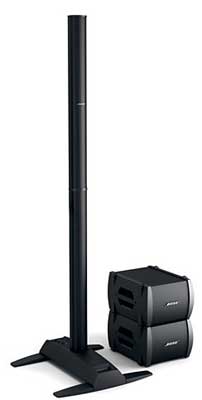
it is amazing clean and a flat response across the full spectrum of bass mids and treble
Exactly!Well let's start comparing brands of amps.
Take a T.C. RH750. 750W of Class D power.
And then lets take an Aguilar DB750...750W...a Mosfet driven Class A/B amplifier.
We might as add in an Ampeg SVT-CL 300W All tube
Now hook them all up to an 810E and then a Bergantino HD410 we'll A/B them.....and then we'll get a everyone from the talkbass to evaluate them, collect some data......and everyone will have a different opinion!
Exactly!
Lol, yes. Kidding. Ever heard of humor? (Not very good humor, apparentlyI guess you haven't heard of EHX (Electro Harmonix) before?
The Bassballs has been a pedal that's been out for years....and guess what? I own one!
 )
)