• TalkBass has been independent since 1998. Add your voice.
    Create a free account to reply to discussions, view embedded media, and browse with fewer display ads.
    Join freeLog in
    Want zero display ads or expanded classifieds tools? Compare plans.

Double Bass playing with freer drummers

Appreciate the insights Ed. I may try to loosen up on the next gig. Club owners have a tendency to shoot us the evil eye if we go too far outside. And the typical patron just looks puzzled.

But I am hearing what you're saying. And I am actually anxious now to try it out.

Ditto on the duo thing. It's all that you said. I do a 4 hour piano & bass gig on certain Thursdays, and it is far and away my favorite gig these days. Let's me be me.
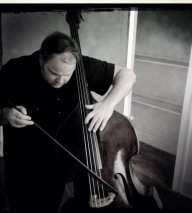
 
The duo thing is the right idea. For about 7-8 years I played outside at the train station with a great saxphonist - no amp. for the first four year I never soloed or even played a fill - just solid four. That left me with a big sound and good walking time.
So another good idea is when in doubt play four. Most of us can count to four, most drummers seem to have a tougher time than they think counting to 16, 32 whatever..
And yeah, Roger Tuner is amazing. Funny guy too.
 
bolo said:
I may try to loosen up on the next gig...But I am hearing what you're saying. And I am actually anxious now to try it out.

Just remember that other piece of advice (that I got from a drummer, actually) -don't let your desire to make something happen get in the way of what is actually happening.

Don't try stuff, just let stuff happen. Like DEMON2 says, when you find yourself outside the moment (or being aware that you're aware of being aware), you can always fall back into the quarter note. Just try to be open for the moment.
 
Ed and damon, heard that. Thanks again.

What do you (and others) think of the model of the Miles Davis Quintet of the early 60's? Tony Williams work is amazing to me. Still. I would call that free and open in a certain sense. No?

I have heard Ron Carter described as the one person who pretty much stayed at home most of the time, (rhythmically at least), building a foundation for all the others to do their incredible playing on top of. I have read this characterization of Ron Carter 's role by various jazz "critics," and maybe even by Miles himself. (I'd have to check some liner notes there, but all my CDs are in packing boxes, gettin' ready to move across town).

This is kind of what I was thinking of when I stated earlier that I try to balance things when the drummer goes outside, and expect him in turn to support me when I want to stretch out.

When we both go outside together, it can be kind of hit and miss. And the misses can get ugly. But again maybe I'm being too stiff.
 
That's a pretty amazing band, and I do know from some folks that worked with Ron that Tony, Ron and Herbie did start by working some stuff out. Which led to more and more and more openess, so by the time you get to the Plugged Nickel sessions they aren't so much playing tunes as they are playing together.

Personally I don't think of it so much as "outside" as I do real "inside" - so deep into the melody and harmony that you can play absolutley ANYTHING you are hearing in relation to that (even the most ambiguoous and personal relation) and (as long as the other players are listening) it will still carry the tune forward. Even if nobody is playing any of the changes at that particular moment. To me (and this is entirely a personal philosophy and should be taken with the caveat that I can't really play and actually suck) the times you run into problems isn't when folks are playing "in" or "out", it's when they are playing stuff that they really don't hear. It's NOT like they hear an idea that goes across a bar line, it's more that they DECIDE that what they do is play across bar lines. Or that they get so caught up in the line that they're playing that they don't hear the tune anymore; how can you abstract the form when you aren't REALLY hearing the form anymore?
 
Another thing that happens is keeping the form without obvious refferences to the chord changes. This can happen on tunes where I know the melody REALLY well. When I play "Softly, as in a morning sunrise" one of the saxophonists I play with my bass lines are all melodic and counter melodic material, Not based on chords at all, but I do keep the 32 form at all times. It was not something caculated, it just morphed into that over the years.
 
I am trying to get my head around all this. So for my own benefit:

tZer said:
Bottom-line - if the drummer is NOT being the 'easy to lock-in-on' time keeper of the song, the job falls in your lap as a bass player to make sure the rest of the band does have something to key in on.
Uncletoad said:
... cling to straight fours just to make sure everyone else isn't lost.
I guess this is the manner I’ve grown accustomed to, for better or for worse. Kind of the Ron Carter w/ Miles model I outlined one post earlier.
Snarf said:
Here's an example of what I'm talking about:
Yikes! Afraid I can’t help there. Holy mackerel. Definitely not what I thought of based on my limited and now seemingly cloistered jazz experience. But totally legit in its own way.
fingers said:
That Patitucci clip is great. The thing is... these are all super high level guys that have been VERY serious about playing for a long time. The form is a little hard to follow. They stretch, pedal, bend, omit, changes at will based on listening to eachother. Watch John though. He gets into a walking groove and is pretty true to the changes. Also, being a performer in this situation makes things much easier to follow. I still say, if this is playing you are interested in doing, get out the metronome and get your time in order. Then book stuff with 'freer' guys. You will mess up from time to time. Take note, learn.

*btw I don't really think of these type of drummers as freer. The way that they phrase and approach keeping time is different. Time is still there.
Now all that I can dig. Well said.
Ed Fuqua said:
Just remember that other piece of advice (that I got from a drummer, actually) -don't let your desire to make something happen get in the way of what is actually happening.

Don't try stuff, just let stuff happen. Like DEMON2 says, when you find yourself outside the moment (or being aware that you're aware of being aware), you can always fall back into the quarter note. Just try to be open for the moment.
We like to say “When you’re thinkin’, you’re stinkin’." Has a little more homespun and earthy ring, don’t you think?

I really liked your last post too. Just don’t have anything worth adding. Who would of thought I would enjoy talking so much about drummers?
 
One note. I have played with a few guys that try to be so hip they mess themselves up. When I was younger I used to think I was always at fault. As I have matured as a player and gotten more confident with my time I've realized that sometimes these guys are too hip for themselves. Don't be pushed around and get confident with your own time. This will make the tune groove better and make the jam more fun for everyone.

I remember Blakey said something like, "One hip is cool, but two hips make as @$$." Or something like that.
 
Funny you should say that. I worked on a gig with an adventurous drummer this past weekend. On break, he was kind of complaining about me and/or the piano player getting turned around two different times in the previous set after a couple of his polyrhythmic cross-stylistic drum breaks.

Later I thought to myself, well, just 'cuz you're a drummer doesn't make your sense of time infallable or something. Maybe I was on it and YOU got turned around.

I will say that even though I still have lots of room to improve, working with a metronome has really helped my internal sense of time. IMO Ed Friedland's The Working Bassist's Toolkit has some really good metronome exercises in it. Like set the metronome so that it clicks only once per measure, on the "and of 2", and then try it on the "and of 3", the "and of 4", stuff like that.
 
One more note - On the Miles Davis Highlights from the Plugged Nickel CD, you can clearly hear someone (not Miles) in one tune say "Show me the one." So I guess I don't feel so bad about occasionally getting lost or turned around.
 
Man, I hardly know where to start.

bolo said:
complaining about me and/or the piano player getting turned around....polyrhythmic cross-stylistic drum breaks...I guess I don't feel so bad about occasionally getting lost or turned around.

Well, if yer sure that that's what's going on, record it and sit down with the cat and count through the ****, see what's going on. Over and above that, I prolly would have a talk with the cat about how he oughta be playing with the band on the stand and not the one in his head. That playing music is about playing together and not about going down a checklist of **** you decided to play on the drive to the gig. But you gotta be SURE that you are being open to the moment and not playing on automatic pilot, because (without hearing you who knows) he may be the one that is struggling to initiate a conversation.

Look, I used to live in East Bum****, I know how it is. You generally got one or two guys on each instrument and that's it. And no matter how all of us want to be able to be all things to all people, sometimes you run into folks (who you may love dearly and who sound great) that you have absolutley no hook up with. It's particularly bad news when they're the drummer in town who gets all the calls for the same gigs you do.
 
Ed Fuqua said:
Look . . . I know how it is. . . . sometimes you run into folks (who you may love dearly and who sound great) that you have absolutley no hook up with.
Yesshah, chummy! But even then it's worth remembering that people change. If (as Ed is implying) the trouble is handled in a grown-up fashion you leave the door open for hook-ups in the future.
 

Latest posts