• TalkBass has been independent since 1998. Add your voice.
    Create a free account to reply to discussions, view embedded media, and browse with fewer display ads.
    Join freeLog in
    Want zero display ads or expanded classifieds tools? Compare plans.

Poly Finish Falling off My Ernie Ball Stingray 5 HH

Apr 5, 2013
145
142
Naples FL & Hartford, CT USA
Disclosures
Nobody give me anything!
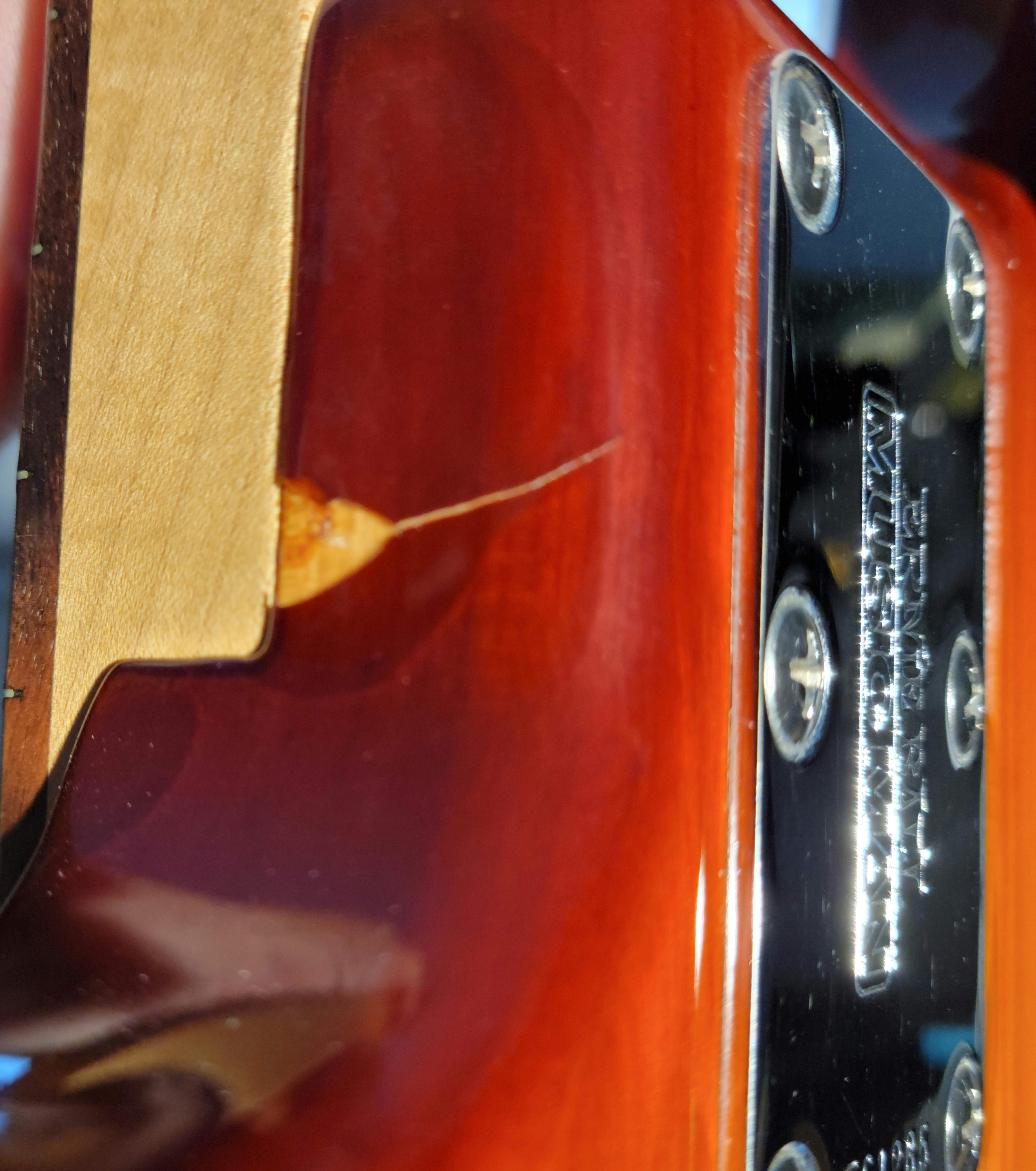
I bought my Stingray 5 HH bass 14 years ago new. I had it in storage at home in a closet along with 5 other guitars for 7 months. On my return, I was shocked and heartbroken to see what looked like chips and blisters in the finish of the SR! My other guitars were fine, just the Stingray had damage. Weird because no one used it, not strange solvents were put on it, it was temperature and humidity controlled as well so I can't figure out why the finish is unbonding from the body. Stingrays are finished in very thick polyester-just like i was in the 1970's come to think about it. The finish is separating from the body and you can see air where they are and some of the finish has cracked with edges that are razor sharp. A couple of other Stingray owners said they had similar problems. I called a service rep at Ernie Ball for assistance. The rep was very nice and asked me to send pics so he could discuss with a team of other people. I got the polite impression that they are doing everything they can just to build new product than monkey with a 14 year old bass with Covid. Any idea why the finish is delaminating? I would be interested in getting a metalflake paint job similar to newer Stingrays if anyone know of a good shop. Any suggestions let me know.
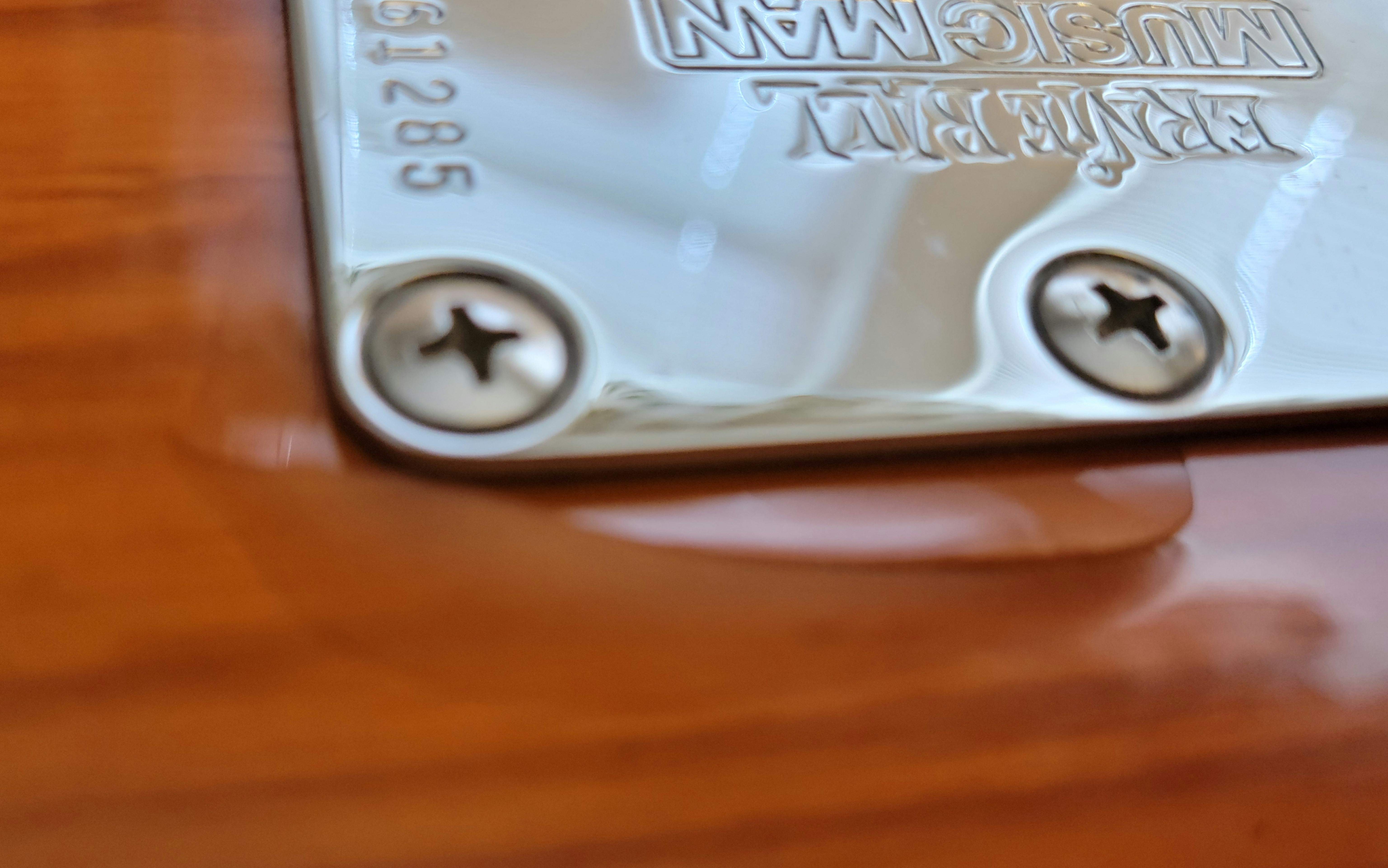
stingdef backplate.jpg
stingneckdef before.jpg
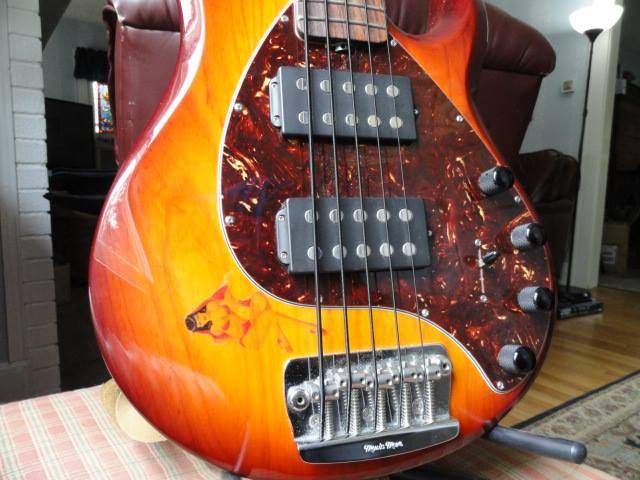
stingrayfront.jpg
I tried gluing one of the open cracks down with superglue but it the glue eats the finish so that won't work.
 
I've seen this happening on a new Stingray! I was playing on a cruise ship and there was other band whos bass player had new stingray limited edition. If i remember correctly it was like month old and the finish started to peel from the back of the bass! It was crazy! I dont know why it happened but I bet he got new bass.
 
I bought my Stingray 5 HH bass 14 years ago new. I had it in storage at home in a closet along with 5 other guitars for 7 months. On my return, I was shocked and heartbroken to see what looked like chips and blisters in the finish of the SR! My other guitars were fine, just the Stingray had damage. Weird because no one used it, not strange solvents were put on it, it was temperature and humidity controlled as well so I can't figure out why the finish is unbonding from the body. Stingrays are finished in very thick polyester-just like i was in the 1970's come to think about it. The finish is separating from the body and you can see air where they are and some of the finish has cracked with edges that are razor sharp. A couple of other Stingray owners said they had similar problems. I called a service rep at Ernie Ball for assistance. The rep was very nice and asked me to send pics so he could discuss with a team of other people. I got the polite impression that they are doing everything they can just to build new product than monkey with a 14 year old bass with Covid. Any idea why the finish is delaminating? I would be interested in getting a metalflake paint job similar to newer Stingrays if anyone know of a good shop. Any suggestions let me know. View attachment 4310815 View attachment 4310817 View attachment 4310818 I tried gluing one of the open cracks down with superglue but it the glue eats the finish so that won't work.

I’ve seen older lesser quality basses have finishes that still look new, i.e. my T-40 and T-45. For the price of an EBMM there’s no way I’d tolerate that. Are you the original owner? If so get EBMM to make things right.
 
I’ve seen older lesser quality basses have finishes that still look new, i.e. my T-40 and T-45. For the price of an EBMM there’s no way I’d tolerate that. Are you the original owner? If so get EBMM to make things right.
Yes, I bought the bass brand new and I have taken very good care of it. It was never subjected to heat, chemicals, body sweat. I have always maintained it using body and neck techniques from their website. I did contact Ernie Ball Service department and sent them pics. The rep said he would discuss this with a production team but they have not gotten back to me so far
 
Yes, I bought the bass brand new and I have taken very good care of it. It was never subjected to heat, chemicals, body sweat. I have always maintained it using body and neck techniques from their website. I did contact Ernie Ball Service department and sent them pics. The rep said he would discuss this with a production team but they have not gotten back to me so far
Hope it all works out.
 
I would email their customer service. They're nice folks and will actually respond to you. Don't freak if it takes a few days but they do read and react to customer communications. Good luck.
For reference here is my 35 year old EBMM poly finish. Except for a couple small dings it looks better than some 3 year old instruments I have. This has held up to tours and decades of gigs. So what you're dealing with is not normal and maybe it's worth politely asking them to take a look at it.
upload_2021-6-25_12-52-20.jpeg
 
I’ve seen older lesser quality basses have finishes that still look new, i.e. my T-40 and T-45. For the price of an EBMM there’s no way I’d tolerate that. Are you the original owner? If so get EBMM to make things right.

I would argue the finish on your T-45 is equal to that of your Music Man. The US Peavey were high quality basses.
 
  • Like
Reactions: B-Mac
Yes, I bought the bass brand new and I have taken very good care of it. It was never subjected to heat, chemicals, body sweat. I have always maintained it using body and neck techniques from their website. I did contact Ernie Ball Service department and sent them pics. The rep said he would discuss this with a production team but they have not gotten back to me so far
 
I would email their customer service. They're nice folks and will actually respond to you. Don't freak if it takes a few days but they do read and react to customer communications. Good luck.
For reference here is my 35 year old EBMM poly finish. Except for a couple small dings it looks better than some 3 year old instruments I have. This has held up to tours and decades of gigs. So what you're dealing with is not normal and maybe it's worth politely asking them to take a look at it.
View attachment 4313667
I Contacted Ernie Ball about the defective finish lifting off the body of my 14 year old Stingray 5 HH and left a voicemail. Later that day I got a call back from service and the fellow was a good listener who requested I send in photos. 2 days later he called me and we discussed more about my bass. He said he would be discussing with a group of production people. A few days later he emailed saying there is an engineer at Ernie Ball who is out this week and will be returning next week with whom he will be discussing the problems with and what to do. I am pleased with Ernie Ball's concern and excellent follow up. I don't know what they can do. I'd like the bass stripped and refinished but when I asked if they could do it in one of the new fancy heavy metal flake, they said if they did it they would only do the type of finish that came on it. Hoping for a good solution. I will wait for their response meanwhile I'm searching for pro guitar paint shops.
 
  • Like
Reactions: Killing Floor
This kind of delamination is not totally unusual with thick polyester finishes.

These finishes rely purely on mechanical adhesion to the sealer coat underneath, by 'keying into' the scratch pattern left during sanding.
This is in contrast to nitro and some other finishes, which 'burn in' and adhere chemically between coats.

Thicker polyester is quite rigid, and thus more likely to delaminate if the substrate material (i.e. the body wood) moves with temperature/humidity.
This does not mean you did anything wrong with storage - wood just moves over time.

If it is indeed polyester, then it's probably pretty much chemically inert. CA glues (aka superglue) will not dissolve or otherwise soften cured polyester,
so you can glue down loose flakes with superglue if you are careful. I've done it many times.
A very common area for this delamination is around fret ends on the side of a fretboard - the wood shrinks, the fret ends poke out, and it lifts a little disc of finish
around each one, leaving a whitish spot. I've repaired lots of these by wicking thin CA into each one, making it transparent again, and then block sanding and buffing to make
everything flat and shiny again. Works great. If you use fairly thin viscosity glue, it will draw under the flake by capillary action and make it look clear again.
Glu-Boost Fill-n-Finish "Thin" or "Super-thin" is what I use for this - but be careful with the "super-thin" as it pours out very easily and makes a wicked mess.


If the CA is actually "eating" the finish then it might be polyurethane or some other topcoat material.
Test it on an inconspicuous area (under the neckplate is good).
It may just be that you are leaving loose glue on the surface that looks like finish damage after it's wiped off.
Polyester is also impervious to acetone, so you can clean up leftover glue with acetone and Q-tips.
Again, test in an inconspicuous area first before applying acetone.

Cheers,
Martin
 
This kind of delamination is not totally unusual with thick polyester finishes.

These finishes rely purely on mechanical adhesion to the sealer coat underneath, by 'keying into' the scratch pattern left during sanding.
This is in contrast to nitro and some other finishes, which 'burn in' and adhere chemically between coats.

Thicker polyester is quite rigid, and thus more likely to delaminate if the substrate material (i.e. the body wood) moves with temperature/humidity.
This does not mean you did anything wrong with storage - wood just moves over time.

If it is indeed polyester, then it's probably pretty much chemically inert. CA glues (aka superglue) will not dissolve or otherwise soften cured polyester,
so you can glue down loose flakes with superglue if you are careful. I've done it many times.
A very common area for this delamination is around fret ends on the side of a fretboard - the wood shrinks, the fret ends poke out, and it lifts a little disc of finish
around each one, leaving a whitish spot. I've repaired lots of these by wicking thin CA into each one, making it transparent again, and then block sanding and buffing to make
everything flat and shiny again. Works great. If you use fairly thin viscosity glue, it will draw under the flake by capillary action and make it look clear again.
Glu-Boost Fill-n-Finish "Thin" or "Super-thin" is what I use for this - but be careful with the "super-thin" as it pours out very easily and makes a wicked mess.


If the CA is actually "eating" the finish then it might be polyurethane or some other topcoat material.
Test it on an inconspicuous area (under the neckplate is good).
It may just be that you are leaving loose glue on the surface that looks like finish damage after it's wiped off.
Polyester is also impervious to acetone, so you can clean up leftover glue with acetone and Q-tips.
Again, test in an inconspicuous area first before applying acetone.

Cheers,
Martin
Thanks, Martin. I did try to glue a chip back on with high quality super thin CA glue purchased at Woodcraft for wood working. It instantly bled the color our of the poly finish so this is not a suitable fix. I found out that the heat pipes in our house up North run in the wall in the closet where I had stored my bass and the heat probably caused the finish to crack although it did not affect a Strat and a Takamine acoustic guitars finish. While I spent the Winter in hot, sunny Florida, my bass was cooking in the closet. My Stingray was in a Mono Vertigo gig bag and the piping surrounding all the edges also cracked. The people at Ernie Ball Service were really great about looking into this and I even had an engineer contact me who was concerned. So, in time I have come to realize that storing my bass inside a closet that gets too hot appears to be the culprit. Now I have to decide what to do with the bass-sell it as is, refinish it myself or send it out to get a custom paint job. Thanks for your suggestions, Martin.
 
  • Like
Reactions: Eneade and Giffro