What does your practice routine look like? At one time I had a fairly disciplined routine, now I just kind of noodle around. How about you, suggestions on going from an intermediate to advanced welcomed.

Enjoy the benefits of a premium membership!
Upgrade Account
-
TalkBass has been independent since 1998. Add your voice.
Create a free account to reply to discussions, view embedded media, and browse with fewer display ads.
Join free Log in
Want zero display ads or expanded classifieds tools? Compare plans.
You are using an out of date browser. It may not display this or other websites correctly.
You should upgrade or use an alternative browser.
You should upgrade or use an alternative browser.
Practice routine
- Thread starter Willie5String
- Start date
More options
Who Replied?
I pick up the bass approximately 2 to 8 times a day on an average, and play randomly whatever I want for 10 minutes to 30 minutes per time (it happens it will only be 5 minutes, or that I will jam for an hour straight, but that is on rare occasions).
Of course if there is a specific piece or technique I need to get down I will dedicate some of the time to practicing that in specific.
But I do think it is important to have fun, and keep yourself motivated to play as much as possible, but of course also to challenge yourself.
1 hour just having fun can be as rewarding in terms of strict practice and progress as 15 minutes of strict practice, actually leaning to incorporate your skills in an IRL context.
Of course if there is a specific piece or technique I need to get down I will dedicate some of the time to practicing that in specific.
But I do think it is important to have fun, and keep yourself motivated to play as much as possible, but of course also to challenge yourself.
1 hour just having fun can be as rewarding in terms of strict practice and progress as 15 minutes of strict practice, actually leaning to incorporate your skills in an IRL context.
Last edited:

I pick up the bass 3 or 4 times a day for about 15 minutes each time.
The day starts with scales to get them out of the way. I like Pac-man's scale method.
Next is the specified exercise in the method book. Right now I'm on Dominant 7ths, so I work through them on the circle of 5ths. And then do the 7th exercise in the method book.
Finally, I work on a song in the song book. Right now the song is Into the Great Wide Open, which is quite easy for me. The last song was Radar Love which was a little fast.
I don't do alot of noodling around, but sometimes it's fun to invent interesting bass lines or progressions if I have an idea for a song.
The day starts with scales to get them out of the way. I like Pac-man's scale method.
Next is the specified exercise in the method book. Right now I'm on Dominant 7ths, so I work through them on the circle of 5ths. And then do the 7th exercise in the method book.
Finally, I work on a song in the song book. Right now the song is Into the Great Wide Open, which is quite easy for me. The last song was Radar Love which was a little fast.
I don't do alot of noodling around, but sometimes it's fun to invent interesting bass lines or progressions if I have an idea for a song.
I pick up the bass approximately 2 to 8 times a day on an average, and play randomly whatever I want for 10 minutes to 30 minutes per time (it happens it will only be 5 minutes, or that I will jam for an hour straight, but that is on rare occasions).
Of course if there is a specific piece or technique I need to get down I will dedicate some of the time to practicing that in specific.
But I do think it is important to have fun, and keep yourself motivated to play as much as possible, but of course also to challenge yourself.
1 hour just having fun can be as rewarding in terms of strict practice and progress as 15 minutes of strict practice, actually leaning to incorporate your skills in an IRL context.
Well, I always work on songs/tunes, since I almost exclusively play original music.I pick up the bass 3 or 4 times a day for about 15 minutes each time.
The day starts with scales to get them out of the way. I like Pac-man's scale method.
Next is the specified exercise in the method book. Right now I'm on Dominant 7ths, so I work through them on the circle of 5ths. And then do the 7th exercise in the method book.
Finally, I work on a song in the song book. Right now the song is Into the Great Wide Open, which is quite easy for me. The last song was Radar Love which was a little fast.
I don't do alot of noodling around, but sometimes it's fun to invent interesting bass lines or progressions if I have an idea for a song.
And it happens on a regular basis that I come up with something that I can't actually play, or at least can't play properly, so that in it self turn out an exercise, but with an actual practical IRL purpose.
That said nowadays I really view myself more as a composer kind of musician, than instrumentalist, that just happens to have bass as my preferred instrument of choice, so that naturally change my focus somewhat, in terms of practice.
Last edited:
- Oct 22, 2015
- 21,155
- 256,591
- Disclosures
- I am an affiliate for Ari Cap.
Having a teacher who knows my skill and knowledge levels means my practice is focused and purposeful.

I have an instructor I’m working with. My goal is musical improvement. Achieving it through studying Jazz. Walking and soloing are where I really want improvement. I try to practice 1 or more hours a day. I try to spend time reading every sitting. Lately that’s been the melody lines of the standards I’m working on. Currently working Cheek to Cheek and Autumn leaves. Also been messing with One Day My Prince Will Come. Walking, melody, comping rootless chords. Started messing with improvised soloing based on melody of Autumn Leaves. Seeing definite improvement.

4 days/week:
1 hr. technique
1 hr. repertoire
2 days/week:
2 hrs technique
2 hrs rehearsal
1 hr. technique
1 hr. repertoire
2 days/week:
2 hrs technique
2 hrs rehearsal

I've always got new material, both originals & covers, to work on. I'll also work on songs not performed by the band just because I find them fun and/ challenging.
I work much more than 40 hours/week so my practice “routine” isn’t really all that routine.
I try to pick up the bass for at least 10 minutes every day but some days I don’t make it.
When my time is limited to 10 minutes I just run through three tunes of repertoire (I’m in three originals bands). When I have more time I try to work on either technique or reading. I’ve collected a bunch of lesson books over the years and I choose a different one to work out of every now and then.
Lately I’ve been focusing on reading so I’ve been using Fred Paterno’s The Literate Bassist.
Away from the bass (downtime at work) I’ve been taking the exercises in that book and transcribing them into every key, and that’s practice, too (sort of).
I try to pick up the bass for at least 10 minutes every day but some days I don’t make it.
When my time is limited to 10 minutes I just run through three tunes of repertoire (I’m in three originals bands). When I have more time I try to work on either technique or reading. I’ve collected a bunch of lesson books over the years and I choose a different one to work out of every now and then.
Lately I’ve been focusing on reading so I’ve been using Fred Paterno’s The Literate Bassist.
Away from the bass (downtime at work) I’ve been taking the exercises in that book and transcribing them into every key, and that’s practice, too (sort of).

Pick a jazz standard, learn the melody and harmony. Play the bassline. Learn a solo. Write a solo. Try (emphasis on try) to improvise over it.
Sometimes it takes me a week, sometimes 3 months. Life is busy.
Sometimes it takes me a week, sometimes 3 months. Life is busy.

I always practice while standing...I don't ever sit and play. I guess it's the old adage of "practice like you play." If I can't play something while standing, I'll practice until i can. I have a work schedule that allows me to pick up one of my bass guitars around 12pm and practice until about 3:30. If work doesn't permit me to practice during the day I'll practice from 5:30pm to 7pm. On the weekend I'll usually play during both of those time frames.
I start by working on my right hand technique with some slow 16th notes and work my way up to speed. Once my fingers are awake I'll either play along with songs on YouTube or practice using Songsterr. I LOVE being able to slow songs down and select which parts I want to repeat.
Since figuring out how to use my index, middle, and ring finger for playing I have been focusing on making my technique tighter and getting my fingers up to speed, and my endurance up for playing fast passages.
I just jam out to my favorite songs, learn new ones, and practice the parts I can't play perfectly yet.
I start by working on my right hand technique with some slow 16th notes and work my way up to speed. Once my fingers are awake I'll either play along with songs on YouTube or practice using Songsterr. I LOVE being able to slow songs down and select which parts I want to repeat.
Since figuring out how to use my index, middle, and ring finger for playing I have been focusing on making my technique tighter and getting my fingers up to speed, and my endurance up for playing fast passages.
I just jam out to my favorite songs, learn new ones, and practice the parts I can't play perfectly yet.

I pick the bass once per day and run through random practices generated by an app that I developed myself.
Practices are pretty diverse; like accents, arpeggios, chords, finger independence, improvisation, intervals, key signatures, metronome / timing, fretboard dexterity, scales, transcription, etc... I occasionally add / remove practices.
The app is open-source and available on GitHub , but it's far from being a user-friendly app usable by everyone. However; with some formulas / macros, a non-programmer could build a similar system in Excel.
Practices are pretty diverse; like accents, arpeggios, chords, finger independence, improvisation, intervals, key signatures, metronome / timing, fretboard dexterity, scales, transcription, etc... I occasionally add / remove practices.
The app is open-source and available on GitHub , but it's far from being a user-friendly app usable by everyone. However; with some formulas / macros, a non-programmer could build a similar system in Excel.
Groove Master
Commercial User
- Apr 22, 2011
- 1,808
- 1,291
- Disclosures
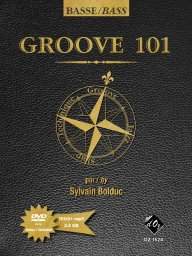
- Author of Groove 101, Slap 101 and Technique 101
I'm coming back at the instrument after a brain stroke so I had to modify my routine from scratch.What does your practice routine look like? At one time I had a fairly disciplined routine, now I just kind of noodle around. How about you, suggestions on going from an intermediate to advanced welcomed.
I do a lot of scales ans arpeggios Major and minor, but....
The new thing I apply now is the TEMPO Mapping.
I do program my drums track with micro increase of the tempo. I start at 80 for 24 bars then I increase the tempo of 5 bpm on a 24 bars length and so on.
That way I don't feel the increase of the tempo and I can reach easily new goals. You can use something like that to learn and master a difficult part.

I'm coming back at the instrument after a brain stroke so I had to modify my routine from scratch.
I do a lot of scales ans arpeggios Major and minor, but....
The new thing I apply now is the TEMPO Mapping.
I do program my drums track with micro increase of the tempo. I start at 80 for 24 bars then I increase the tempo of 5 bpm on a 24 bars length and so on.
That way I don't feel the increase of the tempo and I can reach easily new goals. You can use something like that to learn and master a difficult part.
That's inspiring

Groove Master
Commercial User
- Apr 22, 2011
- 1,808
- 1,291
- Disclosures
- Author of Groove 101, Slap 101 and Technique 101
Thank you. A lot of hard work and determination. Music is the bestThat's inspiring


