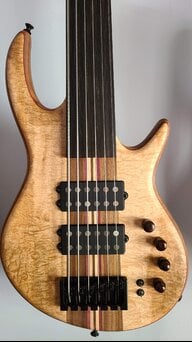
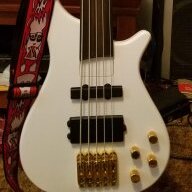
Next, you'll be saying there's all these parallel lines running down the fingerboard that keep getting closer and closer together...
Is that the non-Euclidian multi-scale tuning I've been hearing about? ...

TalkBass has been independent since 1998. Add your voice.
Create a free account to reply to discussions, view embedded media, and browse with fewer display ads.
Join free Log in
Want zero display ads or expanded classifieds tools? Compare plans.
Next, you'll be saying there's all these parallel lines running down the fingerboard that keep getting closer and closer together...

“What could be easier”? Retune.I don't re-tune. On a fretless, what could be easier?
“What could be easier”? Retune.
How do you play open low E in tune?


5th fret of the b string.


Plus, A=440 all the time is boring! Convenient but boring.

This is all great, then the folks clamoring that all of the ills of the human race would be eradicated by tuning everything to A-432.
Screw all that. At 65, and for as long as I’ll probably be around, it’s A-440 or bust…
Oh, yeah, to the OP, who started all of this….
Stick with A-440 and try to practice without looking at the fingerboard….
Im not ashamed to admit, nay, proclaim that my fretless has lines (and gee, I still feel as manly as ever…), but I do try to practice without looking at the fingerboard.

I guess because I listen to and play along with a lot of music from the late '60s and '70s, it's very often not A=440. Maybe they weren't in tune when they were recorded, maybe the tape machine wasn't calibrated, or often they would speed the tape up to give it more energy - James Brown did this a lot, and Ted Templeman talks about it being done to Harper's Bizarre's version of 59th St. Bridge Song and not liking it. I can't tell unless I have an instrument in hand, so it's not like I have perfect pitch.would like to hear more about that. Why is it boring?
How do you play a low B in tune?5th fret of the b string.
I don't exactly understand what you are trying to say here. Are you giving me a hard time when I said my woodwinds resonate better at 442. They just do but it's no big deal really -- I play 440 most of the time and I do not preach that any tuning is better. Tune what the piano is tuned to.
For woodwind it's just adjusting the mouthpiece or head-joint and we all lip up or down to correct intonation. You get used to it and it s no big deal really. Really surprised that electric bassist are bent out of shape when all they have to do is turn the tuning peg no more than 1/2 turn between the extreme reference pitches. It's more work for brass and woodwind when they continually have to adjust their air column to compensate.
Most of old classical music was composed when the standard A was lower -- Historically 432 is what they refer to as Vivaldi tuning and some people think that music should be played to what the composer tuned the instruments at Also what if you are playing with a really old pipe organ that was built to lower tuning. The orchestra will have to tune to that. How the new age folks came up with 432 is the frequency of the cosmos is a head scratcher for sure.
Orchestra that do high say that they do that because of brass section sound better and the string section is brighter and the new violin construction can take higher tuning with no issues. Of course the opera singers would like to do it lower.
I don't care whether a fretless has lines or not. I am more interested in how the player plays not his high and mighty stance that he has no lines. I have both and enjoy playing them. And yes I look at the fingerboard. Jaco, Gary Willis et al do.
I do think that being open to various tuning reference can be an eye/ear opener.
I thought this discussion was about fretless basses. All my 5er's sport a High C.5th fret of a low F# string

...
I do think that being open to various tuning reference can be an eye/ear opener.
. The question was whether or not to tune to the reference or adjust handshape/position, not the ups and downs of the various reference options. It seems to me that for many folks playing in tune when the instrument itself is in tune is enough of a challenge without then having to fiddle with the one thing that significantly eases the burden. YMMV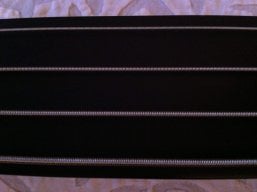
As interesting a topic as this is, it feels just a little OT here, IMHO