I've got the MXR M80 and I'm quite happy with it, I don't see it leaving my board any time soon. For rehearsals, I keep the bass at 2, maybe 3 o' clock, mids at 1 o'clock and I cut the treble slightly. I keep the amp eq dead flat as I see no point in eqing my signal twice, and this approach works well for me. Last week the bassist of the band we share our practice space with said I'm essentially depriving myself of tone-sculpting options quite unnecessarily. The man is no fool, he's a brilliant bassist with years of experience and a huge collection of gear, it's fair to assume he knows what he's talking about. I on the other hand am hardly a newbie myself and more importantly I'm a firm believer in not fixing what ain't broke. I'm just curious to know what you all think, does it make any sense to eq a signal that's already been eq'd?

Enjoy the benefits of a premium membership!
Upgrade Account
-
TalkBass has been independent since 1998. Add your voice.
Create a free account to reply to discussions, view embedded media, and browse with fewer display ads.
Join free Log in
Want zero display ads or expanded classifieds tools? Compare plans.
You are using an out of date browser. It may not display this or other websites correctly.
You should upgrade or use an alternative browser.
You should upgrade or use an alternative browser.
Preamp pedals & amp EQ
- Thread starter IfanSaer
- Start date
More options
Who Replied?
Tone preference is a personal thing. Don’t worry.


Many of the coolest sounds in music have come from people using equipment in ways that people said you’re not supposed to.
I respect conventional wisdom but like to push it out of the way and see what happens as well.
I respect conventional wisdom but like to push it out of the way and see what happens as well.
If the M80's choice of EQ voicing suits you, then there's no loss to stick with that.
It's entirely possible that the voicing of the EQ on the amp is different, so might suit some players better.
Whether or not both together would be any improvement over either one on its own is an absolute lottery however, so I wouldn't say you're going against any general "standard" approach.
It's entirely possible that the voicing of the EQ on the amp is different, so might suit some players better.
Whether or not both together would be any improvement over either one on its own is an absolute lottery however, so I wouldn't say you're going against any general "standard" approach.

Once you arrive at the tone you are happy with, additional 'tone sculpting options' are not necessary. Just because a knob is there, it doesn't mean you have to use it. Or yank it.
I think you'll find the most widely accepted practice is bass-cable-amp. After that it's pretty much a free for all with everyone doing what works best for them.
Expertise is cool. But the fact that someone has been playing for years doesn't automatically mean they know what is right for you. And a big collection of gear indicates nothing for certain other than a lot of disposable income.
I think you'll find the most widely accepted practice is bass-cable-amp. After that it's pretty much a free for all with everyone doing what works best for them.
Expertise is cool. But the fact that someone has been playing for years doesn't automatically mean they know what is right for you. And a big collection of gear indicates nothing for certain other than a lot of disposable income.

Depriving you of tone-sculpting options? By adding a pedal with EQ? Not sure I follow that logic at all...
The only negative I can see that may be an issue is that you can get the same tone without the pedal. And depending on your amp, that may or may not be the case. So my only take would be that if your amp can do everything your M80 can, you probably don't need both. But if in any way that M80 is an upgrade to you (tonally, functionally, whatever), who cares what that other bassist said. If it works for you, stick with it.
The only negative I can see that may be an issue is that you can get the same tone without the pedal. And depending on your amp, that may or may not be the case. So my only take would be that if your amp can do everything your M80 can, you probably don't need both. But if in any way that M80 is an upgrade to you (tonally, functionally, whatever), who cares what that other bassist said. If it works for you, stick with it.
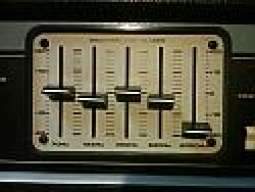
I used to run my Dicosimo 360+ preamp straight into the “power amp in” jack on the back of my Acoustic 320 amp, which bypasses the amp’s two built-in preamps. Great sound, but I’ve since discovered that I prefer running that preamp into the front of my Acoustic 370, which doesn’t have an effects loop. So with this setup, I’m stacking two preamps.
My default approach is the same as OP’s: I set the 370 to flat and EQ with the 360+ pre (which honestly, I also try to EQ as flat as possible). Since I’ve been sending the 360+ to FOH through a DI before hitting my amp, the advantage I've found with cascading preamps is that I can make adjustments to my stage volume and EQ on the fly with the 370 if necessary while not messing with the DI signal I’m sending to FOH. That way if the FOH person has made tweaks to my DI signal to play better in the room, I’m not moving the goalposts on them by needing to adjust what the band is hearing on stage.
For instances where your amp is covering the house or the rehearsal space, OP’s approach of tweaking EQ at the external preamp works perfectly fine, but there’s still no reason not to also adjust further at the amp if that helps the bass sit in the band mix more perfectly.
So in short, do whatever sounds best to you and your bandmates’ ears. Lol
My default approach is the same as OP’s: I set the 370 to flat and EQ with the 360+ pre (which honestly, I also try to EQ as flat as possible). Since I’ve been sending the 360+ to FOH through a DI before hitting my amp, the advantage I've found with cascading preamps is that I can make adjustments to my stage volume and EQ on the fly with the 370 if necessary while not messing with the DI signal I’m sending to FOH. That way if the FOH person has made tweaks to my DI signal to play better in the room, I’m not moving the goalposts on them by needing to adjust what the band is hearing on stage.
For instances where your amp is covering the house or the rehearsal space, OP’s approach of tweaking EQ at the external preamp works perfectly fine, but there’s still no reason not to also adjust further at the amp if that helps the bass sit in the band mix more perfectly.
So in short, do whatever sounds best to you and your bandmates’ ears. Lol
Salud!
Use what you want, of course (and listen to the other guy and learn from him).
I usually use put the amp flat, then use the bass active preamp first, then the pedalboard EQs. Amp comes last. It's not exactly a conscious decision, but I use my bass everytime, I use my pedalboard in almost all rehearsal and gigs, and the amp is whatever I have at hand (at home, at the rehearsal space, at the venues). So it makes sense to first use what I know best.
Use what you want, of course (and listen to the other guy and learn from him).
I usually use put the amp flat, then use the bass active preamp first, then the pedalboard EQs. Amp comes last. It's not exactly a conscious decision, but I use my bass everytime, I use my pedalboard in almost all rehearsal and gigs, and the amp is whatever I have at hand (at home, at the rehearsal space, at the venues). So it makes sense to first use what I know best.

Tone, even in the context of LEGENDARY bassists, is very much a personal preference and "YMMV" topic. If there is a specific tone you're going for, like trying to emulate a famous or known tone, there might be a "wrong" way to do it. When it's what you like or enjoy, there really is no "wrong" answer.
As for your current signal chain, I'd utilize that as your "baseline" for good tone. Depending on what the venue is like, I'd leave the MXR as-is and do room correction with the amp EQ. If it doesn't need it, then leave it flat like you're doing. Not intending to tell you what to do, just an answer that may get folks to back off if the same conversation comes up again. Just my $0.02...
As for your current signal chain, I'd utilize that as your "baseline" for good tone. Depending on what the venue is like, I'd leave the MXR as-is and do room correction with the amp EQ. If it doesn't need it, then leave it flat like you're doing. Not intending to tell you what to do, just an answer that may get folks to back off if the same conversation comes up again. Just my $0.02...

The bassist is right. The amp EQ allows more tonal complexity or perhaps it can also be called fine tuning. The amp is already doing this because a flat setting is never perfectly flat. Don’t be afraid to experiment with the tone settings. The question that you’ll have to answer is, do you need such control. The answer will only come after trying it.
if you can: Try the MXR80 directly into the power amp in or effect return. This will bypass your amp’d preamp and allow you to hear what affect the amp’s pre is having on your sound. Another approach is to patch the MXR80 into the effects loop. Plug into the amp’s input. This places the MXR80 tone stage after the amp’s pre. You will have pay attention to the level settings both on the pre and the MXR.
if you can: Try the MXR80 directly into the power amp in or effect return. This will bypass your amp’d preamp and allow you to hear what affect the amp’s pre is having on your sound. Another approach is to patch the MXR80 into the effects loop. Plug into the amp’s input. This places the MXR80 tone stage after the amp’s pre. You will have pay attention to the level settings both on the pre and the MXR.
I'm essentially depriving myself of tone-sculpting options quite unnecessarily.
Does he understand that you are happy with your sound? if so, that statement is complete nonsense.

Everybody uses their gear differently. With an active bass, a preamp pedal and an amp, you have three knobs that do 'Bass', but more likely than not, they all do it differently.
If you keep your bass and amp flat and boost bass on the pedal, you could try boosting on the bass or amp and keeping the pedal flat - doing that for every available frequency band and find out which one you like best.
However, I personally use the EQ options I have before I hit the amp to sculpt a signal that will have the vibe I am aiming for, and which will sound good through FOH.
The amp EQ is what I use to marry the cabinet to the room.
If you keep your bass and amp flat and boost bass on the pedal, you could try boosting on the bass or amp and keeping the pedal flat - doing that for every available frequency band and find out which one you like best.
However, I personally use the EQ options I have before I hit the amp to sculpt a signal that will have the vibe I am aiming for, and which will sound good through FOH.
The amp EQ is what I use to marry the cabinet to the room.
No, he's not. Of course you have more tantalizing options with more knobs and filters. But the OP is happy with his sound. There is nothing to fix and no need to use more knobs.The bassist is right.
No, he's not. Of course you have more tantalizing options with more knobs and filters. But the OP is happy with his sound. There is nothing to fix and no need to use more knobs.
My main point was to experiment and see what works best for the OP. Not that he has to accept what his friend recommended. Chained EQ settings may not be required for his needs.
Everybody uses their gear differently. With an active bass, a preamp pedal and an amp, you have three knobs that do 'Bass', but more likely than not, they all do it differently.
If you keep your bass and amp flat and boost bass on the pedal, you could try boosting on the bass or amp and keeping the pedal flat - doing that for every available frequency band and find out which one you like best.
However, I personally use the EQ options I have before I hit the amp to sculpt a signal that will have the vibe I am aiming for, and which will sound good through FOH.
The amp EQ is what I use to marry the cabinet to the room.
Exactly this. If I have my amp and cab with me, first thing we do is leave amp on mute and dial in the bass sound with FOH. Get the sound we want. Then I turn the amp on and go back out front and listen to see what adjustments need to be made at the amp to adjust for the room and marry everything together. And we can adjust volumes by hearing what the room is doing. Sometimes turn down the amp and put more through FOH. Sometimes it may sound better to put a little more through the amp. It is different every time, even when playing the same room we have found.
Exactly this. If I have my amp and cab with me, first thing we do is leave amp on mute and dial in the bass sound with FOH. Get the sound we want. Then I turn the amp on and go back out front and listen to see what adjustments need to be made at the amp to adjust for the room and marry everything together. And we can adjust volumes by hearing what the room is doing. Sometimes turn down the amp and put more through FOH. Sometimes it may sound better to put a little more through the amp. It is different every time, even when playing the same room we have found.
Yeah. You can save your session on the digital mixer and return a fortnight later to the same room, rig the same gear and set up everything exactly the same, simply recall the session from the mixer ... and sound like poopie.
That is because audio is two thirds science, one quarter magic and ten percent chaos.
Yeah. You can save your session on the digital mixer and return a fortnight later to the same room, rig the same gear and set up everything exactly the same, simply recall the session from the mixer ... and sound like poopie.
That is because audio is two thirds science, one quarter magic and ten percent chaos.
Yep. Humidity, number of people in the room, one extra barstool in the back, a fan that was on that wasn't before, maybe Auburn won this week and lost last time, hurricane forming in the Gulf, blood moon. Who knows?
My main point was to experiment and see what works best for the OP. Not that he has to accept what his friend recommended. Chained EQ settings may not be required for his needs.
I understand, and my apologies if I came across a bit harsh. Experimenting and learning your equipment is never a bad idea, but when you don't use all your knobs, it doesn't mean that you are depriving yourself of options. Maybe you are more skilled using your fingers to get the sound you want?

- Feb 12, 2006
- 60,953
- 5
- 220,612
- Disclosures
- Development Engineer-Mesa Boogie, Development Engineer-Genzler (pedals), Product Support-Genz Benz
Often, amps are nowhere near flat with the knobs at 12:00. I tho k what the other bass players was trying to say is that stacking different preamp voicings tends to be unpredictable and the amp’s native voicing plays into this. Sometimes the additional eq can be helpful, sometimes it can hurt.


