• TalkBass has been independent since 1998. Add your voice.
    Create a free account to reply to discussions, view embedded media, and browse with fewer display ads.
    Join freeLog in
    Want zero display ads or expanded classifieds tools? Compare plans.

Quilter Bass Block

Yes of course. I think the bassblock quilter has a lot of power, but it needs definition. With EBS microbass II you solve the problem.
I guess a little bit of definition can be achieved with active pickups? Even more with onboard active EQ?
I really love my BB800 and it's my go-to amp, but its EQ can be problematic in some contexts. I'm gonna say that in my experience the amp wasn't the problem, never. The problem was its limited ability to manage something wrong in the room, stage, etc.
It happened to me a couple of times to play in an extremely boomy vibrating resonating rehersals room and the only fix I've found on my BB800 is to lower the Depth knob as much as possible, as well as the Contour knob (not always).
An active EQ on the instrument or in your pedalboard would make things more tight and defined, the same is for general clarity/brightness, which isn't possible to get with the BB800 alone.
I'm really curious to try a bass with active EQ in my BB800 set flat, it can be my perfect amp for that.
 
I often use this amp with a preamp pedal into the passive input. No problems . Lately I have been jonesing for a trick fish because I want that quick articulate finger funk sound that I heard Jeff Andrews get when I was playing with him in his living room, I don't know how much of it was the amp or him though, but last week I played for the first time with a preamp with a little high pass filtering and it was as fast and funky and articulate as I could have wanted. Just saved myself a thousand bucks!
 
Last edited:
  • Like
Reactions: eff-clef and Zbysek
I guess a little bit of definition can be achieved with active pickups? Even more with onboard active EQ?
I really love my BB800 and it's my go-to amp, but its EQ can be problematic in some contexts. I'm gonna say that in my experience the amp wasn't the problem, never. The problem was its limited ability to manage something wrong in the room, stage, etc.
It happened to me a couple of times to play in an extremely boomy vibrating resonating rehersals room and the only fix I've found on my BB800 is to lower the Depth knob as much as possible, as well as the Contour knob (not always).
An active EQ on the instrument or in your pedalboard would make things more tight and defined, the same is for general clarity/brightness, which isn't possible to get with the BB800 alone.
I'm really curious to try a bass with active EQ in my BB800 set flat, it can be my perfect amp for that.
My Yamaha 734A is fantastic through the BB800, I do keep the depth two clicks to the right and flatten the contour. The yammy sounds quite rich, I also put it in the passive input because it is not an overpowering preamp
 
  • Like
Reactions: Mingus_Habens
Boy, I'd sure not say the BB800 lack definition. Perhaps your cab lacks definition... IMO cabs are the single most important element in an amps signal chain.

No. I have tested it in several cabinets, MarkBass Ninja, Hartke XL 1x15 + 4x10 and Gallien Krueger. In none of them I took all its juice until I bought the Microbass II. The sound that I like is this one.
 
[QUOTE = "Mingus_Habens, post: 22490524, miembro: 319466"]
Tengo mucha curiosidad por probar un bajo con ecualizador activo en mi BB800, puede ser mi amplificador perfecto para eso. [/ QUOTE]


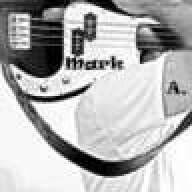
Lo tengo de esta manera y va perfectamente con dos bajos con un sonido tan diferente como Sadowsky y Vigier. Puedo tener dos bajos juntos en el escenario con un solo amplificador.

mark, sadw,vig.jpeg
 
No. I have tested it in several cabinets, MarkBass Ninja, Hartke XL 1x15 + 4x10 and Gallien Krueger. In none of them I took all its juice until I bought the Microbass II. The sound that I like is this one.
Tone is one thing, and is subjective; lacking definition is another, and is less subjective. I find the BB800 does not lack definition, but its tone is not for everyone.

 
  • Like
Reactions: kasbrey
...the BB800 does not lack definition, but its tone is not for everyone.
Agreed - you have to be pretty happy about the tone of your bass to appreciate the Quilter.
The BB800 is accurate and powerful, and the EQ controls are really useful, but it doesn't provide radical tone shaping, and the gain structure/on-board limiting doesn't lend itself to distortion.
 
  • Like
Reactions: bdplaid
I think it's interesting, the kind of conversations that we can have with the BB800 on the market.
A totally flat amp means that any and all tonal preferences have to be called out as such.
So someone who says the Quilter "lacks clarity" is really saying that they prefer a boost in x frequencies or what-have-you.
And there's nothing wrong with any of this.
If anything, it should be empowering to all users as it's giving us more information than we had before on the tones we like. So now @barrabajazz can walk into a studio or a backlined gig and say "hey, I really like to cut through in _______ range", and he'll be right on the money, instead of using rough metrics like "high mids", "low mids", "punch", or whatnot.
 
Now that I have more hours with the BB800, I can say that I am really liking its tone. But I guess this is a taste thing. What fits for me, may good for others.

The Quilter is exactly what I was looking for. Pure bass tone with simple, intuitive adjustments. But I have to say I disagree with others opinions about its flexibility. I think you can get a lot of different tones from the same bass, but with the Quilter, you never loose the identity of each bass. With the 2 knobs I can easily have 5-6 different tones with the same bass. Just combining the two. And then you can combine the Gain and Master and that also affects the sound. And if you add the tone knob of the bass and the pickups knobs, you have many sounds to choose from.

But, again, depends on what each bassist is looking for. For me, who likes passive basses and not processed tone, it's perfect.
 
The Quilter definitely has flexibility, but my GK 700RB-II is a much more flexible amp in terms of EQ and gain structure.

My primary speaker is balanced and clean sounding, so I appreciate that the Quilter doesn’t muck that up. The GK could be a little strident with that cab.

Also, I have a board full of dirt pedals for gain shaping.

On the flip side, my at-home cab is a little dark, so the GK lets me brighten it up, and between preamp, boost, and power amp controls, I have multiple ways to gain stage the GK and affect the feel.

For gigs, I really, really appreciate the Quilter’s simplicity.
 
I think it's interesting, the kind of conversations that we can have with the BB800 on the market.
A totally flat amp means that any and all tonal preferences have to be called out as such.
So someone who says the Quilter "lacks clarity" is really saying that they prefer a boost in x frequencies or what-have-you.
And there's nothing wrong with any of this.
If anything, it should be empowering to all users as it's giving us more information than we had before on the tones we like. So now @barrabajazz can walk into a studio or a backlined gig and say "hey, I really like to cut through in _______ range", and he'll be right on the money, instead of using rough metrics like "high mids", "low mids", "punch", or whatnot.

Has anyone verified that the BB800 is, in fact, totally flat? (Apologies if this has been discussed and I missed/forgot it.)

In my brief experience with one, it did not sound that way to me (I heard it as slightly rolled off up top -- maybe a bit warm/big in the lows, but it's been awhile and I'm less sure about that). But, then, I have played through a few amps and preamps that were claimed to be flat/unvoiced and all sounded different to me. This doesn't necessarily negate those claims, per se -- I take a claimed "flat" preamp/amp to be "flat within its passband" -- that is, flat within where it rolls off, top and on bottom, whether by design or by some other limitation.

Further, being "flat" (as in having "no hills and valleys" in the frequency response) doesn't tell you how much of what kind of distortion, pleasing or otherwise, is in the signal, which is a big part of what gives an amp its character, particularly (though not exclusively) when you're talking about tube amps or amps that seek to emulate some of their characteristics (like the Bass Block, the GK RB series amps, and others).

As for articulation, discussed a few posts up, I think that there are several components to it, some more and some less subjective (like the degree of control an amp has over a speaker), and some dependent on other factors (like how well suited the amp and the speaker its paired with are to each other).

I've mentioned before that I didn't have much time with the BB800 (I got an early unit with a component issue, which the company, by all accounts, has long since resolved, and only got to play it a few times at home for that reason). During that time, I found it to have a nice, propulsive "bounce" that I hadn't experienced with other micro amps.

The Quilter's lower damping factor (relative to many other solid-state heads) has been discussed and I don't think it's a secret that the amp seeks (with some success) to emulate certain aspects of tube amps (that bouncy, propulsive feeling being one). In a lot of music, this makes the amp feel more articulate -- the same characteristics that give it that nice, propulsive feel give the notes a nice snap -- it's easier to be dynamic and give certain notes a little poke with your right hand (I would argue that it is more dynamic, then, in that sense and in that context).

However, when playing very fast (for me) slap or fast-as-I-could-go staccato (when trying to make the amp hiccup, in other words), the Quilter started to get blurry relative to my GBE 1200 -- the big lead sled controlled the speaker more tightly and maintained greater separation between the notes, no question.

I'm not saying that the BB800 isn't a great little amp -- in my limited time with it, I thought it was one of the more pleasant-sounding and one of the most natural feeling micros I've played -- and it might well be flat within its passband (though I'd be curious to see where it rolls off and curious how much speaker resonance at certain frequencies, due to the lower damping factor, might contribute a smidge of "extra bass -- I've no idea, honestly, just curious).

I just didn't hear the amp as this totally uncolored, hyper-articulate machine -- which is how some people (not you in particular, just several posts I've read over the months) seem to be describing it. I liked it -- I just didn't hear it that way.
 
Has anyone verified that the BB800 is, in fact, totally flat?

In my brief experience with one, it did not sound that way to me (I heard it as slightly rolled off up top -- maybe a bit warm/big in the lows, but it's been awhile and I'm less sure about that).

I doubt the BB800 is flat, and you seem to have answered your own question in the best way possible - by using your own ears.

IME "flat" amps sound pretty lifeless, as basses themselves sound kinda, well, crappy. A MarkBass amp set to "flat" sounds rather this way to me. Likewise using PA-type equipment directly into a power amp may be dead flat on a meter, but sure sounds like dookey - forget having anything like "bounce" or any other euphemisms that might make a great bass tone.

But one of the most popular amps in history - the Ampeg SVT - is anything but flat.

What I'm getting at is, searching for "flat" is a fools errand. Searching for the amp that has the most pleasing sound to you is the goal.

It has been said that one does not play the guitar, but plays the amp, and I believe that is true, at least as far as tone is concerned.
 

Latest posts