- Jan 24, 2002
- 2,117
- 950
- Disclosures
- NS Design / AER Endorsing Artist
Yes. That's the main point of Rabbath's pedagogy. His arms look like wet rags when he plays.(is being completely effortless on the double bass...even possible?)

TalkBass has been independent since 1998. Add your voice.
Create a free account to reply to discussions, view embedded media, and browse with fewer display ads.
Join free Log in
Want zero display ads or expanded classifieds tools? Compare plans.
Yes. That's the main point of Rabbath's pedagogy. His arms look like wet rags when he plays.(is being completely effortless on the double bass...even possible?)
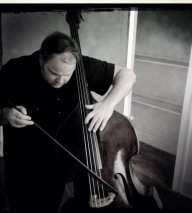
Yes. That's the main point of Rabbath's pedagogy. His arms look like wet rags when he plays.
I don't doubt that's true for some players. François was once a very serious body builder and has very thick arms as a result. With the large mass of his arms combined with the leverage the length of his arms provide, he only needs gravity to pull a massive sound.No argument, but could he look that effortless pulling a huge pizz. sound that cuts through a drummer and bunch of horns?
I use a lot of his principles and rarely get tired (even doing the above) but some things just need that force to happen.
I don't doubt that's true for some players. François was once a very serious body builder and has very thick arms as a result. With the large mass of his arms combined with the leverage the length of his arms provide, he only needs gravity to pull a massive sound.
Check out his recording of Frank Proto's Concerto No. 2. He's on stage with a 100 piece orchestra (including drums and some very heavy brass), and can be heard clearly the entire time without amplification.
A final thought - please don't limit your experimentation - when you do not explore something to it's fullest potential, you only limit yourself.
Happy bassing,
Hans

Hello All,
I just came across this thread last night - I'd like to share a few things that might be of help and also (perhaps) help with some misconceptions.
One of the biggest misconceptions is that Rabbath left hand technique is designed to "take the place" of the traditional fingering systems of Simandl, Nanny etc. This is simply not the case. If you look at the 3rd Volume of his method you will find well over 100 different fingerings for each scale! In his words "the more ways you have to go from one place to another, the more rich you are."
That being said, the one of the greatest innovations that Rabbath has made includes the concept of dividing the bass into 6 positions (using the landmarks of the harmonics at places of the 8ve and 5th related to the open strings) through the use of the pivot. Please understand, he does not use this concept exclusively - it is combined with everything else! He also codified the concept of the crab technique - collapsing the hand to bring a finger forward or back and then re-establishing the hand position to move the hand by using that finger as a bookmark (this is easier demonstrated than written as text).
A big misconception about the pivot is that it is an "extension." This is not the case. The hand is never extended allowing for undue pressure or strain on the hand. The primary difference between a pivot and a shift, is that the entire hand moves as one unit with a shift. A pivot is made with the thumb staying in place, but with a relaxed hand position. A correctly made pivot is not a stretch or reach, it is more like pivoting with one foot on the floor in basketball. With the pivot you are still essentially playing pitches in relationship to the placement of your thumb, just as you are in a closed hand (Simandl) position - you are only moving slightly (much less than a shift) to get there.
Furthermore - and most importantly for both hands and arms - he emphasizes the use of the weight of the arms. You must use the weight of your arm to depress the string, not squeeze with the muscles of your hand. By using the weight, you will tire much less easily. As to playing as strong as Wilbur Ware - remember that his students/supporters include such heavyweight hard plucking jazz bassists as Rufus Reid, John Clayton, and even Ray Brown who was so impressed that he made a video of Francois early on.
I would like to share that I am an unabashed fan of Rabbath's pedagogy - and a bit of a pedagogy nut (over 20 years teaching and 5 file cabinets full of materials). I developed the Art of the Bow and new Art of the Left Hand DVDs with François through my university because I wanted a more comprehensive and complete look at his techniques for me and my students. The university owns these products, but they have been sold in over 40 countries to date. If you really want to witness a comprehensive explanation to all of his techniques and see him demonstrate everything plus interviews, biomechanics animations etc. I invite you to check out http://artofthebow.com. Michael Cameron just wrote a review of the new AOLH DVD in this month's American String Teacher (just arrived yesterday) "The production is jammed with practical advice and a detailed breakdown of his left hand philosophy. To sweeten the pot there are plenty of riveting demonstrations of his performance that gauge the validity of his methodology... Both sets deserve a central place in any bassist's library."
A final thought - please don't limit your experimentation - when you do not explore something to it's fullest potential, you only limit yourself.
Happy bassing,
Hans
Hello All,
I just came across this thread last night - I'd like to share a few things that might be of help and also (perhaps) help with some misconceptions.
One of the biggest misconceptions is that Rabbath left hand technique is designed to "take the place" of the traditional fingering systems of Simandl, Nanny etc. This is simply not the case. If you look at the 3rd Volume of his method you will find well over 100 different fingerings for each scale! In his words "the more ways you have to go from one place to another, the more rich you are."
That being said, the one of the greatest innovations that Rabbath has made includes the concept of dividing the bass into 6 positions (using the landmarks of the harmonics at places of the 8ve and 5th related to the open strings) through the use of the pivot. Please understand, he does not use this concept exclusively - it is combined with everything else! He also codified the concept of the crab technique - collapsing the hand to bring a finger forward or back and then re-establishing the hand position to move the hand by using that finger as a bookmark (this is easier demonstrated than written as text).
A big misconception about the pivot is that it is an "extension." This is not the case. The hand is never extended allowing for undue pressure or strain on the hand. The primary difference between a pivot and a shift, is that the entire hand moves as one unit with a shift. A pivot is made with the thumb staying in place, but with a relaxed hand position. A correctly made pivot is not a stretch or reach, it is more like pivoting with one foot on the floor in basketball. With the pivot you are still essentially playing pitches in relationship to the placement of your thumb, just as you are in a closed hand (Simandl) position - you are only moving slightly (much less than a shift) to get there.
Furthermore - and most importantly for both hands and arms - he emphasizes the use of the weight of the arms. You must use the weight of your arm to depress the string, not squeeze with the muscles of your hand. By using the weight, you will tire much less easily. As to playing as strong as Wilbur Ware - remember that his students/supporters include such heavyweight hard plucking jazz bassists as Rufus Reid, John Clayton, and even Ray Brown who was so impressed that he made a video of Francois early on.
I would like to share that I am an unabashed fan of Rabbath's pedagogy - and a bit of a pedagogy nut (over 20 years teaching and 5 file cabinets full of materials). I developed the Art of the Bow and new Art of the Left Hand DVDs with François through my university because I wanted a more comprehensive and complete look at his techniques for me and my students. The university owns these products, but they have been sold in over 40 countries to date. If you really want to witness a comprehensive explanation to all of his techniques and see him demonstrate everything plus interviews, biomechanics animations etc. I invite you to check out http://artofthebow.com. Michael Cameron just wrote a review of the new AOLH DVD in this month's American String Teacher (just arrived yesterday) "The production is jammed with practical advice and a detailed breakdown of his left hand philosophy. To sweeten the pot there are plenty of riveting demonstrations of his performance that gauge the validity of his methodology... Both sets deserve a central place in any bassist's library."
A final thought - please don't limit your experimentation - when you do not explore something to it's fullest potential, you only limit yourself.
Happy bassing,
Hans


