the edges/seams on my bass are chewed up. seams are OK, not split. looking for an edge guard. saw a short on cello repair, the luthier applied a light brown plastic, flexible corner strip, probably about 3/4" x 3/4". at one time on another bass I used interior car trim guard, nothing fits on this bass and would like to have it look professional.

Enjoy the benefits of a premium membership!
Upgrade Account
-
TalkBass has been independent since 1998. Add your voice.
Create a free account to reply to discussions, view embedded media, and browse with fewer display ads.
Join free Log in
Want zero display ads or expanded classifieds tools? Compare plans.
You are using an out of date browser. It may not display this or other websites correctly.
You should upgrade or use an alternative browser.
You should upgrade or use an alternative browser.
ragged edges, seams not split
- Thread starter bendover42089
- Start date
More options
Who Replied?
Sounds like you might be looking for these. I’ve used them for years, and they’re great: Bass Edge Protector Set - Bumpers (Leather or Rubber)
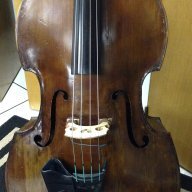
On my carved my luthier found nice felt strips instead of leather/rubber. He double-stacked them on the upper bout for a little more height. I will take a picture when i can if that sounds interesting to the OP. The lower bout felts are something like 9 inches long to account for rolling the bass down/up from the floor. They are wearing out over time, unlike leather/rubber, i spose I’ll have to replace them at some point.
EDIT: i was curious and had a few mins…. the felts are 16” actually. Here are a couple pics:
EDIT: i was curious and had a few mins…. the felts are 16” actually. Here are a couple pics:
Attachments


Last edited:

I have leather strips, but like you I made them long on the lower bout to accommodate rolling the bass when you lay it down. Otherwise the bass would be resting on the wood right till the end, or you'd have to pick it up and position it horizontally in the air before setting it down. That last is too much trouble.On my carved my luthier found nice felt strips instead of leather/rubber. He double-stacked them for a little more height. I will take a picture when i can if that sounds interesting to the OP. The C bout felts are something like 9 inches long to account for rolling the bass down/up from the floor. They are wearing out over time, unlike leather/rubber, i spose I’ll have to replace them at some point.
I used 1/4" belting leather, applied the first strip with contact cement, then applied a second strip on top with contact cement (you don't try to put the two strips together and then bend them), and then used Bullseye Amber Shellac for color. They've been on there some 10 years or more now and show only minor wear.
Have a look here with some photos a few postings below:Instead of bumbers, it sounds to me like they are seeking some sort of longer trim applied continuously along the edge itself. If so, I've never heard of or seen such a thing.
Bumpers thread
In the beginning the tube holds by itself, but not too good after half a year.
First I tried some glue, but that would not stick well to the tube. Even not if roughed up with sandpaper on the inner side.
But then I used transparent colorless synthetic sticky tape that sticks very well to the tube and also on my glossy finish. Easy to get off but sticks well too. One at each end and for longer ones one more in the middle is enough.
Maybe not for a decent (solo?) instrument in clear view of the listeners, but for a workhorse that could not be treated well under all circumstances it is a good solution.
The good thing is that the pressure/weight goes to too and back as before whereas rib mounted bumpers might open a seam if too much weight (someone sitting on the basses rib) or impact happens to the bumpers/ribs.
But bumpers are more aesthetically pleasing if your bass in total is too.
Sliding the bass over the floor with the PVC tube does not work well, you need to roll the bass along the tube to get it up or lift it.
Last edited:
That's gonna result in something beside a bass seam opening up! My fisticuffs skills are weak, but I think they'd be up to that task. Someone SITTING on the bass? Sheesh!... rib mounted bumpers might open a seam if too much weight (someone sitting on the basses rib)...
Yes, that was the sort of thing I understood the OP to mean. Only the OP can judge for himself whether he thinks that "looks professional."Have a look here with some photos a few postings below:
I have bumpers on both of my basses. As others have noted, 2d set on the lower bout would help when laying it down. But my approach has been to not care about my ply, and to just be very careful when laying my hybrid down. I usually play my hybrid in places that have carpeting. If not, I'm just very careful laying it down. If any question, I'll essentially pick it up by the neck heel and the endpin, and place it down on the bumpers. No damage yet.
The ply (an Engle), I just lay it down on whatever surface. During the summer, often on asphalt. Bass is only a dozen years old, but so far the wear has not progressed beyond "patina"!


But come on, can you still drag the double bass on its side on the ground if you have those in place on it? 
I use the same sizes and placement but with the material of an old fan belt. The only complain is that I put those on much too late when the rim of the top already had been going good bye in some places.On my carved my luthier found nice felt strips instead of leather/rubber. He double-stacked them on the upper bout for a little more height. I will take a picture when i can if that sounds interesting to the OP. The lower bout felts are something like 9 inches long to account for rolling the bass down/up from the floor. They are wearing out over time, unlike leather/rubber, i spose I’ll have to replace them at some point.
EDIT: i was curious and had a few mins…. the felts are 16” actually. Here are a couple pics:

Here's a 1975 promo shot of my band. I may have been the one who suggested that Carol sit on my Anton Schroetter plywood bass. There were no ill effects, but I wouldn't do that now...That's gonna result in something beside a bass seam opening up! My fisticuffs skills are weak, but I think they'd be up to that task. Someone SITTING on the bass? Sheesh!


