
Enjoy the benefits of a premium membership!
Upgrade Account
-
TalkBass has been independent since 1998. Add your voice.
Create a free account to reply to discussions, view embedded media, and browse with fewer display ads.
Join free Log in
Want zero display ads or expanded classifieds tools? Compare plans.
You are using an out of date browser. It may not display this or other websites correctly.
You should upgrade or use an alternative browser.
You should upgrade or use an alternative browser.
Raised pole pieces for the A string ?
- Thread starter REV
- Start date
More options
Who Replied?

The raised pole piece is to make sure that the A string is loud enough. Back then because of how they designed the pickups, the A had a problem of being quieter than the rest of the strings so they raised the pole piece to remedy it. Eventually pickups were redesigned to not have that problem.
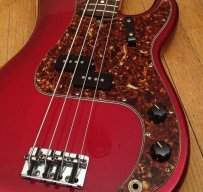

Yeah, I don't know why pickup companies still do that other than to cater to those who have to have a "genuine authentic reproduction 58 P pickup." But it was actually the strings back then that was causing it to happen, not the pickup itself.


It's not the pickups. It was the strings and the arc of the fingerboard compared to the relative flatness of the pickup. What has changed is that the arc of the fingerboard is less, so there is not as much difference in string height over the polepieces from string-to-string.
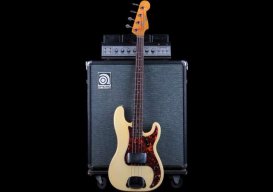
I own a Fender True Vintage 58 pickup. Very well balanced and musical pickup. Has a lot of punch on A-string, but could be easily fixed just lowering the pickup

Interestingly enough, on my Yamaha RBXJM2 bass, the both vertical rows of pickup poles on the Seymour Duncan SMB6-a pickup are raised from lowest (B and C strings) to higher positions (G and E strings) up to the highest position (A and D strings).
Yeah, I don't know why pickup companies still do that other than to cater to those who have to have a "genuine authentic reproduction 58 P pickup." But it was actually the strings back then that was causing it to happen, not the pickup itself.
Interesting that it was the string and not the pickup magnet.
That's because your fretboard has a curved radius and the pickup surface is flat, so they radius the polepieces. Not needed on a P pickup since it can be adjusted separately for each string.
Thanks for the 'splanation, Jimmy!

Resurrecting an old thread but I have a question about this. I just bought a warmoth P-bass body that came with all hardware parts from a 57 AVRI (Stratosphere sold to orig owner). It has one of the authentic vintage pickups with the raised A polepieces. The A is terribly loud compared to the other strings. I figured I could mash that side of the pickup down into the body, but that would look kind of wonky. I am wondering if anybody has ever lowered the raised pole pieces down through one of these pickups to make it into a normal P-Bass pickup? I am thinking that is my next move with it before I take them out and replace with something more normal.

I am wondering if anybody has ever lowered the raised pole pieces down through one of these pickups to make it into a normal P-Bass pickup? I am thinking that is my next move...
That move has a high probability of killing that half of the pickup. The moving of the magnets could break the coil wire, or damage enough of the coil wire insulation to short out the pickup if the wire didn't break.
I'd opt for the wonky look given those two choices.

It's not the pickups. It was the strings and the arc of the fingerboard compared to the relative flatness of the pickup. What has changed is that the arc of the fingerboard is less, so there is not as much difference in string height over the polepieces from string-to-string.
Thread dredge,
My zone of most experience comes from Fenders/FSOs from the '60s era and modern variations. Now I'm planning a '58 Fender type FSO with top shelf parts therefore doing research and memory refresh about the finer details of Fender '50s era P basses.
(e.g. The hows ands whys of the wood, finishes, dimensions, shapes, profiles, etc and the progression of changes between '51 to '59/'60.)
At the same time I've noticed that even though the new Fender Custom Shop versions of '50s P basses can have 7-1/4" radius fretboards but probably 2/3 or more are being made instead with modern 9-1/2" radius boards. I suspect that's a lot to do with why Fender stopped making or retailing '58 precision pickups a few years ago.
Applying all that, it occurs to me as I decide the radius for my custom neck factors into my pickup selection too. If I choose 7-1/4" R then I could go with whichever post-'58 P pickup--TV, CS, Lollar, Fralin, etc--or if I want to be the 1958-reproduction-stickler, I could go with a '58 type P pickup from Klein.
However, that '58 type pickup wouldn't make so much sense if I were to choose the more modern 9-1/2" R for my custom neck. I see a fork in the road regarding my choices.
Why not? I installed a similar pickup in a friend's bass that has the 9 1/2 inch radius and it sounds killer. The A poles are really not any higher than the D-G poles, and the E poles are inset which helps string-to-string balance.However, that '58 type pickup wouldn't make so much sense if I were to choose the more modern 9-1/2" R for my custom neck. I see a fork in the road regarding my choices.
Why not? I installed a similar pickup in a friend's bass that has the 9 1/2 inch radius and it sounds killer. The A poles are really not any higher than the D-G poles, and the E poles are inset which helps string-to-string balance.
I'm not sure what you mean or what I'm missing about this conceptually.
Breaking this down to help understanding...
Considering all things equal relative to the pickup coils and bobbins, the position A poles on these pickups are higher than the E, D and G, yeah?
This is to compensate for more even or balanced output from the A string, relative to the E, D and G, right?
The way these pickups were designed gives them particular tonal characteristics but necessitated higher positioned A pole magnets to compensate, right?
These are the relationships I'm considering.
When the array of the string, conforming with a 9-1/2" R fretboard, why wouldn't that largely mitigate the functional reason for staggered/raised A-string poles that originated when 7-1/2" radius fretboards were the standard.
I assume this type of pickup likely can be height adjusted or angled for balanced output across all four strings but I don't know what appreciable unique tonal quality or characteristics are gained, beyond aesthesis or a less compromised presentation of authentic '58 reproduction.
This is also keeping mind that according to Lollar their standard P pickups are "similar in tone to the original late-‘50s split-coil P-Bass® pickups, ours offer high-mids that cut through the mix. You get an open top end with plenty of note attack, presence and clarity, with defined sub- and low-end frequencies.
Avg. DC: 11.0K"
I'm not sure what I'm missing conceptually. My genuine intent isn't to argue; but to be fully informed to make decisions.
Yes, I'm thinking about this a lot. Someone might say I'm overthinking it but I'm curious and want to know more.
The only thing that a magnetic slug or pole raised above the flatwork does is increase the articulation of the string, given equal distance from the string to the flatwork. This balances out the articulation of the D and G strings, which with less mass has less inertia and articulates differently. This was a big deal when the amplifier had four 10-inch paper cone speakers that couldn't handle that much power, and the low end rolled off sooner from the open back of the classic 4X10 Bassman Amp. The E string, having more mass, will induce a stronger signal to the pickup, so whether by lowering the poles to decrease the sound of the articulation to save the speakers, or lower that side of the pickup generally to reduce the strength of the signal, it just doesn't make that much difference on the E string poles.
The only thing that a magnetic slug or pole raised above the flatwork does is increase the articulation of the string, given equal distance from the string to the flatwork. This balances out the articulation of the D and G strings, which with less mass has less inertia and articulates differently. This was a big deal when the amplifier had four 10-inch paper cone speakers that couldn't handle that much power, and the low end rolled off sooner from the open back of the classic 4X10 Bassman Amp. The E string, having more mass, will induce a stronger signal to the pickup, so whether by lowering the poles to decrease the sound of the articulation to save the speakers, or lower that side of the pickup generally to reduce the strength of the signal, it just doesn't make that much difference on the E string poles.
There's the historic context I wanted/needed... Got it. Thank you!
It's essentially a concern or choice that should consider which amps one might possible use and how faithful the '58 preproduction they desire.
I'm working through a checklist of a sort before making choices.
I think there's an important distinction to be made in terms of trying to figure out why something was done the way it was done, back in the day, versus trying to understand the actual, practical difference that thing makes.
The practical difference between the 58 pickup with taller poles vs any other split P with the pickup slanted to get the poles at the same effective distance from the string is going to be incredibly small. Small enough that I would bet good money that most people couldn't detect it in a blind sound sample comparison much less a bass in a band mix or a live gig. The 58 will have ever so slightly more output (alnico magnet strength is partially determined by the ratio of surface area to height, a taller pole has more output) but also ever so slightly less very high end response (more conductive material in the magnetic field).
Personally, I don't like the sound of the raised poles, but - again - it is very much a difficult thing to detect, and in the broad scheme of p bass pickup design variables it's a very minor variable.
If I were in your shoes I'd just pick based on aesthetic considerations and how badly you want your bass to be "true" to a certain spec. Don't get caught up in trying too hard to understand if there's some magic involved in some particular change (there isn't, in this case).
The practical difference between the 58 pickup with taller poles vs any other split P with the pickup slanted to get the poles at the same effective distance from the string is going to be incredibly small. Small enough that I would bet good money that most people couldn't detect it in a blind sound sample comparison much less a bass in a band mix or a live gig. The 58 will have ever so slightly more output (alnico magnet strength is partially determined by the ratio of surface area to height, a taller pole has more output) but also ever so slightly less very high end response (more conductive material in the magnetic field).
Personally, I don't like the sound of the raised poles, but - again - it is very much a difficult thing to detect, and in the broad scheme of p bass pickup design variables it's a very minor variable.
If I were in your shoes I'd just pick based on aesthetic considerations and how badly you want your bass to be "true" to a certain spec. Don't get caught up in trying too hard to understand if there's some magic involved in some particular change (there isn't, in this case).
Fretboard radius is immaterial to anyone but the player, and so is being a stickler. It's how A strings were made back then is why they raised the polepieces.Thread dredge,
My zone of most experience comes from Fenders/FSOs from the '60s era and modern variations. Now I'm planning a '58 Fender type FSO with top shelf parts therefore doing research and memory refresh about the finer details of Fender '50s era P basses.
(e.g. The hows ands whys of the wood, finishes, dimensions, shapes, profiles, etc and the progression of changes between '51 to '59/'60.)
At the same time I've noticed that even though the new Fender Custom Shop versions of '50s P basses can have 7-1/4" radius fretboards but probably 2/3 or more are being made instead with modern 9-1/2" radius boards. I suspect that's a lot to do with why Fender stopped making or retailing '58 precision pickups a few years ago.
Applying all that, it occurs to me as I decide the radius for my custom neck factors into my pickup selection too. If I choose 7-1/4" R then I could go with whichever post-'58 P pickup--TV, CS, Lollar, Fralin, etc--or if I want to be the 1958-reproduction-stickler, I could go with a '58 type P pickup from Klein.
However, that '58 type pickup wouldn't make so much sense if I were to choose the more modern 9-1/2" R for my custom neck. I see a fork in the road regarding my choices.
BTW, I'll take 9 1/2" all day long over 7 1/2"! I bend strings and always had a problem with low action and choking strings on a bend with 7 1/2.

Howdy!
I may as well resurrect this thread as it's relevant to my question...
I have a brand new Player Precision with just one of the A-string pole pieces raised on the pickup. Like this:

So my question is: is it possible to lower this single piece or will it break the pickup? It makes the A string sound louder than others. That is easily remedied by lowering the pickup from that side, I know, but it is also visually unpleasant. First stages of OCD, you might ask...
Any help is appreciated.
I might as well mention it has a Tort Pickguard...
I may as well resurrect this thread as it's relevant to my question...
I have a brand new Player Precision with just one of the A-string pole pieces raised on the pickup. Like this:
So my question is: is it possible to lower this single piece or will it break the pickup? It makes the A string sound louder than others. That is easily remedied by lowering the pickup from that side, I know, but it is also visually unpleasant. First stages of OCD, you might ask...
Any help is appreciated.
I might as well mention it has a Tort Pickguard...


