• TalkBass has been independent since 1998. Add your voice.
    Create a free account to reply to discussions, view embedded media, and browse with fewer display ads.
    Join freeLog in
    Want zero display ads or expanded classifieds tools? Compare plans.

Reducing weight on a solid Rosewood body.

hbarcat

Supporting Member
Aug 24, 2006
10,227
18,611
Rochelle, Illinois
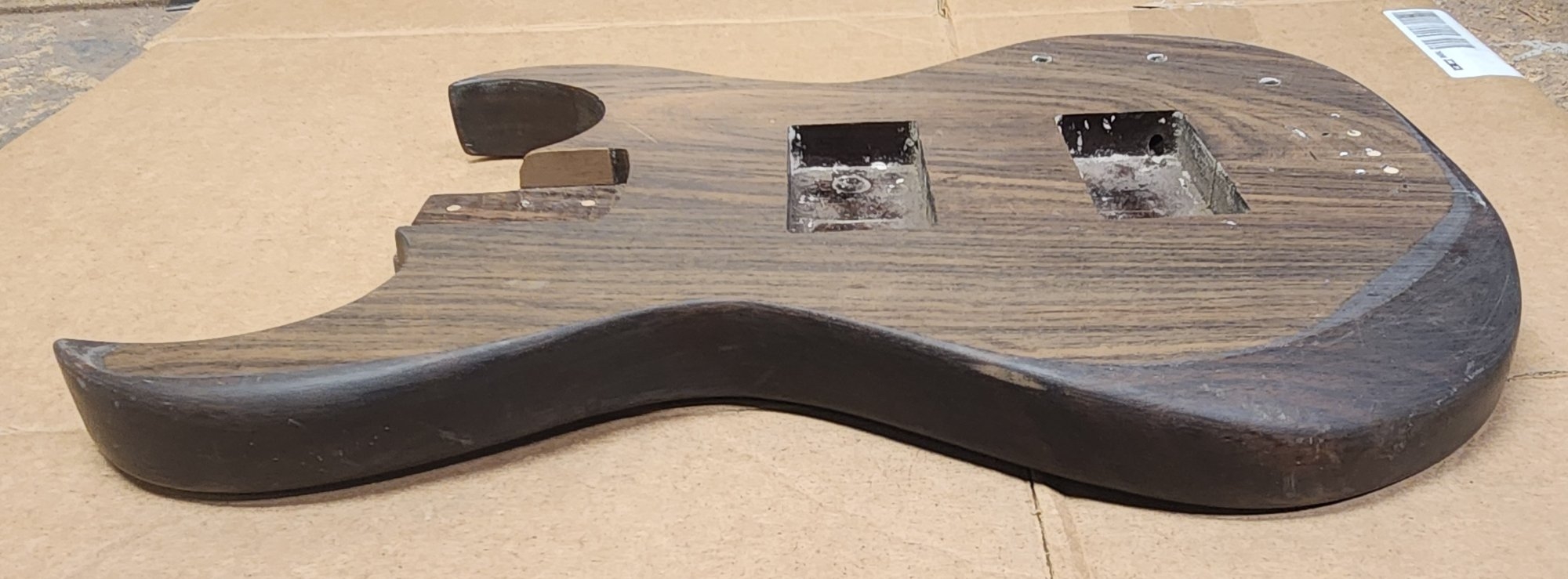
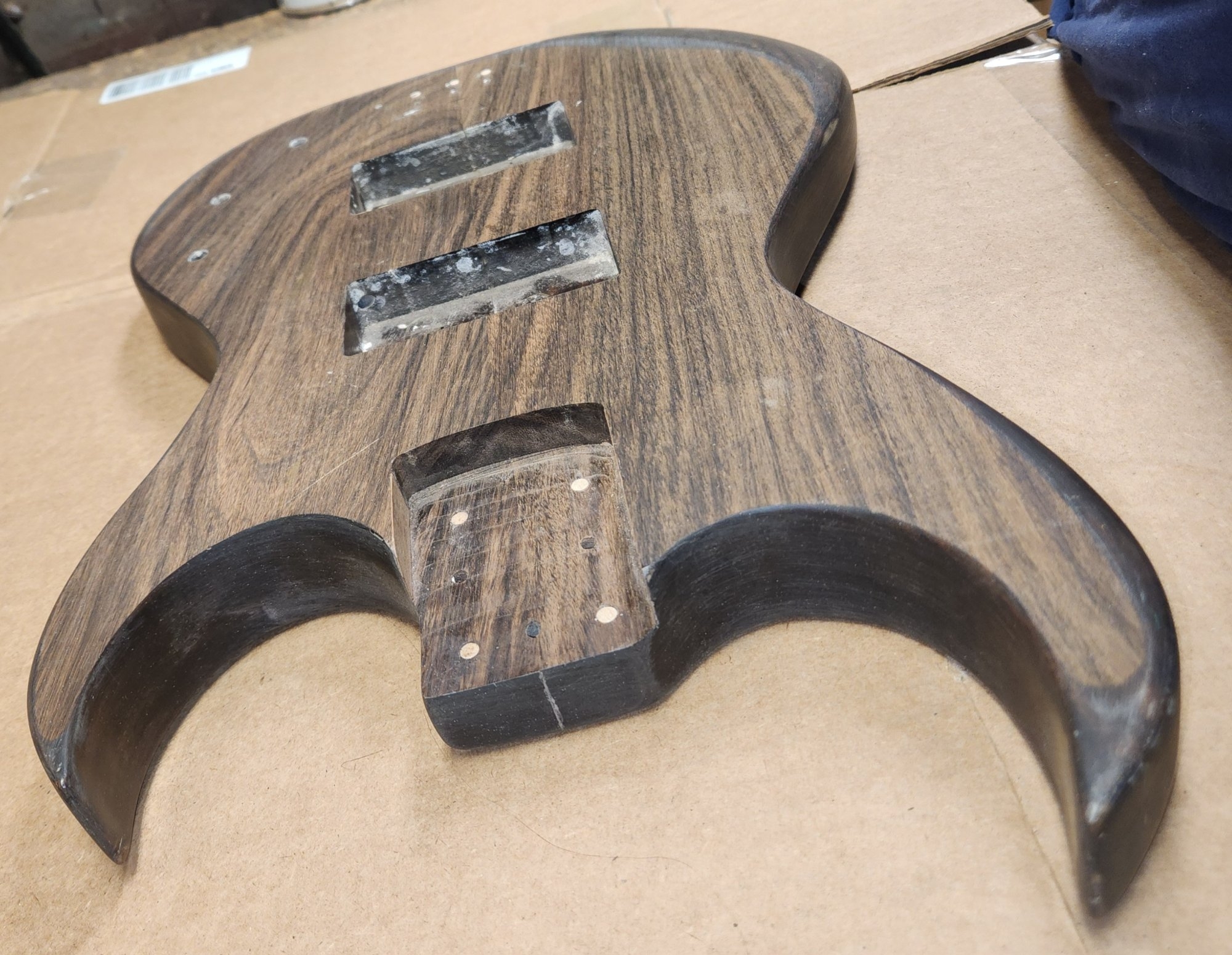
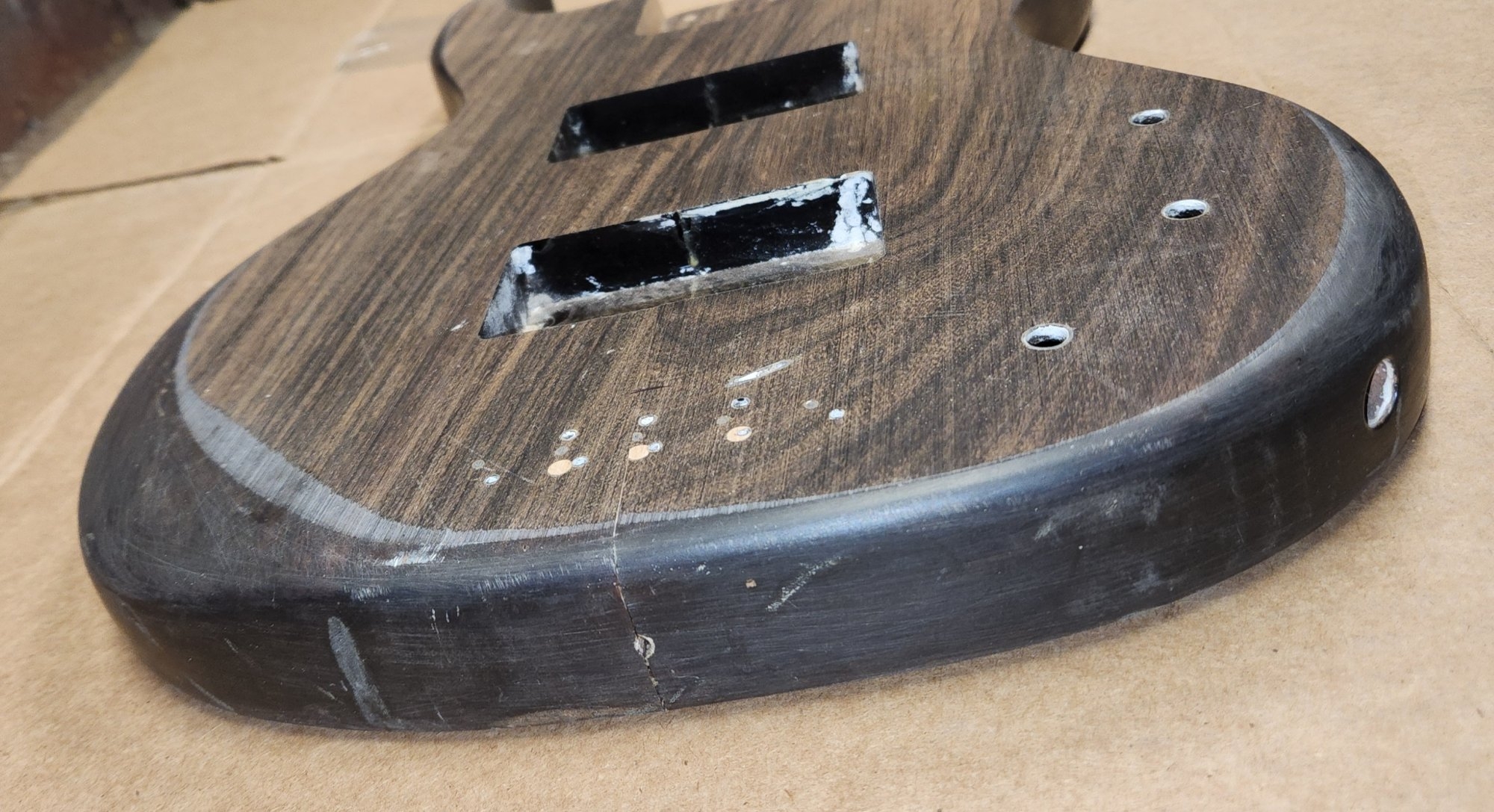
Decades ago, I found myself with an orphaned bass body that was originally made by Schecter in the 1980s as a Fender P body clone. It was made of solid Rosewood and weighed 6.8 pounds.

I sat on it for awhile and then about 2015 I decided to make some use of it. I started by radically cutting into the body to try to reduce as much weight as possible. I completely restructured the upper horns and trimmed away wood along all the edges. I routed out the pickup cavities with the intent of using lightweight covers over them. I finished by planing a small amount of material off the front and back. Then I abandoned the project.

So now I want to take this up again and this is where it's at today. The bare body now weighs 5.6 pounds.

The dark areas are remains of the clearcoat that I sprayed on it as a test before I planed the front and back.
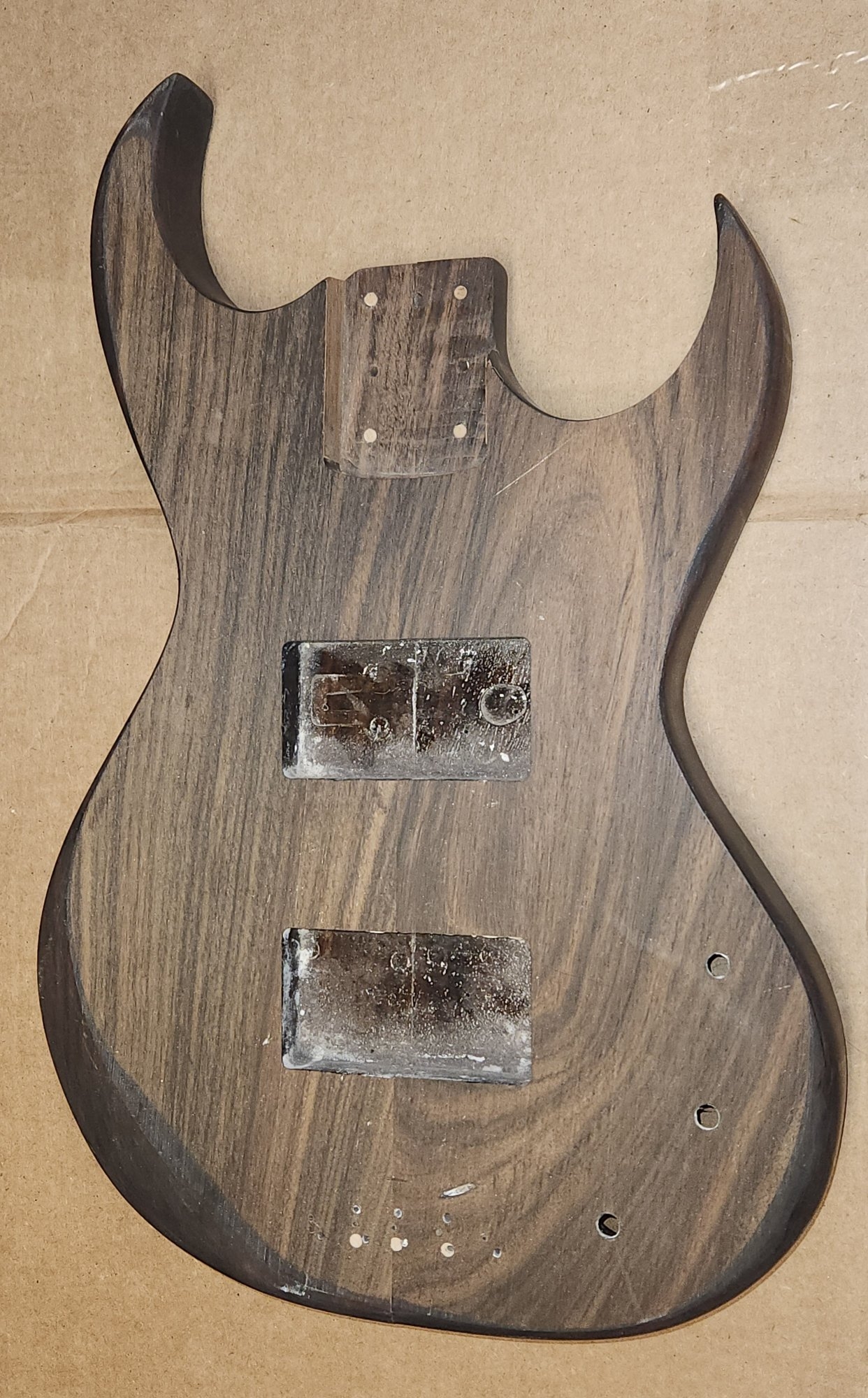
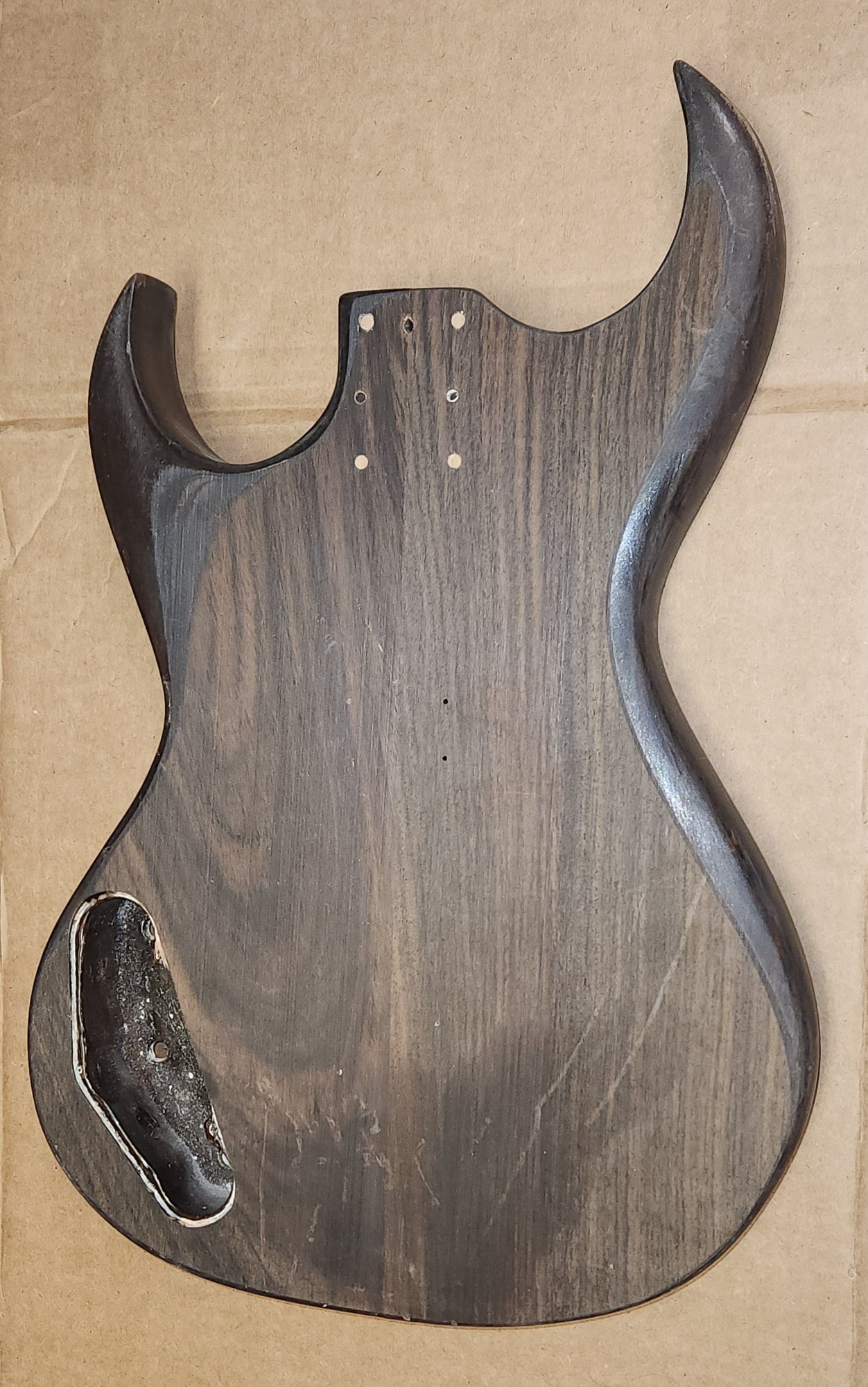
20260223_105149.jpg
20260223_105204.jpg
20260223_105250.jpg
20260223_105308.jpg
20260223_105326.jpg


My plan is to carefully remove a bit more wood around the edges to give a softer contour and then add the neck, pickups, hardware, etc..

I think an oil finish would be appropriate, but I'm open to other options.

I'm open to any and all suggestions about what you think might be interested in seeing moving forward.
 
Last edited:
Decades ago, I found myself with an orphaned bass body that was originally made by Schecter in the 1980s as a Fender P body clone. It was made of solid Rosewood and weighed 6.8 pounds.

I sat on it for awhile and then about 2015 I decided to make some use of it. I started by radically cutting into the body to try to reduce as much weight as possible. I completely restructured the upper horns and trimmed away wood along all the edges. I routed out the pickup cavities with the intent of using lightweight covers over them. I finished by planing a small amount of material off the front and back. Then I abandoned the project.

So now I want to take this up again and this is where it's at today. The bare body now weighs 5.6 pounds.

The dark areas are remains of the clearcoat that I sprayed on it as a test before I planed tge front and back.

View attachment 7439081View attachment 7439082View attachment 7439083View attachment 7439084View attachment 7439085

My plan is to carefully remove a bit more wood around the edges to give a softer contour and then add the neck, pickups, hardware, etc..

I think an oil finish would be appropriate, but I'm open to other options.

I'm open to any and all suggestions about what you think might be interested in seeing moving forward.

Hey hbarcat;

It's good to see you working on another cool project. Definitely a beautiful chunk of wood, worth turning into a playable bass.

Not many options left for trimming some more weight out of it. You could try boring some holes in from the edge at the back end, and putting a rosewood cap over them?

My personal opinion is that it would look best with a simple clear gloss finish. Not too thick, no extra tinting on the surfaces, just clear. Maybe a bit of darker brown tinting around the perimeter. It's already got plenty of color and grain contrast.
 
You could lose a little more weight with an aggressive tummy cut but that’s about all that’s left to reduce.

You could always route cavities under a pick guard but it would be a shame to cover such pretty rosewood with a pickguard. Unless, of course, the pick guard was made from another beautiful piece of wood.
 
I'm okay with the weight as it is, so I have no desire to get rid of any more wood other than the trivial amount that will come off when rounding off the edges. I'm also not really into the idea of a pickguard. I want to keep the look as simple and clean as possible.

I am contemplating doing an arch top contour, but that could be tricky. I've never done one before and if I take off just a bit little too much wood in one spot, I've basically ruined the body. I really don't want to risk it.
 
I’d be interested in Bruce’s expertise on finishes but in my experience not every clearcoat will dry properly on rosewood due to oil in the wood. Urethane has not been good on rosewood for me. Nitro is fine, but fragile. Not sure about water-based or catalyzed lacquer products though.
 
  • Like
Reactions: hbarcat
That’s beautiful. I would shorten and de-sharpen the horns a bit, then make a headless neck, and use lightweight Nova headless hardware. Maybe even Lace BassBar pickups.
 
  • Like
Reactions: hbarcat
Mighty pointy bass there, gotta be from the 80's?
The original shape was a Fender Jazz body clone, produced by Schecter in the 80s.

It was only a few years ago when I cut the pointy horns into the body. I was copying the shape of bass bodies that a local luthier uses on his own custom boutique basses.


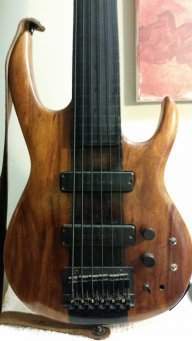
This is the "sister" bass I made (flamed maple body)
20221103_155917.jpg
 
  • Like
Reactions: Matt Liebenau
I think if you want to keep the top as it is (i.e., not adding a drop top), then I would consider slicing the top off, hogging out some chambers and gluing the top back down.

If you have access to a very large bandsaw, you could lay this body into a jig that holds it flush so you can cut it, and then take off the top. If you don't have a large enough bandsaw, then I'd split it down the middle (probably tablesaw) and then remove the top from each half. I'd then glue the top halves back together so I could router plane them flush on the underside of the new top, and do the same to the body halves. Once the cavities were routed out, I'd glue the top back onto the bass and then re-rout the pickup cavities and neck pocket.

This method, if done carefully, would only lose about 1/8" in width and 3/16" or so in thickness. It's a bit of work of course, but it's a way you could preserve the existing grain on the front and back. The seam on the side could either just be ignored, or you could put a contrasting (or subtle) veneer between them as an accent.