

Enjoy the benefits of a premium membership!
Upgrade Account
-
TalkBass has been independent since 1998. Add your voice.
Create a free account to reply to discussions, view embedded media, and browse with fewer display ads.
Join free Log in
Want zero display ads or expanded classifieds tools? Compare plans.
You are using an out of date browser. It may not display this or other websites correctly.
You should upgrade or use an alternative browser.
You should upgrade or use an alternative browser.
More options
Who Replied?
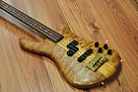
Well. I do see one Haz and two Cor-Tek boards and one Mighty Mite.I don't see SNC here. I see 3 KHAZ and one HAZ. It literary says 'HAZ LABS' on the HAZ.
Can't tell anything about if Mighty Mite was a Korean made board that was made by Cor-Tek (KHAZ) or something else made anywhere.
Last edited:
Can you tell something about the issues that was experienced with the "KHAZ" boards?BTW, some of us got frustrated when their KHAZ boards died that they bought other KHAZ pre's in the hope that they worked. They don't.
I'm also having issues with my SNC pre. I'm nearly ready to try either an Audere or EMG BTS just to have a working bass. It's been dead about 6 years. HATE the fact that Spector will not even talk about these basses let alone sell a replacement pre. I would have taken a Tone Pump if it was offered for sale.
I can tell only for the Cor-Tek board that is a pretty reliable and very robust board. No issues nothing at all with the pots during past ~30 years after the board was assembled by Cor-Tek.
At least I did hear issues about the pots of the Mighty Mite board though.
EMG BTS is good choice that comes close to HAZ in regards of Bass/Treble filter alignments
I bought a Spector NS2A from a guy who had a few of them. I actually went to buy a teal bass with Spector pups and pre-amp but ended up buying one that looked like it might have come from the factory this way. This one was painted black but if you looked super carefully it was once factory red and then factory repainted black which was due to Kramer's marketing dept, requesting far too many red ones that weren't selling. This one might have been an artist's model or test bass. The tone was much better with the Khaz and active EMG's and the action and playability rival most custom basses.
The only problem I've ever had with this bass is that one day about 6 years ago it just stopped working for no good reason. The other pre's were bought as "maybe working". One of the boards is a Mighty Mite. Wonder if HAZ Labs would repair a legit pre that they manufactured. Or maybe just through a chip at it?
The only problem I've ever had with this bass is that one day about 6 years ago it just stopped working for no good reason. The other pre's were bought as "maybe working". One of the boards is a Mighty Mite. Wonder if HAZ Labs would repair a legit pre that they manufactured. Or maybe just through a chip at it?

- Apr 14, 2022
- 371
- 2,082
- Disclosures
- Owner of LRWMedia, manufacturer of LHZ vintage bass preamps.
BTW, some of us got frustrated when their KHAZ boards died that they bought other KHAZ pre's in the hope that they worked. They don't.
I'm also having issues with my SNC pre. I'm nearly ready to try either an Audere or EMG BTS just to have a working bass. It's been dead about 6 years. HATE the fact that Spector will not even talk about these basses let alone sell a replacement pre. I would have taken a Tone Pump if it was offered for sale.
Jim: Would you be interested in selling your dead HazLabs board? Or maybe a swap for a new LHZ preamp?
I'd reverse-engineered the LHZ from nothing but photos and measurements made by forum members, but have not had a real HazLabs preamp in my hands. I'd love to repair it so I can do some comparisons against the original and the LHZ.
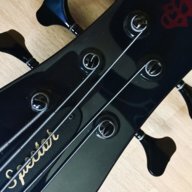
I'm also having issues with my SNC pre. I'm nearly ready to try either an Audere or EMG BTS just to have a working bass. It's been dead about 6 years. HATE the fact that Spector will not even talk about these basses let alone sell a replacement pre. I would have taken a Tone Pump if it was offered for sale.
My question as well what’s wrong with them. Michalik (the Tonepump’s designer) actually sells them. Get a quote directly from him (may take some time): michalik.cz
Jim: Would you be interested in selling your dead HazLabs board? Or maybe a swap for a new LHZ preamp?
I'd reverse-engineered the LHZ from nothing but photos and measurements made by forum members, but have not had a real HazLabs preamp in my hands. I'd love to repair it so I can do some comparisons against the original and the LHZ.
I wanted to ask that as well haha, but it would be in better hands if you got it.
What puzzles me about the Hazlabs board is that has Hazlabs written on it, but otherwise looks like a SNC. You should probably ask Sheldon.
Last edited:

Sheldon sold me a repair kit for a bad KHaz a few months back. I think it was something like 11 resistors and 9 capacitors plus the pots for the tone controls. He didn't have them in stock but he pointed me in the right direction for some replacement volume pots. I also had gotten my hands on an old LF442 op amp. Took me less than an hour to get everything swapped out, plus I had picked up some male and female phoenix connectors to make quick disconnects for everything. It's now in one of my NS2000/5's and is by far the best sounding bass in my collection. I would definitely talk to Sheldon and get his advice. If you can get the kit and get it working, I promise it will be well worth it.
- Apr 14, 2022
- 371
- 2,082
- Disclosures
- Owner of LRWMedia, manufacturer of LHZ vintage bass preamps.
What puzzles me about the Hazlabs board is that has Hazlabs written on it, but otherwise looks like a SNC. You should probably ask Sheldon.
Great catch! I went back the photos I originally used (HazLabs serial numbers from the 36xx - 38xx range) when tracing the circuit, and they are different boards.
Sheldon sold me a repair kit for a bad KHaz a few months back.
Thank you for the info about the repair kit. However, I'm currently building and selling the LHZ preamps (both mine and the SNC are clones of the same HazLabs design) so I have all of the same components in the shop.
I am also curious why there were so many failures on the KHAZ. Is there a common failure mode on the Haz (and clones) that has been repeatedly noticed?
Never read about that. Since joining the Spector club some 6 years ago, I’ve never came across such threads or postings - and I believe that I’m constantly lurking around Spector related topics here or at Facebook or in my german forum.I am also curious why there were so many failures on the KHAZ. Is there a common failure mode on the Haz (and clones) that has been repeatedly noticed?
My NS-2A has a KHAZ and is probably one of the earlier ones (no serial number) and its KHAZ is running pretty smooth. It would be interesting what the exact symptoms would be.
I also have four other clones and all are running as expected- so no, highly doubt that.
Recently my 18V HAZ stopped working bc a wire to main pot was ripped of. But that’s nothing serious.
@Jim C
If I was in your shoes I'd bring the bunch of four boards to an experienced service tech that may fix the issues on the boards with ease.
There is not much of components in it on these boards and I'm pretty sure costs for labor should be small. Troubleshooting shouldn't be a big deal on these boards.
Once the issues are fixed and the boards are up to specs again, you may have a pretty good choice for comparison aims.
HAZ with LF442, KHAZ with TL072 and Mighty Mite with TL062.
I'm pretty sure you may notice some sonic deviation once the Boards are AB'd each other.
Furthermore it was even possible to swap the op-amps each other on these boards for comparison aims.
Personally I'd keep the board that I like best, maybe keep another one as spare part, and sell the remaining two ones.
Sheldon (SNC) and AgingEngineer might be a good choice where to ship the boards for service.
If I was in your shoes I'd bring the bunch of four boards to an experienced service tech that may fix the issues on the boards with ease.
There is not much of components in it on these boards and I'm pretty sure costs for labor should be small. Troubleshooting shouldn't be a big deal on these boards.
Once the issues are fixed and the boards are up to specs again, you may have a pretty good choice for comparison aims.
HAZ with LF442, KHAZ with TL072 and Mighty Mite with TL062.
I'm pretty sure you may notice some sonic deviation once the Boards are AB'd each other.
Furthermore it was even possible to swap the op-amps each other on these boards for comparison aims.
Personally I'd keep the board that I like best, maybe keep another one as spare part, and sell the remaining two ones.
Sheldon (SNC) and AgingEngineer might be a good choice where to ship the boards for service.
IME the most common failermode for 9V battery powered devices that quit working will be worn out (respectively broken) 9V battery clips.
Leakage of (too old) battery may cause corrosion on the battery clip, and even once the contact-poles are cleaned, over time the corrosion may come back again and the board quits working.
Sometimes it also happens that a battery clip is broken and must be (anyway) replaced for a new one.
Leakage of (too old) battery may cause corrosion on the battery clip, and even once the contact-poles are cleaned, over time the corrosion may come back again and the board quits working.
Sometimes it also happens that a battery clip is broken and must be (anyway) replaced for a new one.

Passinwind
I know nothing.
- Dec 3, 2003
- 23,045
- 45,909
- Disclosures
- Designer/Toaster Tech @ Passinwind Electronics
@Jim C
If I was in your shoes I'd bring the bunch of four boards to an experienced service tech that may fix the issues on the boards with ease.
There is not much of components in it on these boards and I'm pretty sure costs for labor should be small. Troubleshooting shouldn't be a big deal on these boards.
I have a working relationship and also a friendship with @Jim C and have already offered to take this on, but not for at least a few months. I could probably do a full board trace in an hour or so, but if the designer still sells these things I would respect his IP and not publish or distribute it without his agreement, same as for any gear. If Jim wants to go with someone more vested in these things or with a different outlook that would be fine by me though. To me it's just broken stuff that I'm sure could be improved.

Last edited:
I'm sure many of you are aware of @Passinwind posts for his own outboard, open source, filter based, pre-amps from this thread. The Passinwind Open Source Preamp
Absolutely amazing with a passive J bass.
Absolutely amazing with a passive J bass.
Passinwind
I know nothing.
- Dec 3, 2003
- 23,045
- 45,909
- Disclosures
- Designer/Toaster Tech @ Passinwind Electronics
I'm sure many of you are aware of @Passinwind posts for his own outboard, open source, filter based, pre-amps from this thread. The Passinwind Open Source Preamp
Absolutely amazing with a passive J bass.
They were actually originally meant to be onboard preamps, but as it turns out, pretty much nobody is willing to drill that many holes in a perfectly good bass. And that’s fine, it just means I can use substantially nicer opamps in my pedal designs. Which would be the first thing I’d be looking at with an updated HAZ-ish circuit, most likely. But I’ve only ever even seen one Spector bass in real life, and that was about 45 years ago. So as I said, probably best to leave this to those with some skin in the game. Always fun to see how others skin felis catus as well.

Yeah, but I have 4 of your pre-amps for testing right now and that last chameleon one is freakin' possessed and I said the same about the blue one before it.They were actually originally meant to be onboard preamps, but as it turns out, pretty much nobody is willing to drill that many holes in a perfectly good bass. And that’s fine, it just means I can use substantially nicer opamps in my pedal designs. Which would be the first thing I’d be looking at with an updated HAZ-ish circuit, most likely. But I’ve only ever even seen one Spector bass in real life, and that was about 45 years ago. So as I said, probably best to leave this to those with some skin in the game. Always fun to see how others skin felis catus as well.
Every hot rod move you've made has been awesome!
Maybe the original HAZ is spared modification for historical / repair applications?
Passinwind
I know nothing.
- Dec 3, 2003
- 23,045
- 45,909
- Disclosures
- Designer/Toaster Tech @ Passinwind Electronics
Yeah, but I have 4 of your pre-amps for testing right now and that last chameleon one is freakin' possessed and I said the same about the blue one before it.
Every hot rod move you've made has been awesome!
Maybe the original HAZ is spared modification for historical / repair applications?
My days of doing destructive mods to legacy gear pieces are long over. Maybe you could send whichever one(s) to @AgingEngineer for tracing and then on to me later for a second take, if needed? I helped another TB’er with a Spice model for his HAZ clone attempt several years ago, but he turned out to be a bit of a bad actor, and he even went behind my back to one of our mutual luthier friends to try to buy one of my proprietary onboard builds so he could rip that off too. I have no beef with cloning out of production circuits for legit purposes like keeping old basses up and running, hope it all works out.

I'm wondering if the LHZ has some coloring if no tone controls connected, only the volume control.
Or if I connect the two wires instead of connecting a pot, will it be like a tone pot on full?
Or if I connect the two wires instead of connecting a pot, will it be like a tone pot on full?
With no tone controls connected the board won't work.I'm wondering if the LHZ has some coloring if no tone controls connected, only the volume control.
Or if I connect the two wires instead of connecting a pot, will it be like a tone pot on full?
Some EQ boards such as MEC come with a push/pull volume control that provides the option to bypass the EQ (and op-amp schematic parts) completely.
Thus in in the pull position of the volume control the pickups will be directly connected to the output jack, yet still working of both blend and volume control.
It should be possible to install equivalent EQ bypass option even to LHZ or SNC.
Last edited:
- Apr 14, 2022
- 371
- 2,082
- Disclosures
- Owner of LRWMedia, manufacturer of LHZ vintage bass preamps.
I'm wondering if the LHZ has some coloring if no tone controls connected, only the volume control.
Or if I connect the two wires instead of connecting a pot, will it be like a tone pot on full?
Great question, and I'll apologize in advance for what'll probably be a long answer!
The LHZ is a clone of the 80's HazLabs preamp. The 80's HazLabs is basically a copy of a reference Bandaxall EQ design from the 1950's fed by a treble-boost buffer stage. The Bandaxall stage is tuned so that the response was flat at center sweep of the 100k linear bass and treble pots, and would provide +/-15db of bass and treble cut and boost.
Of course "flat" is subjective. In simulation the frequency response is not mathematically flat: there is approximately +/- < 0.25dB variance from 20Hz to 20kHz in this design. But for practical purposes, that's flat enough for what it was originally designed to be: a bass preamp EQ.
The tone control in a passive EQ circuit is cut only: it does not boost any frequencies. So if a tone pot is "full on" that means it is passing the signal through with little or no cut. Basically, flat response. So a full-on passive tone control will equate to the bass and treble controls of an active cut/boost preamp being at center position, mid sweep.
To use the LHZ without bass and treble pots to just provide flat response, you'd have to replace each pot with two 50k resistors wired to the pot connectors on the preamp. This is necessary as the Bandaxall circuit (as designed) needs to see those two 100k potentiometer in the circuit.
Coming from a world of passive EQ to active EQ on my first Spector Rebop was confusing. I understand bass and treble controls, but the Spector had no center detent so I was never sure where the "flat" point was. It didn't help that the official documentation was vague and internet folklore said that the TonePump was a "boost only" EQ (it isn't). This is why I currently use bass and treble pots with a center detent so I know exactly where the flat response point is.
Sorry about the lengthy post... The short answer is: passive EQ at "full-on" = active EQ at center detent. But, I thought it might help to have some context as to why that is!
The older versions of MEC active Bass/Treble on board electronics have got TL062 op-amp installed.Some EQ boards such as MEC come with a push/pull volume control that provides the option to bypass the EQ (and op-amp schematic parts) completely.
Thus in in the pull position of the volume control the pickups will be directly connected to the output jack, yet still working of both blend and volume control.
Once the TL062 op-amp related part of the electronic is bypassed by push/pull volume control then the "pure" flat sound coming off of the pickups becomes "a lil" bit more open with a little bit more clarity versus flat sound (tone pots in center position) respectively activate TL062 in the signal path.
This means that it can be noticed that the TL062 on its own does already produce some coloring.
The coloring that is produced by TL062 on its own may be liked, or just not.
Personally I prefer op-amps that provide as less coloring to the total sound as possible.


