
• TalkBass has been independent since 1998. Add your voice.
    Create a free account to reply to discussions, view embedded media, and browse with fewer display ads.
    Join freeLog in
    Want zero display ads or expanded classifieds tools? Compare plans.

Review: GHS Black Nylon Tape Wound strings


Since these were being discontinued, I decided to purchase the set before they became rare and expensive. They, along with the Fender Black Nylon sets are the most affordable you can find, and as of the posting of this video, can still be found on various websites like bassstringsonline.com, juststrings.com, elderly.com, and even on e-bay and Amazon (both .com and .ca)

They are very smooth to the touch, quite slinky, or flexible, they're pretty to look at, look great as a contrast to a maple fretboard, and they sound pretty swell, at least with the first impression IMHO. Available only in long (34") scale, the silks are nice and solid, and will mostly conform to top-loading type basses (especially Fender derivatives).

In summary, I do like these strings, they provide a useful alternative to flatwound strings (my usual bass string type), and they also provide a fair amount of top-end and dynamic sounding accents when needed. Even though they reportedly are supposed to make an electric bass sound closer to a double bass, I have yet to develop the technique to take advantage of that.

Keep in mind, if you're coming from flatwound strings (especially steel, but nickel-wrapped also applies) the far more flexible strings will require you to re-adjust your truss rod. As a result, my usually low action I've gotten by using GHS Precision flats had to be raised to accommodate the wider amplitude these strings vibrate at, that can cause rattling, clanginess and fret buzz in the upper frets.

I do recommend these strings for the following reasons to any bassist, newbie or pro:

1) Inexpensive (for the time being)

2) The are versatile, easy to play with their flexibility and easily modified sound. They aren't quite as deep sounding as flatwounds, but they have a lot more upper-register presence without sounding overdriven and springy, as is usually the case with roundwound strings.

3) Pretty to look at

4) No finger-noise, can be made to sound very mellow

5) Easy to install, smooth, and unlike many other nylon-wound strings, aren't overly thick, so very little to no nut filing is involved in installing them (they are 50 to 105s, much like most bass string sets) If your bass previously had those gauges, chances are very good you won't need to re-intonate the bridge.

There are some cons to these strings, mainly that their flexibility does hamper the low-end somewhat (they are not terribly thumpy) and that it does require you to raise the action to accommodate for the decreased tension. These strings might also be difficult to see over an ebony or dark rosewood fretboard, but that's certainly not a deal-breaker.

These strings also require you to play differently and perhaps even use a different amplification setup. Since these are nylon covered, there might be some audible hum from the lack of grounding from you, the player. There are some ways around that, of course.
 
Thank you @nerkoids. You've just confirmed everything I dislike about tapes.
Well, I still have the P-bass with the GHS flats, and they're not being taken off anytime soon.

To be honest, I'm impressed with the sound of these nylons, and I can see them being useful in certain applications, but I think once I build (or buy, depends on the budget later this year) my '66 tribute Jazz bass, I think the flats will be going back on Veronica. They just seemed right for this bass.
 
  • Like
Reactions: Linnin
Thank you @nerkoids. You've just confirmed everything I dislike about tapes.

Why is GHS discontinuing tapes?

As far as GHS is concerned, whenever @Linnin says he dislikes something, there's no point in continuing offering that product as its sales would nosedive eventually. :D:D:D

(Sorry, I couldn't resist.. ;))
 
I have only experienced La Bella Black Tapes and I do agree with the whole nut filing job, trying the GHS Tapes wouldn't hurt to experiment on for my Jazz Ensemble class. My director did say to me he wants to hear an upright tone in our standards :thumbsup:

Edit: Just bought a set and I can't wait for mail day to come any sooner! This pains me to actually see these strings become extinct when they are no longer sold online :rollno:
 
Last edited:
Why is GHS discontinuing tapes? I would think they're pretty popular these days with bass players focusing on more vintage sounds.

Players are grabbing flats for vintage sounds. Most of the time, when players are looking at tapewounds, they want an URB type of sound.
 
Oh no, this is terrible news:crying:. I have these on a Squier Jazz and I was actually thinking getting more to put on other basses.

I have never tried other tapewounds, but GHS Black Nylon are GREAT strings, nice feel (butter smooth, good silk), good tension (the G could be a little tighter, but nice for a "no drill" string) and versatile tone. It's vintage-oriented for sure, but with the Jazz I get enough for what I do (pop, rock, blues, ballads, folk).

I thought they were popular enough to keep making them. Guess I'll have to buy 2 sets and keep them as reserve...
 
  • Like
Reactions: nerkoids
Just put a set on my PJ bass and tuned it to BEAD. It's 24 frets, so I'm only losing one note on the high end.
They sound and feel great to me. Do you have any other nylon strings?


Since these were being discontinued, I decided to purchase the set before they became rare and expensive. They, along with the Fender Black Nylon sets are the most affordable you can find, and as of the posting of this video, can still be found on various websites like bassstringsonline.com, juststrings.com, elderly.com, and even on e-bay and Amazon (both .com and .ca)

They are very smooth to the touch, quite slinky, or flexible, they're pretty to look at, look great as a contrast to a maple fretboard, and they sound pretty swell, at least with the first impression IMHO. Available only in long (34") scale, the silks are nice and solid, and will mostly conform to top-loading type basses (especially Fender derivatives).

In summary, I do like these strings, they provide a useful alternative to flatwound strings (my usual bass string type), and they also provide a fair amount of top-end and dynamic sounding accents when needed. Even though they reportedly are supposed to make an electric bass sound closer to a double bass, I have yet to develop the technique to take advantage of that.

Keep in mind, if you're coming from flatwound strings (especially steel, but nickel-wrapped also applies) the far more flexible strings will require you to re-adjust your truss rod. As a result, my usually low action I've gotten by using GHS Precision flats had to be raised to accommodate the wider amplitude these strings vibrate at, that can cause rattling, clanginess and fret buzz in the upper frets.

I do recommend these strings for the following reasons to any bassist, newbie or pro:

1) Inexpensive (for the time being)

2) The are versatile, easy to play with their flexibility and easily modified sound. They aren't quite as deep sounding as flatwounds, but they have a lot more upper-register presence without sounding overdriven and springy, as is usually the case with roundwound strings.

3) Pretty to look at

4) No finger-noise, can be made to sound very mellow

5) Easy to install, smooth, and unlike many other nylon-wound strings, aren't overly thick, so very little to no nut filing is involved in installing them (they are 50 to 105s, much like most bass string sets) If your bass previously had those gauges, chances are very good you won't need to re-intonate the bridge.

There are some cons to these strings, mainly that their flexibility does hamper the low-end somewhat (they are not terribly thumpy) and that it does require you to raise the action to accommodate for the decreased tension. These strings might also be difficult to see over an ebony or dark rosewood fretboard, but that's certainly not a deal-breaker.

These strings also require you to play differently and perhaps even use a different amplification setup. Since these are nylon covered, there might be some audible hum from the lack of grounding from you, the player. There are some ways around that, of course.

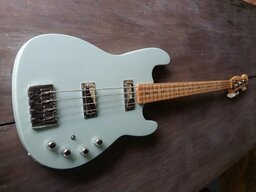
I bought a 1987 japanese p bass reissue 62 with these string on them. They have been on for 14 years and sounding amazing. I bought the last 3 sets I could find in Australia. My 70 p bass has Thomastik flats on. I like both sets for different reasons. The Thomastiks are now 9 years old and sound incredible. These types of strings get way better with age so reviewing them needs a comparison of new v old
 
Since these were being discontinued, I decided to purchase the set before they became rare and expensive.

I bought the last 3 sets I could find in Australia.

When I saw the original post by @nerkoids two years ago, I wondered why anyone would take the time to do a review on something that's been discontinued. He must have known it would be re-introduced sometime down the road.

Now it's back!

7xIaukVQlILIt8qWuCtd1ENiteDL4RJzro1IBW8lSAP0VzhK8AT0g0-6EdTUV0BLytIH_WPGerCv29Xl8qp1ZcecHxVDjuyZ3UvQQ_UkwAsoZFR9MmvAMJBGdPogeMNWTidW7jDpeLOb8pCgqn-vefEevSxG6tCKNSkrjK0bLNwGi9aBbR4jsw1xkh9J-dputZo_o4_ndmycRE_o_9ypPaatZFqiOzPXCo8Mytb2BePhdjg1YmXtL-8iuL4q0wCuDTkohJMF4AGibei75I2XBYXqgWMeoK0ndd6uW7YanjBCN2YivYWMTDRXlSv_JNs0QauwYU3nXrhUPwKwxDll-Ld0z-rnujLjtQ0k5JgIx7hPuEbtsQMfb2b0WrtQExi8USrhVJbdYCcub1F928c5ZAFrAzgM9wqLINB-4A7AcJAQFzm6t-t4AjzDJiXdihFY2X042yncPLMa9Cur_Kt6TZi1HPT44e2t1O_Nk-Nw1EKcLiuNORK-oguLvqp-ngpGnN43y9gKmb8mvde2LqyekmtZAQBT7FTez6bx16JHq80loD5KJZQW7yX08PgsqxlG0bYFBadAGYUh0m3uzNLRcFDwhNMx798A035Hf6-svx5oZd5lYIrXVD-CvpSYZcZD3LYs1Fsi8fILssJ5cGs07velhSrQaFM=s450-no


(Re-designed package, but the same strings inside as before, red silk and all.)
 
Last edited:
  • Like
Reactions: Bermuda Ron
These are back in production, right? Who sells them?

They have been, at least since 2019. The usual string places (Just Strings, Fret Nation, and so on) should have them, or can order them for you.

Standard disclaimer that manufacturing is still a major cluster right now, so patience is appreciated.
 

Latest posts