
Enjoy the benefits of a premium membership!
Upgrade Account
-
TalkBass has been independent since 1998. Add your voice.
Create a free account to reply to discussions, view embedded media, and browse with fewer display ads.
Join free Log in
Want zero display ads or expanded classifieds tools? Compare plans.
You are using an out of date browser. It may not display this or other websites correctly.
You should upgrade or use an alternative browser.
You should upgrade or use an alternative browser.
Right click->Paste
- Thread starter colcifer
- Start date
More options
Who Replied?





Developmental Topographical Disorientation, also known as DTD, is caused by the inability to segregate landmarks and derive navigational information from them, navigate through a non-verbal process, or generate cognitive maps.




James K. Baxter was long a critic of middle-class Pākehā society and he used his reputation in the public sphere to voice this criticism. Baxter’s poetry is often satirical and scathing of te ao Pākehā, which he found to be void of charity, compassion, humility and spirituality. The Māori Jesus is a construct in which the remedy to the Pākehā malady is offered in te ao Māori, particularly through poverty and Baxter’s understanding of aroha; values which epitomise Christ. In this sense, the Māori Jesus is not a denial of Christ’s relevance to Pākehā, only an assertion that middle-class Pākehā do not allow him a place in their society, as Māori values inherently do. The Māori Jesus presents the belief that a truly bi-cultural society is a foundation from which Māori may no longer be second-class citizens and Pākehā may begin to enter te ao Māori, the spiritually and communally rich world that their values keep them from.
For Baxter, the cultural aspects of society are deeply aligned with the spiritual aspects. Middle-class Pākehā society’s response to fringe-dwellers, therefore, is like “the Varsity clock, genteel, exact / as a Presbyterian conscience.” Baxter’s intimations that Pākehā society left much to be desired, in terms of its communality and mutual care, came early. He remembers when, as a child, “a crowd of boys of my own age surrounded me in a shelter shed at school, shouting abuse and inflicting a certain amount of physical violence”, because his father, Archibald Baxter, was a conscientious objector who was tortured by his countrymen in France and vilified in New Zealand. To James, his fathers “black and swollen thumbs / explained the brotherhood of man.” Baxter would come to understand this coldness of heart as a symptom of the lack of aroha, “which… seemed to me to be the Humanity of Our Lord, dismembered among the pakehas.” Surely Baxter did not feel at home in a society that ostracised those like himself, his father and his brother, Terence, who refused to kill in the name of the King.
Well that was pretty long.
For Baxter, the cultural aspects of society are deeply aligned with the spiritual aspects. Middle-class Pākehā society’s response to fringe-dwellers, therefore, is like “the Varsity clock, genteel, exact / as a Presbyterian conscience.” Baxter’s intimations that Pākehā society left much to be desired, in terms of its communality and mutual care, came early. He remembers when, as a child, “a crowd of boys of my own age surrounded me in a shelter shed at school, shouting abuse and inflicting a certain amount of physical violence”, because his father, Archibald Baxter, was a conscientious objector who was tortured by his countrymen in France and vilified in New Zealand. To James, his fathers “black and swollen thumbs / explained the brotherhood of man.” Baxter would come to understand this coldness of heart as a symptom of the lack of aroha, “which… seemed to me to be the Humanity of Our Lord, dismembered among the pakehas.” Surely Baxter did not feel at home in a society that ostracised those like himself, his father and his brother, Terence, who refused to kill in the name of the King.
Well that was pretty long.

(*getMpApicloBaseGet) (mpApicDevID, &mpApicloBase);
lengthLo = ((UINT32)LOAPIC_LENGTH / VM_PAGE_SIZE) * VM_PAGE_SIZE;
sysMmuMapAdd ((void *)mpApicloBase, lengthLo,
VM_STATE_MASK_FOR_ALL, VM_STATE_FOR_IO);
(*getMpApicNioApicGet) (mpApicDevID, &mpApicNioApic);
(*getMpApicAddrTableGet)(mpApicDevID, (void *)&mpApicAddrTable);
lengthIo = ((UINT32)IOAPIC_LENGTH / VM_PAGE_SIZE) * VM_PAGE_SIZE;
for(i=0; i<mpApicNioApic; i++)
{
sysMmuMapAdd ((void *)(mpApicAddrTable), lengthIo,
VM_STATE_MASK_FOR_ALL, VM_STATE_FOR_IO);
}
lengthLo = ((UINT32)LOAPIC_LENGTH / VM_PAGE_SIZE) * VM_PAGE_SIZE;
sysMmuMapAdd ((void *)mpApicloBase, lengthLo,
VM_STATE_MASK_FOR_ALL, VM_STATE_FOR_IO);
(*getMpApicNioApicGet) (mpApicDevID, &mpApicNioApic);
(*getMpApicAddrTableGet)(mpApicDevID, (void *)&mpApicAddrTable);
lengthIo = ((UINT32)IOAPIC_LENGTH / VM_PAGE_SIZE) * VM_PAGE_SIZE;
for(i=0; i<mpApicNioApic; i++)
{
sysMmuMapAdd ((void *)(mpApicAddrTable), lengthIo,
VM_STATE_MASK_FOR_ALL, VM_STATE_FOR_IO);
}
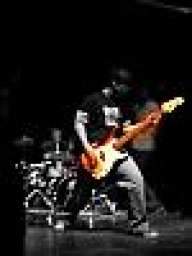
Ouch! That you?
Yep. 6 stitches to put that back together last night. Bass playing will be on hold for at least a week.


