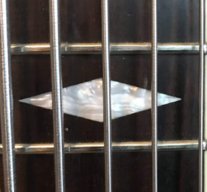
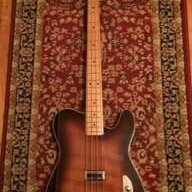
Handsome looking bass.
I wonder what it would look like if the neck and fretboard were also roasted.

TalkBass has been independent since 1998. Add your voice.
Create a free account to reply to discussions, view embedded media, and browse with fewer display ads.
Join free Log in
Want zero display ads or expanded classifieds tools? Compare plans.



This, to me ,looks really good!Roasted neck, roasted body:
View attachment 4904954
It's a 5'er that weighs 7.2 pounds (the body was 3.25), and balances beautifully on a strap. The thing rings like a bell when you tap on it - on a stage with a big PA, the thing really comes alive when I have a FOH person that has a low end lead foot. Do my other basses do that? OK, they do, but they also have roasted necks and (with one exception) roasted bodies. The all also have aluminum hardware - tuners, bridges, neck mounting plates, even the stinkin' knobs are aluminum - taking metal weight off the thing, so it can be mostly wood seems to help.
A roasted neck is most of the advantage, as far as i can tell. It's lighter and stiffer, and has less damping - the "area of reduced sustain" (It's too minor to be called a dead spot, but every bass has one if you know how to listen for it) is moved up the neck a couple of frets and is well mannered. A roasted body seems to be a minor improvement (aside from the weight, where it helps a bunch), but....if you're gonna go, why not go all the way?
This, to me ,looks really good!
Who built it?

This is fully cooked! I was the chef!So, we have seen a lot of roasted necks in the past little while, but you do not hear to much about roasted bodies. Is there an advantage to getting a roasted body? Do you have a bass (or had a bass) with a roasted body and do you think it makes a difference?
The one advantage I could think of is that it removes all the moisture so would likely be lighter. More resonant? I don't know, I have never tried one.
 No stain or color just torched and a satin clear.
Tony has always been ahead of the curve - especially when it came to "roasting" basses:
View attachment 4905308 View attachment 4905309 View attachment 4905311

This is fully cooked! I was the chef!


..... Torrefication not to be confused with putting it in the oven at 350 for an hour. The sugars caramelize and the moisture leaves the wood. End product, lightweight and resonant.....

Is it drunk ?I have a Dean Martin Celebrity Roasted guitar. It’s only available on TV.

Retired in Central OH.MatSci in central OH? Are you in Chillicothe?

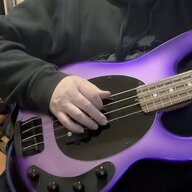
Believe me, I’ve thought about itHandsome looking bass.
I wonder what it would look like if the neck and fretboard were also roasted.
 I had a bass with a roasted neck and it was the most stable neck I ever owned.
....
Speaking as a Materials Scientist, we know that heat treating can improve the properties of the wood, when properly done, stabilizing the structure against moisture, increasing stiffness, and reducing weight. All desirable aspects.
....
Yeah I really liked those, would have grabbed one but already have a lot of Fender Ps. No need for more.Fender had a limited run fully roasted (maple neck and ash body) American Precision bass out about 4-5 years ago. It was beautiful and I almost got one.
View attachment 4904982

I like roasted woods. It's like 50 years of aging from an hour or two in an oven without oxygen. Torrefication not to be confused with putting it in the oven at 350 for an hour. The sugars caramelize and the moisture leaves the wood. End product, lightweight and resonant. Downsides? Some don't like the look and the wood can be more brittle to work with. You have less of a fudge factor with pilot holes and such. I don't know if there is a different tone, but there is a different feel and I like it.