Enjoy the benefits of a premium membership!
Upgrade Account
-
TalkBass has been independent since 1998. Add your voice.
Create a free account to reply to discussions, view embedded media, and browse with fewer display ads.
Join free Log in
Want zero display ads or expanded classifieds tools? Compare plans.
You are using an out of date browser. It may not display this or other websites correctly.
You should upgrade or use an alternative browser.
You should upgrade or use an alternative browser.
Roasted Maple Necks?
- Thread starter lowendgenerator
- Start date
More options
Who Replied?
I had a Stingray HH4 with roasted neck and couldn't tell any significant tonal difference between it and my other HH4 Stingray with regular maple neck and rosewood fingerboard.
Mine was a roasted birdseye maple neck with a matching roasted birdseye maple fingerboard.
Very nice bass, but it didn't sound any different to me.
Mine was a roasted birdseye maple neck with a matching roasted birdseye maple fingerboard.
Very nice bass, but it didn't sound any different to me.

Does anyone know how bright these sound tonally? I want to know if they're as bright as normal maple or not.
And yes, 1 year bump. Come at me bro!
Tupac, you aware bro?
I had a Stingray HH4 with roasted neck and couldn't tell any significant tonal difference between it and my other HH4 Stingray with regular maple neck and rosewood fingerboard.
Mine was a roasted birdseye maple neck with a matching roasted birdseye maple fingerboard.
Very nice bass, but it didn't sound any different to me.
I don't see why it would. As I understand it, the wood is just heated until the sugars in the maple caramelize! It's sort of a variation on "colonial maple". Same Idea only darkening done by aging. I've got a colonial maple drumset I built. (raw shells were sitting out on a shelf in music store for years and years and turned dark.) A couple of the drums had to be made from new white maple shells. Those were stained to match. There was exactly ZERO difference in the tone of the wood between the aged and non-aged maple. I presume same goes for the toasted necks so long as you don't give it a good charing.

- Dec 28, 2009
- 2,053
- 1,380
- Disclosures
- Endorsed by K.B. Guitars, Nordstrand Audio Pickups, Von York Strings and Gallien-Krueger Amps.
I would need to put my BFR Roasted Neck Bongo 4H against a regular Bongo 4H before I could say for sure.

IMHO the EBMM ad contains way too much marketing fluff: specifically, unverifiable claims about resonance, etc. This is from the Sadowsky site, and seems far more reasonable to me:
Sadowsky Guitars has always taken pride in the quality and stability of our neck wood. We are now pleased to offer "roasted maple" necks for an unprecedented level of stability. Lumber for maple necks and fingerboards is placed in a special oven after normal kiln dying. The wood is roasted at temperatures ranging from 180º to 220º Celsius. The result of this treatment is wood that is significantly more resistant to absorbing or releasing moisture. With this increased stability, the "roasted maple" process enables us to offer figured maple neck blanks for the first time in our three decades of instrument making. We have always advocated that figured neck stock was too unstable to use. However, any piece of wood than has a stability problem will warp during the roasting process and be discarded. It would also be a recommended option for players who reside in areas of extreme humidity (low or high), or who travel a lot through variable climates, as well as players who desire a figured maple neck for aesthetic reasons.
NOTE: The roasting process is performed on lumber. It cannot be applied retroactively to finished necks.
NOTE: The roasting process is performed on lumber. It cannot be applied retroactively to finished necks.


They look great, but I don't see the benefit of having more fundamental.
IMO the claims about "resonance" and "fundamental" are nothing more than marketing nonsense.

I'm surprised companies haven't used this method before in bodies for purely aesthetics instead of stain.

It looks good. Most definitely great from an aesthetics standpoint. Make a tonal difference? Guess I'll have to run one down at GC if I can and try it.
Make a tonal difference?
Honestly??? - not any I've noticed, although it sure does look pretty... I bought mine because I got a smokin' deal on a BFR 5 string HH that also had an ebony fretboard - they're not very common, AFAIK... I haven't regretted the purchase any - it plays and sounds great, and has gotten alot of compliments...
- georgestrings

BassHappy
Supporting Member
Some of you good folks may have gotten the same email blast I got today.
Looks like Warmoth is now doing ROASTED MAPLE necks....
I am intrigued as I only play necks that are satin and LOVE the wenge neck on my Drake which has no finish at all.
So far, I am only seeing guitar necks, but I bet bass necks are on the way....

Comment if you see fit....
BassHappy
Looks like Warmoth is now doing ROASTED MAPLE necks....
I am intrigued as I only play necks that are satin and LOVE the wenge neck on my Drake which has no finish at all.
So far, I am only seeing guitar necks, but I bet bass necks are on the way....
Comment if you see fit....
BassHappy
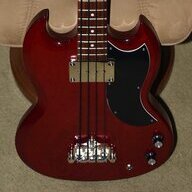
When I played a Gibson SG Std. with a baked maple board, it sounded pretty good. The Maple gave it a bit of a brighter sound with the Humbuckings.
- Jul 3, 2004
- 1,300
- 641
- Disclosures
- Endorsing Artist: Ernie Ball MusicMan Guitars
Got one on my Bongo 6 with stainless steel frets-
Humid summer and bone dry winter.
Out of case.
This neck is stable!
Humid summer and bone dry winter.
Out of case.
This neck is stable!

Turnaround
Commercial User
Roasting is not recent, unless you consider a couple of centuries to be recent. There are other practices too that stabilized wood and produced spectacular results. Like burying the wood in manure. Or in sand at the seashore. Or soaking it with urine. Sinking it to the bottom of a river. Some of the treatments are unsavoury today. Most are too costly.