• TalkBass has been independent since 1998. Add your voice.
    Create a free account to reply to discussions, view embedded media, and browse with fewer display ads.
    Join freeLog in
    Want zero display ads or expanded classifieds tools? Compare plans.

Double Bass RUST issues on Tuning Keys and Headstock

Hello fellow Dbass players,
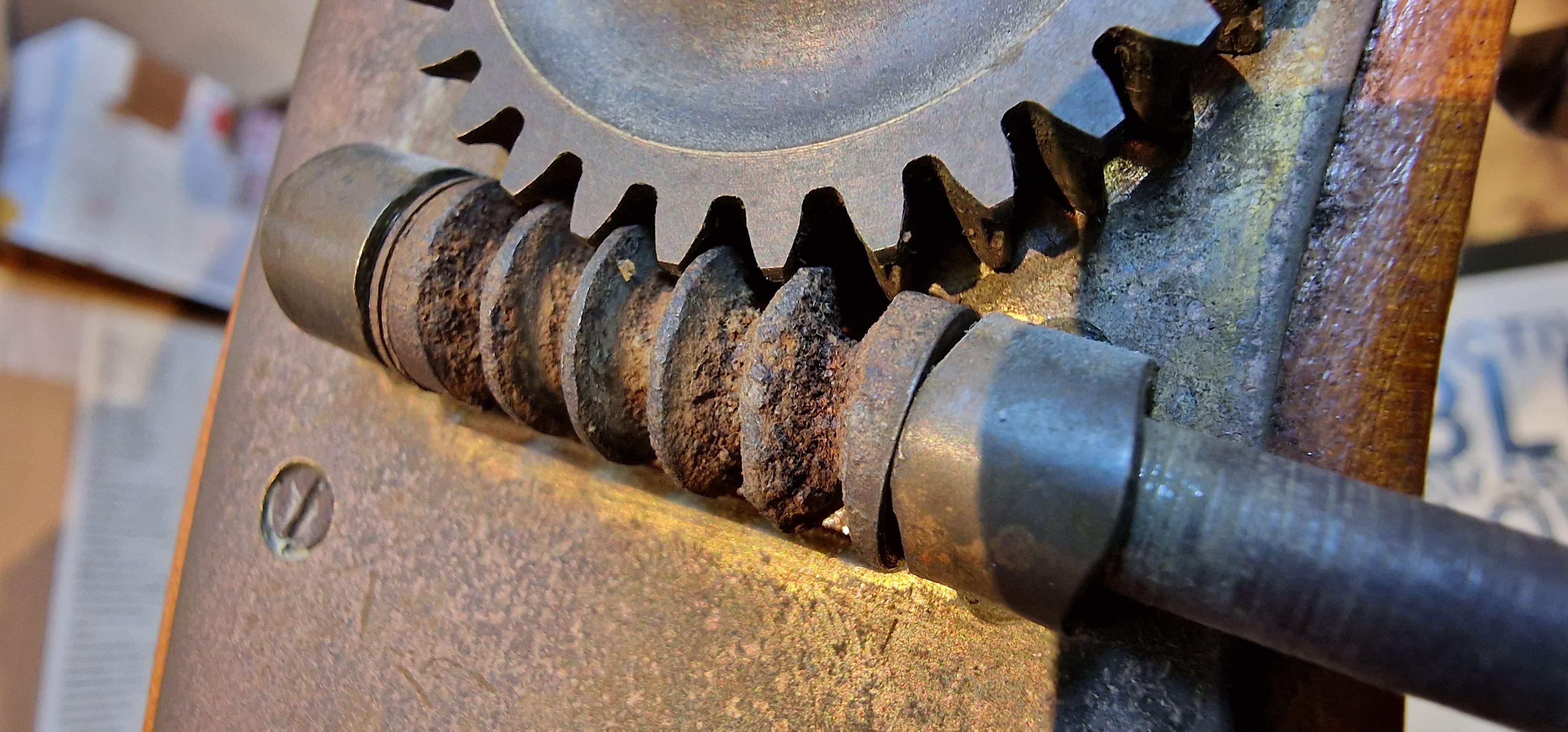
I was hoping some of you can point me to the right technique to go about cleaning the Tuning keys on my newly acquired Double bass.
20230313_183046.jpg
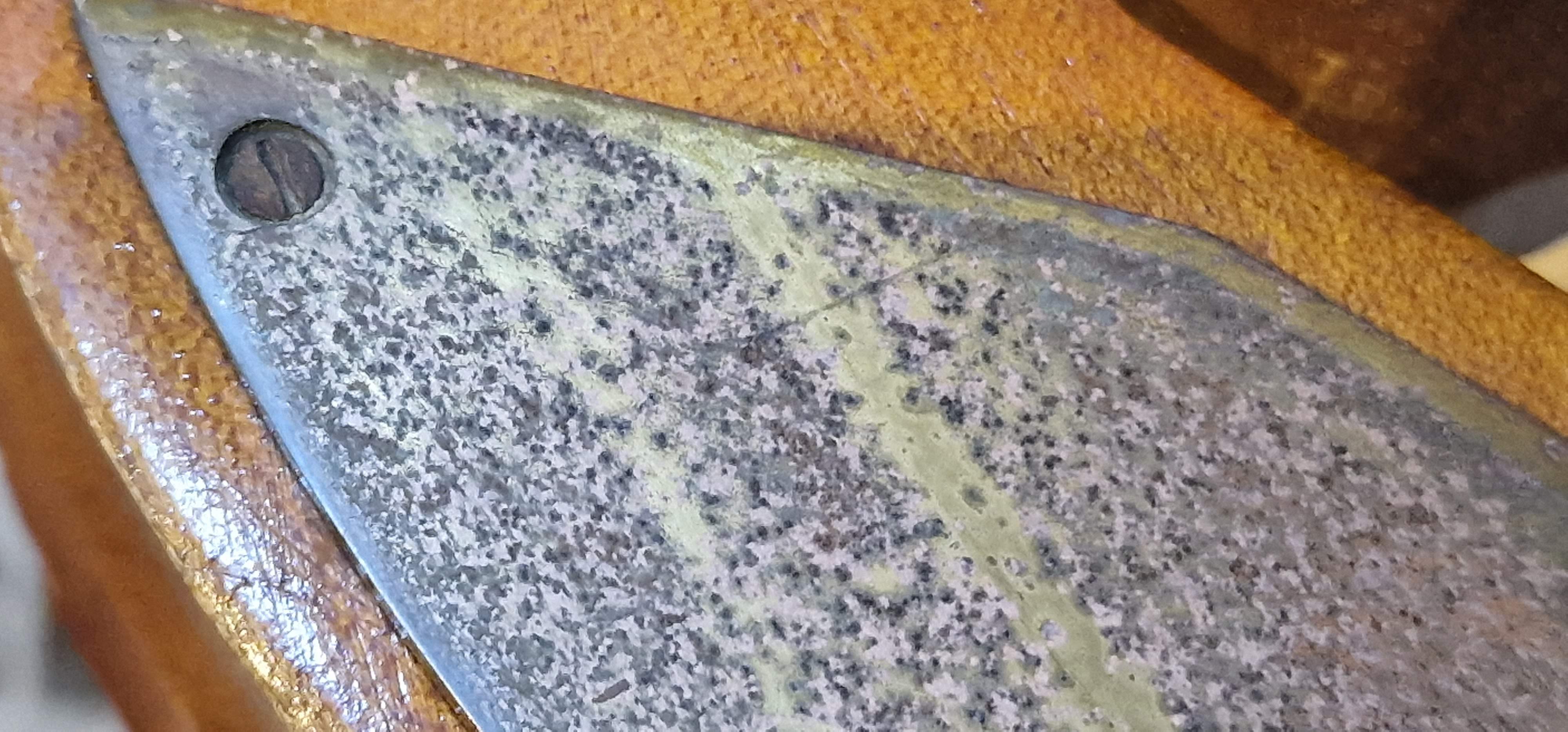
I am trying to avoid removing the strings completely if at all possible. My guitarist proposed using WD-40 and gently rubbing it off with a cloth or toothbrush, and then using sawing machine oil to lubricate the mechanism. Any better ideas? And what about the headstock plate?
20230313_182937.jpg


I would appreciate any input as I am new to this wonderful instrument, but a bassist for many years.

Thanks!
 

Attachments

  • 20230313_182837.jpg
    20230313_182837.jpg
    609.6 KB · Views: 48
I don't expect half-measures will work well. Don't rotate the machines till the gears are clean, it'll likely cause more damage. Remove the strings, dismount the machines, disassemble the spur gears and descale the worm gears with a brass wire wheel. Confirm which parts are made of which metal. If they're all steel I'd keep going with the brass wheel on everything and treat the remaining deep rust with a good dunk in muriatic acid, then repolish. If the plates are brass you'll want to handle them more delicately, with buffs.
 
Not gonna be easy to remove the strings wtihout rotating the gears. I think that rust on the worms will do some, but not very much, damage to the brass gears.

I'd lube the worms with a thick oil (NOT WD-40 or sewing machine oil or anything that's going to instantly spread and soak into the wood); remove the strings; remove all the machines, disassemble the machines.

Steel that's rusty I'd go over with a wire wheel till all rust is gone. Then you need to explore your options. Personally I'd probably have the worms zinc or nickel plated. If the plates are steel, you can get them down to bare metal (phosphoric acid "Naval Jelly" or wire wheel), wash them good and clean, get them real dry and clean, then shoot a couple coats of clear Krylon to stop future rust. Anything that's brass you can choose what to do in a range from leaving it alone to polishing it up with Brasso. Make sure the threads of the worm and the teeth of the gear are real clean before reassembling. Then use grease, not oil, between the teeth and the threads. Me, I'd use a white lithium grease. How you lube the spindle will depend on what it's made of and whether it runs directly in the wood of the pegbox. I'd suggest that beeswax is probably a good first choice there as it won't oil soak the wood. I think you want to keep lubricating oil away from wood.
 
Cut the strings, dismount the plates and submerge in an ultrasonic bath until clean. I was taught that the appropriate lubricant for tuning machine gears is #10 machine oil.
I was presuming the strings were worth saving. Thinking about it, though, if the rest of the bass looks like that, the strings are probably toast as well. Cut 'em with some wire dikes and get on with it.
 
  • Like
Reactions: Steven Ayres
First of all, thank you all for your input and suggestions.
Also, I took pictures of the worst one, the G string. The others are not as bad.
This is the E string:
20230317_212531.jpg

@dhergert: That would be interesting if the instrument (or at least the Tuner set) is that old (pre-1933). I have only a tag visible inside:
20230313_183215.jpg

Based on some quick search earlier this year, I thought I was dealing with a similar instrument as this member from the Netherlands:
Post:
Anyone know a Russian bass maker?
Discussion in 'Basses [DB]' started by BassicRookie, Dec 13, 2009.

If it is old, then like you and others here have said, it is worth doing right.
No, tuning is not affected.

@ Steve Ayres: I have been careful to not rotate the machines for obvious reasons. I am almost sure we are talking about brass as the metal used here, but need to confirm it somehow. (suggestions?)

@turf3: One thing is abundantly clear, no WD-40 will be used or similar oils.
If it is indeed brass, I will look into using Brasso as you suggested when it comes to polishing and white lithium grease for the gears.

@Sheriff: Woah, I would be nervous cutting the strings (which are in very good shape by the way) but if there is no other option I can try. It may be the case that I only need to remove the one as explained at the top. The ultrasonic bath is a good suggestion.

Anyways, thanks again for the time taken to reply; I will do the same and take the time to do this right and be able to enjoy my bass for many years.
 
Last edited:
  • Like
Reactions: Don Hergert
Wow! Those worms are in bad shape! I would brush on WD-40 and go to work with a soft stainless steel brush. Gradually rotate until you get all the way around. Removing the plates completely seems like a waste of time. Any chemical bath that will remove the rust will destroy the brass. If you can get much of the rust off then maybe the gears will work fine. If not, then replacing them will likely be much cheaper and easier than restoring them. Don't throw time and money at this.
 
I am almost sure we are talking about brass as the metal used here, but need to confirm it somehow. (suggestions?)

The gears could be brass, but that's unusually soft for this application, and I'd suspect bronze or soft steel first. (Rust requires iron content, so if not that what you could be seeing is corrosion due to dissimilar metals or even old wax used as lubricant.) In any case your brass wire wheel will work fine. Best practice would have been to make both gears of the same material, so dismounting a spur gear and testing treatments on the inside of it could be helpful.
 
"Brass" covers a wide range of alloys. The proper choice for this application would be a free-cutting bar stock, which will be plenty hard for generations of service (if it's not operated by a rough rusty worm). Certain bronze alloys would also be reasonable choices. I am positive that on my bass the gears are brass and the worms are steel. For the bass in question it's highly unlikely the worms are wrought iron, they certainly aren't cast iron; they're most likely mild steel (a good choice). They should have been plated, but they weren't. Neither were the ones on my bass.

As to best practices for worm gears, best practice, especially for the essentially unlubricated condition, would actually be to use DISsimilar materials. Identical materials, especially steel on steel without plating or assured lubrication, is a good way to get galling and damage. For this particular application, the brass gear (which has less wear) and the steel worm (which has more wear) is the best choice of materials. Brass on steel has a certain lubricity that reduces wear compared to steel on steel. (Of course if the thing's running in an oil bath, the considerations are different; but for all intents and purposes we have to expect dry operation in a double bass.

Back to the question of how to clean, I would take the whole thing off (what? eight little wood screws?) and disassemble it, then clean each part according to its own requirements. I certainly wouldn't go after the thing with a wire brush and WD40 while it's stil mounted on the wood. I think you're going to get a big mess and flecks of rust and oil all down in the mechanism that'll be essentially impossible to get out of there without disassembling. I always like to get stuff out of the machinery and up on the bench where I can concentrate on it.
 
Last edited:
Well, I've never done this ("Ah ha!" you say! "Then why the hell are you commenting?" Just can't help it I guess) but what I'd do would look kind of like this:

1) Take tension off strings by some means. If you can't bring yourself to cut them, you COULD just drop the bridge (padding the top where it's going to hit), or you could lube the worms and carefully loosen them just enough to be able to slip each one off the bridge. Or cut them.

2) Remove gear from shaft - screw in center of gear

3) Remove plates with worm. Does the shaft come with, at this point?

4) Once you've got the plate with worm off the bass on the bench, I think you could de-rust it pretty well with a wire brush, rotating it around as you go. If the plates are rusty steel as they look, you can use the brush on them too. Then blow everything off with compressed air, wash in solvent, wash in hot soapy water, get good and dry, and (this last bit optional) spray the whole thing with some clear Krylon - which will get on the worms which won't matter but it'll also maybe hold back any new rust on the plates.

5) Lube the worm lightly - I'd use white lithium grease, others may have better suggestions

6) "Reassembly is the reverse of disassembly".

I just don't like, at all, the idea of wailing away with powered wire wheels and WD-40 when the thing's still mounted on the bass. I see lots of oil-drenched wood and permanent oil/rust stains.
 
  • Like
Reactions: Dacarch
UPDATE:
Wasted no time in getting the project going and it has been fun so far.

I started by placing the bass on a sturdy support and taking detailed pictures of all the areas involved.
Next, I marked the position of the bridge and started slowly de-tensioning the chords, (after brushing off as much of the rust as I could on the one chord.) The wood creaked and moaned a bit but it worked.
20230327_144205.jpg

Next I removed the screws of the plates, making sure to note their positions. And yes turf3, the shafts came along.
20230327_172950.jpg

I was then able to spray both of them with WD40 and took my time using various attachments on dremmel tool to work on the rusted worms.
20230327_173403.jpg


Once I have both sides clear of rust I will start polishing the brass plates with Brasso. I am also looking into getting Krylon (or similar) as a protective coat, but as I said, I am enjoying the restoration process and taking my time doing it as well as I can.

Will post an update once I get more precious time from the wife and kids. Again thanks to all that have put their suggestions and tips here.
 

Latest posts