• TalkBass has been independent since 1998. Add your voice.
    Create a free account to reply to discussions, view embedded media, and browse with fewer display ads.
    Join freeLog in
    Want zero display ads or expanded classifieds tools? Compare plans.

Sanding Swamp Ash

Hello TBers,

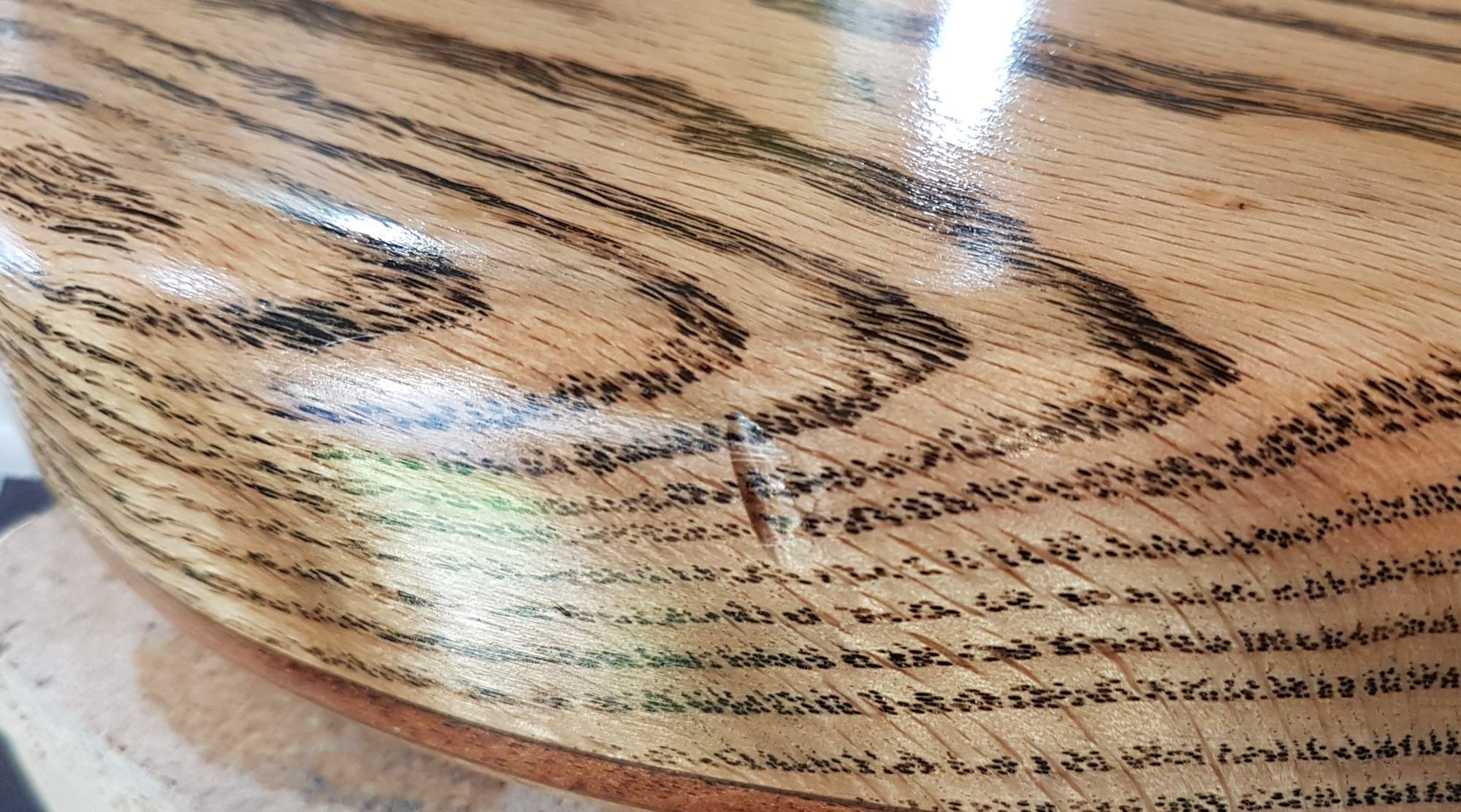
I have this Warwick Corvette I wish to let go and before I do that I would like to bring it back to pristine condition. The main issue I want to correct is small scratches/dents on the swamp bash body as the neck is pretty much immaculate.

A friend of mine has informed me that the finish they have used in the factory is a melted wax finish. Meaning, they melt some beeswax and apply in copious amounts using a sponge/cloth while the wax is still in liquid form. Wax seeps into the wood somewhat (not sure how much since I know wax generally stays on the surface).

I would like your advice on how to proceed. This same friend of mine advised me to not go at this bass body with sandpapers as the wood is sensitive and can be scratched irreparably. I am not sure how this works and this is why I am asking for your advice.

One thing I suspect is important is using a sanding block as the wood grain is such that it will have an irregular surface if I go at it using sandpaper with bare hands. Of course this may be a desirable feature but not in my case. Do you agree with my suspicion?

After I am done I 'm thinking about using a thin Tru Oil finish as it makes pretty much everything look glorious in my experience.

Thanks for reading, I'm looking forward on your tips on my options and how to proceed.
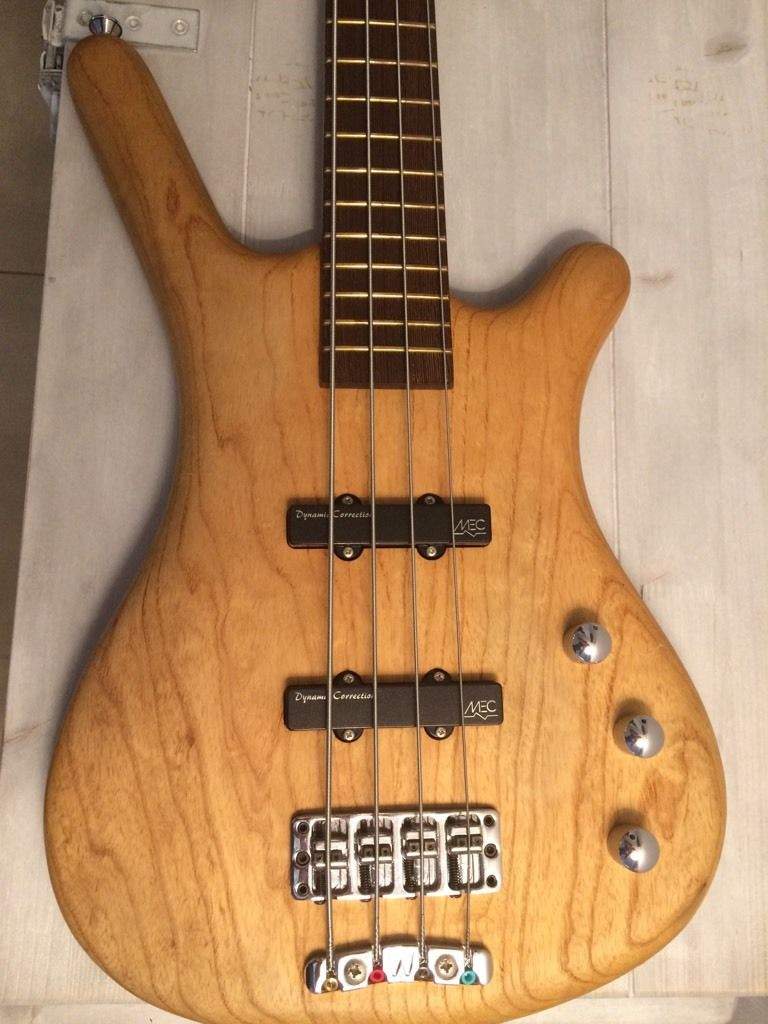
02.JPG
 
Last edited:
I’m not completely familiar with the finish Warwick uses. I’d say sand a small area inside the control cavity or pickup route or in the neck pocket if it’s a bolt on then try the TruOil there and see if it matches.

Definitely use a sanding block. Start fine, maybe 400 or 600 grit and, only if that’s not working, go more coarse.
 
One trick I use is with walnuts

Break the walnut so that a good portion of the white part is exposed

Rub it on the scratch

Wipe off residue

This will not repair the scratch, but it will hide it really well.
 
  • Like
Reactions: jesterbass
I’m not completely familiar with the finish Warwick uses. I’d say sand a small area inside the control cavity or pickup route or in the neck pocket if it’s a bolt on then try the TruOil there and see if it matches.

Definitely use a sanding block. Start fine, maybe 400 or 600 grit and, only if that’s not working, go more coarse.

Thanks for your response. I will be taking a fine layer off of the entire body surface so there's no need of matching with the current finish. Hopefully the current wax finish means I won't have persistent residual stain in certain areas, the wax should be limited to the surface.
 
If it is actually wax that has soaked in you might still test a small area to make sure the TruOil sticks and cures properly. So far for me TruOil has stuck to everything but I’ve never tried it over a waxed surface.

I've had Tru Oil not dry on oily wood like cocobolo, definitely worth a test.

Hopefully I'll be able to remove all the wax, so I'll be applying Tru Oil on sanded Swamp Ash. I'm almost certain it hasn't penetrated deep so I won't have to remove a lot of wood. I think there's already areas of discoloration, lighter colored areas (hay color - typical swamp ash) among the majority of orangey tint created by the wax. I 'll be hitting this thing with steam and 400-ish sandpaper, see how it works out.
 
  • Like
Reactions: Jisch
Why not just refinish with beeswax? You then have the original finish type and you don't have to worry about different finishes not working with each other if some of the original finish is still there.

Because I also want to get rid of the dings and scratches on the body.

EDIT: Just figured out what you mean (lack of sleep). I find it much more messy to do and the process may not be exactly simple (and I don't know that process). Plus I love Tru-Oil, I'm used to working with it and I'd like to see what swamp ash looks like with it. Thanks for your suggestion though.
 
Last edited:
  • Like
Reactions: SLivinghouse
I've never heard of any production guitar finished with wax on bare wood. But if it was I would go at it with a cabinet scraper to try and remove all the finish I could as sanding would just keep smearing it into the surface.

Thanks for the tip, that's actually a concern. You can believe it though, it's a melted wax finish. I have seen the pickup cavities where the wax has dripped into.
 
Because I also want to get rid of the dings and scratches on the body.
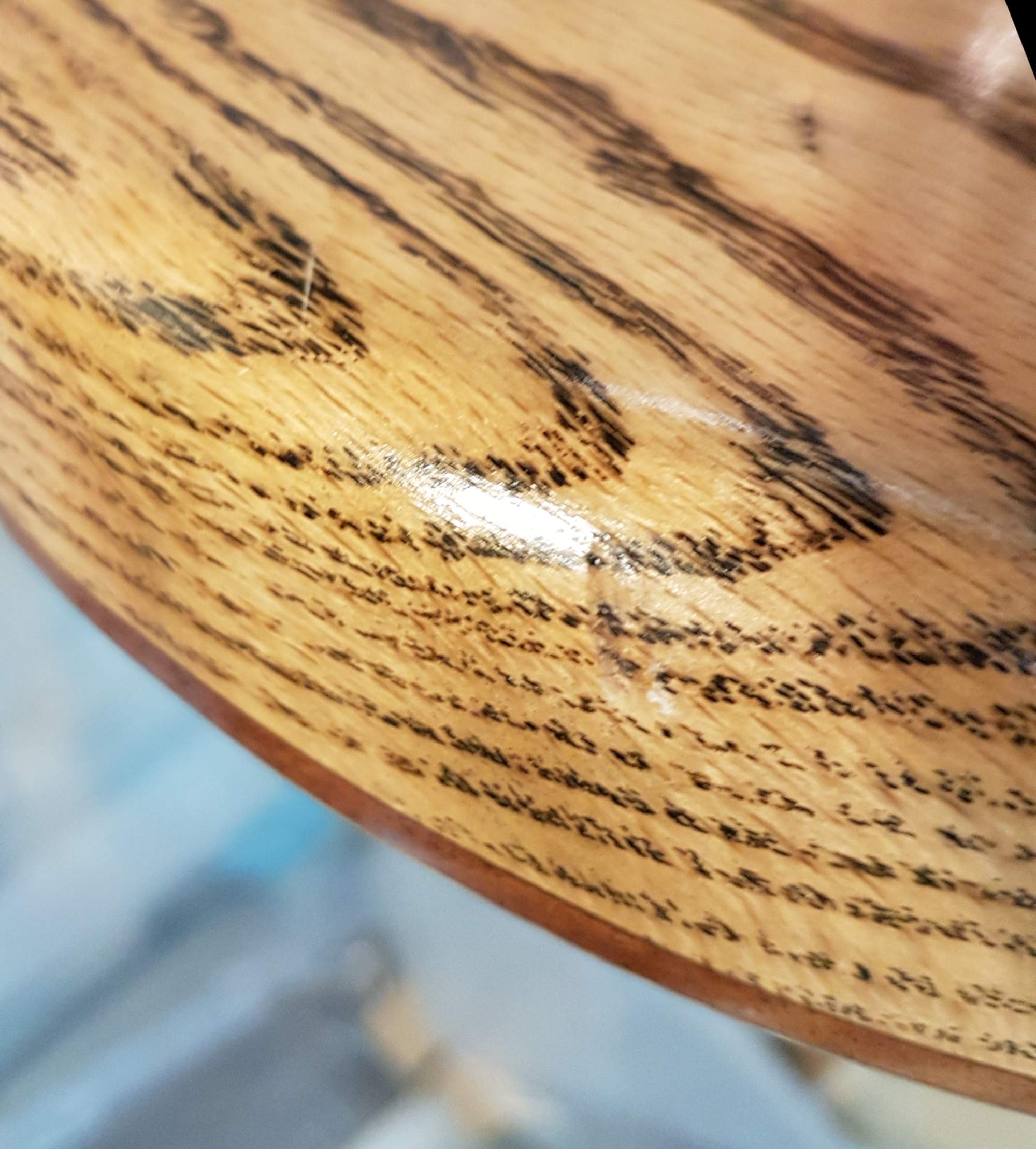
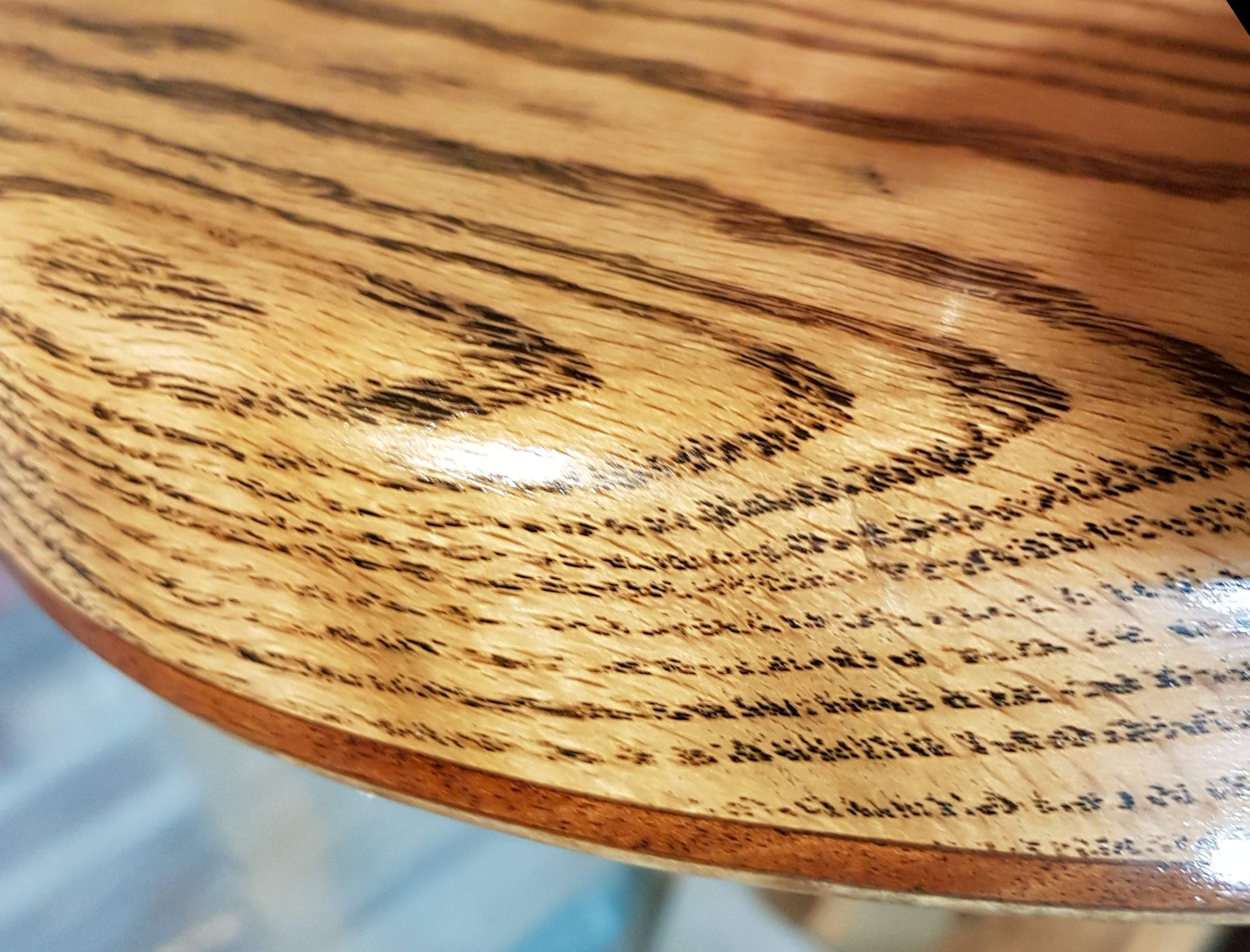
If you could steam out the dents and dings, is it in good enough condition to be restored by their wax restorer product? I use a soldering iron and a small piece of soaking wet terry cloth. I put it right into the dent and work it to steam the fibers and careful not to hold it long enough to dry out and burn. Just a thought. :)

When there was nothing but anger. :D

Partially steamed out, probably 5 minutes of steaming.

As far as I could get it with steaming, another 5 or so minutes.
 
I wasn't aware they did a melted-wax-only finish. I wonder if it's really a mix of wax and a drying oil, or wax melted in over top of an oil finish, or wax on top of shellac, or some other combo. Finishing with beeswax is not difficult and if anything it's superior in some ways a finish like tru-oil since you can be totally done, start to finish, in an afternoon - instead of having to wipe on twelve billion coats over days and days and days and days to build a finish up.

I'm not sure I understand the goal here though - are you trying to spot-sand the scratches and then just spot-repair the finish and blend into the original finish? Or totally strip and re-do it?
 
I can’t imagine that the finish is wax only - beeswax when it hardens is like a rock. My wife is a beekeeper and I used to make my own finishes using a mix of linseed oil, varnish and melted beeswax. It probably has some amount of solvent in it to make it workable. If you sand it well and work through the grits it should take any finish ok, even though there might still be some residual wax.
 
  • Like
Reactions: jesterbass
Swamp Ash is an open pore wood. The Warwick wax finish will always be embedded in the open pores. No matter how much sanding you will never get all of the wax out of the wood unless you plan on resculpting the entire body. Thankfully Tru Oil contains mineral spirits which is a great wax solvent. You may want to cover the body with mineral spirits and rub the mineral spirits off the body vigorously. Do this two or three times then apply the Tru Oil.
 
This same friend of mine advised me to not go at this bass body with sandpapers as the wood is sensitive and can be scratched irreparably.
View attachment 3405476

I've sanded a lot of ash wood and have never scratched it irreparably. sand lightly, when in doubt, start with a finer grit than you think you need to. You can always go back to a coarser grit if you need it.
 
Oil-Wax finish: I would recommend a mix of pure food grade mineral oil and pure beeswax. Carefully melt the beeswax into the mineral oil in a double-boiler. Depending on the proportion of wax to oil, you will get your desired viscosity at room temperature... It's been years since I made any so I don't recall the proportions offhand but something like 2 oz wax to a half cup of mineral oil is probably in the ballpark :)
 
  • Like
Reactions: jesterbass
Check the market on used Warwick prices. You may find given the condition of your bass, that all the scratches and dings only amount to $100 difference in resale value. You’ll have to determine how much effort is worth it to you, assuming you have all the materials you need already, and that if you mess up the finish, it will detract more value than the scratches. Heck, an oil finish compared to the factory wax finish might even hurt resale!
 
  • Like
Reactions: Beej and jesterbass