

Enjoy the benefits of a premium membership!
Upgrade Account
-
TalkBass has been independent since 1998. Add your voice.
Create a free account to reply to discussions, view embedded media, and browse with fewer display ads.
Join free Log in
Want zero display ads or expanded classifieds tools? Compare plans.
You are using an out of date browser. It may not display this or other websites correctly.
You should upgrade or use an alternative browser.
You should upgrade or use an alternative browser.
School Me on...Why a New Bass Goes Sharp
- Thread starter MusicManStudio
- Start date
More options
Who Replied?


TRUE STORY:
It's the Bass String Fairy.
Bass String Fairies are known to come out while you're sleeping, or when you aren't looking at your bass for a few hours.... and turn the tuners.
Just a tiny bit, but always tighter....
The fable goes that in the old dark days of bass strings... in the 1800s when they used gut and rope strings... strings stretched all the time. Specially when new!
So the bass fairies heard this and would go out at night and tighten the strings to try and help out the poor bassists who were already the unsung heroes of the symphony orchestra.
As time went on, and electric basses came along with much better tuning stability, the fairies started finding it harder and harder to find the big acoustic basses going flat.
They saw how Bassists were taken for granted and otherwise the butt of jokes in rock bands, so they made a new rule - whatever the type of bass, whatever the type of string, WE WILL HELP THEM!!!
So tighten your strings, they do.
If you're lucky, you might catch one - the fable goes on that if you DO catch a Bass String Fairy, they will teach you the REAL trick behind boiling strings. But that's only a fable, right?
It's the Bass String Fairy.
Bass String Fairies are known to come out while you're sleeping, or when you aren't looking at your bass for a few hours.... and turn the tuners.
Just a tiny bit, but always tighter....
The fable goes that in the old dark days of bass strings... in the 1800s when they used gut and rope strings... strings stretched all the time. Specially when new!
So the bass fairies heard this and would go out at night and tighten the strings to try and help out the poor bassists who were already the unsung heroes of the symphony orchestra.
As time went on, and electric basses came along with much better tuning stability, the fairies started finding it harder and harder to find the big acoustic basses going flat.
They saw how Bassists were taken for granted and otherwise the butt of jokes in rock bands, so they made a new rule - whatever the type of bass, whatever the type of string, WE WILL HELP THEM!!!
So tighten your strings, they do.
If you're lucky, you might catch one - the fable goes on that if you DO catch a Bass String Fairy, they will teach you the REAL trick behind boiling strings. But that's only a fable, right?

As do the strings.Definitely a temperature issue, wood expands and contrats.
Yes, this.Wood and steel both change with temperature, and not in lock step. Wood actually moves less (along the grain) than steel does. So, it's mostly the fault of the steel if it's temperature. When I go to gigs in the winter, the cold in the car is enough to make the thing a bit sharp (the steel shrinks more, so it's higher tension, and therefore sharp). Leave it sit for a bit, it comes back into tune.
If a bass sits in a cool room after playing, it will go slightly sharp. To bring it back in tune, you can run a cloth back and forth across the strings a few times, or just play it for a little while. The strings will warm up a bit and their pitch will drop a little.

My guess is that perhaps
It was a bass gremlin. The only way to appease them is carrots.
New Warwick German 5'er
Last tuning was a few days ago. Typically, I would expect a few cents flat
because of wood and parts settling in, but on this it was many cents sharp.
tia
It was a bass gremlin. The only way to appease them is carrots.

And then when everything is good... Here comes Winter!So true! On average it takes me about 6 months before I get a new instrument to my liking. Doesn't mean I don't still use itbut with rare exceptions, I don't bond with any bass until I get it tweaked just right.

A dozen years ago, I played a casual gig at my boss' house in Newport Beach, CA harbor on his back deck. I swear, I WATCHED the neck of my G&L SB-2 bow and the bass go sharp when the evening beach fog rolled in. Made note of THAT life lesson!!!

Ric5
Inactive
- Jan 29, 2008
- 29,772
- 30,452
- Disclosures
- I like 5, 8, 10, and 12 string basses
Definitely a temperature issue, wood expands and contrats.
not temperature ... humidity

JeezyMcNuggles
Inactive
- Feb 23, 2018
- 14,723
- 20,970
- Disclosures
- I suck, but nobody really notices
It happens.New Warwick German 5'er
Last tuning was a few days ago. Typically, I would expect a few cents flat
because of wood and parts settling in, but on this it was many cents sharp.
tia
Wood expands, it'd get more tension.
Wood shrinks, less tension.
Makes sense right?

An older instrument should be more stable, but anything is possible. A jolt could also be the culprit.
The position of the tuners could cause contact in the case, altering the tuning to some degree.
Just takes a few seconds to retune anyway so no big deal.

The position of the tuners could cause contact in the case, altering the tuning to some degree.
Just takes a few seconds to retune anyway so no big deal.

Depends on what side of the equator you are on.Probably half the basses I own have been put in their case or bag dead-in-tune, only to be pulled out a day or two later and they crept several cents sharp. And these basses were setup properly, strings wound properly on the pegs, etc. (I'm REAL fussy about tuning), and across the board in terms of age or construction in a steady 'climate' here in the house.
I've never nailed it down as to why, but I've seen it regularly.
Or blue cheese, apparently...My guess is that perhaps
It was a bass gremlin. The only way to appease them is carrots.

It gets colder, the neck straightens and pitch goes up a little.New Warwick German 5'er
Last tuning was a few days ago. Typically, I would expect a few cents flat
because of wood and parts settling in, but on this it was many cents sharp.
tia
This may very well settle and do this less and less over time.

This. It's a heat from your hands kind of thing. You may also be initially tuning when it's cold rather than tuning when it's nice and warmed up. Tune on day one mid woodshed session and then check it on day four - mid woodshed.As does metal. I.e., the strings.
Try this. Put the bass away in tune. If it really is the same temperature when you get the bass out the next time, check the tuning. Is it sharp? Don't retune right away. Play for a while and then check again. The heat from your hands will warm up the strings a bit and change the tuning.

Last tuning was a few days ago. Typically, I would expect a few cents flat
because of wood and parts settling in, but on this it was many cents sharp.
This has nothing to do with the make of bass or its age.
Strings expand when they get warmer. That makes them go flat. They contract when they get colder. That makes them go sharp. Your fingers warm up the strings, putting the bass away cools the strings and makes them go sharp. The ambient temperature of the room will also affect the tuning.
I don't expect my basses to be in tune when I pick them up and they are cooler, or after 20 mins playing, when they have warmed up.

Actually, it is both temperature and humidity. My composite basses, Steinberger and Modulus, which are virtually impervious to humidity changes, also go sharp when they cool off between sets. All matter expands and contracts with temperature changes. A quick rub down of the neck and they go right back into tune. Humidity changes cannot be corrected this way and would require a set-up adjustment. But you are certainly correct that humidity can effect a wooden neck in this manner. I had an Alembic neck, otherwise very stable, literally fret out due to high humidity in a hot Florida bar. The adjustable nut saved the night!not temperature ... humidity

I always run my hands up and down the strings for about half a minute before I tune a bass, especially my upright. If I tune without warming the strings, the bass tends to go a wee flat, once you start playing.
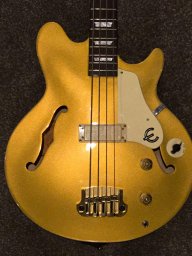
Peter Rowan once remarked while tuning on stage, “This guitar still thinks it’s a tree!”A young bass is still growing when you get it, so the strings that fit it perfectly at first start feeling tight after a little while. Soon your bass will mature to its full size and leave its reckless tunings of youth behind.
Ric5
Inactive
- Jan 29, 2008
- 29,772
- 30,452
- Disclosures
- I like 5, 8, 10, and 12 string basses
Actually, it is both temperature and humidity. My composite basses, Steinberger and Modulus, which are virtually impervious to humidity changes, also go sharp when they cool off between sets. All matter expands and contracts with temperature changes. A quick rub down of the neck and they go right back into tune. Humidity changes cannot be corrected this way and would require a set-up adjustment. But you are certainly correct that humidity can effect a wooden neck in this manner. I had an Alembic neck, otherwise very stable, literally fret out due to high humidity in a hot Florida bar. The adjustable nut saved the night!
most of us have basses with wood necks
I did play a bass with a modulus neck in a music store ... it was really really nice


