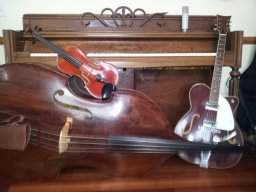
Old basses
Through a shop: Find one (or more than one within driving distance of each other) with as much selection as you can. This likely means some travel and research ahead of time. Call the shops and talk to them about what you are looking for, see what they have available, and make an appointment. This way they know you are coming, usually will have a couple of instruments in mind for you, and often have someone there who is prepared to spend some time working with you. Also, websites aren't always on top of their current inventory. "You had X, Y, and Z on your website" sometimes turns into "sorry, we sold those a month ago."
Find out if they have done any of the recent repairs/restorations in shop, how healthy the instrument is, if it needs more work etc. Factor that into your budget as well, as some restoration jobs aren't cheap.
Private sale: Take the instrument to a shop/maker or two to get their two cents. Most bassists aren't going to straight out lie to you, but they might have a rather distorted view of what the instrument is worth on the market now if they have owned it for a number of years. See if what the shop has to say about it (the maker, year, health of the instrument etc.) lines up with what the seller has to say. Same thing with repairs and restorations as above.
Shops and private sellers expect you to make an offer and try to get the price down. If the bass is healthy, feel free to make an offer that knocks enough off the asking price that you would be ok with their counter offer. Don't insult them, or ask for a $30 000 bass for $15 000, but there usually is some wiggle room. If the bass needs work, (open cracks, a new bridge, setup, an extension or whatever) try to get that included in your price as well. A good quality bag should be included at the very least, especially in this price range.
New Basses: I really think in this price range, you should strongly consider a new instrument. There are some fantastic modern makers out there making great basses. They are healthy instruments. Some old basses have been entirely rebuilt. If you take a look at restoration pictures, especially the inside view of tops and backs, often there is a LOT of new wood in there. As previously mentioned, new instruments have also been winning a lot of jobs. They are in the best condition they ever will be in, and often are very clear, focused, fast speaking instruments. This really helps when you are playing through the athletic repertoire required for auditions.
Talk to some makers and see if you can play some examples of their work. Most work on commission and even have a waiting list, but usually they can put you in touch with other bassists who own their instruments, so you can play them and get a feel for their work. Commissioning a bass gives you a ton of options, as most makers will let you pick string length, body outline, hardware, etc. and really cater the instrument to you. You can find modern instruments in shops as well, and if you have a couple of years, the ISB convention (the next one is in 2015) is a great place to see a ton of new and old instruments all in the same place.
Take your time. You could very well play this instrument for the rest of your career, so you really want to find something you love. Other than that: Happy hunting!