• TalkBass has been independent since 1998. Add your voice.
    Create a free account to reply to discussions, view embedded media, and browse with fewer display ads.
    Join freeLog in
    Want zero display ads or expanded classifieds tools? Compare plans.

Seeking advice on 4-string Bass for 14 yr old son?

YOU DID GOOD!

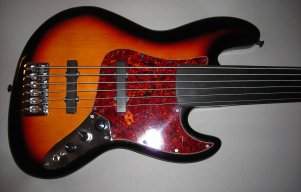
Yes I own an L-2500 Trib just like that one! It looks like you've got the Ash body which is the one with the best tone IMHO. Mine is Ash. This bass can do just about anything! You'd be hard put to do better than this bass at this price range! If I'd seen that I'd have snapped it up in an instant just out of pure greed given I already own two G&L L-2500s (fretted trib and fretless MiA)

See, we TOLD you that a mint-used bass was the way to save cash! Also tell your son that G&L trib factory strings are uber-bright SIT strings. They do turn the bass into a great slap machine, but just be aware that other name-brand strings of various types from flatwound all the way to bright rounds each can dramatically change the tone of the bass and usually for the better too. Such experiments are educational.

Another unique feature of the L-2500 is that it is both a passive and active bass! You can switch back and forth (although the battery continues to run in passive mode so long as the cord is plugged into the bass) and totally unique in a bass the, tone controls are passive and work in both active and passive modes (usually tone controls quit in active basses when switched into emergency passive mode). The downside is the controls only cut and do not boost.

Go check the price of MIA L-2500s! And note that the electronics in the Trib are identical to the MIA. The main difference is that the MIA versions have "to die for" wood grain. I tell you true, there is just about no way your son could find a better quality, more versatile bass at the price point you found. He is a very lucky kid!

And good luck to him from all of us here at TB. And as he develops bass questions of all kinds, TB is fer sure a great resource to tap into. None of us here 'know it all" which is why we hang here too! But there are a LOT of amazing people here with some major experience and knowledge.

Thanks for the re-assurance. One thing on this bass is the switches. Since it was used, we did not get any paperwork on what each switch does. We can tell what we "think" each does from simply flipping each and playing but it would be nice to actually see something in writing that shows the functions of the controls in different positions. I did run a few internet searches for a "User Manual" and found that but oddly enough, it has things like details electrical wiring diagrams (more like a "service Manual") instead of the basics of the controls (This switch does this, here is how to adjust the truss rod, etc) which I thought was a bit odd. Owning two of these perhaps you have a graphic or could point us to a weblink with those details?

PS - I found the details on youtube searches of sellers promoting the Tribute series.
 
Thanks for the re-assurance. One thing on this bass is the switches. Since it was used, we did not get any paperwork on what each switch does. We can tell what we "think" each does from simply flipping each and playing but it would be nice to actually see something in writing that shows the functions of the controls in different positions. I did run a few internet searches for a "User Manual" and found that but oddly enough, it has things like details electrical wiring diagrams (more like a "service Manual") instead of the basics of the controls (This switch does this, here is how to adjust the truss rod, etc) which I thought was a bit odd. Owning two of these perhaps you have a graphic or could point us to a weblink with those details?

PS - I found the details on youtube searches of sellers promoting the Tribute series.

Oops sorry. Missed your post (he says about a month late!). I hope you have the graphic by now. They are rather hard to find for some odd reason. Not sure where mine came from and I seem to have lost the file for it. But it's pretty simple. The switch closest to the neck is the pickup selector: chooses neck, bridge or both. The next switch is the series/parallel for the humbucker halves. The series gives a deeper tone. And the last switch is the passive/active switch. The first position is passive. Tone controls still do continue to work! Next is "active" which is slightly brighter. And finally you have "active" with an added treble boost. Note that passive tone controls can't boost the highs or lows, only cut them, so to control your sound you'd say use series to boost lows and then cut them some with the bass knob or boost highs with the "active" switch and then use the treble knob to roll them back if you want. This is a bit different than the way most active basses work.