
• TalkBass has been independent since 1998. Add your voice.
    Create a free account to reply to discussions, view embedded media, and browse with fewer display ads.
    Join freeLog in
    Want zero display ads or expanded classifieds tools? Compare plans.

SG & EB Bass Club

Did you use washers for this? I'm just curious how you addressed that.

It is a long sordid tale, so I'll spare you the details…

Initially, yes. Precision shims from Mc Master to be clear. But getting a near exact match was difficult, and even when it was within .01" and I had added a crush washer into the stack I could still (acoustically) hear a rattle at certain frequencies. It bugged me.

So I next used aluminum standoffs that I faced square and to length (I have a lathe in my house). That worked great- rattle gone.

I didn't like the bridge for other reasons, so I gave it (and the standoffs) to a friend. He plays differently and is still using it today, so it is an effective solution.

Hopefully that helps? Ha ha
 
  • Like
Reactions: Supernaute
My first encounter with a 3 point was with the Epi Rivoli reissue , when they first came out. There was not much info about them back then and it was a natural urge to drop the nose to set them up. Sure enough the back retainers would lift.
It was some years later before I was able to find any good information about setting them up. And the advice to not drop the nose of a 3point.
 
  • Like
Reactions: Supernaute
It is a long sordid tale, so I'll spare you the details…

Initially, yes. Precision shims from Mc Master to be clear. But getting a near exact match was difficult, and even when it was within .01" and I had added a crush washer into the stack I could still (acoustically) hear a rattle at certain frequencies. It bugged me.

So I next used aluminum standoffs that I faced square and to length (I have a lathe in my house). That worked great- rattle gone.

I didn't like the bridge for other reasons, so I gave it (and the standoffs) to a friend. He plays differently and is still using it today, so it is an effective solution.

Hopefully that helps? Ha ha
Yeah, getting the height correct seems to be the tricky part. I tried putting some washers in there but I was unable to get the height to perfectly match the height of the body.

For now I decided to just epoxy the inserts in there. It's curing right now as I type this. I'll find out soon whether this is enough to hold the bridge tight to the body. Fingers crossed. ;)
 
  • Like
Reactions: No Compute
I'll find out soon whether this is enough to hold the bridge tight to the body. Fingers crossed. ;)

It will be. But the foundational problem still needs to be addressed. All you have done is spread that uneven force vector deeper into the body of the instrument itself. So, instead of a lifted bushing you will see a cracked body.

Try a shim stack now against that after it cures. At least you will have minimized the effects. Ever use a bearing puller? The same mechanical principle is at work here. An adhesive is not the correct solution.

Good luck, my friend.

 
  • Like
Reactions: Supernaute
It will be. But the foundational problem still needs to be addressed. All you have done is spread that uneven force vector deeper into the body of the instrument itself. So, instead of a lifted bushing you will see a cracked body.

Try a shim stack now against that after it cures. At least you will have minimized the effects. Ever use a bearing puller? The same mechanical principle is at work here. An adhesive is not the correct solution.

Good luck, my friend.
Thank you. Yeah, a shim is possible using washers but like I said getting the thickness right is tricky. You want it just thick enough to fill the gap but not too thick or the bridge won't be flush with the body. Seems to me that Hipshot should include inserts with the proper dimensions along with these bridges to eliminate this problem.
 
Those cavities are a major design flaw. The Babicz does not suffer from that inherent deficiency, and will not lift any bushings. Likely the bolt would neck off, strip, or damage the bushing at extreme torque values. None of those things are good, granted, but the bushings would not have lifted in the process.

There's no "inherent deficiency" in the design per se. The only deficiency is Gibson/Epi QC.

I've *never* had bushings pull out of a Gibson guitar or bass regardless of the bridge used, and I've owned hundreds of them, and worked on quite a few more. Yes, I've read about it for sure and once again I'd attribute it to the poor QC out of the factory. Mind you, I use heavy strings. Always have. As in 10-52 on electrics and mostly 50-110 on basses. I've had Tilit-O-Matics bend due to the alloy used in them but have never had an issue with the bushings.

But be aware of that obvious flaw and plan accordingly (something to take up that empty cavity space).

I have yet to see the flaw, but always plan accordingly as in: install the bridge as designed, put the strings on, deal with intonation/setup, play.

Seems to me that Hipshot should include inserts with the proper dimensions along with these bridges to eliminate this problem.

That would hardly solve the Gibson/Epi QC problem causing the issues in the first place...
 
Last edited:
Seems to me that Hipshot should include inserts with the proper dimensions along with these bridges to eliminate this problem.

Seems to me that Hipshot should correct their obvious design and engineering oversights before claiming to be selling an improvement over an existing 'inferior' product. That full depth cavity is completely unnecessary and serves no beneficial function (again, reference vs. a Babicz). 3-point Gibsons are a bit tricky, but very functional if used properly. If used properly, nary a bushing will lift. And they have a very long service history.

You've already epoxied the bushings in place. So just find a stack height that is fairly close (within .02" or so), and add a 'crush' washer or two in there to allow for silent operation while still negating the negative cavity lift
 
  • Like
Reactions: Supernaute
There's no "inherent deficiency" in the design per se

Sure there is. No per se needed.

Turn one upside down and look at the bores for the mounting bolts. Why are they larger than the bushing's diameters and deeper than the bottom face of the bridge?

As stated above- ever use a bearing puller? If so, doesn't this look a little too similar?

This is pretty simple physics
 
This is pretty simple physics

Apparently, people managed to pull bushings out of their Les Pauls - or so I've read - long before Hipshot was in business. So we can talk physics all night long - it's pretty darn late where I am :) - but the underlying issue here is the lack of QC and not the bridge design.

A properly seated bushing will NOT be pulled out by a Gibson bridge or a Hipshot replacement in normal use/circumstances. Period. End of story.

You're more than welcome to dislike Hipshot products for whichever reason you deem fit, but I've had Supertones on quite a few basses and have yet to encounter a problem.
 
Apparently, people managed to pull bushings out of their Les Pauls - or so I've read - long before Hipshot was in business. So we can talk physics all night long - it's pretty darn late where I am :) - but the underlying issue here is the lack of QC and not the bridge design.

A properly seated bushing will NOT be pulled out by a Gibson bridge or a Hipshot replacement in normal use/circumstances. Period. End of story.

You're more than welcome to dislike Hipshot products for whichever reason you deem fit, but I've had Supertones on quite a few basses and have yet to encounter a problem.
Maybe not a Gibson. But I'm currently dealing with an Epiphone. And believe me when I say these bushings were SUPER loose. I can only speculate that Epiphone QC is not on par with Gibson, in regard to this issue.
 
Maybe not a Gibson. But I'm currently dealing with an Epiphone. And believe me when I say these bushings were SUPER loose. I can only speculate that Epiphone QC is not on par with Gibson, in regard to this issue.

I own a MIC Epi EB-0 built last year which serves as a synth controller and sports a Hipshot. Works fine and serves its intended purpose. You just got dealt a bad hand regarding the bushings situation, but it shouldn't be a difficult problem to solve.

Good luck.
 
  • Like
Reactions: Supernaute
Let's address these statements one at a time, shall we?

Apparently, people managed to pull bushings out of their Les Pauls - or so I've read - long before Hipshot was the underlying issue here is the lack of QC and not the bridge design.

Nope. We fully agree. Not a QC problem at all, but rather an end user problem. Just like the current discussion about 3-point adjustment. Drive your brand new car in reverse at 85 mph and then complain to me about QC standards when the transmission goes. I'll be equally sympathetic…

A properly seated bushing will NOT be pulled out by a Gibson bridge or a Hipshot replacement in normal use/circumstances. Period. End of story.

But, those bushings could be removed by a technician for service, right? Maybe a bridge ground wire has broken? And what sort of tool would they use? And what might it look like? A lot like the underbelly of a Supertone bridge, no?

I don't dislike Hipshot products. The fins on the bridge bug me when playing in a certain way, so I gifted it away. I do, however, dislike sloppy design. I make a living through engineering, design, and manufacturing in capacities where actual human lives are critically concerned. Not sure how you do it, but I'm strongly guessing it doesn't rely heavily upon mechanical principles. Otherwise it would seem that this discussion would be moot.

And isn't this exactly the crux of TB? Someone who understands a principle is shot down by the masses who don't or (don't want to think things through) because of - I don't know what.

But now sadly I wish I hadn't even responded. Because I knew this is where it would end up (again). Sigh.

Best of luck, original questioner.

I'm out.
 
If you've epoxied the bushings in, you'll be fine.

AS LONG AS you don't overtighten the mounting bolts.

There's no need to crank down on them. They just need to be "tight enough". And "tight enough" won't dislodge epoxied bushings.
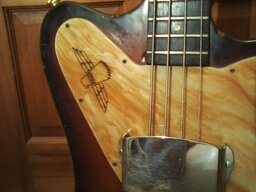
 
  • Like
Reactions: Supernaute
If you've epoxied the bushings in, you'll be fine.

AS LONG AS you don't overtighten the mounting bolts.

There's no need to crank down on them. They just need to be "tight enough". And "tight enough" won't dislodge epoxied bushings.
Thanks, I appreciate the encouragement. I definitely need it haha. :)

Well, I was tinkering around and managed to find some thin sheets of rubber that I used to fashion a couple makeshift grommets. I am going to put these between the bridge and bushings just to be on the safe side. I did some testing and they are just about the right thickness for me to get the bridge "tight enough" without a gap. Hopefully they should do the trick.
IMG_3683.jpeg
 
Last edited:
Let's address these statements one at a time, shall we?

Sure.

Not a QC problem at all, but rather an end user problem.

I see. So when the bushings get pulled out with the original Gibson bridge, it's the user error BUT when it happens when using a Hipshot bridge, it's due to the badly designed Supertone. Got it.

And what sort of tool would they use? And what might it look like? A lot like the underbelly of a Supertone bridge, no?

I guess that you could design one to look that way if you really wanted to, sure.

I do, however, dislike sloppy design. I make a living through engineering, design, and manufacturing in capacities where actual human lives are critically concerned.

And you went as far as suggesting that the Supertone design flaw may result in a cracked body. Please show me one report of that actually happening. I mean, on a Gibson-hating-TB these issues would've surely popped up a million times and would be the talk of the millennium.

Not sure how you do it, but I'm strongly guessing it doesn't rely heavily upon mechanical principles. Otherwise it would seem that this discussion would be moot.

I retired two years ago, but have worn a lot of different hats over the past 39 years...and understand mechanics pretty darn well. Just don't feel like posting my entire CV in this thread...:)

And isn't this exactly the crux of TB? Someone who understands a principle is shot down by the masses who don't or (don't want to think things through) because of - I don't know what.

Real life experience - which I have plenty thereof when it comes to Gibsons - doesn't seem to mirror what you're implying by quoting those principles. That's all there is to it. There's simply not enough tension for the strings/bridge combo to act as a lever and pull the bushings out if they were properly installed in the first place...
 
  • Like
Reactions: mcnach
Well guys, I'm sad to report that my first epoxy attempt failed. :(

I was nervous about overdoing it so I just used a very thin coating of epoxy, applied it with a q tip. I gave it a full 24 hours to cure. When I reinstalled the bridge it looked like everything was good at first. I tuned up ok and the bridge seemed tight. But after I put it down for a few hours, I came back to notice the bridge had raised up slightly. It wasn't much, about enough to slide a business card into the gap. But I could see that the inserts were slowly being pulled out.

So I pulled the inserts out and began again. This time I used a lot more epoxy. I really globbed it in there, putting a nice thick coat all over the inside of cavities. If this doesn't make those things stay put, I don't know what will lol.

I was also concerned about the bridge ground wire, as it was pretty flimsy. I figured if I was going to permanently epoxy these inserts, I should fix that. So I yanked the wire out and replaced it with a much thicker and sturdier one. Then I checked continuity to make sure it was contacting the inserts properly.

So I'm keeping my fingers crossed now. Hopefully it'll work this time. May the bass gods be with me! :p