• TalkBass has been independent since 1998. Add your voice.
    Create a free account to reply to discussions, view embedded media, and browse with fewer display ads.
    Join freeLog in
    Want zero display ads or expanded classifieds tools? Compare plans.

Short scale bass build, truss rod suggestions

Hello,
Working on a 30” short scale Meteora style bass, gonna use ebony for neck.
From what I can tell I’m gonna need a 20” truss rod. Does that sound right? It’s an odd size.
Yes, it’s gonna be heavy, but it’ll look cool, lol.
Appreciate any advice, been building guitars for about 15 years, but my first bass build and first scratch neck build for bolt on (I’ve made one piece acoustic jig builds), but I’m a bit nervous with this expensive piece of wood.
Thanks
JD
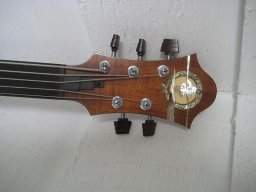
(Added a couple pics of my work)
 

Attachments

  • IMG_0007.jpeg
    IMG_0007.jpeg
    3.1 MB · Views: 43
  • IMG_0014.jpeg
    IMG_0014.jpeg
    3.1 MB · Views: 32
  • Like
Reactions: Beej
Solid ebony for the neck?!? I’m not here to tell you what not to do, but I don’t think that’s going to be very comfortable to play. Very heavy, very expensive and not very stable…. Yeah, it might look awesome but I don’t think it’s going to make a very good neck.
 
  • Like
Reactions: Bloomfield
Ah geez, not really the negative advice I was expecting, I already got the wood and know it’s been done, so it’s happening. lol.
From what I’ve read, it’s very doable. My main question was about truss rod size.
Weight is not a concern, I like heavy guitars. Neck dive is my main concern but my Jag has some neck dive already and it doesn’t bother me.
If I keep it in a case religiously it should hold up fine.
It could be a total disaster but I think it will be cool.
Yes it was expensive.
 
You should be able to find a 20" rod, it's a pretty common size. My usual suppliers all carry a 20"ish variant.

For your neck, there are some examples of full ebony necks by @Slidlow and @Alex Xander in this forum, if you want to take a look and/or chat with them about build considerations. If this will be your first neck, I'd recommend making another neck first using more commonly available wood so you can get a feel for it before tacking the ebony. Neck making is not as difficult as most people expect it to be, but it is a skill that improves the more you build, so it may be worth developing it a touch. :)

This community will generally be very helpful, so feel free to post your questions often and the hive mind will have your back. :woot: It also moves very slowly here compared to the high traffic forums on TB, so it may be a few days before you get some good information. Feel free to ask again or tag specific people for their comment as well. :thumbsup:
 
Solid ebony for the neck?!? I’m not here to tell you what not to do, but I don’t think that’s going to be very comfortable to play. Very heavy, very expensive and not very stable…. Yeah, it might look awesome but I don’t think it’s going to make a very good neck.

I did it on a neck through
.
IMG_8492.jpeg

IMG_8493.jpeg


It was definitely very expensive, however this one certainly wasn't heavy, uncomfortable or unstable. With a bolt on, it could only be better.

It was not a lot of fun to carve, but I've since toyed with some Australian desert timbers that made this carve feel like I was carving balsa.

This one has a deliberately long fretboard so that I could run the steel reinforcement well past the body/neck junction.


I would echo @Beej 's advice and say do a test carve on something else first.
 
Last edited:
Ah geez, not really the negative advice I was expecting, I already got the wood and know it’s been done, so it’s happening. lol.
From what I’ve read, it’s very doable. My main question was about truss rod size.
Weight is not a concern, I like heavy guitars. Neck dive is my main concern but my Jag has some neck dive already and it doesn’t bother me.
If I keep it in a case religiously it should hold up fine.
It could be a total disaster but I think it will be cool.
Yes it was expensive.
Well, as long as you’re going for it…

@Bruce Johnson has posted some great information regarding a double-acting, single-rod truss rod of his own design. While not as convenient as an off-the-shelf unit, it would be somewhat lighter and he provides very specific building instructions from easy-to-obtain materials. Because his design offers pretty high torque, it would also do well to counteract a very stiff wood like ebony.

Another nice side-effect of his single-rod design is that you can make the neck a little flatter if that’s your thing.

If you’re not keen on the idea of making your own truss rod, rods from Bitterroot or Stu Mac have reasonably solid reputations and come in a variety of lengths. Laying a tape along the neck of my Mustang (30” scale), it looks like 19 or 20 inches would work perfectly.

The earlier suggestion of carving a test neck out of a practice piece is sound, although you’ve carved necks before so you’re not going into this totally blind. Do keep in mind that ebony really likes to move with the weather so if you live in an area where the humidity swings, make sure to take measures to seal the wood well.

Sorry if I came off as such a naysayer earlier!
 
Hello,
Working on a 30” short scale Meteora style bass, gonna use ebony for neck.
From what I can tell I’m gonna need a 20” truss rod. Does that sound right? It’s an odd size.
Yes, it’s gonna be heavy, but it’ll look cool, lol.
Appreciate any advice, been building guitars for about 15 years, but my first bass build and first scratch neck build for bolt on (I’ve made one piece acoustic jig builds), but I’m a bit nervous with this expensive piece of wood.
Thanks
JD
(Added a couple pics of my work)

The general rule for truss rods in bass necks is that the working portion of the rod should start about halfway between the nut and the first fret, and extend down to somewhere in the heel. The location at the heel end isn't as important, as long as it ends within an inch or so from the end of the heel. That's for the main length of the truss rod assembly; the adjusting head will extend another inch off one end of the assembly.

For a 30" scale 20 fret neck, a 20" overall length truss rod will barely fit. Ideally, you'd want about 19.5".
 
You should be able to find a 20" rod, it's a pretty common size. My usual suppliers all carry a 20"ish variant.

For your neck, there are some examples of full ebony necks by @Slidlow and @Alex Xander in this forum, if you want to take a look and/or chat with them about build considerations. If this will be your first neck, I'd recommend making another neck first using more commonly available wood so you can get a feel for it before tacking the ebony. Neck making is not as difficult as most people expect it to be, but it is a skill that improves the more you build, so it may be worth developing it a touch. :)

This community will generally be very helpful, so feel free to post your questions often and the hive mind will have your back. :woot: It also moves very slowly here compared to the high traffic forums on TB, so it may be a few days before you get some good information. Feel free to ask again or tag specific people for their comment as well. :thumbsup:
It can be done. Here are two examples with solid one piece ebony neck through construction😎. I really need to finish the six string 😕.
IMG_9298.jpeg
 
Thank so much, great advice!! Definitely gonna build a maple one first, hadn’t thought of that, great suggestion.
Was thinking about putting in a couple carbon fiber rods in it as well, for the stability issues.
Also gonna check other builders as suggested.
Appreciate it!!
 
  • Like
Reactions: Beej
I'll suggest visiting the carbon fiber TOW concept if you are thinking about adding fiber. Does the same job lighter, cheaper and more efficiently than rods or bars.

https://www.talkbass.com/threads/super-lightweight-p-bass-build.1661915/page-3#post-28803243

https://www.talkbass.com/threads/me...cut-bass-w-cnc-content.1660215/#post-28680646

https://www.talkbass.com/threads/wi...ut-the-scrap-bin.1636784/page-5#post-28178808

https://www.talkbass.com/threads/si...-in-fillmore-ca.1518445/page-77#post-28167210

...more if you use the search yourself, this is just a few to get the concept across if you've missed it.
 
Interesting, never heard of that. I already ordered carbon rods for the sides of the truss rod. I figured that would be enough.
I read somewhere else that I don’t even need a truss rod using ebony, but that doesn't seem right to me. Plus, what’s the fun in that??
 
Interesting, never heard of that. I already ordered carbon rods for the sides of the truss rod. I figured that would be enough.
I read somewhere else that I don’t even need a truss rod using ebony, but that doesn't seem right to me. Plus, what’s the fun in that??
I didn’t use carbon fiber rods in my ebony necks. Doesn’t need the extra stiffness and will make it harder for the truss rod to move it for adjustments.
 
I didn’t use carbon fiber rods in my ebony necks. Doesn’t need the extra stiffness and will make it harder for the truss rod to move it for adjustments.
But I read it’s unstable and prone to movement. More so in humidity climates, I’m in Florida. Not saying your wrong, that honestly makes no sense to me, considering the density of the wood.
That why I started this project, I love the hardness of ebony fretboards, so why not make a neck out of it? Should be better than Maple, right?
But I’ve now read numerous posts about it being “unstable”.
I guess I’m gonna find out. LOL
 
  • Like
Reactions: Beej
But I read it’s unstable and prone to movement. More so in humidity climates, I’m in Florida. Not saying your wrong, that honestly makes no sense to me, considering the density of the wood.
That why I started this project, I love the hardness of ebony fretboards, so why not make a neck out of it? Should be better than Maple, right?
But I’ve now read numerous posts about it being “unstable”.
I guess I’m gonna find out. LOL
That's interesting to hear, I've always 'known' it to be stable in service, but you know how hearsay goes. :bag: Have you got any sources? A quick google of 'ebony stable in service' yields mostly results talking about how it is stable over time. The caveat being it needs to be seasoned, but that applies to all woods. :thumbsup:
 
But I read it’s unstable and prone to movement. More so in humidity climates, I’m in Florida. Not saying your wrong, that honestly makes no sense to me, considering the density of the wood.
That why I started this project, I love the hardness of ebony fretboards, so why not make a neck out of it? Should be better than Maple, right?
But I’ve now read numerous posts about it being “unstable”.
I guess I’m gonna find out. LOL
All depends on how the wood was seasoned. If you read my thread on the ebony necked six string you will see I let it sit for years and cut it down in stages to discover any hidden stresses before ending up with a finished neck blank.
 
The general rule for truss rods in bass necks is that the working portion of the rod should start about halfway between the nut and the first fret, and extend down to somewhere in the heel. The location at the heel end isn't as important, as long as it ends within an inch or so from the end of the heel. That's for the main length of the truss rod assembly; the adjusting head will extend another inch off one end of the assembly.

For a 30" scale 20 fret neck, a 20" overall length truss rod will barely fit. Ideally, you'd want about 19.5".
I'm also working on a short scale neck. Mine's 32" scale. You've got me thinking I went to short on my truss rod. I got a 19 1/8" which stops just before my heel. So, I need it to extend so it overlaps slightly into the neck pocket?
 
I'm also working on a short scale neck. Mine's 32" scale. You've got me thinking I went to short on my truss rod. I got a 19 1/8" which stops just before my heel. So, I need it to extend so it overlaps slightly into the neck pocket?

Well, the heel end is less important. The important thing is that the outer end needs to be between the nut and 1st fret. By my charts, a 32" scale neck should have about a 20" long truss rod.