• TalkBass has been independent since 1998. Add your voice.
    Create a free account to reply to discussions, view embedded media, and browse with fewer display ads.
    Join freeLog in
    Want zero display ads or expanded classifieds tools? Compare plans.

Short-Scale String Options

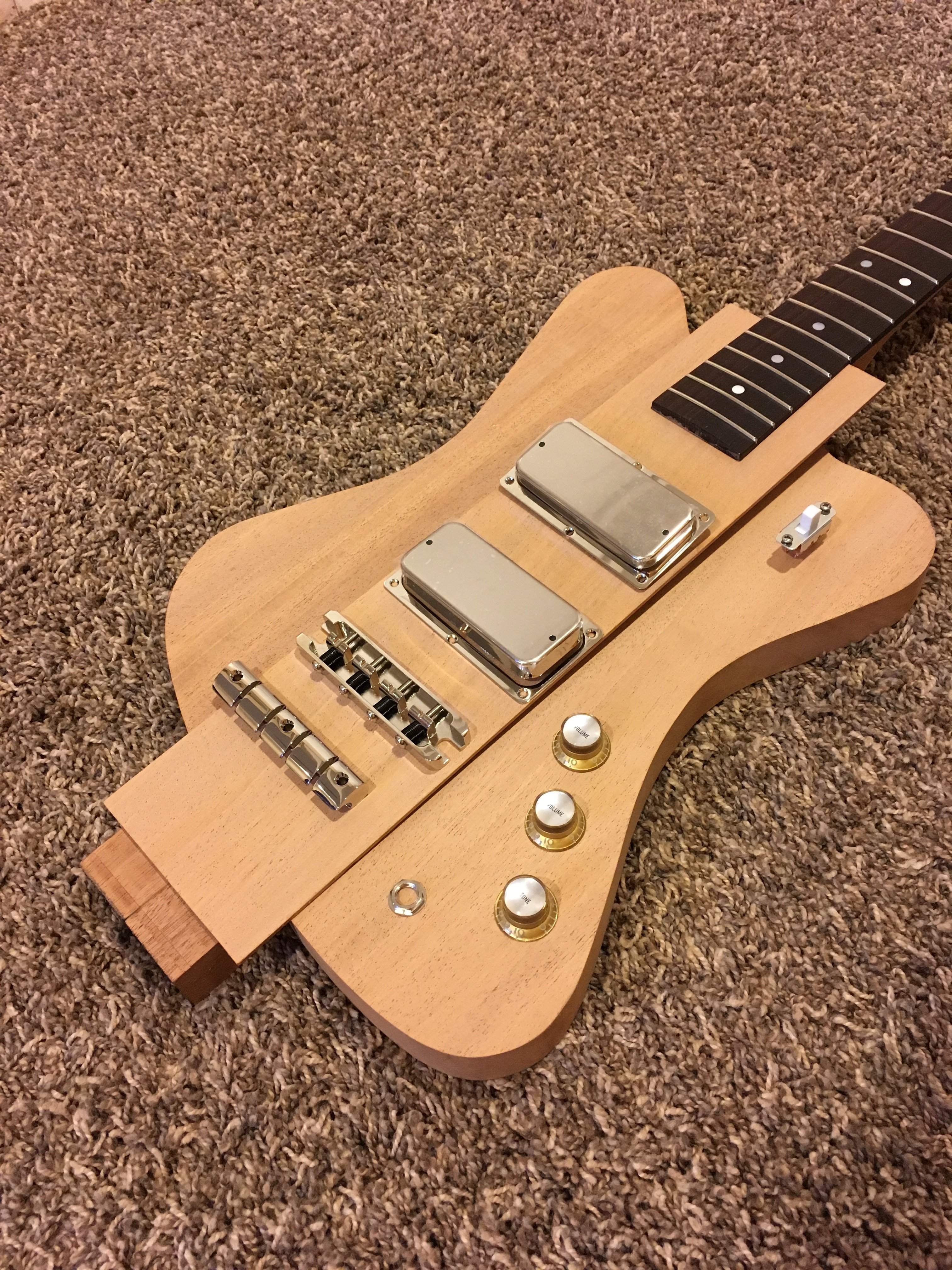
Hey guys/gals. First post here on talk bass. I'm primarily a guitarist, bought and sold a couple basses over the last few years, and I'm currently in the midst of a bass build. Some obligatory pics:
DA36E14D-8A1A-490C-82F0-0A66C86D10FF.jpeg
66B0F065-E647-4ADE-A64F-1E11CB8E9AD3.jpeg
1CEA93EE-C6C9-4B75-A508-28727705E938.jpeg


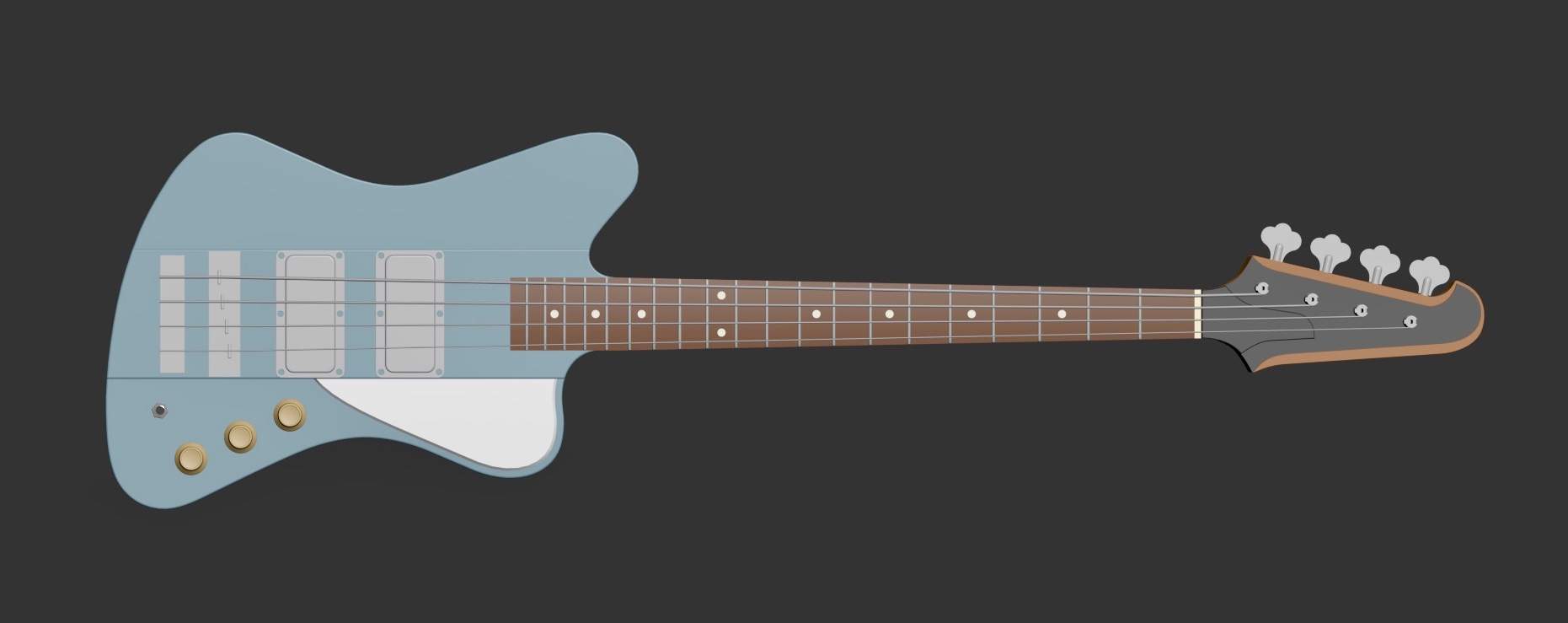
It's my [non-reverse, short-scale] take on a [1963-65 reverse] Gibson Thunderbird.

I need your wisdom/help on string selection. I commonly hear Thunderbirds tend to be a little darker sounding, so I'm after a brighter sounding set of strings. I'm also keen on keeping my string noise down, and would like to avoid rounds. Also not big on coated strings.

After some searching, it seems like either GHS's pressurewounds or EB's cobalt flats would be the ticket (leaning towards the cobalts, like the feel of flats). I have a dilemma, however. The GHS short-scale strings only come in a 40-96 set, which I think is going to be too loose for me. The EB cobalts, on the other hand, don't come in a short-scale version. If they did, I think their hybrid 45-105 would be perfect.

So a couple questions—
  1. Is cutting down long-scale bass strings for a short-scale a bad idea?
  2. Is it possible to silk wrap and taper the string ends yourself?
  3. Should I be cautious of certain string gauges if my tuner posts will be 3/8" diameter?
  4. If I shouldn't cut down strings, what are some other short-scale, low noise, brighter sounding string options?
Thanks for your help!
 
  • Like
Reactions: mikewalker
Welcome to TalkBass! Some of us have been known to dabble in the g****r side at times..... :cool:

My advice and perspective:
  • The tone of an instrument doesn't reveal itself until it's completed. Body and neck woods can give you a very general idea, but it will be pretty approximate.
  • The pickups you choose will be a big factor here. What will you be installing?
  • Short scale is 30" (sometimes 30.5"); medium scale is 32", and long scale is 34" (Fender standard). What's yours? You can measure from nut to twelfth fret and double it.
And my answers to your specific questions:
  1. Not a terrible idea, but not the best idea either. The problem is on the thickest strings - having full thickness windings trying to encircle a tuner post is difficult at best, and can lead to string breakage at worst. Some strings are inherently more flexible than others, so while this might work out fine for a light-gauge set of round-cores, it might not for a heavy-gauge set of flats.
  2. Theoretically possible, but a whole lot of time and effort that can be better spent elsewhere, by buying the right string length in the first place.
  3. As above - if you find agreeable short-scale strings, they will be thin and flexible past the nut at the tuner posts, so no worries. If you try to use thick long-scales, you might have problems.
  4. The GHS Pressurewounds are pretty fantastic. There's also the D'Addario groundwounds, and most (all?) of DR's strings are "compression wound" for a smoother feel.
Honestly, I don't think it's time to worry about strings yet. Find something inexpensive and start with that. I usually have to go through several different string sets before I find the one that works well on any given instrument.
 
in the midst of a bass build.
Honestly, the smartest thing would (have) be(en) to plan ahead and design the short-scale bass to accept long-scale strings. IOW, to tuck away the excess length of the E string at either or both sides of the speaking length. There are many options for short-scale strings, but they'll simply never be as plentiful as long-scale offerings.
Since you've not cut the headstock yet, topsy-turvying it would immediately "fix" the design, toward my suggestion that is (and add a twist to the "non-reverse" concept):
DA36E14D-8A1A-490C-82F0-0A66C86D10FF.jpeg

Not for anyone's aesthetic taste, of course.
An alternative might be keeping the shape of the headstock but using banjo tuners, and having a 1+3 arrangement, with the E-string tuner and relative post as far from the nut as possible.
[Ulterior alternative? Drill one (or two, or four)* through-body hole(s) under the stopbar (which you might need to solder a pivoting thing to, for the string to discreetly dive straight down) and add a strat-style pool rout in the back, at the end (toward the neck heel) of which the E string, or two, or all of them,* can anchor, at the appropriate distance so that the strings taper between nut and tuning post at the other end.]


* As said above, the E string risks breakage if wound full-diameter at the post (but that depends on the stiffness of the string, and the thickness of the post); A strings are mostly fine unless heavy-gauge (IME a 080 can be wound on even the thinnest post without breaking, but I'd be careful with anything thicker); the D and the G are flexible enough to go on anything untapered.
 
Last edited:
1. Is cutting down long-scale bass strings for a short-scale a bad idea?

I definitely wouldn't advise it.

I'm not sure what your aversion is to a smaller gauge, but truthfully I don't find any issue with lighter gauge strings on a short scale. If this is your first short scale, I wouldn't rule ANYTHING out yet as something may surprise you.


2. Is it possible to silk wrap and taper the string ends yourself?

Again yeah...but your time is much better spent elsewhere. Because what you're suggesting entails cutting a string, carefully unwinding the cover wire(s) to a certain length and trimming, re-winding the final cover back and then silking it.


The GHS Pressurewounds are pretty fantastic. There's also the D'Addario groundwounds, and most (all?) of DR's strings are "compression wound" for a smoother feel.

Just as a "point of order," DRs "compression wound" is really just a fancy marketing term for what we all consider industry standard. Everyone does it, otherwise you would be able to just pull each cover off the string.

Their smoother strings are a result of smaller cover diameters over anything else.
 
... I'd suggest that 40-95 probably won't be too loose for you. I used to think that logically short scale bass must have heavier strings, to avoid floppy, flappy, fret rattling. But counter intuitive as it may be, my experience has proven otherwise. I like my basses with 'crazy-low action's and 40's are turning out to be a pretty good trade-off in terms of comfort and flexibility vs fret rattling.
 
  • Like
Reactions: jhawk and michael_t
I used to think that logically short scale bass must have heavier strings, to avoid floppy, flappy, fret rattling. But counter intuitive as it may be, my experience has proven otherwise.

I used to think shorter scales needed heavier strings to compensate for the reduced tension.

But here's the thing... A string with 40 lbs. of tension on a 34" scale would vibrate more freely than a string with 40 lbs. of tension on a 30" scale, which would be too rigid due to the reduced amount of speaking length, resulting in a loss of tonality. As the scale gets shorter, the string tension needs to be reduced in order to retain the same tonal quality.

Took me a while to understand the logic behind some manufacturers offering short-scale sets only in lighter gauges, but it is starting to make sense now.

(DISCLAIMER: No personal experience with short-scale basses.)
 
Last edited:
  • Like
Reactions: jhawk
Before you go buying strings you need to measure what you actually have there. You may end up being able to use long scale strings especially with the reverse headstock.

Measure ball and to nut. It appears you have a anchor behind the bridge. This is going to add distance to where you may require a string with a 33" winding at least which will put you in medium scale territory for most brands.

If you did reverse headstock if the distance from ball end to the thickest string tuner is greater than 37" you can use most string manufacturers long scale strings!
 
Hey guys/gals. First post here on talk bass. I'm primarily a guitarist, bought and sold a couple basses over the last few years, and I'm currently in the midst of a bass build. Some obligatory pics:
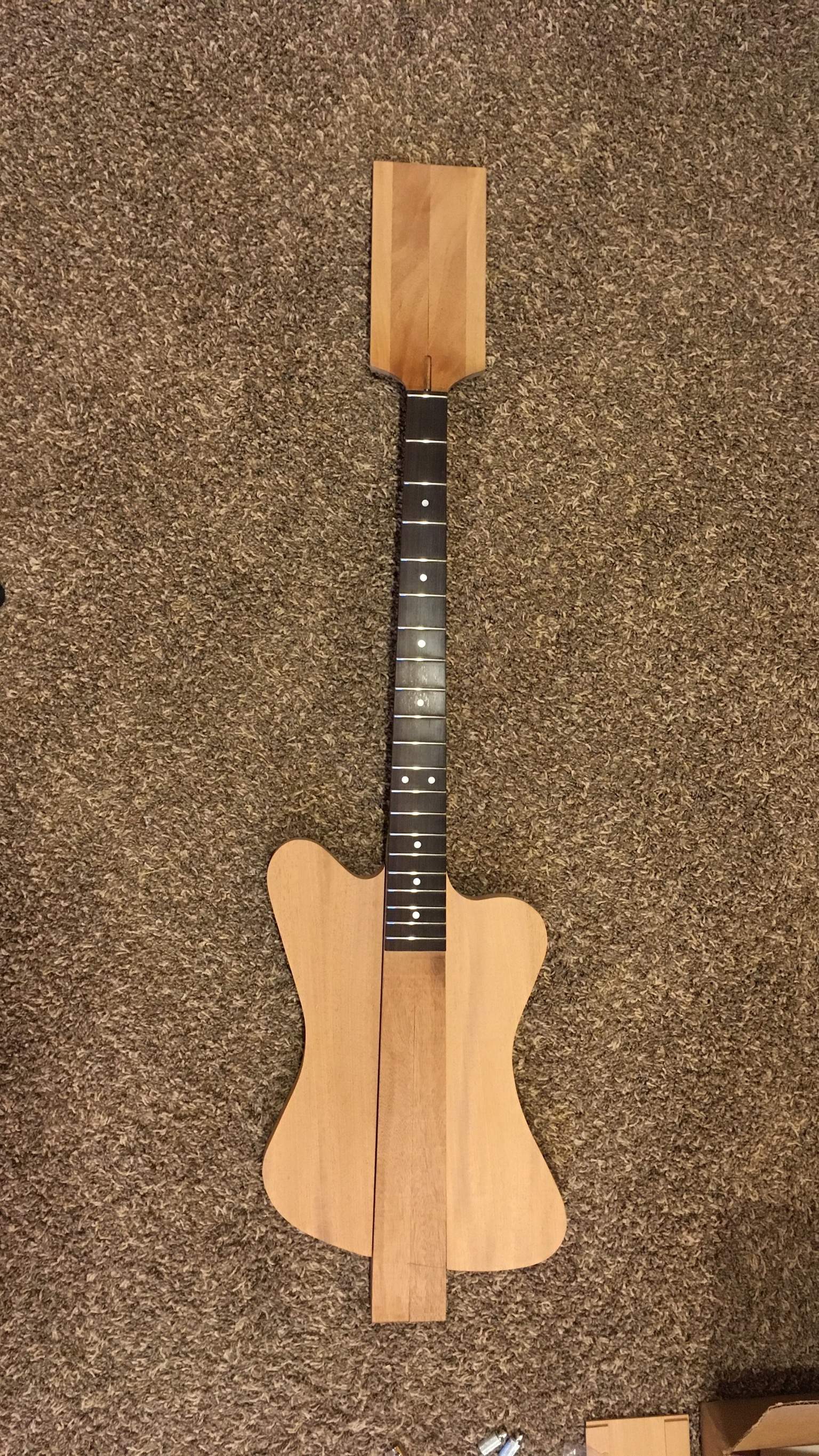
View attachment 3496905 View attachment 3496908 View attachment 3496911

It's my [non-reverse, short-scale] take on a [1963-65 reverse] Gibson Thunderbird.

I need your wisdom/help on string selection. I commonly hear Thunderbirds tend to be a little darker sounding, so I'm after a brighter sounding set of strings. I'm also keen on keeping my string noise down, and would like to avoid rounds. Also not big on coated strings.

After some searching, it seems like either GHS's pressurewounds or EB's cobalt flats would be the ticket (leaning towards the cobalts, like the feel of flats). I have a dilemma, however. The GHS short-scale strings only come in a 40-96 set, which I think is going to be too loose for me. The EB cobalts, on the other hand, don't come in a short-scale version. If they did, I think their hybrid 45-105 would be perfect.

So a couple questions—
  1. Is cutting down long-scale bass strings for a short-scale a bad idea?
  2. Is it possible to silk wrap and taper the string ends yourself?
  3. Should I be cautious of certain string gauges if my tuner posts will be 3/8" diameter?
  4. If I shouldn't cut down strings, what are some other short-scale, low noise, brighter sounding string options?
Thanks for your help!

First and foremost - WELCOME to TB :hyper:

I have several basses, my newest is a short scale Gretsch G2220. Like you, I hate finger noise :mad:!! I'd thought I'd found "my string" with the EB cobalt flats but I had too many of the D strings break on me:spit:. In my decades of playing I've never had a string actually break on me! So I went back to GHS PressureWounds which I now have on a couple 34" scales and now on my short scale which, BTW, I have setup as 1flat tuning and string looseness isn't an issue.
Don't think you can put 34" scale strings on a short scale by just cutting them down!!! There are threads here about why that often doesn't work - usually on basses with narrow tuning pegs. If you use the wide variety tuning pegs you might get away with cutting down regular length strings. I'm sure people with more experience with this will chime in.
Nice start on that bass:bassist:!! We'll look forward to you updating us on your progress:thumbsup:

Again, Welcome,

Joe
 
  • Like
Reactions: jhawk
I am using Ken Smith 30-90 Slap Masters strings on my 30" short scale bass. I also installed Gotoh GB707 tuning machines on it as well. They have slightly larger posts while still being 3/8" posts. The 90 and 70 strings are wrapped with full winds on the posts. The ultra light strings work fine on the 30" scale with excellent tone, I use those strings on all of my 4 string electric basses with headstocks. However they require a lighter attack, but respond with full sound when played with a light touch. I play with ultra low action and a light attack. Here is a picture of the E and A string posts with the Smith strings on the bass.

0804191315.jpg
 
  • Like
Reactions: jhawk
I have cut 34" D'Addario half-rounds down to fit a 30" bass with no ill-effect. Prior to that, I had put a long scale Ernie Ball E string on it in an emergency. Worked fine.

The half rounds might fit your bill for "not flats" and "not rounds". The D'Addios are closer to flats than rounds. If you want a string that's closer to rounds than flats, try SIT semi-flats. The D'Addarios last considerably longer than the SITs, no surprise really.
 
On my 34" and 32" fretless basses I use the SIT Silencers strings. They feel like flats but have quite a bit of the round wound sound. They eventually go dead like all strings and then sound like broken in flats to me. I believe SIT calls them inverse wound strings or something like that. They work on fretless for me, and I have used them on fretted bass with good results. They help with minimizing string noise very well. I also use D'addario XL220 medium scale round wounds on several of my fretted medium scale basses as well as the Roto RS66M sets. I have to try several sets of strings to find what works on each individual bass when I acquire them. As for flats I use the Ernie Ball regular and Cobalt flats, but they are only on 34" scale basses. Flats tend to break if you put them on short scale basses with 3/8" mini post tuners. I have not used flats on a short scale yet so I can't share any experience with them in that situation. Just make sure that you minimize string twist when installing long scale strings on a shorter scale bass. It causes excess tension, lifeless tone, choked notes and shortened string life. But that should be done every time you install strings. This is all just me offering my experience and should not be taken as dogma of any kind. I wish you the best in finding what works for your new build.
Cheers,
Mike
 
  • Like
Reactions: jhawk
I have cut 34" D'Addario half-rounds down to fit a 30" bass with no ill-effect. Prior to that, I had put a long scale Ernie Ball E string on it in an emergency. Worked fine.

The half rounds might fit your bill for "not flats" and "not rounds". The D'Addios are closer to flats than rounds. If you want a string that's closer to rounds than flats, try SIT semi-flats. The D'Addarios last considerably longer than the SITs, no surprise really.

If you're going to try half-rounds, why not try the GHS Brite Flats, which are Alloy 52 half-rounds (vs. pure nickel on the D'A) and they do come in short-scale with 32.75" winding length.

SHORT SCALE BRITE FLATS™
 
Wow!! Thanks for the many replies and thoughtful suggestions. Coming from guitar-world, bass strings are a little foreign to me. I've learned lots already—thank you.

My bass, as currently designed, has the following string dimensions:
Claw to nut - 31.5"
Claw to E tuner post - 33.5"
(The claw is what the ball end fits into, for those unfamiliar with the old t-bird bridges)

This puts me firmly with the 32" wound length offered by most short scale string makers. I've considered some redesigning to accommodate other string lengths, but I think I'll just suck it up and experiment with what's available in the short scale format.

I think I'll start with D'Addario short scale chromes. After more reading, many say they are one of the brighter flats out there. If I don't find them bright enough, I'll perhaps spring for some ground wounds or pressure wounds.

Again, MANY THANKS!
I will be sure to do a build thread once I have everything finished. I will document along the way.
 
I agree about shorter scales not needing as much tension. Because the end anchor points are closer the string becomes less floppy, reducing perceived tension even if actual tension hasn't changed.
I'm worrying about strings now because I'm going to be making the nut in the near future.
Contrary to common belief, the nut slots do not need to snugly fit the string gauge, as long as there is reasonable downforce and the slot floors are curved. .055-.115 is fine to cope with extra-light to heavy EADG gauges.
Are long scale strings a little lighter, to offset the higher tension needed for the longer scale?
No, all strings are simply the gauge that they are.
 
  • Like
Reactions: ctmullins