

Enjoy the benefits of a premium membership!
Upgrade Account
-
TalkBass has been independent since 1998. Add your voice.
Create a free account to reply to discussions, view embedded media, and browse with fewer display ads.
Join free Log in
Want zero display ads or expanded classifieds tools? Compare plans.
You are using an out of date browser. It may not display this or other websites correctly.
You should upgrade or use an alternative browser.
You should upgrade or use an alternative browser.
Simple DI box for active bass?
- Thread starter Just Wrong
- Start date
More options
Who Replied?
any ol' passive DI box will be fine; the nicer ones have nicer transformers (the only part that matters for sound), with better transformers not saturating as easily and giving you better fidelity and bandwidthHello all. I’m looking for a simple DI box for live use with my active bass. Less is more — no EQ, simple power requirements, etc.
The JDI seems to fit the bill perfectly. But what else is out there?

D
Hello all. I’m looking for a simple DI box for live use with my active bass. Less is more — no EQ, simple power requirements, etc.
The JDI seems to fit the bill perfectly. But what else is out there?
You already have the answer.
The Radial JDI is a superb choice. In my opinion it's one of the best DI boxes ever made in ANY category. It is extremely rugged, it doesn't require any external power, it's small enough to fit inside a guitar case/bag and the sound quality is absolutely superb. It's relatively neutral sounding with just a tiny bit of "sweeteing" which makes it less sterile sounding that some of the more clean/"hi-fi" voiced active DIs.
The JDI is a particularly good choice for active basses IMO. In most situations it is a great choice for passive basses too.
I've got a very nice selection of DI boxes at my studio (I keep some of them at home though, for my home recording setup).
In no particular order:
1x ZOD IDDI
1x Rupert Neve Designs RNDI
1x Sonic Farm 2di4
1x Countryman Type 85
2x Radial J48
1x Radial PZ-DI
1x Radial JDV
2x BSS AR-133
2x Radial JDI
1x Radial JDI Stereo
All of these are very good DI boxes. Any comparision between these are comparisons between VERY GOOD and OUTSTANDING.
-If I had to rate all of them based on sound quality alone the JDI would probably be around 3rd. The ones I rate slightly higher or similar quality are considerably more expensive though, and in most cases also much bigger which make them far less suitable for bringing to gigs.
-Based on ruggedness the JDI would be joint 1st with a couple of the others. A JDI might just be the last DI box you will ever need to buy.
-Ease of use... the JDI would be 1st.
-Portability... joint 1st with several others.
-Performance/ price ratio... probably 2nd out of the ones on my list (after the BSS which is VERY hard to beat when it comes to performance/price).
With Talkbass being Talkbass you will of course get pages of suggestions for every DI box out there. Someone even suggested Behringer... Give me strength... Ok, to be fair, cheap stuff like Behringer can sometimes be a decent alternative for some people in some situations, but not when the starting point of the discussion is one of the best DI boxes ever made!!!
It's a no-brainer really. Get the JDI. It has stood the test of time, it is used professionally in THOUSANDS of studios/venues around the world every single day and it is even particularly good for active basses.

Two things:
- instrument level is quite high really. Much stronger than mic level, sometimes. Instrument level may approach or surpass consumer line levels (-10dBV).
- an active bass can be plugged into a (relatively) low impedance (let's say that 10kohm is OK). A mic input on a mixing board will usually be around 1.5-2.5kohm, which is, generally speaking, not an easy load for onboard electronics (and may cause degraded performance, and also more battery usage). Even without considering this, a single-ended signal will be subject to noise over several metres of cable. What the DI does is primarily *balance* the signal (and it also drops the instrument level down to a mic level too, see above, with 10 input : 1 output ratios being common - this also increases the impedance seen by the bass by a factor of 10² = 100, so making a 2kohm load into a 200kohm load, much easier to drive, since higher is better -> less current). Balancing the signal makes it more resistant to noise.
I quite like my IMG Stage Line DI (I have no active basses but I never play without at least plugging into my buffered Boss TU-3 tuner), it's dead cheap and, in a direct comparison with the straight signal into my Scarlett interface, it is just the tiniest bit bass-shy and less "detailed". I can pick it out almost every time but it's stuff that will *never* be audible in a live setting, and probably in a studio setting too, considering all the processing that recording entails. And the fact that in a mix most stuff gets masked anyway.
- instrument level is quite high really. Much stronger than mic level, sometimes. Instrument level may approach or surpass consumer line levels (-10dBV).
- an active bass can be plugged into a (relatively) low impedance (let's say that 10kohm is OK). A mic input on a mixing board will usually be around 1.5-2.5kohm, which is, generally speaking, not an easy load for onboard electronics (and may cause degraded performance, and also more battery usage). Even without considering this, a single-ended signal will be subject to noise over several metres of cable. What the DI does is primarily *balance* the signal (and it also drops the instrument level down to a mic level too, see above, with 10 input : 1 output ratios being common - this also increases the impedance seen by the bass by a factor of 10² = 100, so making a 2kohm load into a 200kohm load, much easier to drive, since higher is better -> less current). Balancing the signal makes it more resistant to noise.
I quite like my IMG Stage Line DI (I have no active basses but I never play without at least plugging into my buffered Boss TU-3 tuner), it's dead cheap and, in a direct comparison with the straight signal into my Scarlett interface, it is just the tiniest bit bass-shy and less "detailed". I can pick it out almost every time but it's stuff that will *never* be audible in a live setting, and probably in a studio setting too, considering all the processing that recording entails. And the fact that in a mix most stuff gets masked anyway.
Last edited:


I have the simplest possible and it seems fine to me:Hello all. I’m looking for a simple DI box for live use with my active bass. Less is more — no EQ, simple power requirements, etc.
The JDI seems to fit the bill perfectly. But what else is out there?
 Millenium DI-E
But then, I also think that with my Ibanez active bass I was also fine without it.

Here you go ...Hello all. I’m looking for a simple DI box for live use with my active bass. Less is more — no EQ, simple power requirements, etc.
The JDI seems to fit the bill perfectly. But what else is out there?
https://www.sweetwater.com/store/de...MI48nU2t3kjQMVc3hHAR0qzCDPEAQYASABEgLq2vD_BwE
Simple, inexpensive, and does the job well. I got mine used for $30 many years ago and it has served me well. Sound engineers seem to like it, too.

I have used this simple Behringer DI for over a decade: simple, clean, inexpensive, gives your sound man exactly what he needs to slot you in the mix properly. Oh - and it was listed as the best in a Sweetwater shoot-out a few years ago.
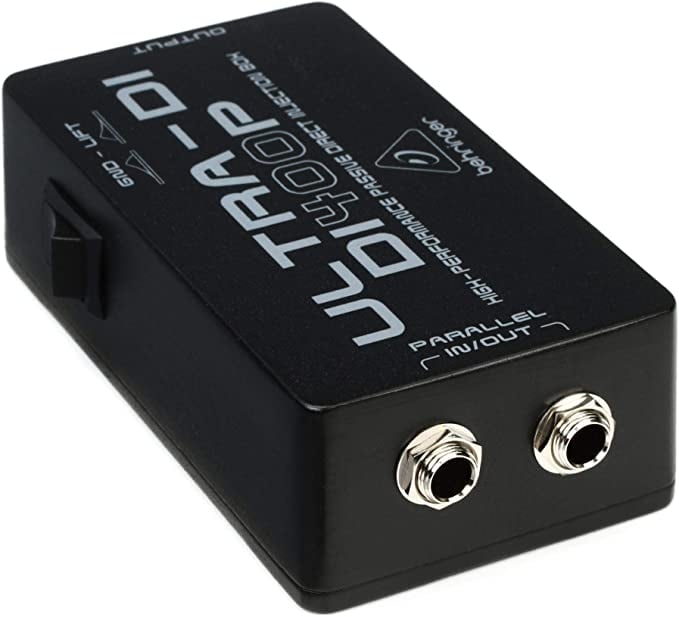
I have the 800 version (it adds a couple of features, namely an attenuator for speaker level and a low pass filter as a cabsim, both bypassable). It is a good DI too. Compared to my IMG Stage Line DI, it cuts and distorts a bit more of the bass and it's cleaner in the mids and treble. You really can't go wrong with either in my opinion. People are a bit too "discerning" when it comes to DIs (my opinion).I have used this simple Behringer DI for over a decade: simple, clean, inexpensive, gives your sound man exactly what he needs to slot you in the mix properly. Oh - and it was listed as the best in a Sweetwater shoot-out a few years ago.View attachment 7247788

Sweetwater is a Behringer shill as of the last few years, so I wouldn’t put much weight into their “opinions” regarding Behringer products (they have lots of shady ways of boosting Behringer product as a result, including lots of promo blogs and videos and exclusive financing schemes not available for other brands they sell, etc): Behringer parent company Music Tribe announces partnership with SweetwaterI have used this simple Behringer DI for over a decade: simple, clean, inexpensive, gives your sound man exactly what he needs to slot you in the mix properly. Oh - and it was listed as the best in a Sweetwater shoot-out a few years ago.View attachment 7247788
Not to say there is anything wrong with that DI, but no point in giving it more credit than it’s due.
Last edited:


Sweetwater is a Behringer shill as of the last few years, so I wouldn’t put much weight into their “opinions” regarding Behringer products (they have lots of shady ways of boosting Behringer product as a result, including lots of promo blogs and videos): Behringer parent company Music Tribe announces partnership with Sweetwater
Not to say there is anything wrong with that DI, but no point in giving it more credit than it’s due.
My rule of thumb these days is find out what the Behringer is copying and buy that instead. That'd probably be the Whirlwind Imp 2 or Radial passive Stagebug. Maybe get the Radial Pro DI if you want an upgrade.
Well, I will. We have used a Behringer all-digital board for the last decade, before Sweetwater started pushing them so strongly. We got it on the recommendation of our sound man, who is in management with the best respected sound reinforcement company in southwest Missouri. So for over a decade the sound of my 10-piece party band has been the best mixed, the least background hiss and noise, and the highest sound quality of any band in southwest Missouri. When we accompany the regional opera company once a year on the annual "Opera Rocks" night, we use Behringer. The principal, Michael Spyres, is the best respected currently touring opera singer in the world with sellout crowds and classical Grammy awards, and can demand whatever sound system he wants. Why do we use Behringer? Simply because it works. Works well, indeed.Sweetwater is a Behringer shill as of the last few years, so I wouldn’t put much weight into their “opinions” regarding Behringer products (they have lots of shady ways of boosting Behringer product as a result, including lots of promo blogs and videos and exclusive financing schemes not available for other brands they sell, etc): Behringer parent company Music Tribe announces partnership with Sweetwater
Not to say there is anything wrong with that DI, but no point in giving it more credit than it’s due.
Last edited:

An important reminder here, a DI converts an unbalanced signal into a balanced signal.
If you just plug a bass into a wired adapter (without a transformer) you are sending an unbalanced signal all the way from your bass to the console or digital stage box.
Industry standard says you should keep unbalanced signal to a max of 15’-25’.
This is why DI boxes are used because a balanced signal can run much greater distances with less noise.
Running an unbalanced signal 50’-100’ is just bad news.
If you just plug a bass into a wired adapter (without a transformer) you are sending an unbalanced signal all the way from your bass to the console or digital stage box.
Industry standard says you should keep unbalanced signal to a max of 15’-25’.
This is why DI boxes are used because a balanced signal can run much greater distances with less noise.
Running an unbalanced signal 50’-100’ is just bad news.

I would use one of the many Sushi Box pedals that have a built in DI, they all have tubes in them that run at high voltage.
Most people buy Sushi Box pedals to get some tube sweetness into their sound but the ones with a DI transformer inbuilt are very popular.
The Neptunium is a smaller version of the Noble pedal, it only uses one tube, the extra tube for the 1/4" output has been replaced by HV mosfets I believe. It still has the tube for the XLR output though which is the important part
The Finally V3 has a built in variable frequency HPF
The Grand Slampeg is based on the Ampeg B15-N
The Venus Z has a Gallien Kruger sound and has all the bells and whistles.
Nathan from Sushi Box is going on holidays in 2 weeks for a month so don't delay if you consider one of his pedals.
Check them out and read some posts, you will not be disappointed. (But be careful, his pedals are highly addictive and its very hard to stop at one)
Chers
Mick
Most people buy Sushi Box pedals to get some tube sweetness into their sound but the ones with a DI transformer inbuilt are very popular.
The Neptunium is a smaller version of the Noble pedal, it only uses one tube, the extra tube for the 1/4" output has been replaced by HV mosfets I believe. It still has the tube for the XLR output though which is the important part
The Finally V3 has a built in variable frequency HPF
The Grand Slampeg is based on the Ampeg B15-N
The Venus Z has a Gallien Kruger sound and has all the bells and whistles.
Nathan from Sushi Box is going on holidays in 2 weeks for a month so don't delay if you consider one of his pedals.

It's finally time to start an official Sushi Box FX thread on Talkbass! @Sushi Box FX makes amazing little pedals at affordable prices! Let's use this space to talk all things Sushi Box FX. Feel free to ask questions, post pictures and most importantly, have some fun. Don't hesitate tagging @Sushi Box FX for any technical questions you would like to keep public. Otherwise, you can PM him for private matters. Check out Sushi Box FX's current pedal offering at
https://www.sushiboxfx.com/.
I'll start by posting a pic of my Particle Accelerator Preamp:

I'm...
https://www.sushiboxfx.com/.
I'll start by posting a pic of my Particle Accelerator Preamp:
I'm...
- kranahan
- Replies: 27,082
- Forum: Effects [BG]
Check them out and read some posts, you will not be disappointed. (But be careful, his pedals are highly addictive and its very hard to stop at one)
Chers
Mick
If you truly want to go bare bones but want great sound then the Dim stick from pedalnetics is the go, he is another great TB'er who makes great stuff for us.
The Dim stick uses no power at all, it is a specially wound transformer that converts the signal to XLR balanced and it works great, it is very small and has several extra features that are useful.
Since you have an active Bass you might appreciate the -15Db pad to drop a hot signal down, it has phase reverse switching and ground lift.
The output is isolated from the input because it uses a true transformer like the more expensive DI boxes.

 pedalnetics.com
EDIT: I missed that BassBrad had mentioned the Dim Stick on post #4 already, I should have known since he has great taste in gear.
The Dim stick uses no power at all, it is a specially wound transformer that converts the signal to XLR balanced and it works great, it is very small and has several extra features that are useful.
Since you have an active Bass you might appreciate the -15Db pad to drop a hot signal down, it has phase reverse switching and ground lift.
The output is isolated from the input because it uses a true transformer like the more expensive DI boxes.
DIm Stick - Pedalnetics
Experience the versatility of the DIm Stick with a transformer from Unagi Magnetics, making it perfect for any instrument you use. DIm Stick.
pedalnetics.com
EDIT: I missed that BassBrad had mentioned the Dim Stick on post #4 already, I should have known since he has great taste in gear.
Last edited:

JazznFunk
Supporting Member
For ZERO additional power requirements - Radial JDI. Done. IF you want the flexibility of an active DI with no frills though, it's hard to pass up the Countryman Type 85. Runs off of a 9V battery OR phantom power. I like both for different reasons, but the JDI is truly plug-and-play with little to no rate of failure or questionable reliability.

I also use a DIm Stick. It's the first thing I plug into before the start of my pedal board as my clean out before hitting any noise makers further on. I love it and the Unagi E4305 transformer sounds and feels great as well. Excellent price and performance.If you truly want to go bare bones but want great sound then the Dim stick from pedalnetics is the go, he is another great TB'er who makes great stuff for us.
The Dim stick uses no power at all, it is a specially wound transformer that converts the signal to XLR balanced and it works great, it is very small and has several extra features that are useful.
Since you have an active Bass you might appreciate the -15Db pad to drop a hot signal down, it has phase reverse switching and ground lift.
The output is isolated from the input because it uses a true transformer like the more expensive DI boxes.
DIm Stick - Pedalnetics
Experience the versatility of the DIm Stick with a transformer from Unagi Magnetics, making it perfect for any instrument you use. DIm Stick.
EDIT: I missed that BassBrad had mentioned the Dim Stick on post #4 already, I should have known since he has great taste in gear.
I believe Basscliff preferred the Countryman. I prefer the Radial JDI. I also have a Behringer Ultra-DI which is ok. For $30, it works.
I started using a Nobelium which the jury is still out on. It has a few questionable design decisions in the circuitry. So I would like to get a long term use on it before recommending. Since I gig almost every weekend, and on some weekdays throughout the year, I probably put it through its paces.
I hate unexpected issues during setup and soundcheck. I've replaced all the consumer level stuff to professional grade; particularly the wireless units. Since doing this sometime last year, I've not had any unexpected issues. Knock on wood. Keep that in mind as I had one issue where the Behringer didn't play nice with a pedal in front of it.
I do have a Steadi Go! from C2C but I've not built it yet. There's a guy on here that has and posted some sound clips. It sounds good, but the change is rather mild, or slight in my ears. The circuit is an Alembic F2b front end copy (input to 1st tube stage), then a simple tube cathode follower, and finally a volume pot.
If you go that route, you'll be in it, cost-wise, probably a little be more than a Radial ProDI. That's not including the power supply. Depending upon your pedal board setup, that could double the cost, or nothing. If you don't like soldering and prefer an active DI, the Countryman 85 will probably work well. There's one on reverb for $129 right now
Some people love the Rupert Neve DI, but that is 48V phantom power only. If you decide to go with an active DI, you'll need to consider the power requirements. I personally don't like relying on the sound guy for phantom power.
I started using a Nobelium which the jury is still out on. It has a few questionable design decisions in the circuitry. So I would like to get a long term use on it before recommending. Since I gig almost every weekend, and on some weekdays throughout the year, I probably put it through its paces.
I hate unexpected issues during setup and soundcheck. I've replaced all the consumer level stuff to professional grade; particularly the wireless units. Since doing this sometime last year, I've not had any unexpected issues. Knock on wood. Keep that in mind as I had one issue where the Behringer didn't play nice with a pedal in front of it.
I do have a Steadi Go! from C2C but I've not built it yet. There's a guy on here that has and posted some sound clips. It sounds good, but the change is rather mild, or slight in my ears. The circuit is an Alembic F2b front end copy (input to 1st tube stage), then a simple tube cathode follower, and finally a volume pot.
If you go that route, you'll be in it, cost-wise, probably a little be more than a Radial ProDI. That's not including the power supply. Depending upon your pedal board setup, that could double the cost, or nothing. If you don't like soldering and prefer an active DI, the Countryman 85 will probably work well. There's one on reverb for $129 right now
Some people love the Rupert Neve DI, but that is 48V phantom power only. If you decide to go with an active DI, you'll need to consider the power requirements. I personally don't like relying on the sound guy for phantom power.
Last edited:


